




Huawei hypes up next Kirin flagship Kirin2026 SoC with 41% power efficiency improvement
It can be argued that no Chinese company suffered worse from US sanctions than Huawei. When the US first placed sanctions on Huawei through the company’s inclusion in the Entity List in 2019, Huawei was the second-largest smartphone maker in the world, even outselling Apple. At that time, Huawei was also developing its in-house HiSilicon Kirin mobile SoCs.
Today, Huawei can't employ TSMC, Intel, or Samsung to manufacture new Kirin chips on their cutting-edge nodes. The company relies on the local Chinese foundry Semiconductor Manufacturing International Corporation (SMIC).
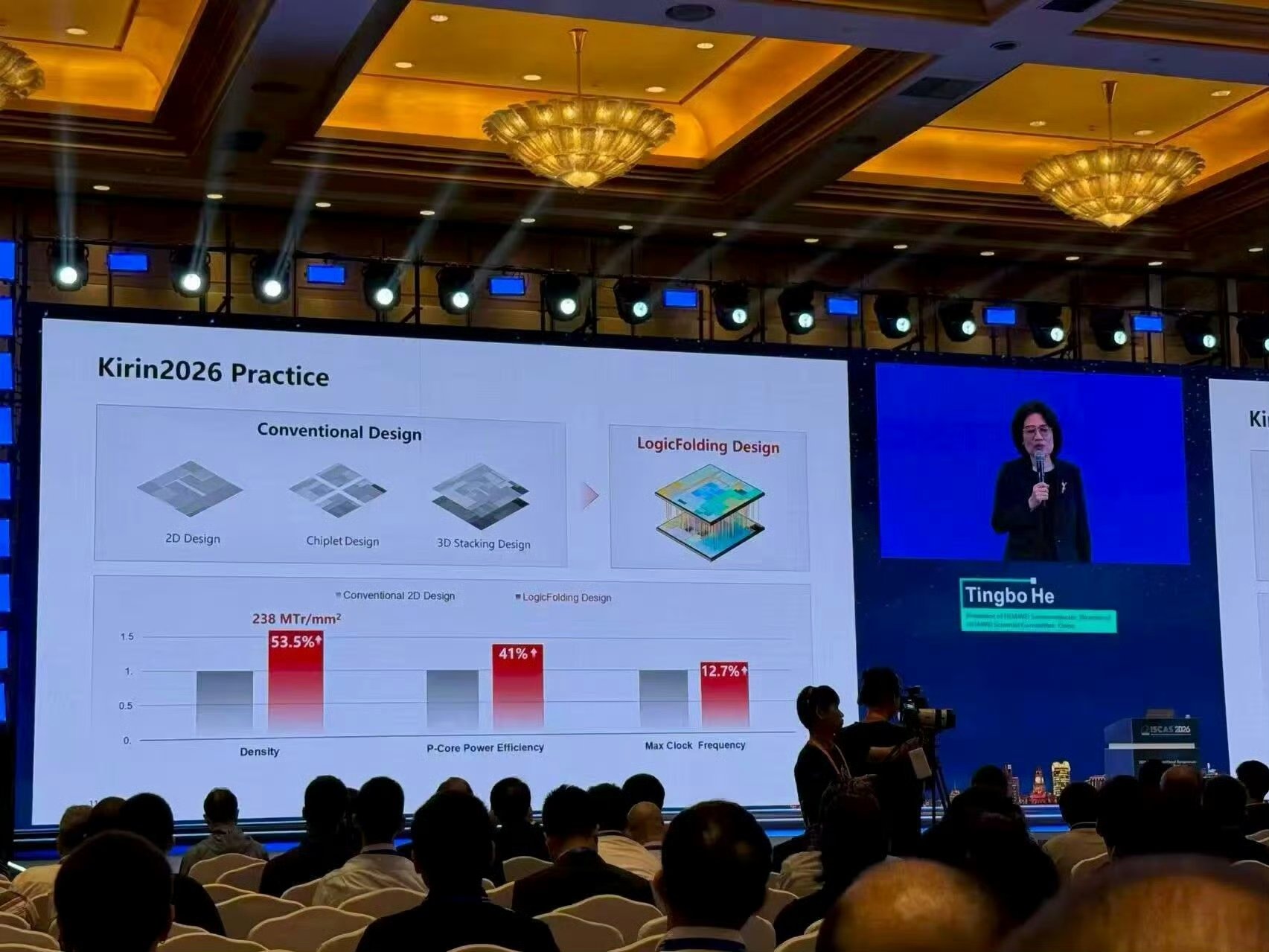
This hasn’t stopped Huawei from trying, and the company is now at the forefront of Chinese efforts to achieve full self-sufficiency in semiconductors. To that end, Huawei has now announced that, courtesy of its new chip design philosophy and LogicFolding technology, the Kirin2026 SoC will achieve a massive uplift in both performance and power efficiency.
HiSilicon Kirin2026
The HiSilicon Kirin2026 is expected to be released later this year. Huawei’s projections claim that the Kirin2026 will have a transistor density of 238 Mtr/mm². For reference, the Kirin 9030 Pro that powers the Huawei Mate 80 Pro Max has a transistor density of 125 Mtr/mm2.
Huawei also claims that the performance cores of the Kirin2026, which could be called Kirin 9050 when it comes out, will boast a 12.7% boost in max clock speed alongside a 41% improvement in power efficiency.
In other words, Huawei is claiming that the next Kirin flagship SoC will achieve major improvements in both performance, power savings, and cost. These are big promises, especially when we consider that Huawei is also chasing some major goals when it comes to process nodes.
That said, even with these performance and efficiency improvements, the latest mobile processors like the Qualcomm Snapdragon 8 Elite Gen 5, Samsung Exynos 2600, MediaTek Dimensity 9500, and Apple A19 Pro will remain out of reach of the Kirin2026 or Kirin 9050 SoC. The mobile SoCs from Qualcomm and the like use advanced nodes from TSMC and Samsung, which Huawei currently has no answer to.
Source(s)
Huawei via Tech Home on X, Teaser image source: Rubaitul Azad on Unsplash
 Add as a preferred source on Google


