





Kingston Fury Renegade G5 8 TB review - High-end PCIe 5.0 NVMe SSD with more than 14,000 MB/s for gaming & workstations
Sebastian Bade 👁 (translated by Sebastian Bade) Published 🇩🇪 🇫🇷 ...
Verdict - With the Fury Renegade G5, Kingston delivers one of the fastest SSDs ever
The Kingston Fury Renegade G5 with 8 TB impresses in the test with outstanding overall performance and is one of the fastest PCIe 5.0 SSDs currently available. With sequential read and write rates of over 14,000 MB/s, the top model achieves top values in CrystalDiskMark. The SSD is also extremely stable under continuous load: in the diskspd loop, the performance remains constant over the entire test period, and thermal throttling does not occur in our test scenario. However, this requires the use of a powerful heat sink to exploit the full potential of the mass storage even under continuous load.
Overall, the Kingston Fury Renegade G5 presents itself as a powerful NVMe mass storage device without any significant technical weaknesses. However, the price of the 8 TB version, which is clearly in the high-end segment, must be viewed critically. Cheaper alternatives such as the equally powerful Kingston KC3000 offer lower transfer rates, but with around 7,000 MB/s, they also deliver high performance at a significantly lower price.
Pros
Cons
Price and availability
The Kingston Fury Renegade G5 8 TB is not currently available. The Kingston Fury Renegade G5 with 4 TB can be purchased from Amazon for $593.
Kingston Fury Renegade G5 Models

The Kingston Fury Renegade G5 with 8 TB is aimed at demanding gamers, content creators and power users who want to get the most out of a PCIe 5.0 SSD. With advertised transfer rates of over 14,000 MB/s read and write, it is currently one of the fastest NVMe SSDs in its performance class. In this test, we take a closer look at the 8 TB version of the Fury Renegade G5 and analyze how it performs in everyday use and under continuous load and what strengths and weaknesses it reveals. In addition to the 8 TB model tested, the FURY Renegade G5 is also available with 1 TB, 2 TB and 4 TB, whereby the smaller variants (1 TB and 2 TB) in particular have slightly lower write rates according to the data sheet.
| Kingston Fury Renegade G5 SSD | |
|---|---|
| Form factor | M.2 (2280) |
| Interface | PCIe 5.0 x4 |
| Memory | 3D-NAND TLC, LPDDR4 DRAM cache |
| Weight | 9.2 g (8 TB); 7.7 g (2 TB + 4 TB); 7.3 g (1 TB) |
| available capacities | 8 TB, 4 TB, 2 TB, 1 TB |
| Data transfer rates (sequential according to the manufacturer) |
up to 14,800 MB/s read up to 14,000 MB/s write |
| Load capacity | 8 PB, 1,000 TB per TB capacity |
| IOPS | 2200K read, 2200K write |
| average operating time | 2,000,000 h |
| Firmware | SGW00110 |
| Warranty period | 5 years |
| EAN | SFYR2D/8T1; SFYR2S/4T0; SFYR2S/2T0; SFYR2S/1T0 |
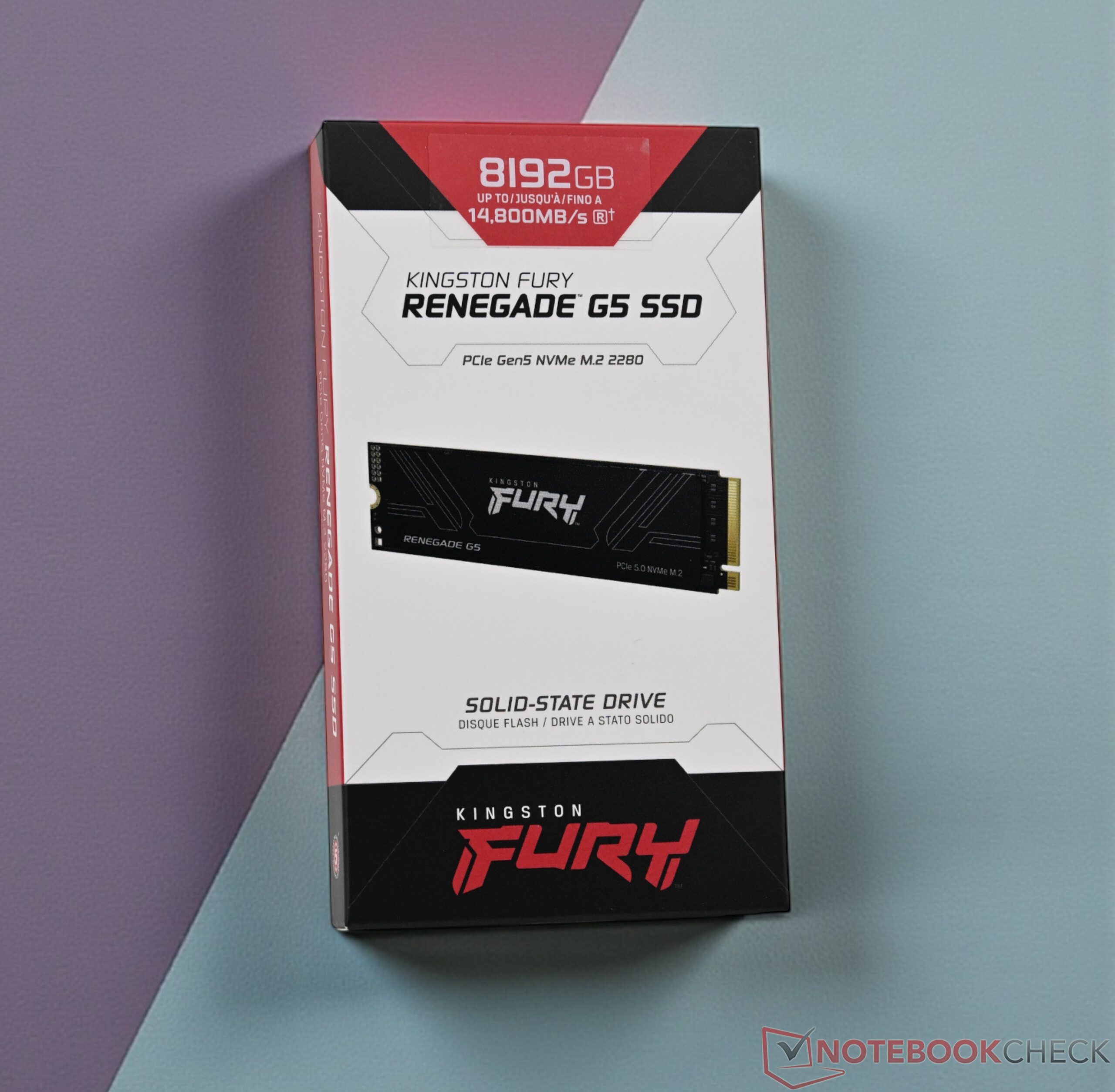
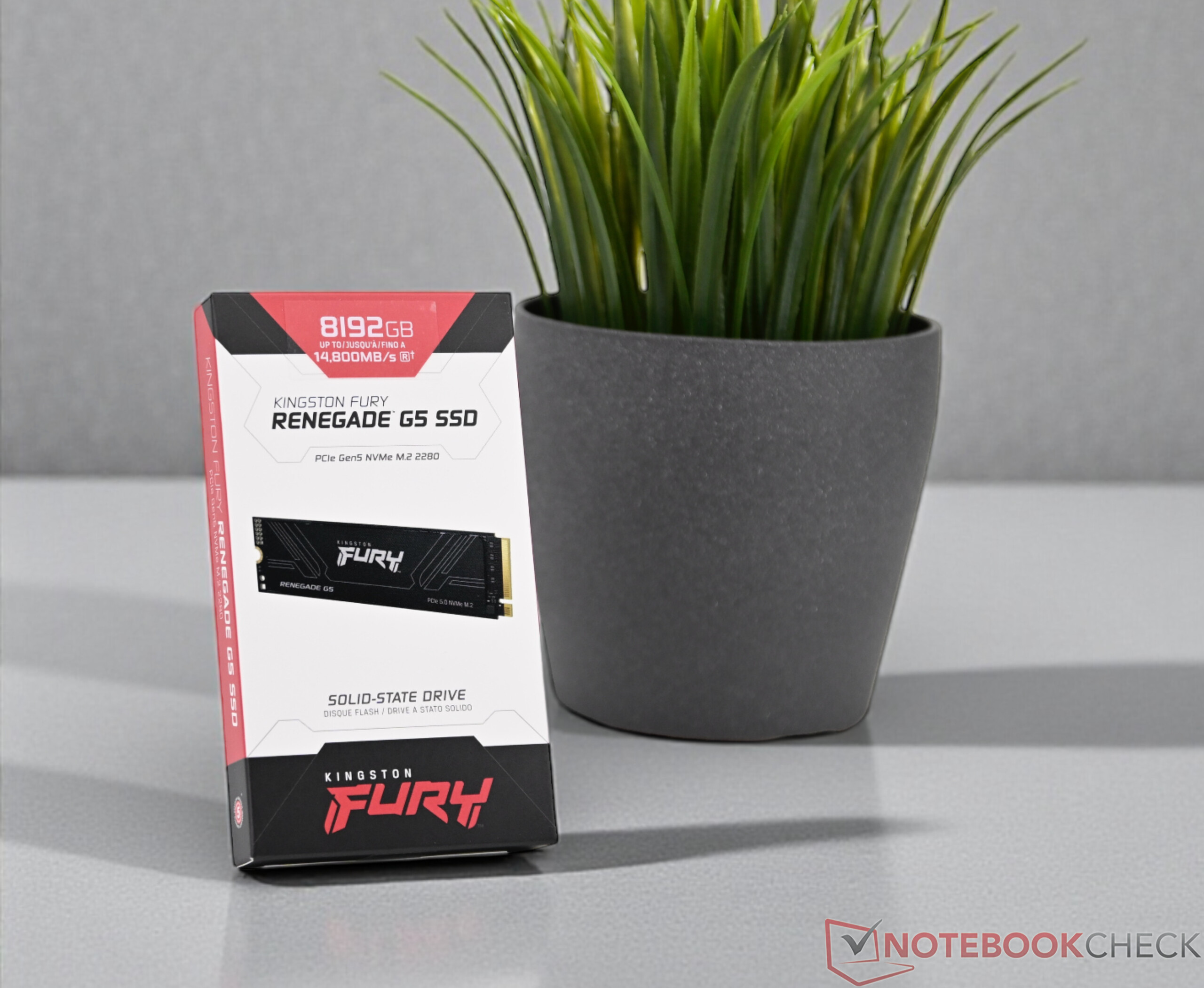
Packaging & scope of delivery: cardboard and plastic ensure safe transportation
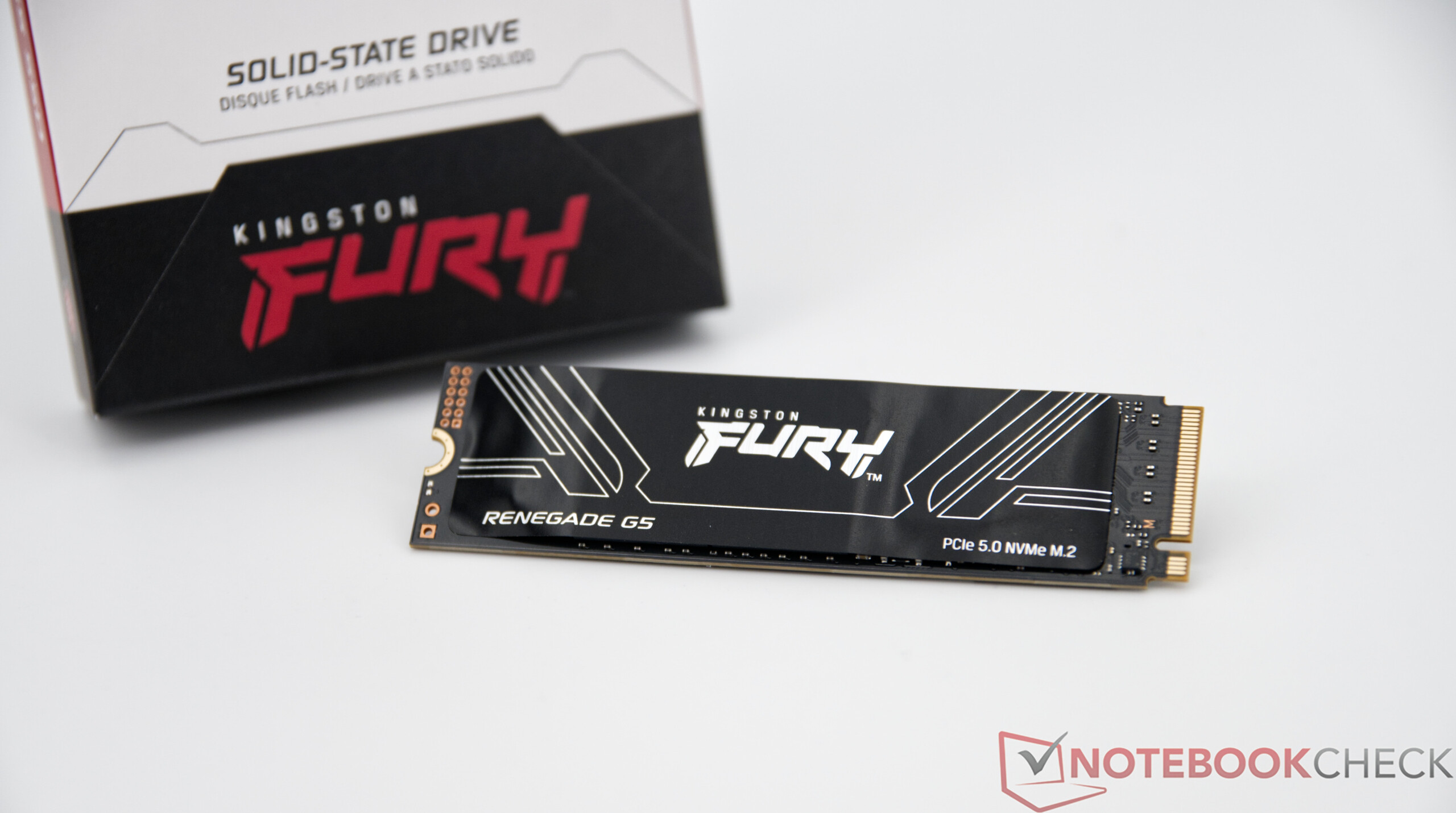
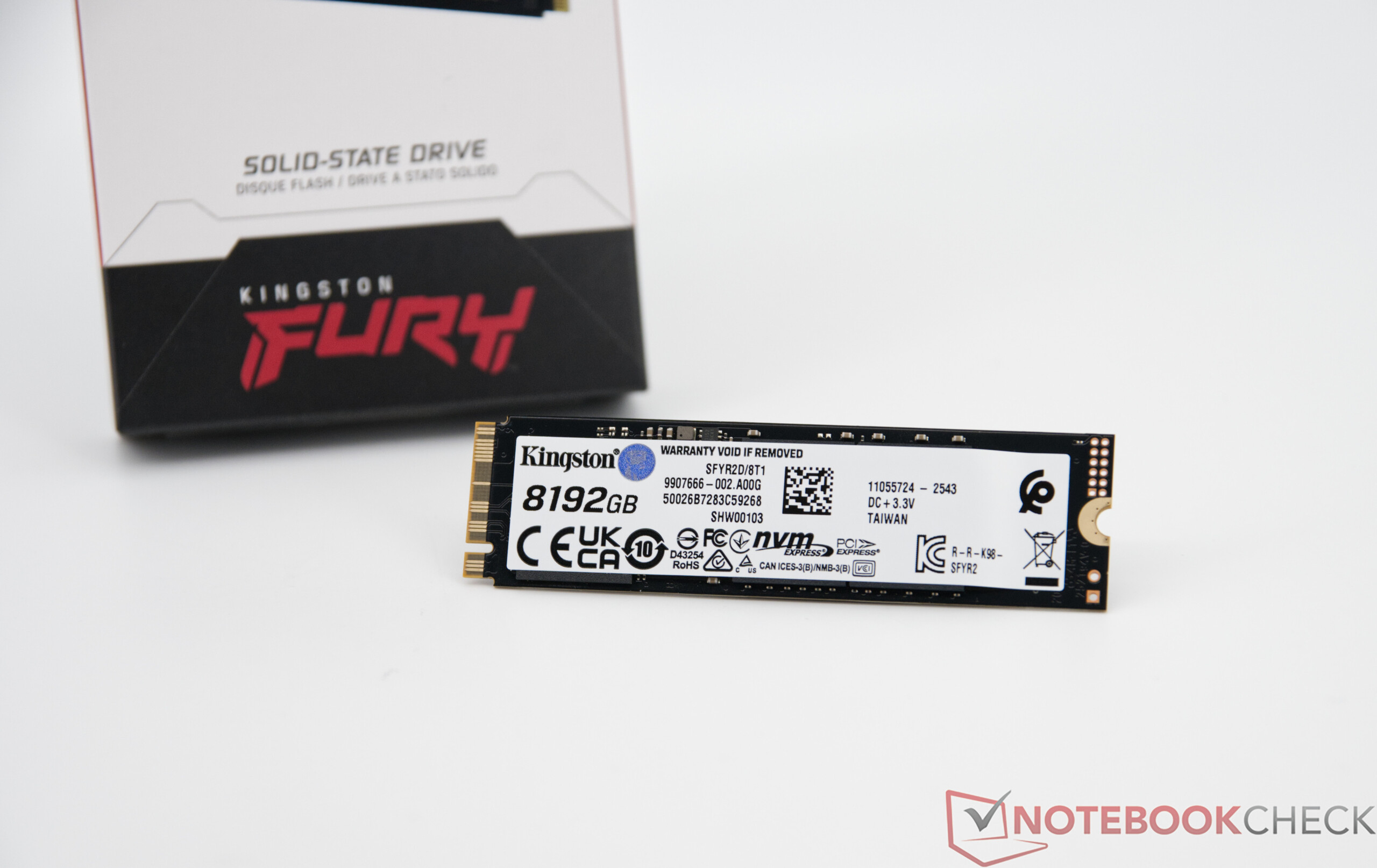
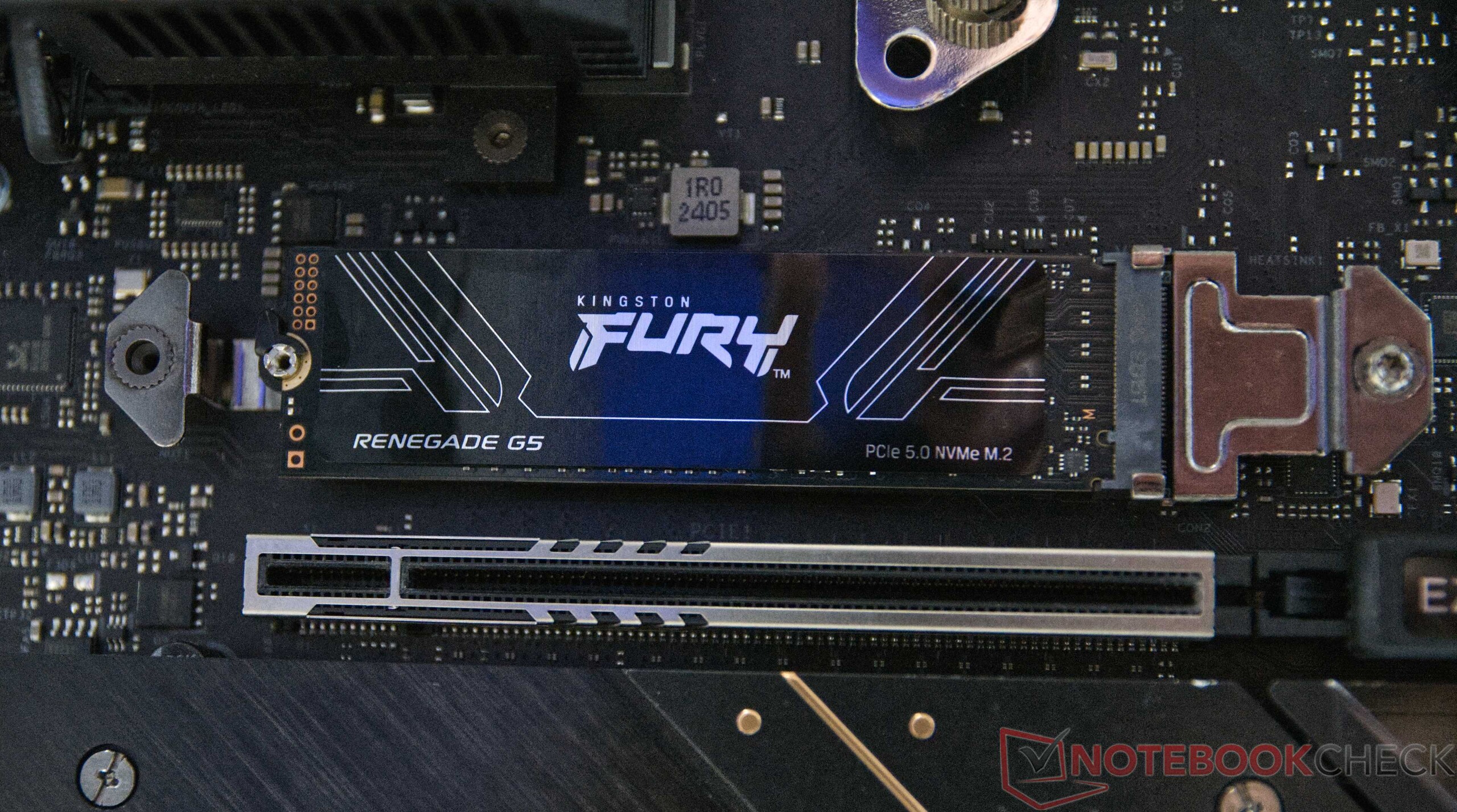
Kingston delivers the Fury Renegade G5 with 8 TB in plain cardboard packaging. Inside, the SSD is housed in a precisely fitting plastic holder for secure attachment. Environmental certifications such as RoHS and REACH are met, even if the packaging itself is not made from recycled materials. The sticker on the SSD looks very thin, so we do not assume that this is a factory-installed cooling pad. Considering the high performance, PCIe 5.0 SSDs should not be operated without a separate heat sink. In addition, the 8 TB variant is double-sided, which must be considered during installation and when selecting a suitable cooling concept.
Test system
For this test, we use our GPU test system based on the Asrock X870E Taichi motherboard in combination with the AMD Ryzen 7 9800X3D.
Transfer rates
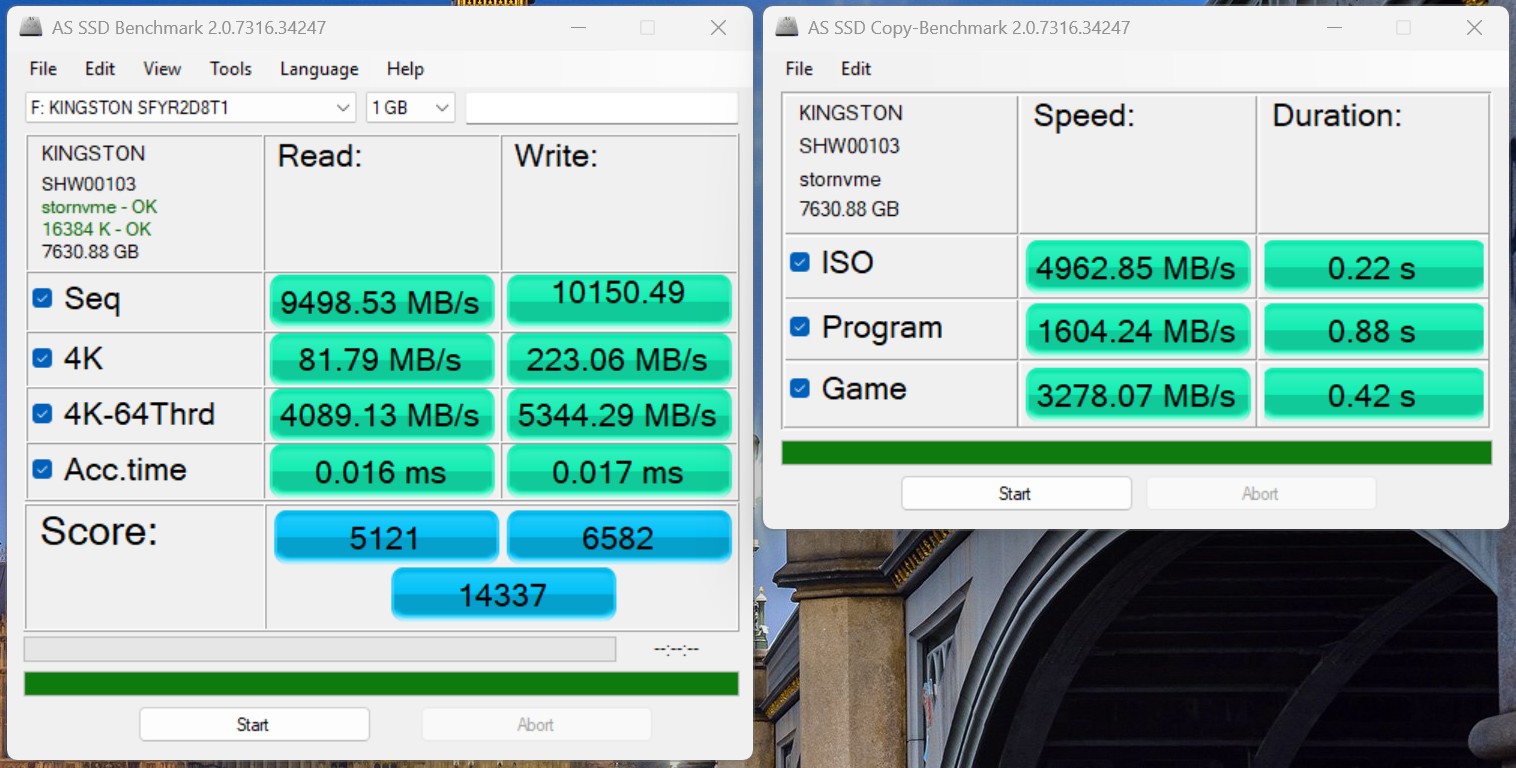
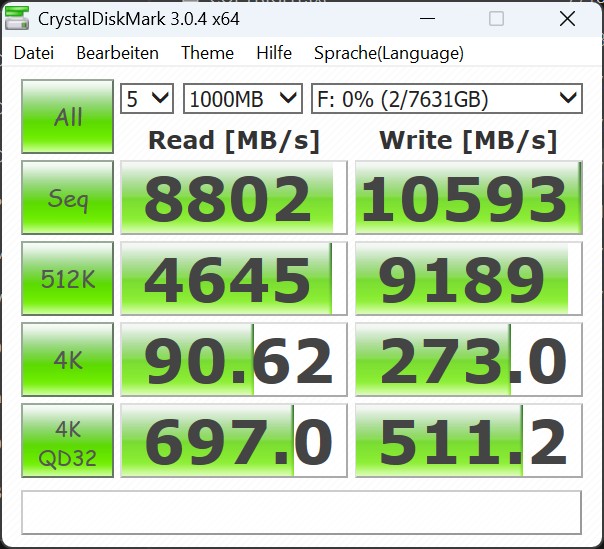
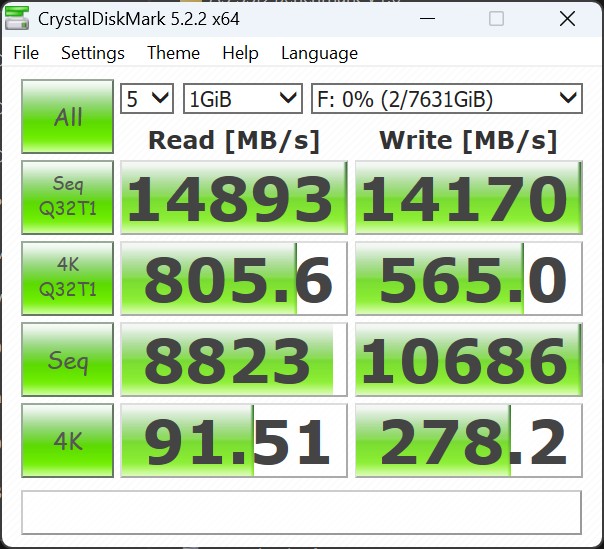
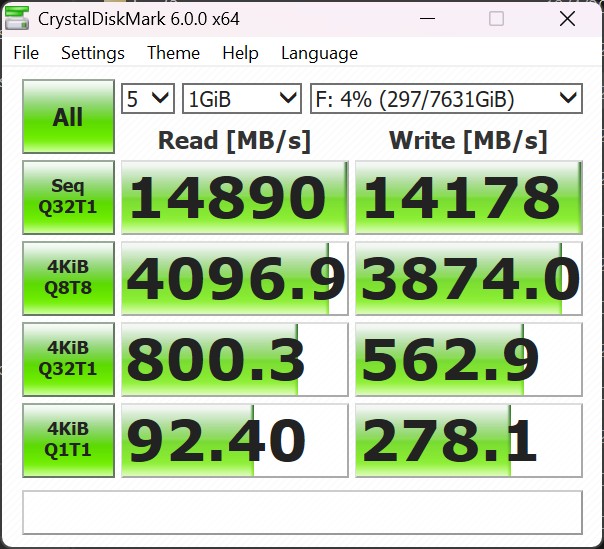
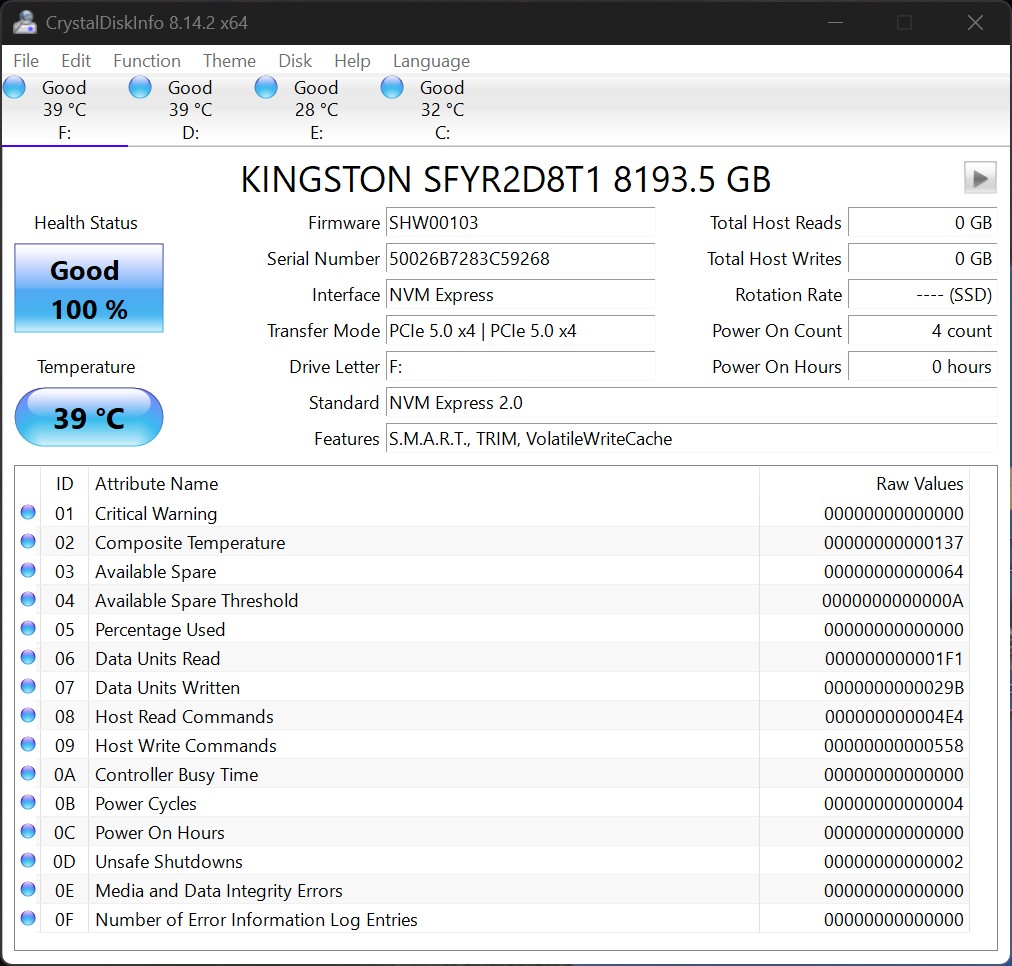
In our test system, the Kingston Fury Renegade G5 with 8 TB can almost fully exploit its enormous performance potential. In the CrystalDiskMark 6 benchmark, we measured sequential read rates of over 14,900 MB/s and write rates of around 14,200 MB/s. As expected, the results in the AS-SSD benchmark are somewhat lower. In a direct comparison with other internal high-end SSDs, the Fury Renegade G5 is clearly ahead of competitor models such as the Samsung 9100 Pro or the Kingston KC3000.
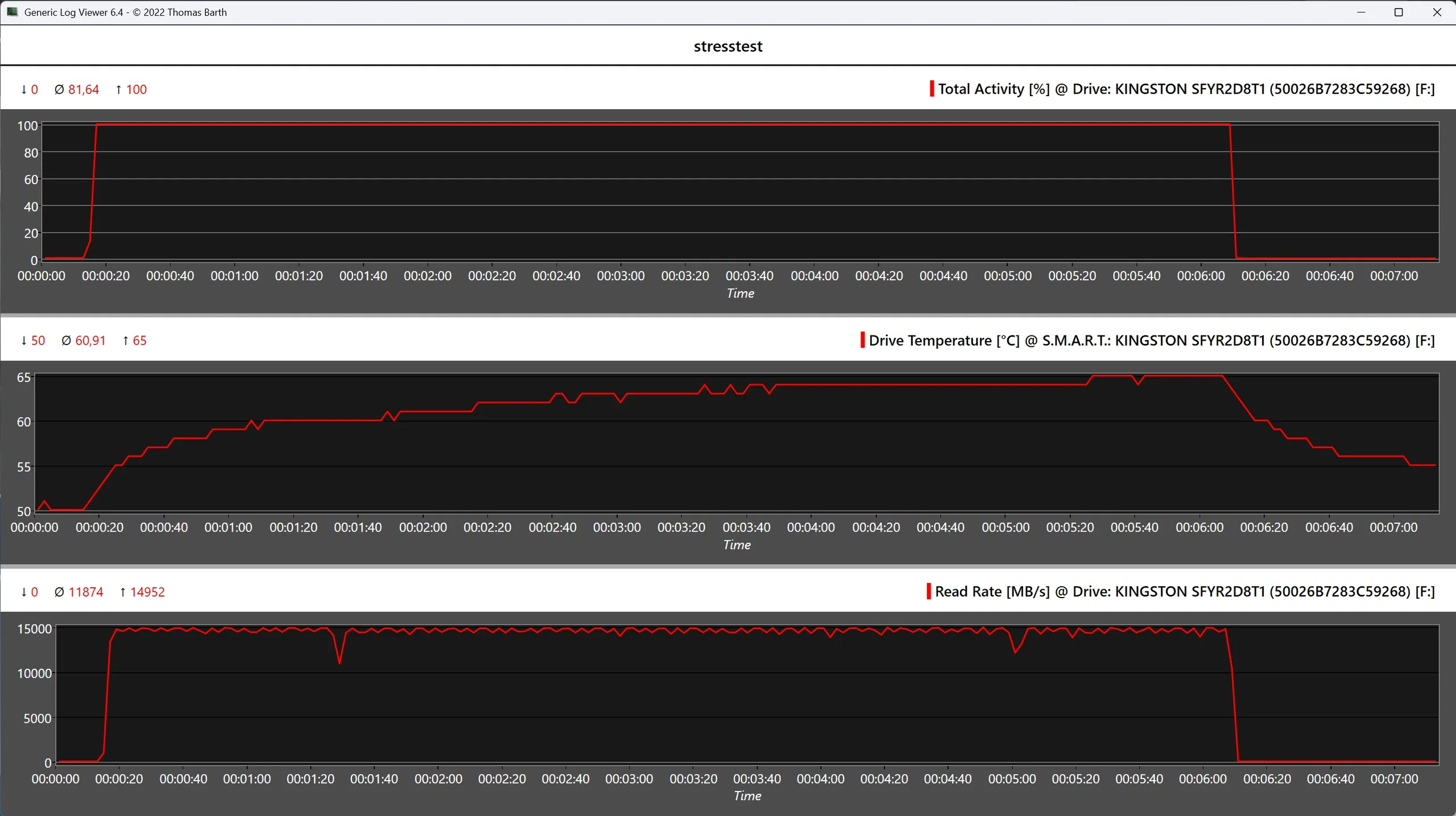
In the Diskspd endurance test, the SSD also shows largely constant performance. Although there are occasional minor fluctuations in performance, there is no significant drop over the entire test period. With an average of more than 14,000 MB/s, the Kingston Fury Renegade G5 also impresses under sustained load. While both versions of the Kingston Fury Renegade G5 deliver impressive performance, the 8 TB model scores over the 4 TB version with slightly more constant read rates under continuous load. However, this requires sufficient cooling: in combination with the heat sink of the ASRock mainboard used, this worked excellently in the test. In compact systems such as laptops or mini PCs, however, the higher temperatures could lead to significantly greater performance losses under continuous load.

| Drive Performance rating - Percent | |
| Kingston Fury Renegade G5 4 TB | |
| Kingston Fury Renegade G5 8 TB | |
| Average Kingston Fury Renegade G5 8TB | |
| Eurocom Raptor X17 Core i9-14900HX | |
| Kingston KC3000 2 TB | |
| Schenker XMG Pro 16 (E25) | |
| AMD Ryzen 7 7800X3D | |
| Average of class | |
* ... smaller is better
DiskSpd Read Loop, Queue Depth 8
Conclusion
The Kingston Fury Renegade G5 with 8 TB presents itself in the test as an uncompromising high-end SSD based on PCIe 5.0. With sequential read and write rates of over 14,000 MB/s, it delivers first-class performance and is one of the fastest NVMe SSDs in its class. Even under continuous load, performance remains largely constant, provided effective cooling is available. The Fury Renegade G5 is therefore clearly aimed at demanding users who expect maximum speed and high storage capacity in a desktop system.
Transparency
The selection of devices to be reviewed is made by our editorial team. The test sample was given to the author by the manufacturer free of charge for the purposes of review. There was no third-party influence on this review, nor did the manufacturer receive a copy of this review before publication. There was no obligation to publish this review. As an independent media company, Notebookcheck is not subjected to the authority of manufacturers, retailers or publishers.
This is how Notebookcheck is testing
Every year, Notebookcheck independently reviews hundreds of laptops and smartphones using standardized procedures to ensure that all results are comparable. We have continuously developed our test methods for around 20 years and set industry standards in the process. In our test labs, high-quality measuring equipment is utilized by experienced technicians and editors. These tests involve a multi-stage validation process. Our complex rating system is based on hundreds of well-founded measurements and benchmarks, which maintains objectivity. Further information on our test methods can be found here.
 Add as a preferred source on Google


