




GoPro Mission 1 Pro ILS camera draws high interest from Hollywood filmmakers at Cine Gear LA
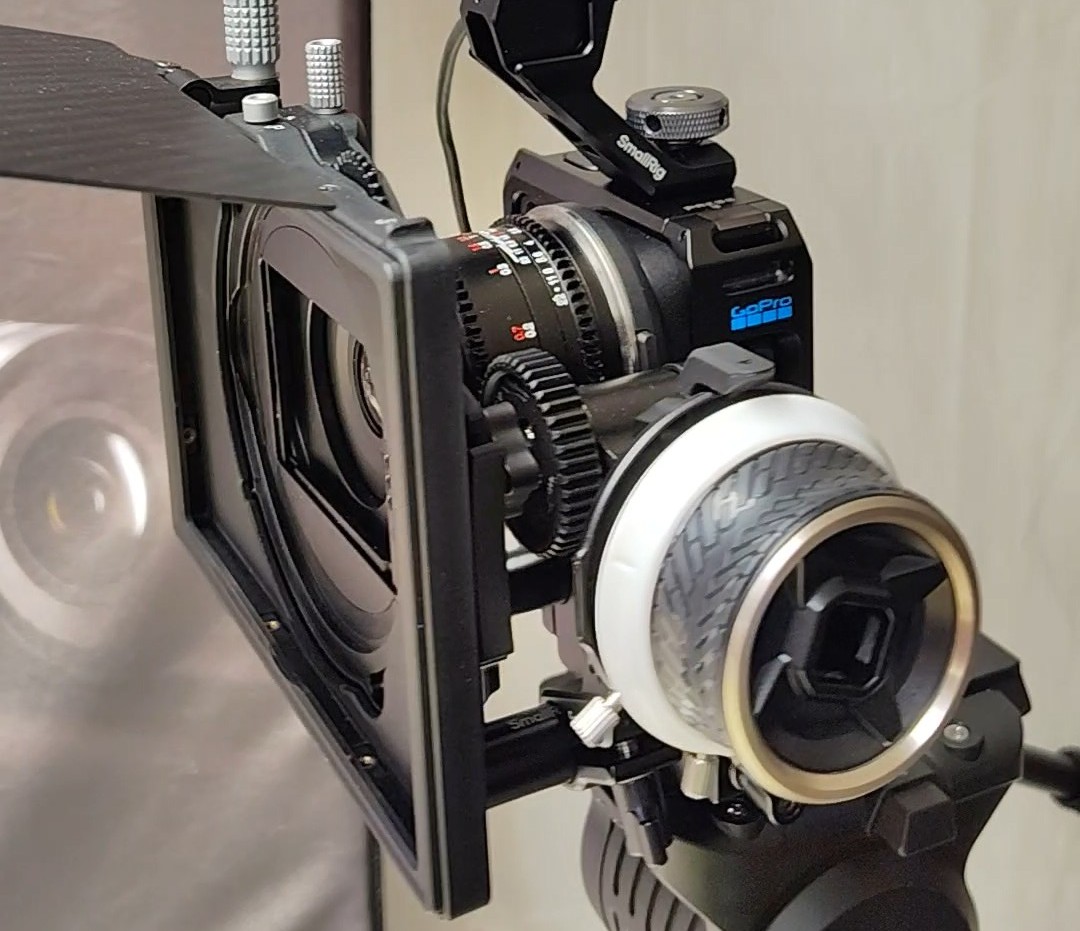
GoPro brought its Mission 1 series action cameras to Cine Gear LA 2026, which was held on June 5-6, 2026, at Universal Studios Hollywood. Many professional filmmakers had the opportunity to go hands-on with the upcoming Mission 1 Pro ILS, which combines a 1-inch 8K sensor with a Micro Four Thirds (MFT) lens mount. The company continues to be shocked by “all the response” the M1P has generated since its launch at NAB 2026.
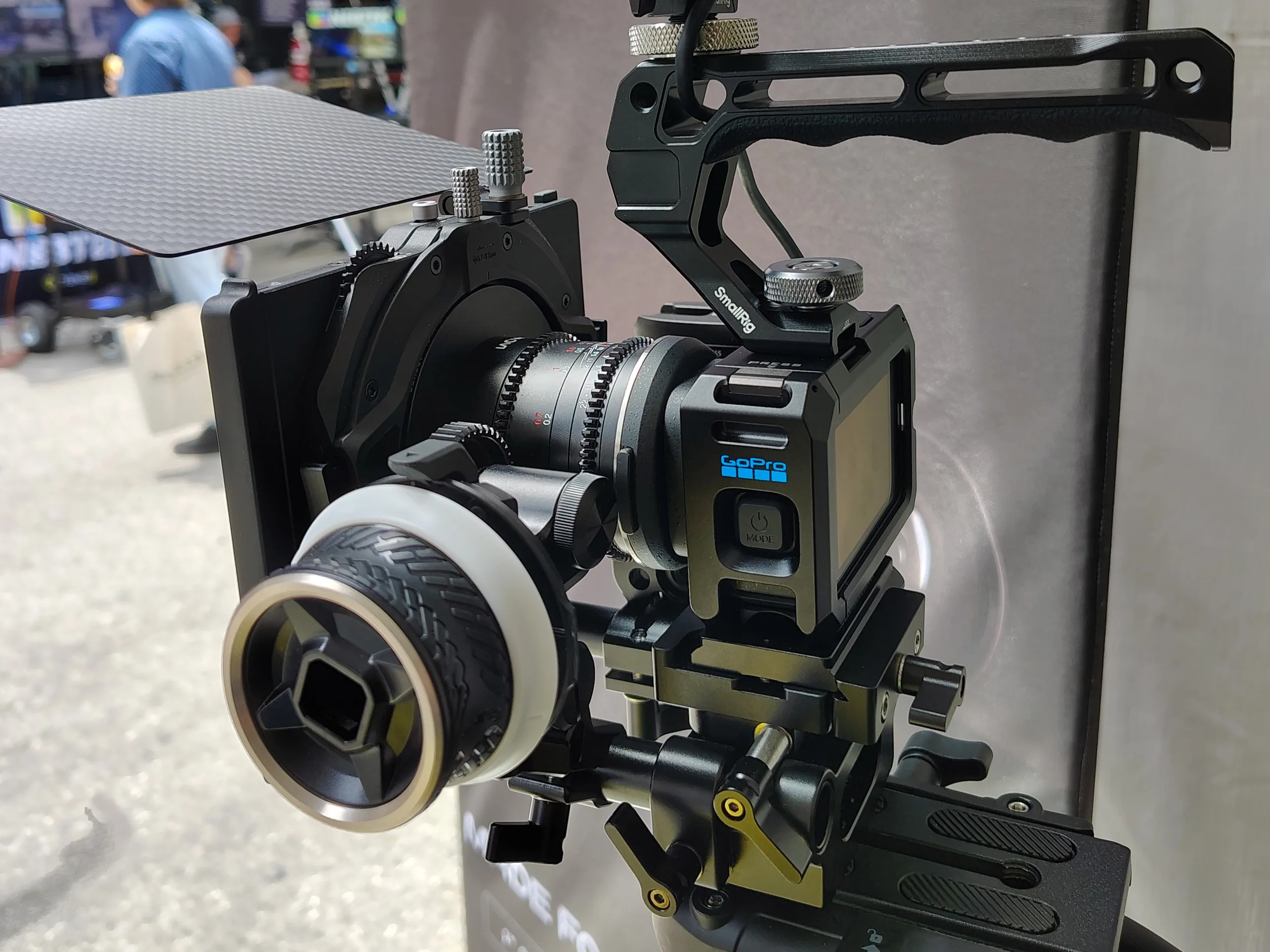
The Mission 1 Pro ILS directly addresses the desire of creative filmmakers for a petite digital camera capable of high-quality imaging, with the flexibility and look offered by a variety of lenses. All lenses are operated manually, but owners can use third-party lens accessories to add features such as LiDAR auto-focusing, a representative noted.
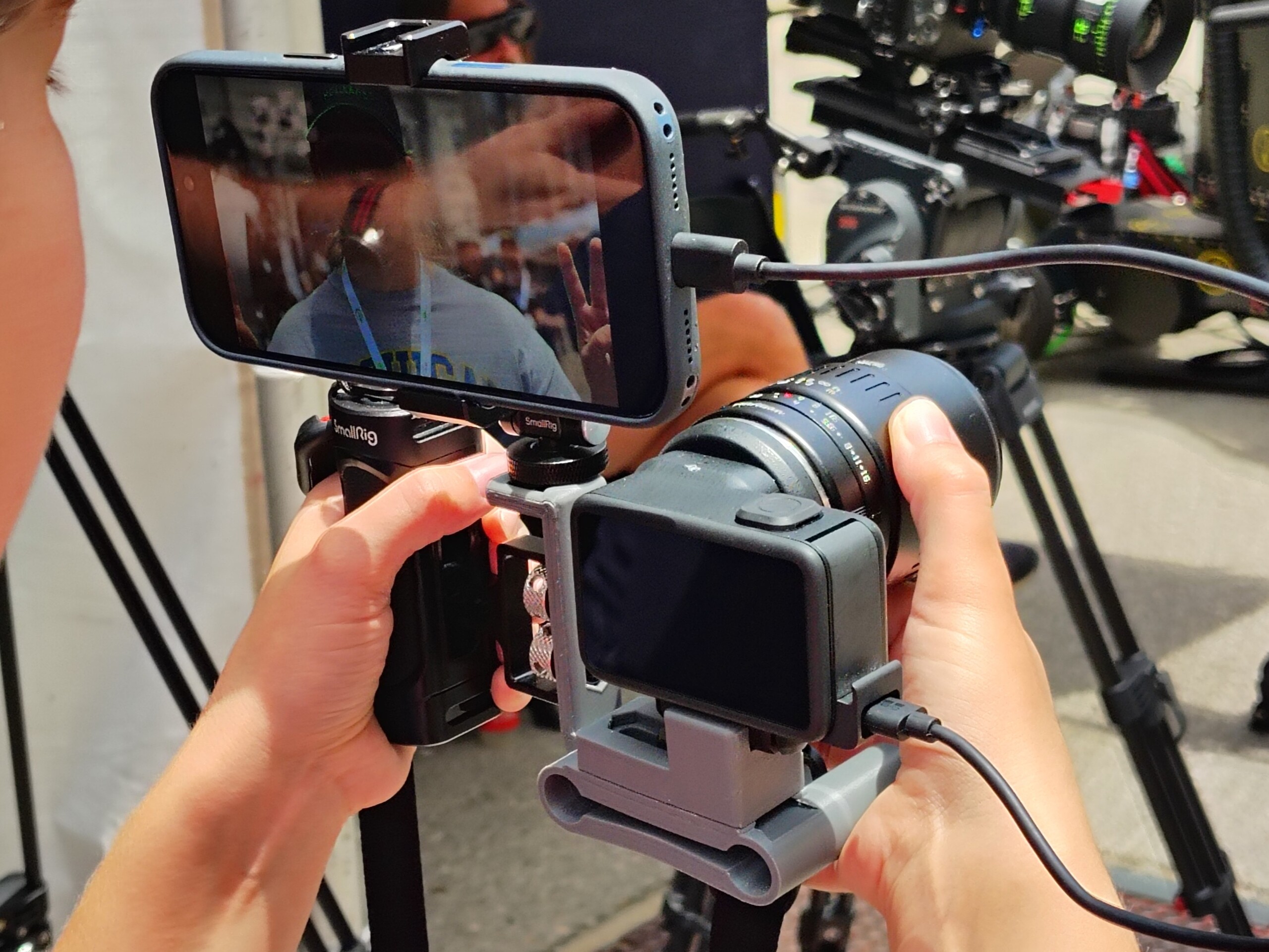
One M1P ILS was paired with a TTArtisan APS-C 40mm F2.8 macro lens (sold here on Amazon) and a left-hand Small Rig grip mounted to a 3D-printed base, with a USB-tethered smartphone on top as a monitor. This package was surprisingly lightweight, especially after handling the many other larger cameras showcased at the expo, such as a Canon C50 mounted to a 24mm RF Prime cine lens.
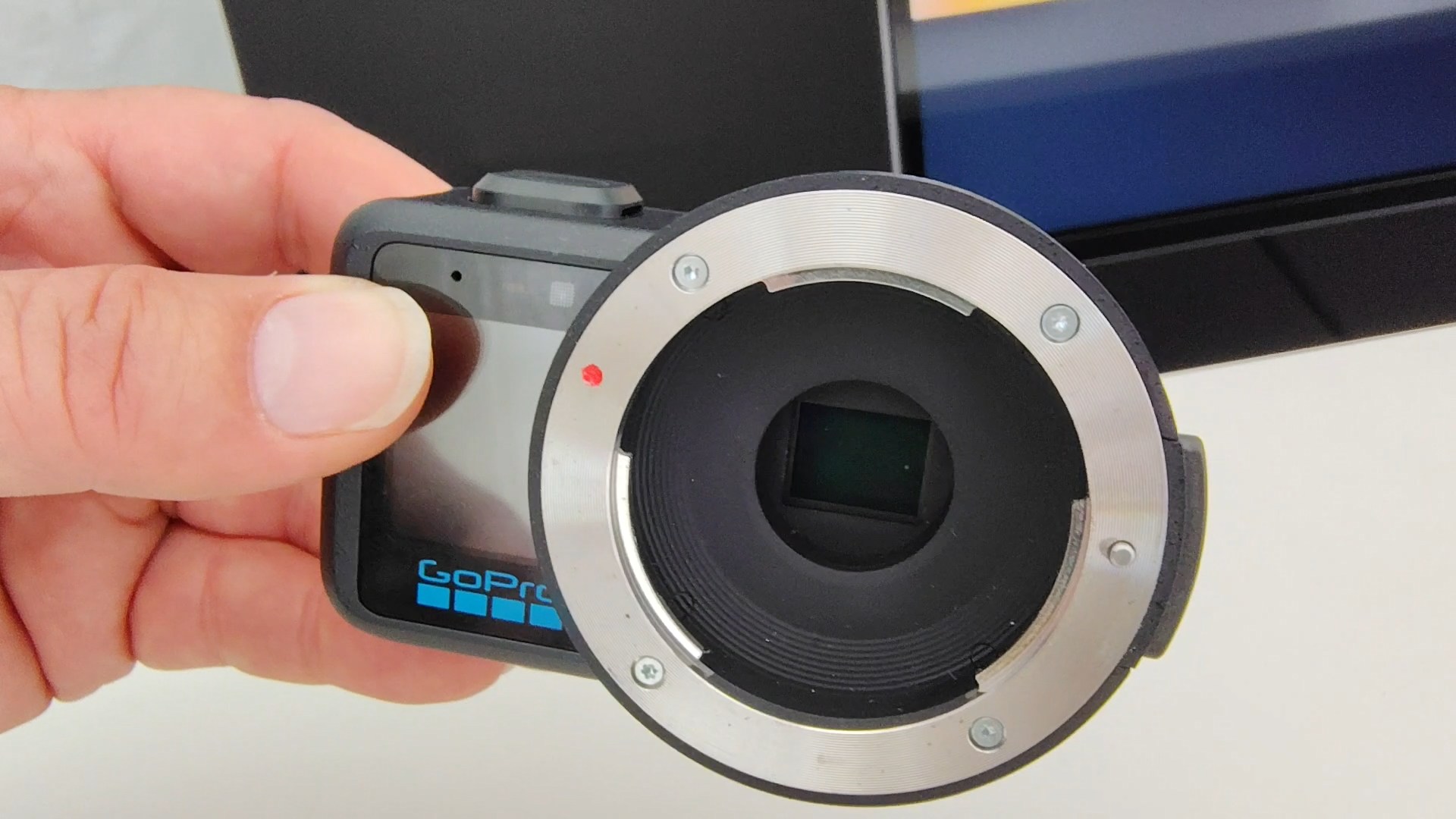
The 1-inch sensor is similar to Super 16 film in size and captures much more light than previous GoPro sensors. It supports open gate capture using the full width and height of the sensor in 8K 4:3 at up to 30 fps. The open gate capture not only matches the IMAX format better, but can be used with anamorphic lenses to output 2.40:1 footage.
When recording 16:9 videos, the camera can capture 8K at up to 60 fps, 4K at up to 240 fps, and 1080p at up to 480 fps. Importantly, when recording 4K at 60 fps or slower in 4:3 or 16:9, the Mission can utilize Dual Gain Readout of the sensor’s native 1.6 µm pixels while combining them in Quad Bayer mode to obtain up to 14 stops of dynamic range from the 50 MP sensor with reduced noise levels. Digital stabilization can also be applied.
When the lens is removed, the sensor is exposed to the environment. Since it does not have an ultrasonic dust removal mechanism, filmmakers will need to take care to avoid unnecessary dust exposure.
As shipped, videos can be recorded using a custom-developed 10-bit 4:2:0 GP-Log2 profile at up to 240 Mbps to H.265 (HEVC) files, but the representative noted alternative recording methods can extend that to 300 Mbps. MicroSD cards with a v30 or UHS-3 rating are recommended, and the camera will automatically benchmark the maximum transfer rate of each storage card to avoid dropouts during recording.
Another M1P ILS was paired with a Laowa 17mm T1.9 MFT Cine lens (sold in this bundle on Amazon), follow focus, matte box, and lens filter holder mounted in a SmallRig cage (sold here on Amazon), with a USB-connected smartphone on top as a monitor.
The Laowa produced a very cinematic image, with crisp focus highlighted with zebra patterns on the smartphone, and beautiful bokeh when defocused. The follow focus immediately felt great and no adaptation was necessary to pull focus quickly and slowly. When fully defocused, highlights flared to reflect the shape of the hexagonal iris organically. The live feed on the smartphone can be pinch zoomed to verify focus and check details.
A quick tap of the smartphone or Mission 1 touchscreen brought up a slew of settings, including quick access to LUT presets. Users can select from dozens of presets or create their own custom LUT, however there are no LUTs specifically matching motion picture films such as Kodak Vision3 250D.
The color technology along with the app will be in constant development until the M1P ILS is released, with app features such as LUT and preset control, auto subject framing, and zebra overlays to be added and refined.
For sound, the M1P ILS comes with 4 built-in microphones capable of recording 32-bit float audio for clip-free recordings in most extremely loud situations. Bluetooth and USB-C microphones can also be connected, and the camera can record up to three audio tracks simultaneously.
Social media creators who want something more action-oriented might consider the Mission 1 Pro (sold here on Amazon), which uses the same 1-inch sensor as the M1P ILS coupled with a 15mm wide-angle lens, allowing it to be used down to 66 ft. (20 m) underwater out-of-the-box.
Source(s)
 Add as a preferred source on Google


