




Free open-source audio editor lets AI agents cut and rearrange tracks, with edits kept undoable
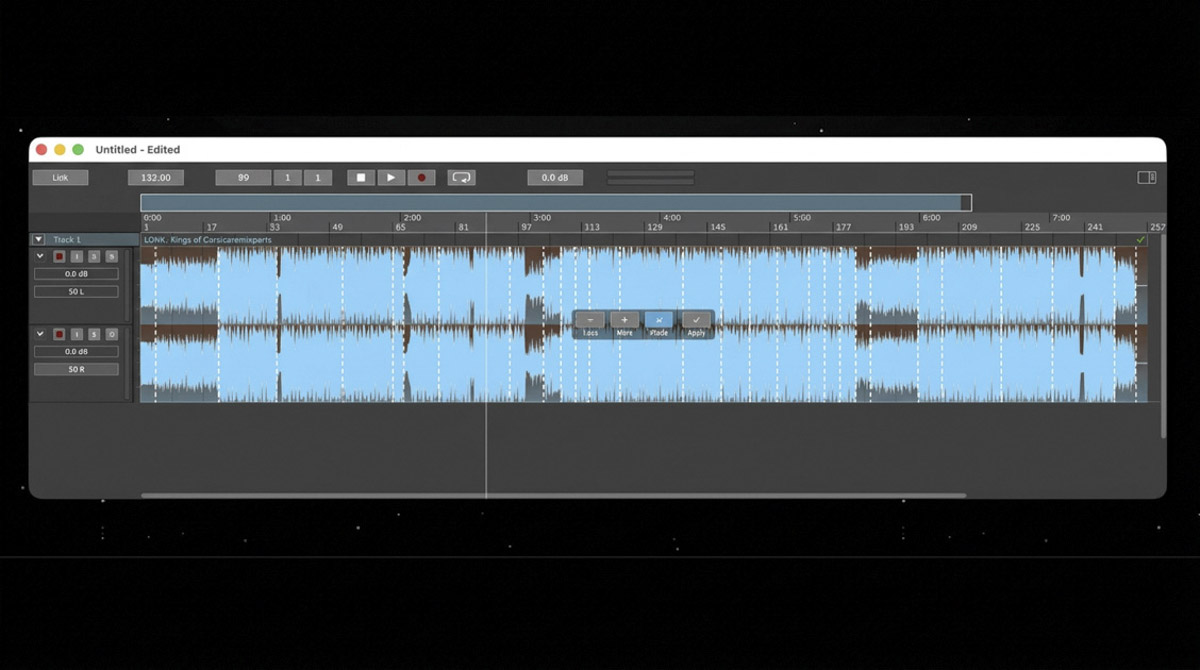
Audionaut, a free open-source multitrack audio editor for Windows, macOS and Linux, is putting an unusual constraint around AI-assisted editing: when an agent changes a project that is already open in the application, the resulting edit can be reversed through the editor's normal undo system.
The agent functionality is the project's most recent feature, according to the developer's October 2 Show HN post. Audionaut itself has been under development for several years, so the application is not a brand-new project.
Agent control is provided through the Model Context Protocol (MCP). According to Audionaut's documentation, its MCP server exposes the editor's command-line operations as tools that compatible agents can invoke. These include importing and exporting audio, analysing clips, splitting and moving clips, changing gain and fades, adjusting clip speed, assembling arrangements and separating stems.
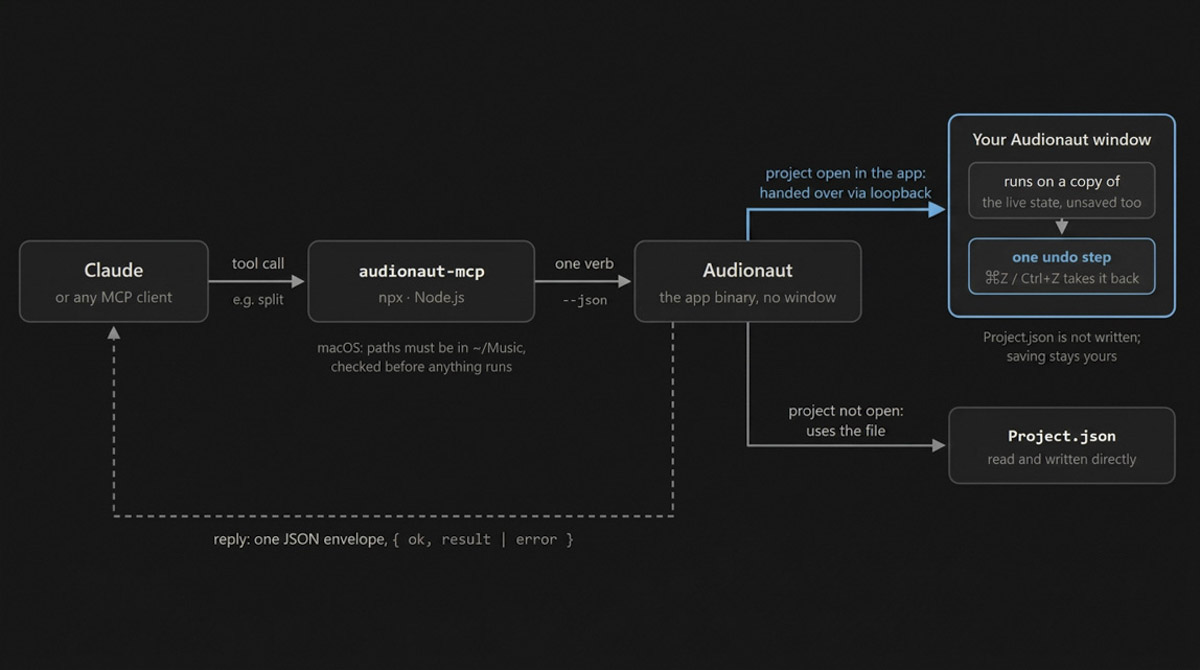
The more unusual part is what happens when an agent works on a project that is already open. Audionaut says an agent command works from the project’s current in-app state, including unsaved changes, and the resulting edit is then added to the normal undo history. The project file is not automatically written in this workflow, leaving the user to decide when to save it.
Human edits are also given priority. If the user makes another change before an agent command finishes, the documentation says the agent result is dropped and a retry is requested instead of overwriting the newer human edit. Commands are refused while recording, while exports are refused during playback.
The project has also drawn feedback on Hacker News. One user who said they had tried Audionaut for a few minutes suggested additions including easier file importing, automatic crossfades, envelopes and effects. The developer said several of those suggestions had been added to the project's backlog. These comments are anecdotal rather than evidence of Audionaut's overall performance or adoption.
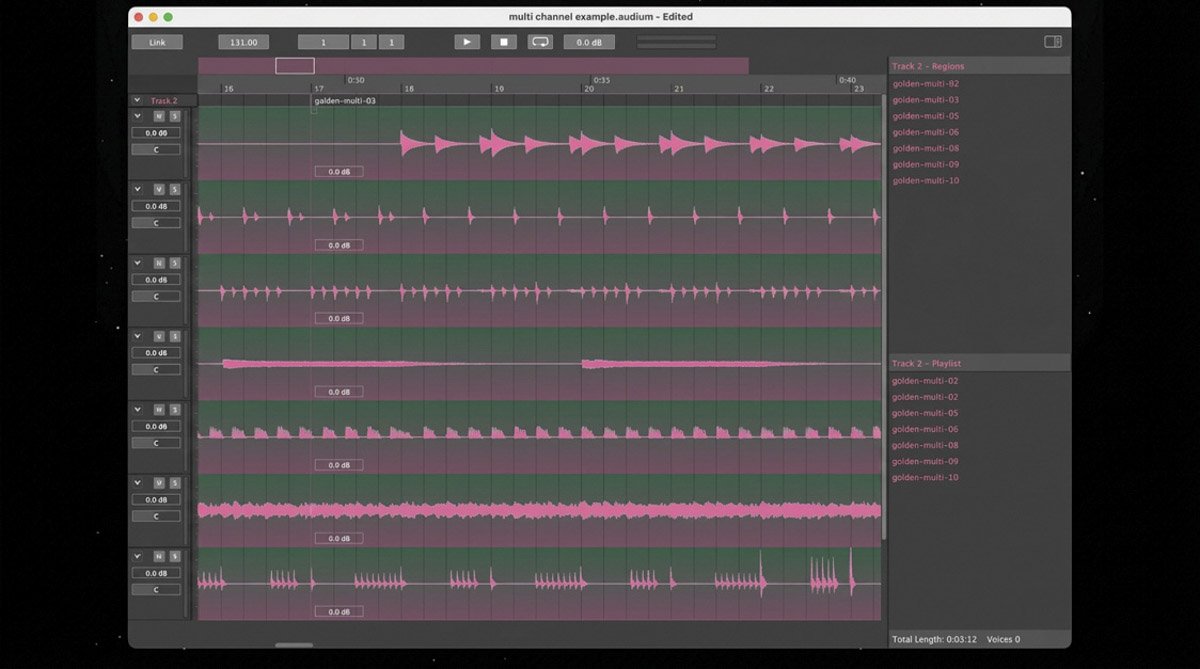
Agents can also invoke Audionaut's stem-separation function. The project's stem-separation documentation says it uses Meta AI Research's htdemucs model through demucs.cpp to turn a selected mono or stereo clip into four tracks: Drums, Bass, Other and Vocals.
According to the documentation, the separation model requires a one-time download of around 80 MB, after which the processing is carried out locally on the user’s computer. Audionaut says the entire separation is treated as one edit, meaning one undo operation removes all four newly created tracks. The current implementation processes clips of up to ten minutes and performs the separation on the CPU.
This does not establish that Audionaut's agent-generated edits or stem separation are better than those of other audio tools, and the developer notes that automatically produced results can still require manual editing. What distinguishes the implementation is the way agent operations are integrated into the editor's existing project and undo system rather than being treated as irreversible external changes.
Audionaut is available as free open-source software. Its official website provides builds for Windows, macOS and Linux, while its source code is available through the project's GitHub repository.
 Add as a preferred source on Google


