




OpenAI launches Dots, always-on AI workers with their own cloud computers

OpenAI has introduced Dots, a new type of AI agent designed to handle complex, multi-step tasks independently rather than simply respond to user requests. Each Dot gets its own cloud computer, browser and access to connected applications, allowing it to continue working on projects even when the user is away.
The idea is to move beyond the familiar chatbot model, in which users must keep prompting an AI in a single conversation. OpenAI says a Dot can take responsibility for a project, work on several tasks at once and return with completed work, questions or requests for approval.
Dots are powered by GPT-6 Astra and can connect to more than 4,000 applications through OpenAI’s plugin ecosystem. Users can interact with their agents through ChatGPT, Slack and Microsoft Teams. They can also speak to Dots by voice. The agents can message users when they need additional information or a decision, while preserving a project’s context across different communication channels. OpenAI envisions Dots as AI assistants that learn a user’s preferences, working style and standards over time.
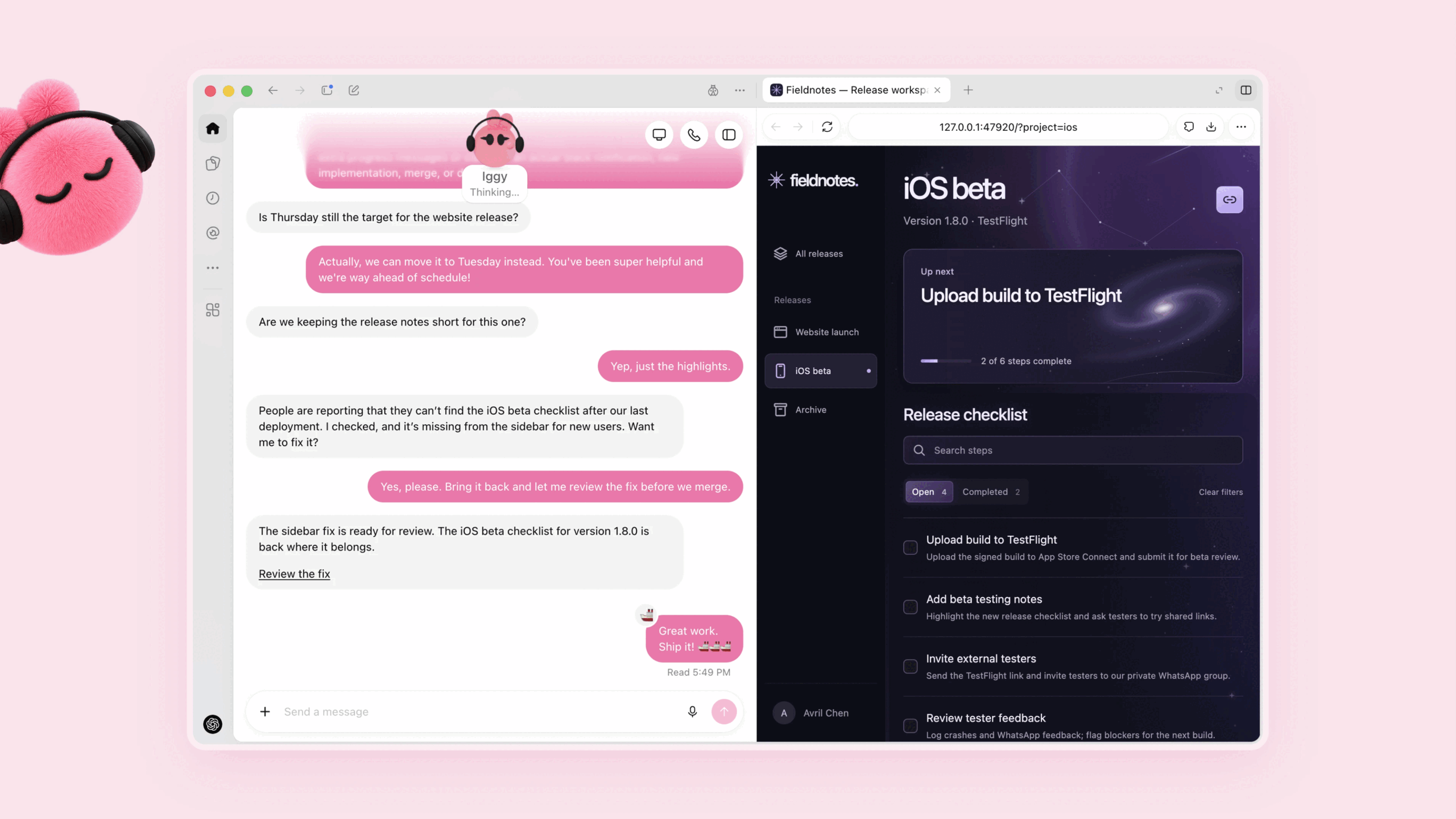
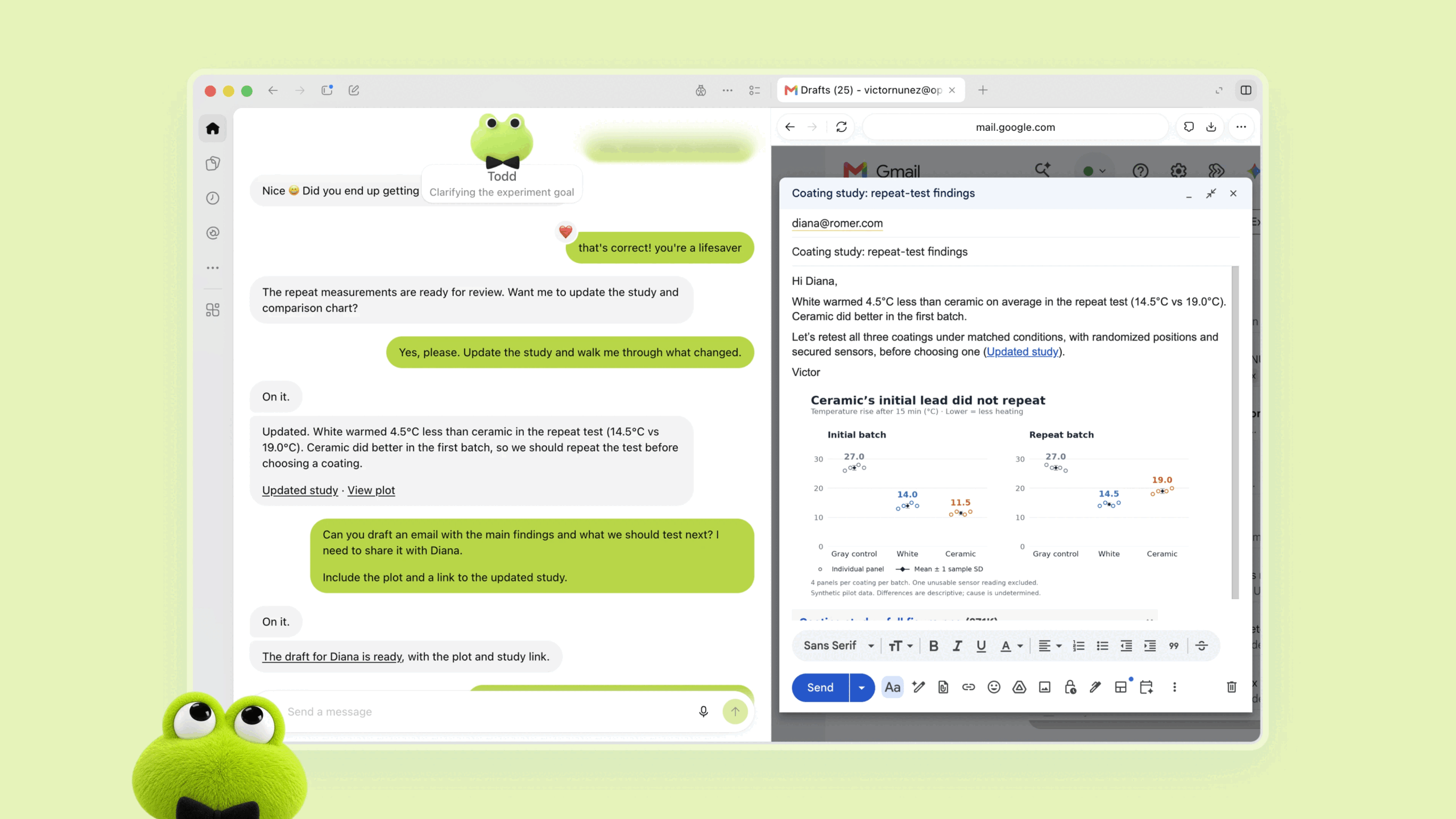
OpenAI provided several examples of how Dots could be used. For developers, a Dot could monitor customer feedback, identify the most common bugs, build and test fixes, then prepare pull requests for human review. For product teams, it could update launch materials as requirements change. Researchers could use it to rerun analyses as new data arrives, while content creators could use it to turn interview transcripts into clips, show notes and social-media drafts.

OpenAI also described a sales-focused use case in which a Dot checks customer requirements, reviews account history, builds a proof of concept for an integration and updates a proposal as the project changes. The company says users should remain responsible for reviewing work and approving commitments.
The defining feature of Dots is their ability to operate independently, but OpenAI says users remain in control of what the agents can do.
Each Dot works in its own cloud-based environment by default. A user’s computer and files remain separate unless they explicitly allow the agent to connect to a laptop. Dots can use saved passwords to sign in to supported websites without exposing those passwords to the AI model, OpenAI says.
When a user is not actively working with a Dot, the agent can conduct what OpenAI calls “proactive research” — looking for useful background work to do. However, this mode is restricted to read-only access: Dots cannot send messages, change content in connected apps or control the user’s browser or computer.
Users choose which applications a Dot can access and can create rules that automatically allow actions, require approval or block them entirely. OpenAI says its system reviews actions that could affect accounts or disclose information, while certain sensitive tasks — such as changing a password — must always be completed by the user.
Alongside personal Dots, OpenAI is previewing “specialist Dots” for organizations. These agents would have dedicated identities, credentials and access to specific company systems, allowing them to take on narrowly defined responsibilities such as procurement, invoice processing, email marketing, customer support and commercial contracting.
OpenAI plans to develop the enterprise version through focused pilots, working directly with companies to set a Dot’s role, tools and approval process. The company is also working with Microsoft to integrate specialist Dots with the governance and security controls in Microsoft Agent 365.
Dots are rolling out today in ChatGPT to Pro and Business Premium users in eligible markets. Enterprise users — including Education and Healthcare workspaces — can try the beta when their administrator enables it. One Dot is included with Pro and Business Premium subscriptions at no extra cost. OpenAI says those plans also include an allowance for more intensive work, with higher limits for the first month after launch. In the future, users will be able to add more Dots and increase either their operating speed or the amount of work they can complete each month.
Source(s)
 Add as a preferred source on Google


No comments for this article
