




New free, open-source video editor update brings offline AI subject masking and pro color scopes
OpenShot 4.0 is out now for Windows, macOS, and Linux, the first major version since 3.5.1 in April. It is still free under GPLv3.
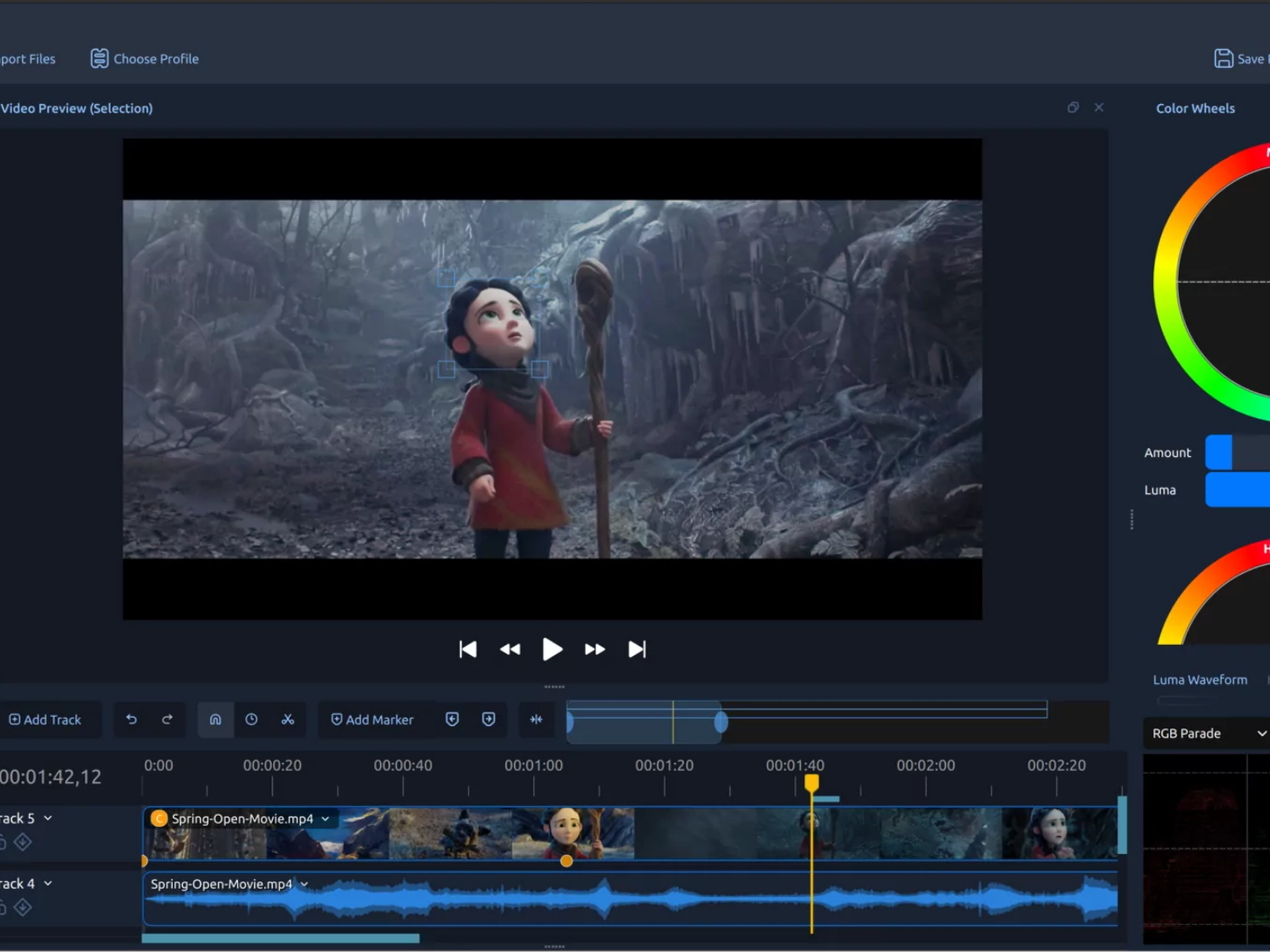
Color View arranges a preview, clip properties, color wheels, and video scopes around the footage. It is driven by a new Color Grade effect covering exposure, contrast, temperature, tint, highlights, shadows, saturation, and vibrance, with separate wheels for global, shadow, midtone, and highlight ranges. You also get four editable curves for the full image and the red, green, and blue channels.
OpenShot reads .cube LUT files and includes an intensity control that blends a LUT instead of applying it at full strength. Every parameter is keyframable. Scopes cover luma waveform, histogram, RGB parade, and vectorscope, each with a region tool for analyzing part of a frame; the vectorscope adds a skin-tone reference line.
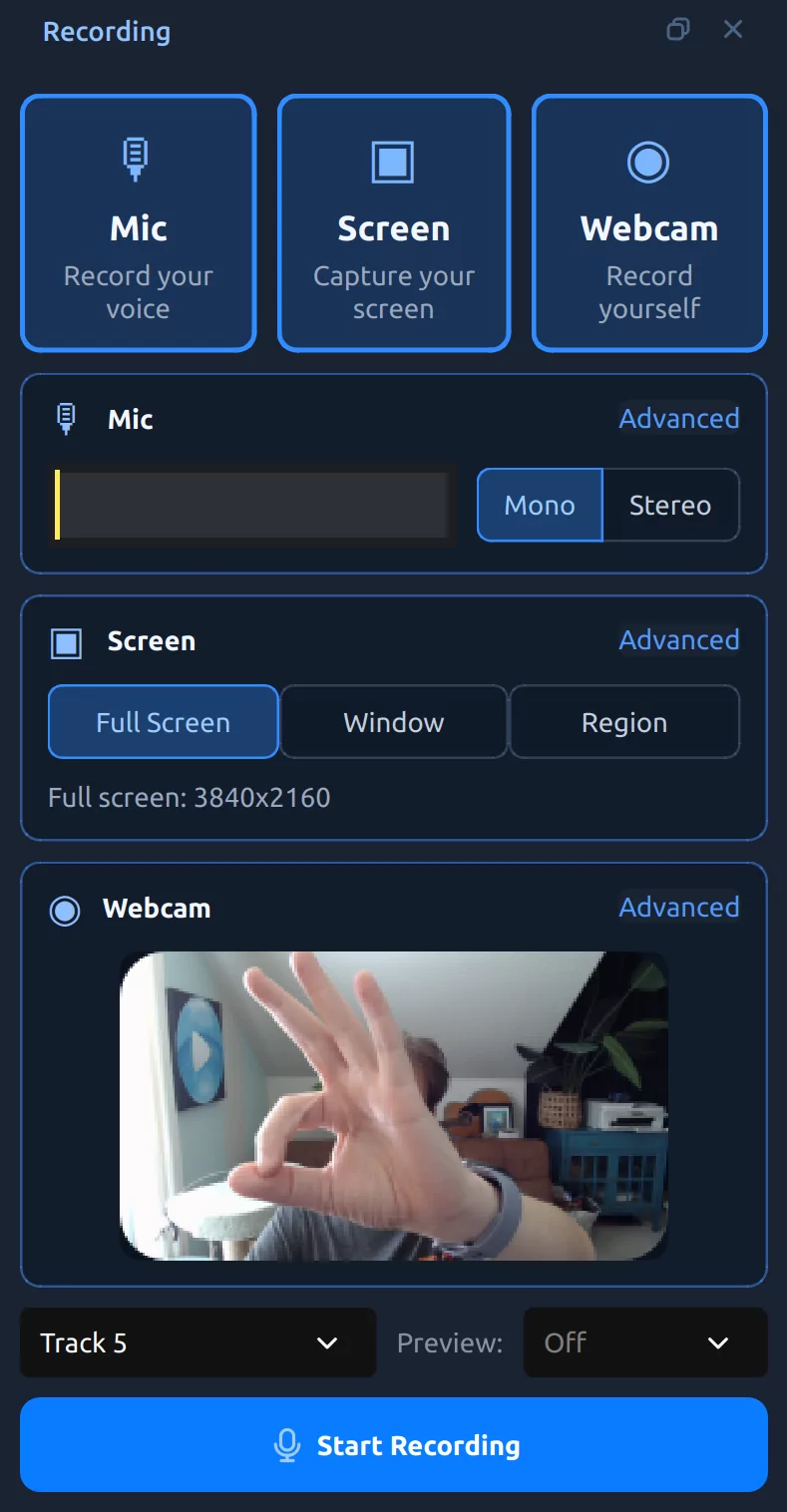
Recording View, on the other hand, captures microphone, screen, webcam, and system audio direclty into a project. It keeps each source as a separate file and timeline clip. Screen and webcam takes can be placed into a rounded picture-in-picture layout automatically. Capture paths are native to Windows, macOS, Linux X11, and Linux Wayland through PipeWire; however, there are options varying by system and permissions.
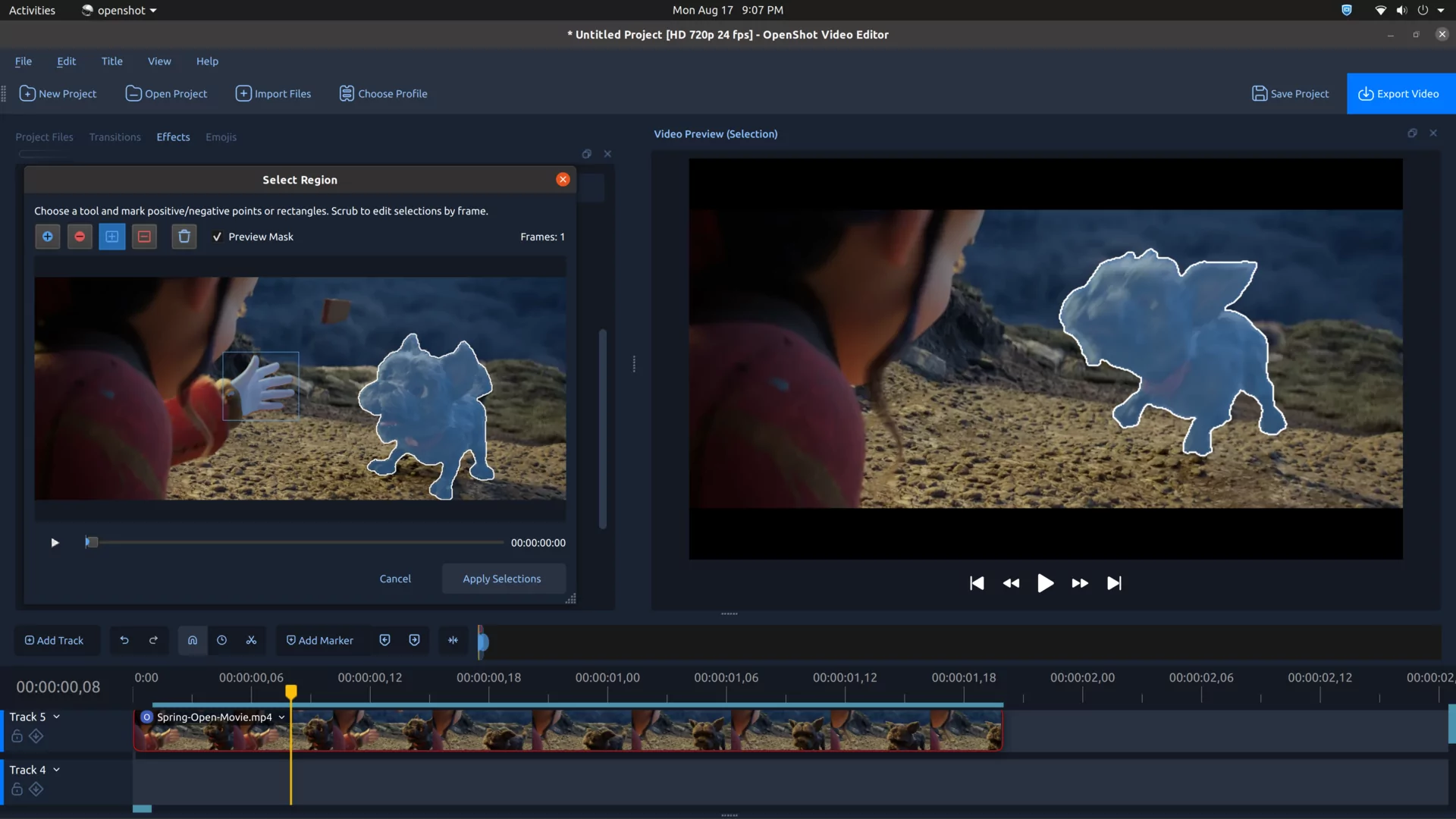
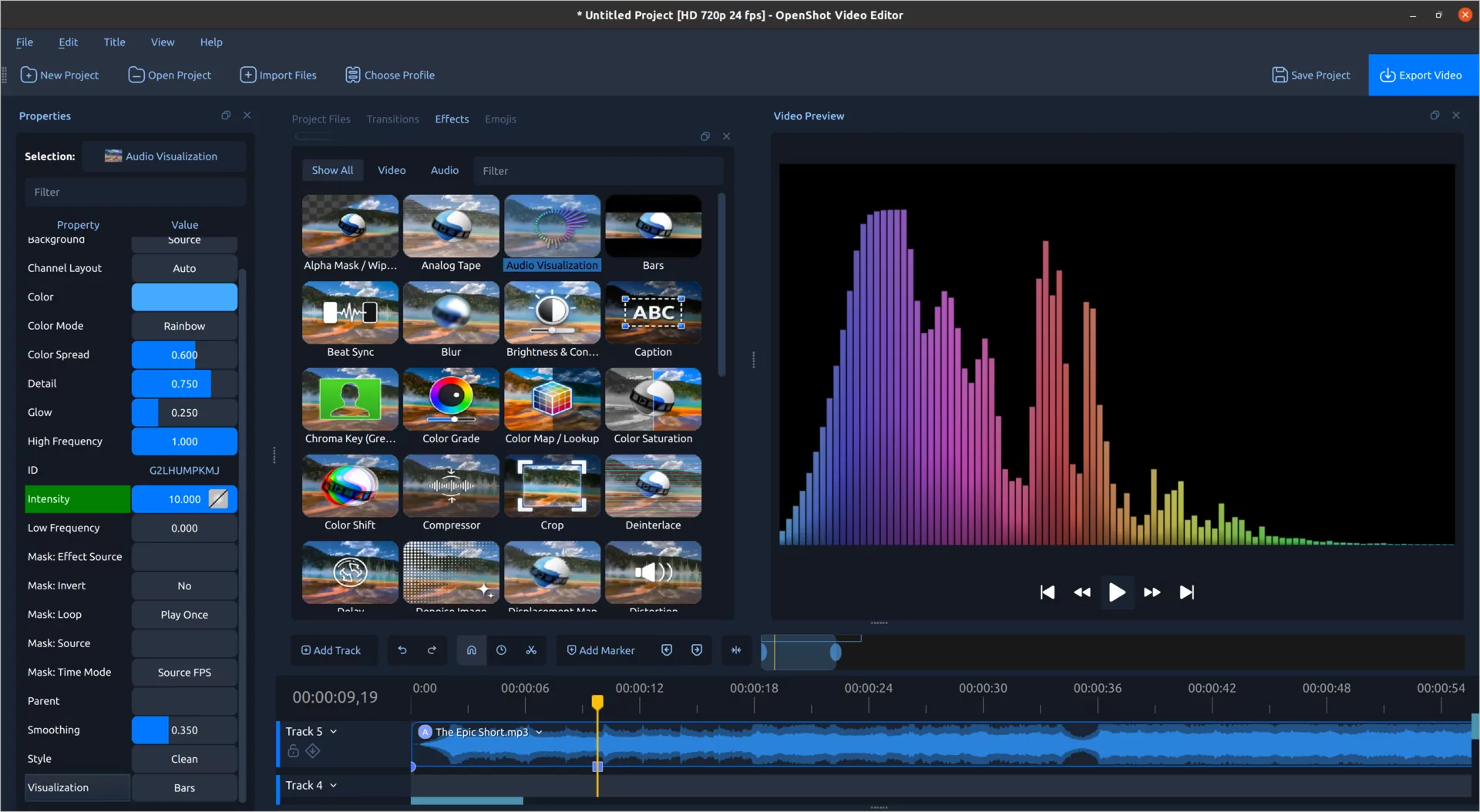
Ten effects are new: Audio Visualization, Beat Sync, Film Grain, Denoise Image, Shadow, Glow, Displacement Map, Timer, Color Grade, and Object Mask. The last of those builds an animated selection around a subject from a few positive and negative points, using YOLO, EfficientSAM, and Cutie networks converted to ONNX and downloaded on demand. All processing happens locally, with no cloud service, account, or subscription involved.
Also, the timeline is now fully native Qt. It replaces the old web-based components, and ruler timecode can be edited directly.
Source(s)
 Add as a preferred source on Google


