




Denuvo added to 007 First Light 6 days before release date, canceling pre-orders

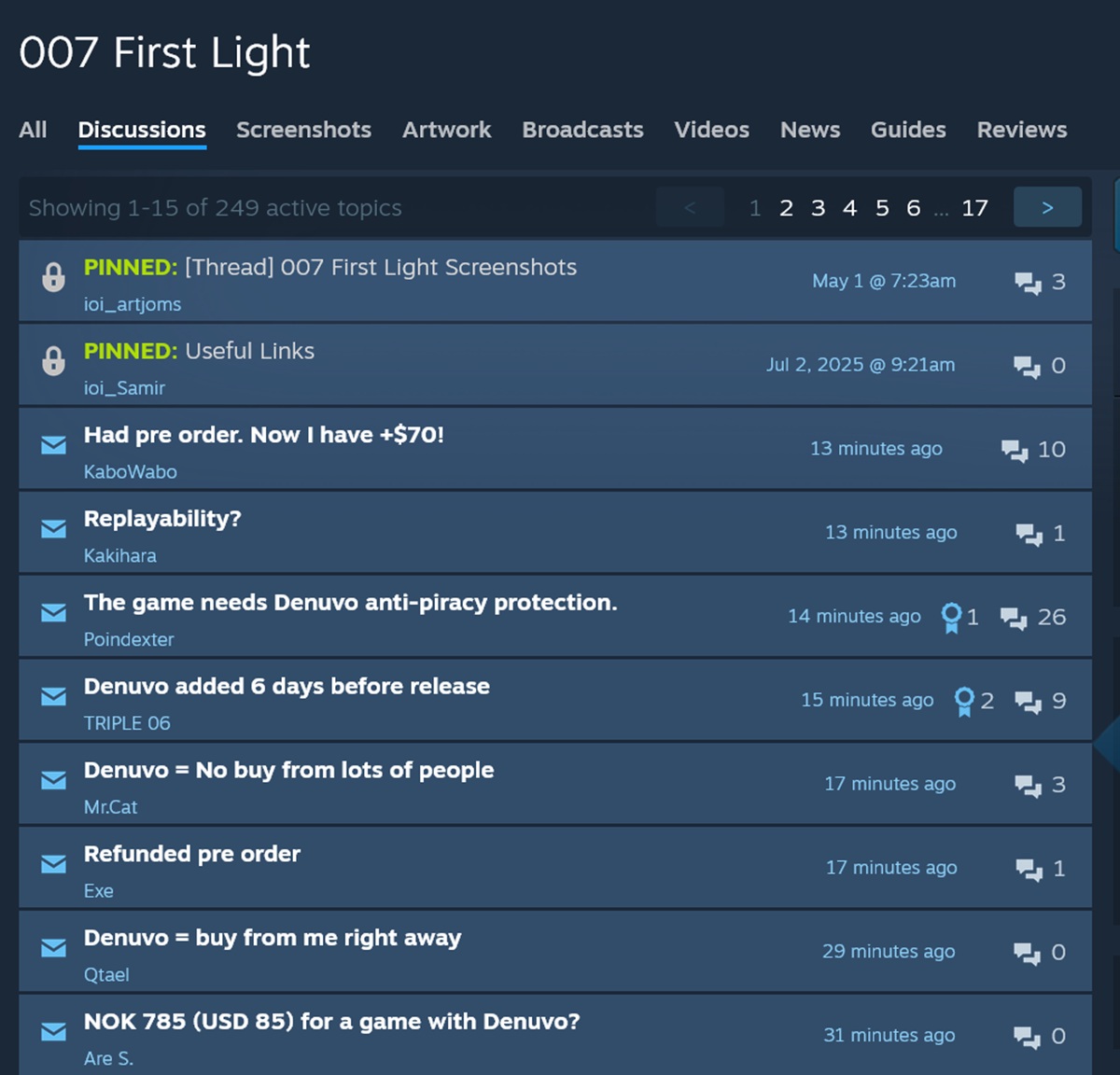
In a growing trend, publishers continue to add Denuvo DRM to Steam games closer to launch. IO Interactive’s upcoming James Bond thriller is the latest example. Just 6 days before the 007 First Light release date, the disclaimer is now visible on Valve’s marketplace.
Delayed Denuvo disclosures
Irdeto’s DRM remains a popular way to curb piracy, even though the hypervisor bypass overcomes the protection. Other recent Denuvo games include Lego Batman: Legacy of the Dark Knight. Its fans learned of its existence about 2 weeks ahead of its debut. Crimson Desert players had less warning in March, prompting outrage.
Not surprisingly, gamers are not welcoming the news on Reddit and Steam forums. Buyers have threatened to cancel 007 First Light pre-orders, which began in September 2025. Critics have concerns about the game's long-term accessibility and intrusive server authentication on PCs.
Another worry is that Denuvo will impact performance. Its effects vary, but marginal differences were detected in Resident Evil Requiem. IO Interactive’s project already drew skepticism when it listed its memory-hungry system requirements. However, after a two-month release date delay, previews highlight optimized visuals.
Even if frame rates are stable, some James Bond fans are allocating their money elsewhere. Posts in the Steam game’s forum condemn the late confirmation of the anti-piracy tactic. Redditors are also upset, with etakarine canceling a 007 First Light pre-order, calling the move “scummy behavior.”
Will Valve change its policy?
One request is for Valve to require publishers to include Denuvo disclaimers before accepting orders. There have been similar complaints about generative AI-related notifications. In several instances, the presence of machine-generated assets wasn’t known until after launches.
Some observers question why companies are still embracing the DRM. By the 007 First Light release date, it’s possible pirates will crack the title. The hypervisor bypass requires disabling certain Windows security settings, limiting its appeal. On the other hand, recent arrivals like Pragmata have seen the protection cracked without needing the workaround.
 Add as a preferred source on Google


