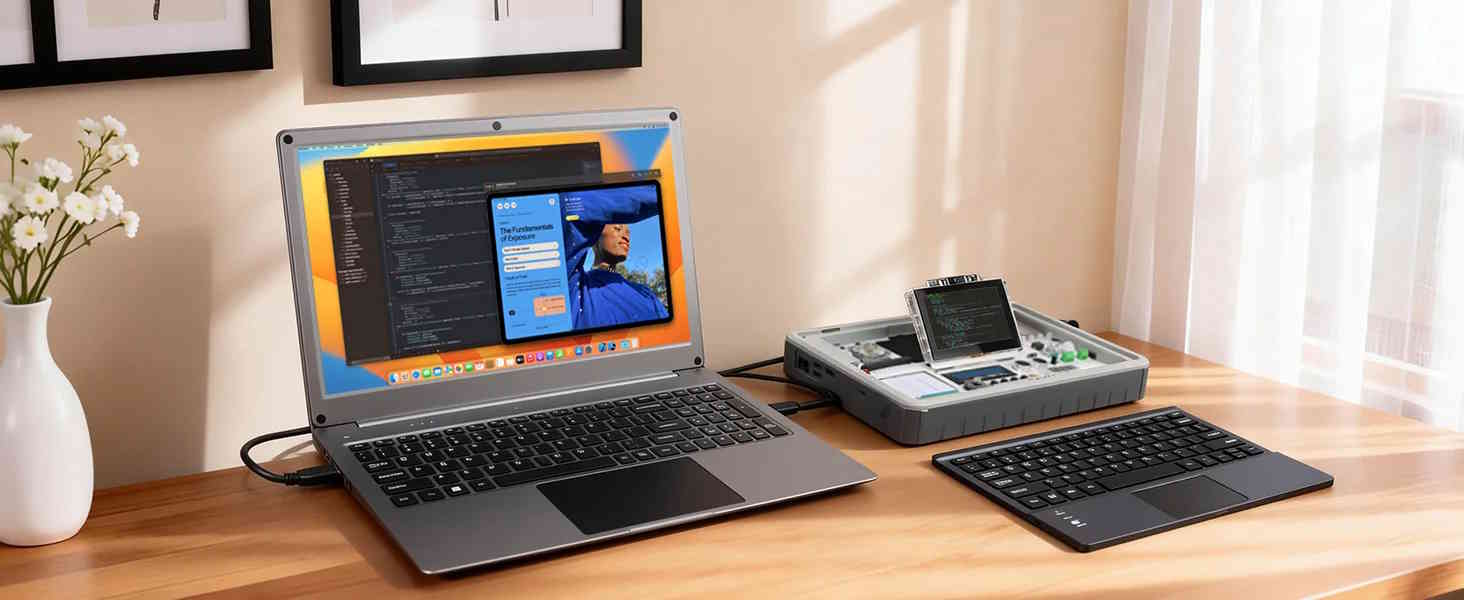
CrowView turns smartphones and mini PCs into laptops with many connections
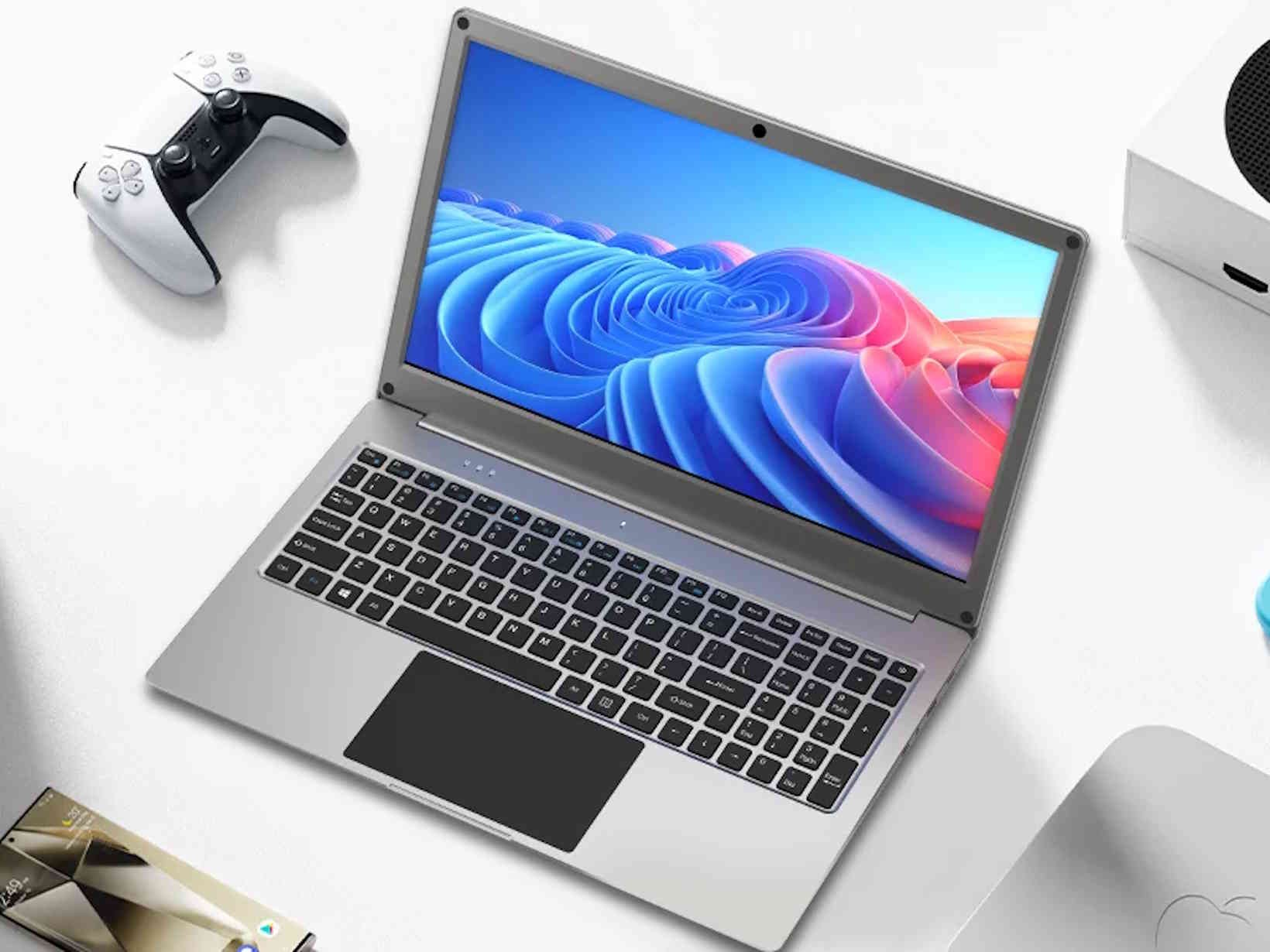
The CrowView Note can be used with various devices. (Image source: Elecrow)
The CrowView Note allows you to easily transform smartphones or other devices into a more or less fully functional notebook at a low price. Such a device could be useful for a highly portable setup.
Elecrow offers systems that can be simply described as laptops without a dedicated processor. The CrowView Note 15.6 is one such model, which connects to a compatible smartphone or a mini PC. This can be used, for example, while traveling, when answering emails or handling simpler tasks without using dedicated Windows or macOS programs, or when users don't want to forgo a (limited) notebook experience.
The device features a 15.6-inch IPS display with a resolution of 1920 x 1080, a 60 Hz refresh rate, and a brightness of 300 cd/m². According to the manufacturer, the sRGB color space is fully covered. It features a built-in battery with a capacity of 6,000 mAh, meaning that the battery of a connected smartphone is not constantly drained.
The keyboard layout is QWERTY, including a numpad and a touchpad. The device can receive both electrical power and image signals via USB-C. There are a total of three USB-C ports and one mini HDMI port. Further ports include two USB-A ports, a jack output, and two speakers. The model weighs 1,545 grams and measures 372 × 244 × 26 millimeters. Further details can be found on the product page.
The CrowView Note 15.6 is currently available from Elecrow for $176.80, not including shipping.
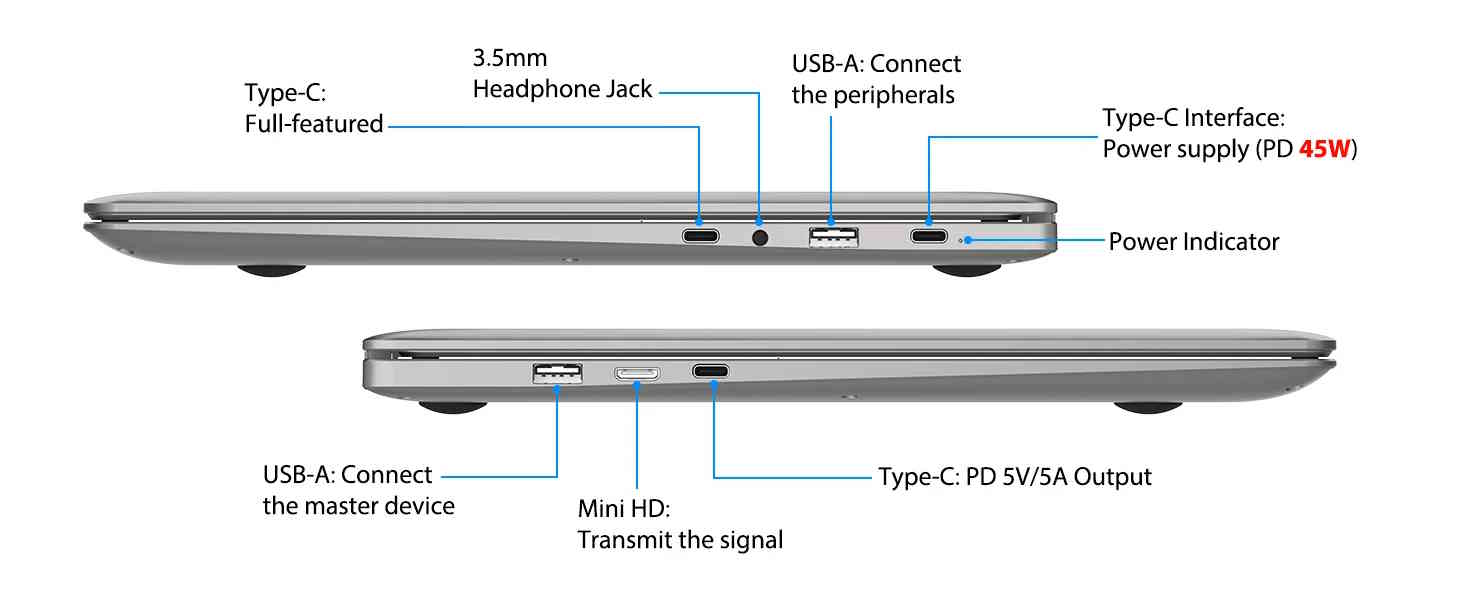
Numerous connections are available. (Image source: Elecrow)Use with SBCs is also possible. (Image source: Elecrow)
Editor of the original article:Silvio Werner - Senior Tech Writer - 16317 articles published on Notebookcheck since 2017
I have been active as a journalist for over 10 years, most of it in the field of technology. I worked for Tom’s Hardware and ComputerBase, among others, and have been working for Notebookcheck since 2017. My current focus is particularly on mini PCs and single-board computers such as the Raspberry Pi – so in other words, compact systems with a lot of potential. In addition, I have a soft spot for all kinds of wearables, especially smartwatches. My main profession is as a laboratory engineer, which is why neither scientific contexts nor the interpretation of complex measurements are foreign to me.
Translator:Jacob Fisher - Translator - 2691 articles published on Notebookcheck since 2022
Growing up in regional Australia, I first became acquainted with computers in my early teens after a broken leg from a football (soccer) match temporarily condemned me to a predominately indoor lifestyle. Soon afterwards I was building my own systems. Now I live in Germany, having moved here in 2014, where I study philosophy and anthropology. I am particularly fascinated by how computer technology has fundamentally and dramatically reshaped human culture, and how it continues to do so.