




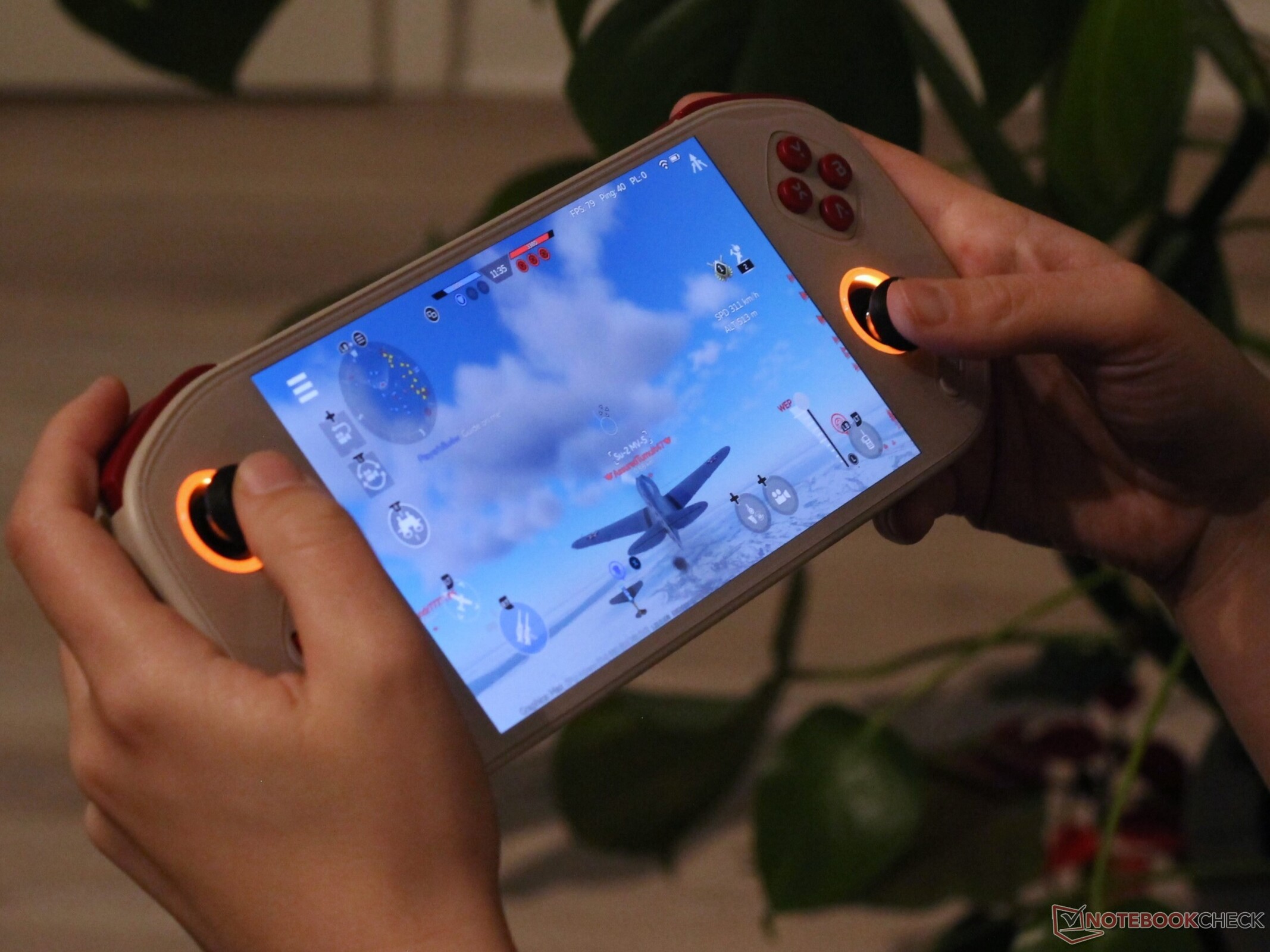
Conclusion: A lot of fun for 200 dollars
With the Pocket Max, the manufacturer Mangmi offers a well-rounded package. Even more demanding Android titles can be played. The manufacturer has also expanded the OS with a very useful sidebar. Compared to the Mangmi Air X, which costs only half as much, the increased computing power is a major advantage, and the 7‑inch AMOLED display delivers a convincing, 144 Hz‑smooth image.
However, we did notice two problems with the Pocket Max: The advertised modularity is limited in practice, with only the directional pad and digipad being interchangeable. If Mangmi had followed this concept more closely, it would have been possible to differentiate it more strongly from competing products. After all, there are quite a few, such as the Odin2 Portal with the Snapdragon 8 Gen 2 for only 50 euros more, or the more compact Retroid Pocket 5 at the same price as the Pocket Max.
Pros
Cons
Price and availability
The Mangmi Pocket Max is available to order starting from February 5. In addition, there are shipping costs of around 20 dollars to be considered; import duties do not usually have to be paid but this will vary depending on where the buyer is.
After the Air X, the Pocket Max is the second gaming handheld from Mangmi. The system is also positioned to compete, at least on paper, with a nominally low price and comes with an AMOLED display and a SoC that is very suitable for emulation and Android gaming, but is already very outdated.
Specifications
Scope of delivery and hardware
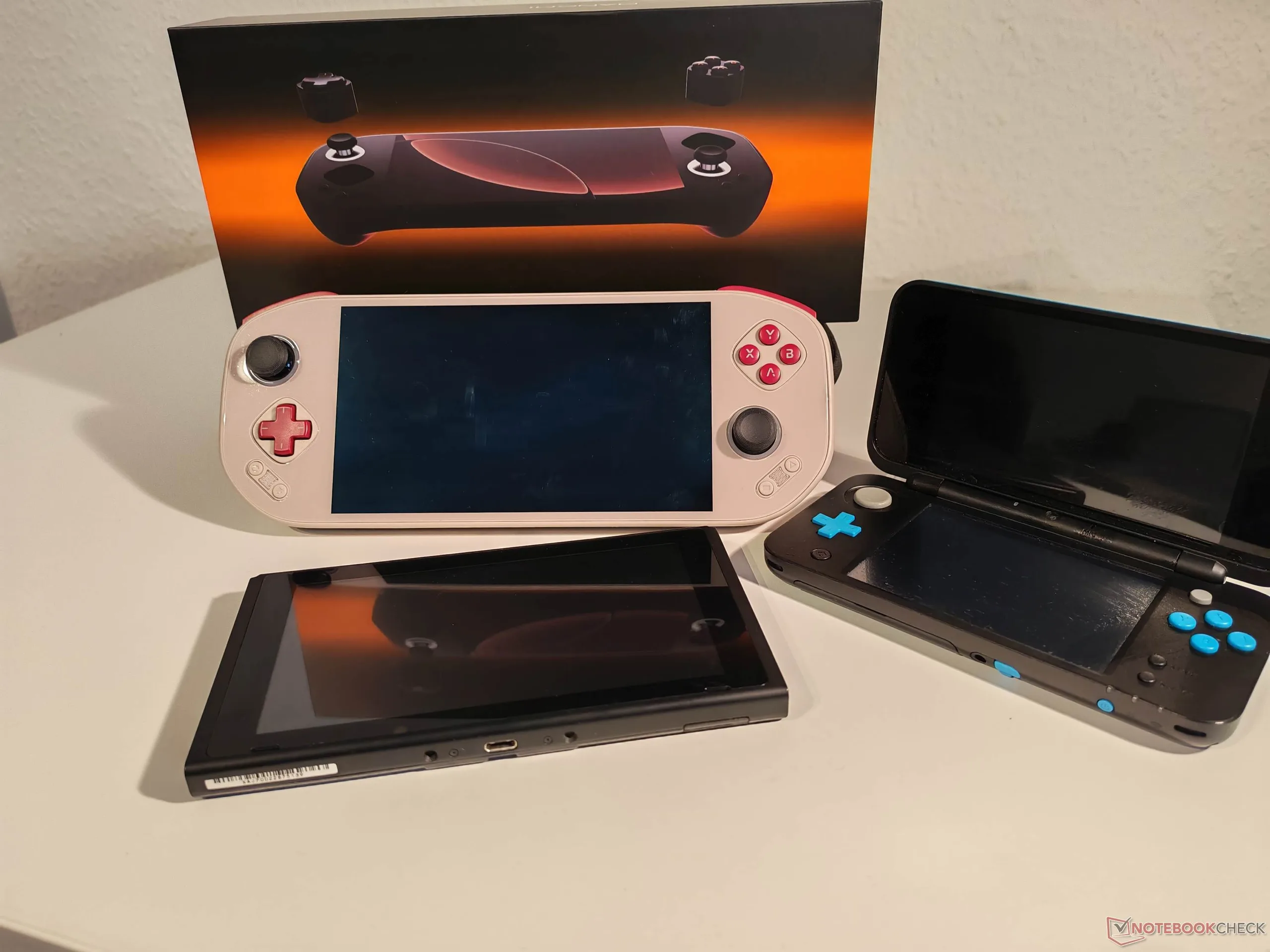
In addition to the gaming handheld itself, our test sample included a suitable case, a protective film covering the entire front and a few alternative input devices - more on the latter later. The case is apparently lined with velour and comes with a small mesh inner pocket, but without an elastic band for the handheld.
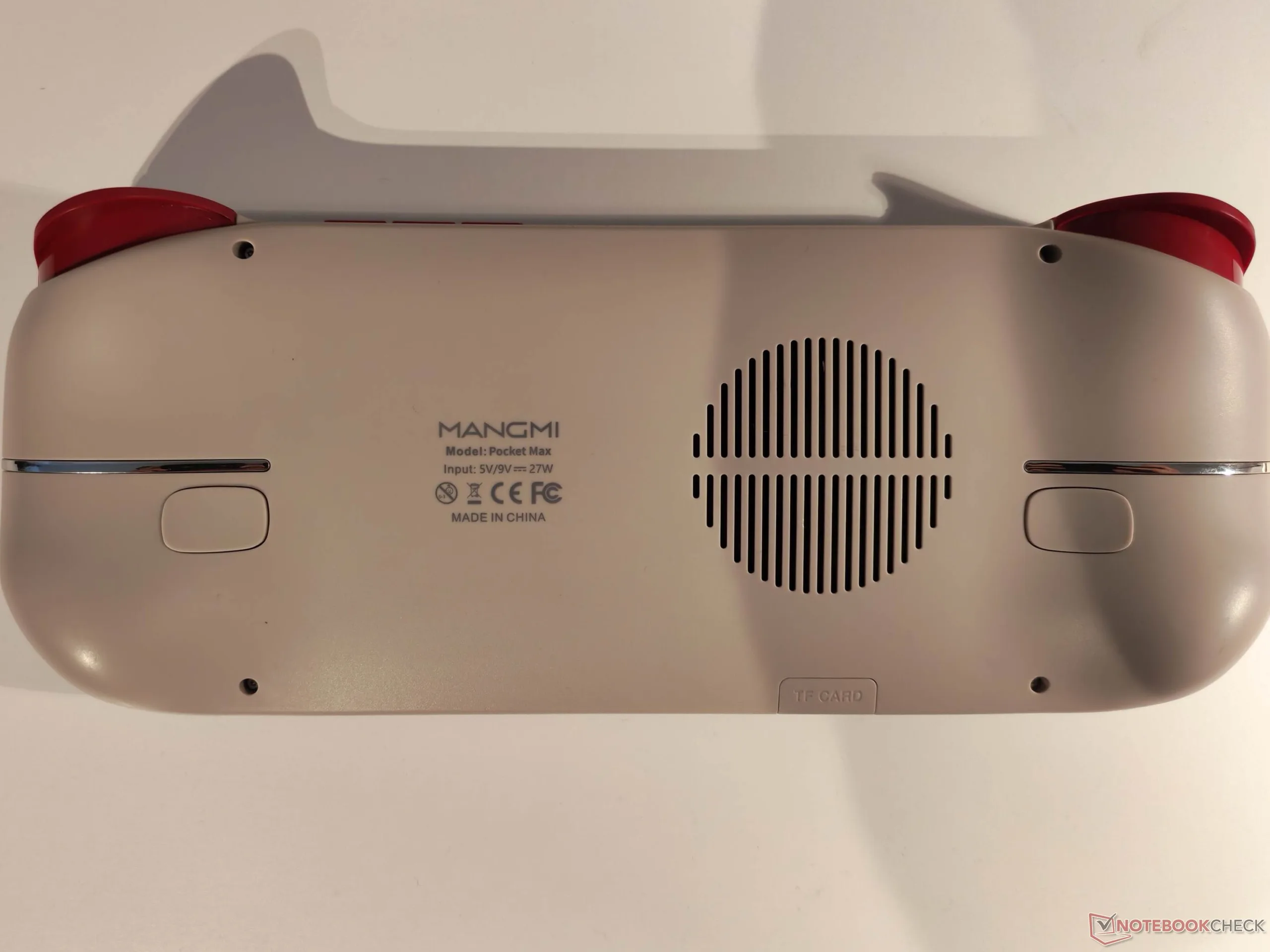
The Mangmi Pocket Max comes with a seven-inch display and is therefore definitely no longer a very compact (retro) handheld. The entire front is at one height and has a glass panel. The back is ergonomically shaped, so there are molded horns on the left and right - which also house the vibration motors. A ventilation grille can also be seen, and there is another grille on the top.
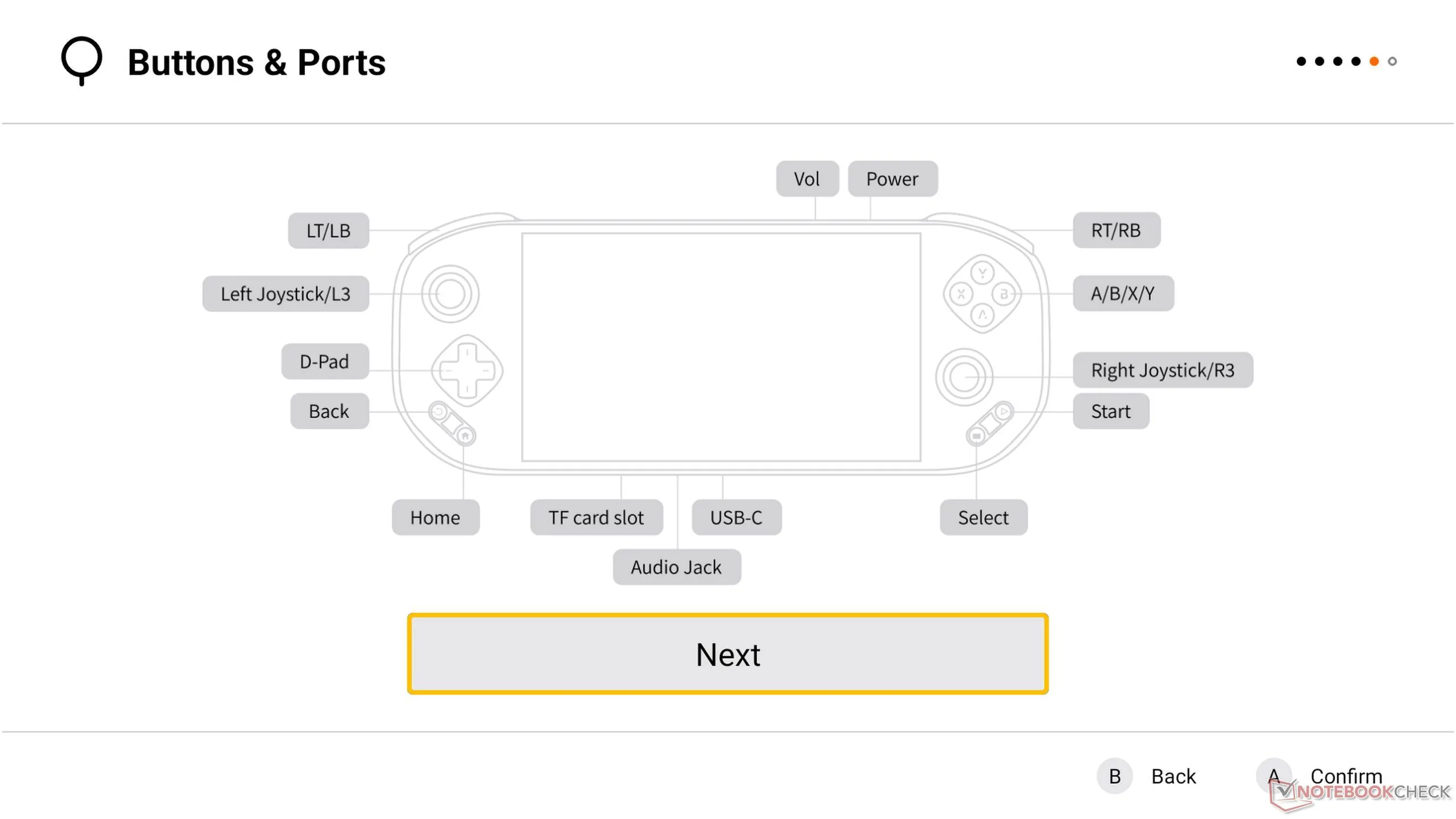
On the back are the two additional buttons, which can be operated easily with the middle finger. The USB Type C port, the jack connection and the memory card slot are located on the underside, next to the microphone. On the top, there are three buttons for switching on and controlling the volume, as well as the shoulder buttons and the two triggers. There is little to complain about in terms of the general workmanship; there are no noticeable gaps. The handheld itself is generally stable (torsionally rigid), so slightly increased force will not cause it to creak or even break. The only thing that could be criticized is the grip: This is solely due to the geometry, but the back is smooth.
AMOLED and a bit of modularity
Two features of the Mangmi Pocket Max are particularly noteworthy: the handheld comes with an AMOLED display and at least partially modular input devices. Subjectively, the presence of the Full HD AMOLED screen definitely represents an improvement compared to an IPS panel. Relatively high brightness levels can be achieved. Due to the technology, the display of contrasts benefits from the stronger black representation. The refresh rate of 144 Hz allows a smooth display in principle, but the SoC must first achieve this - and the corresponding app must support it.
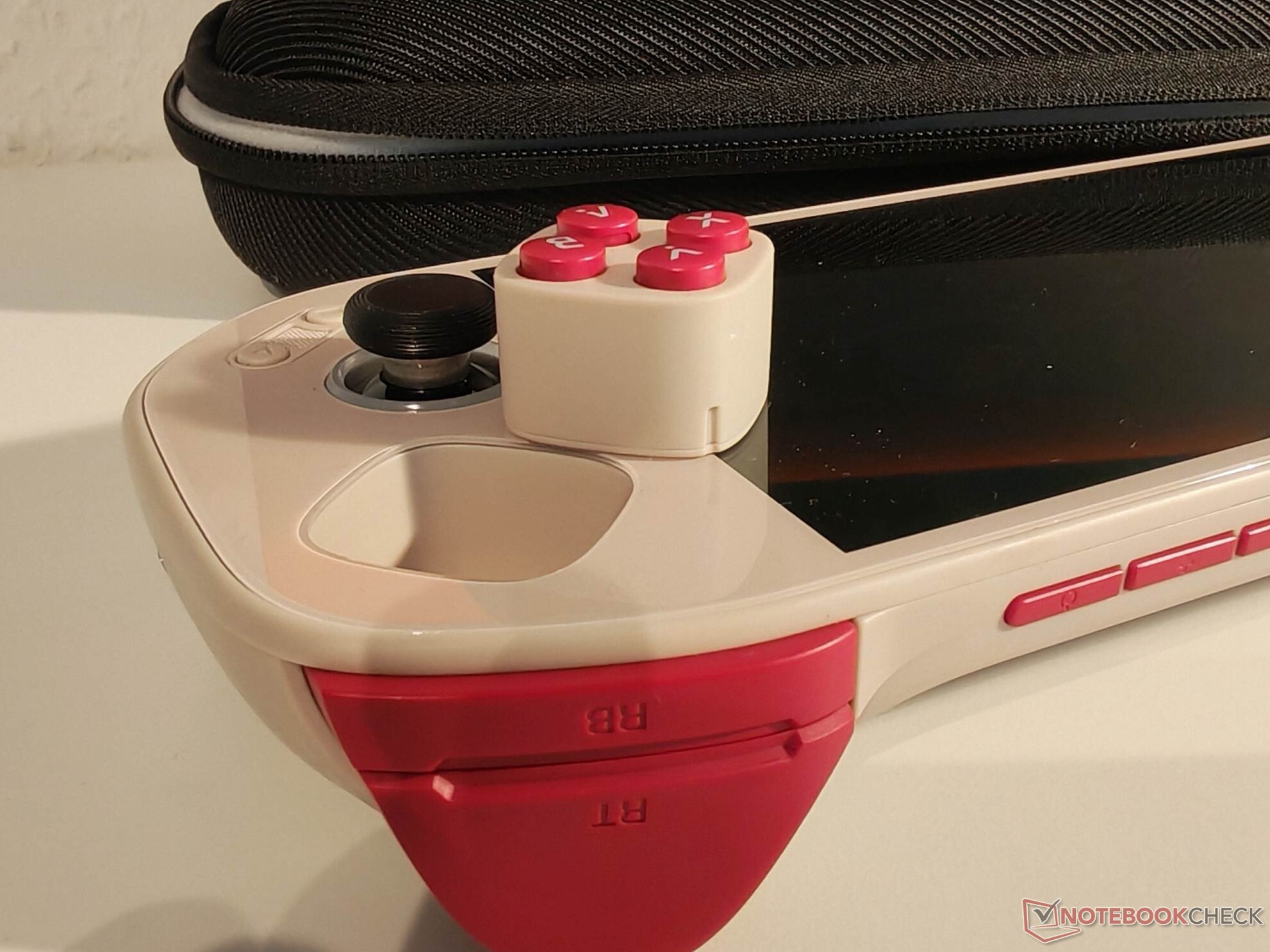
The directional pad and action buttons can be replaced. These are attached magnetically and can be pulled out with the help of very discreet indentations on the side of the directional pad and action buttons. A second pair was already included in the package, but customers had to pay an extra charge for these models, which are based on micro-switches and offer significantly stronger feedback. The idea is basically good, but the control pad and action buttons cannot be interchanged due to the different dimensions of the modules. The modules themselves are relatively compact. Other functional modules with, for example, six instead of four action buttons have not yet been announced. If there really are only different types of buttons available, this would be a bit of a missed opportunity, especially as the joysticks cannot be interchanged.
Installation and software
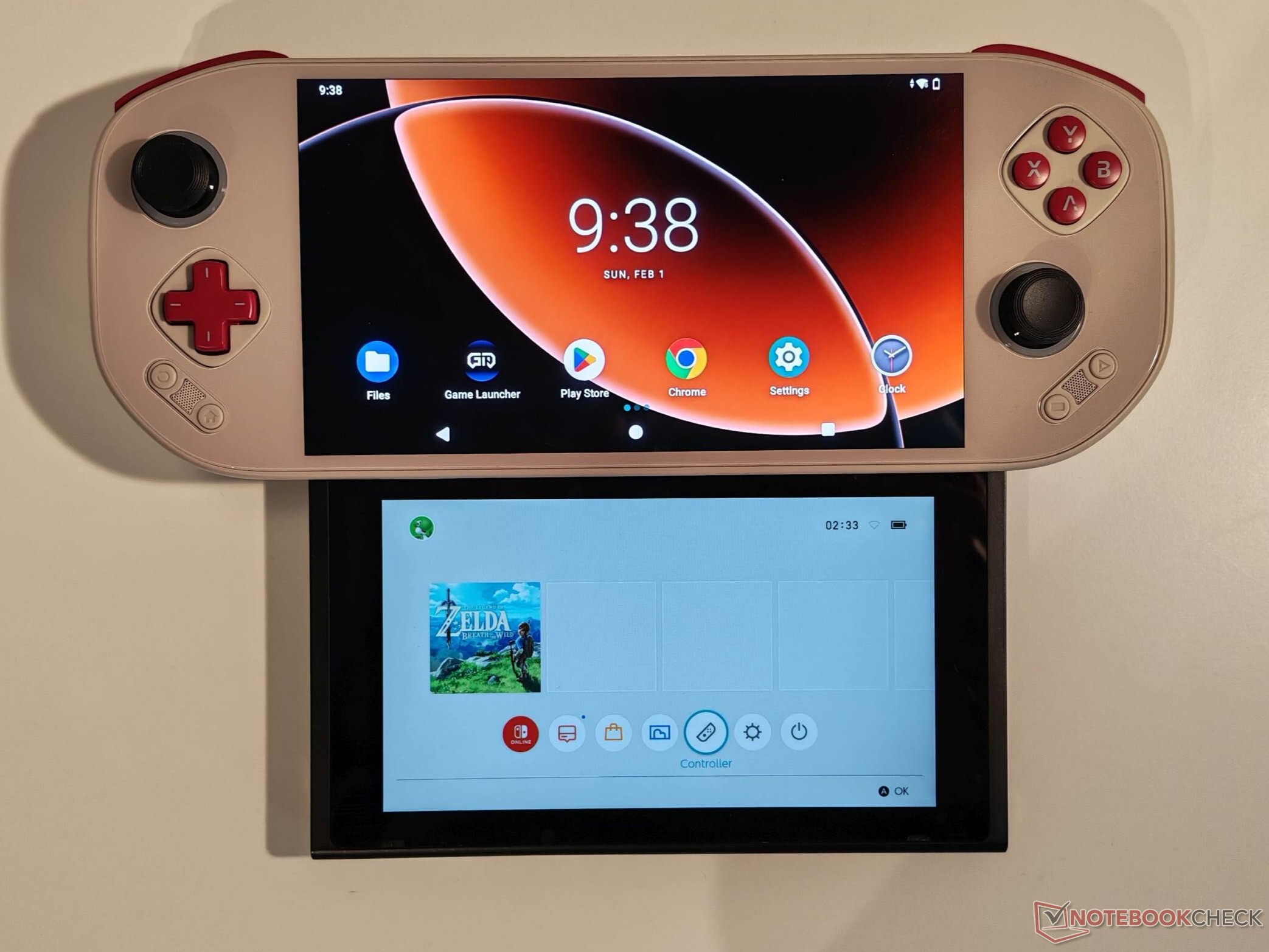
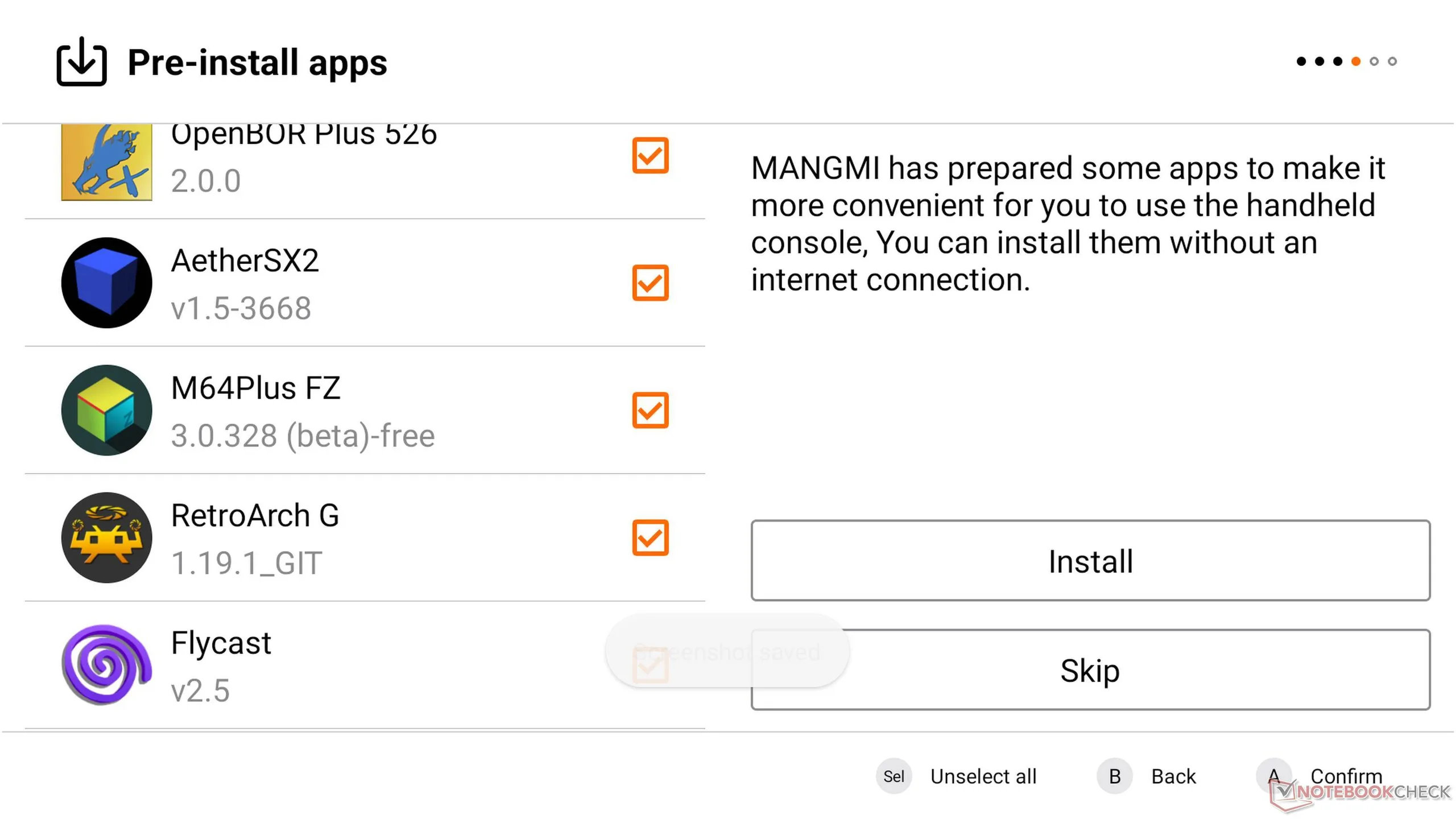
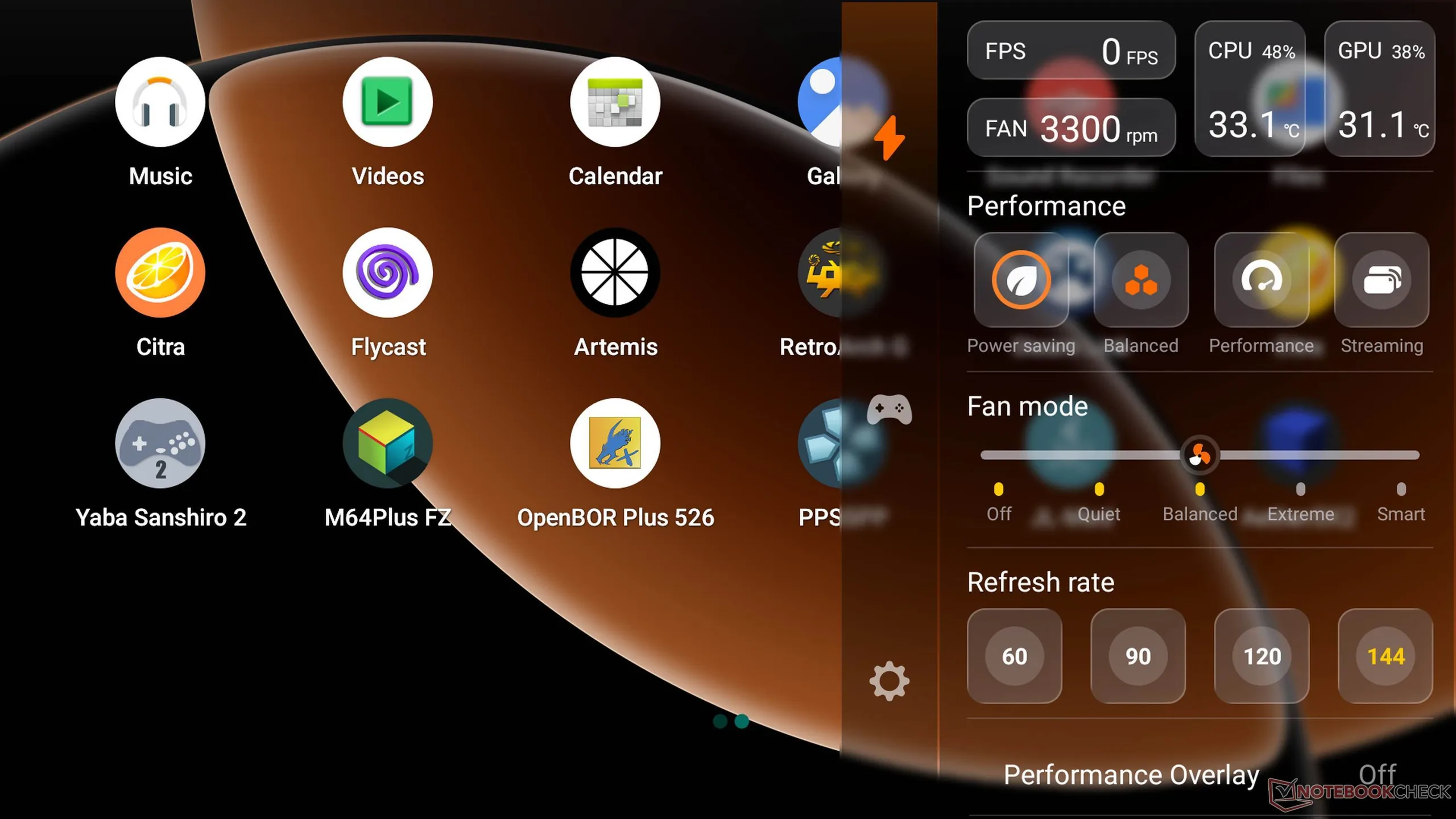
The Mangmi Pocket Max is based on Android 13, so it is easy to set up. Various emulators can be selected during the initial installation and are then immediately available. A very useful quick access bar is integrated with the sidebar, which displays the current load, enables the selection of various performance modes, fan modes and the refresh rate and also provides quick access to operating options.
Useful Android-Gamer
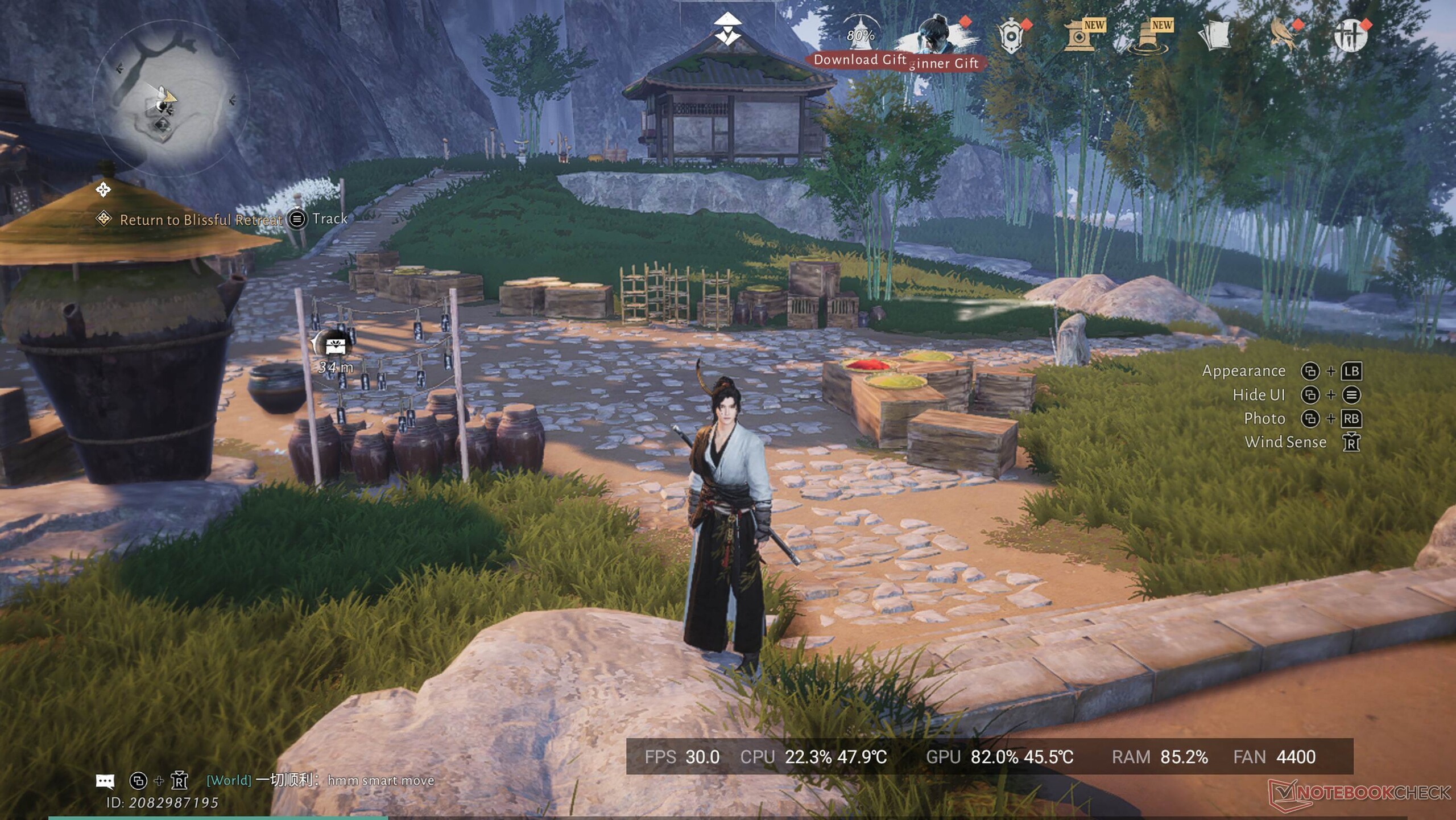
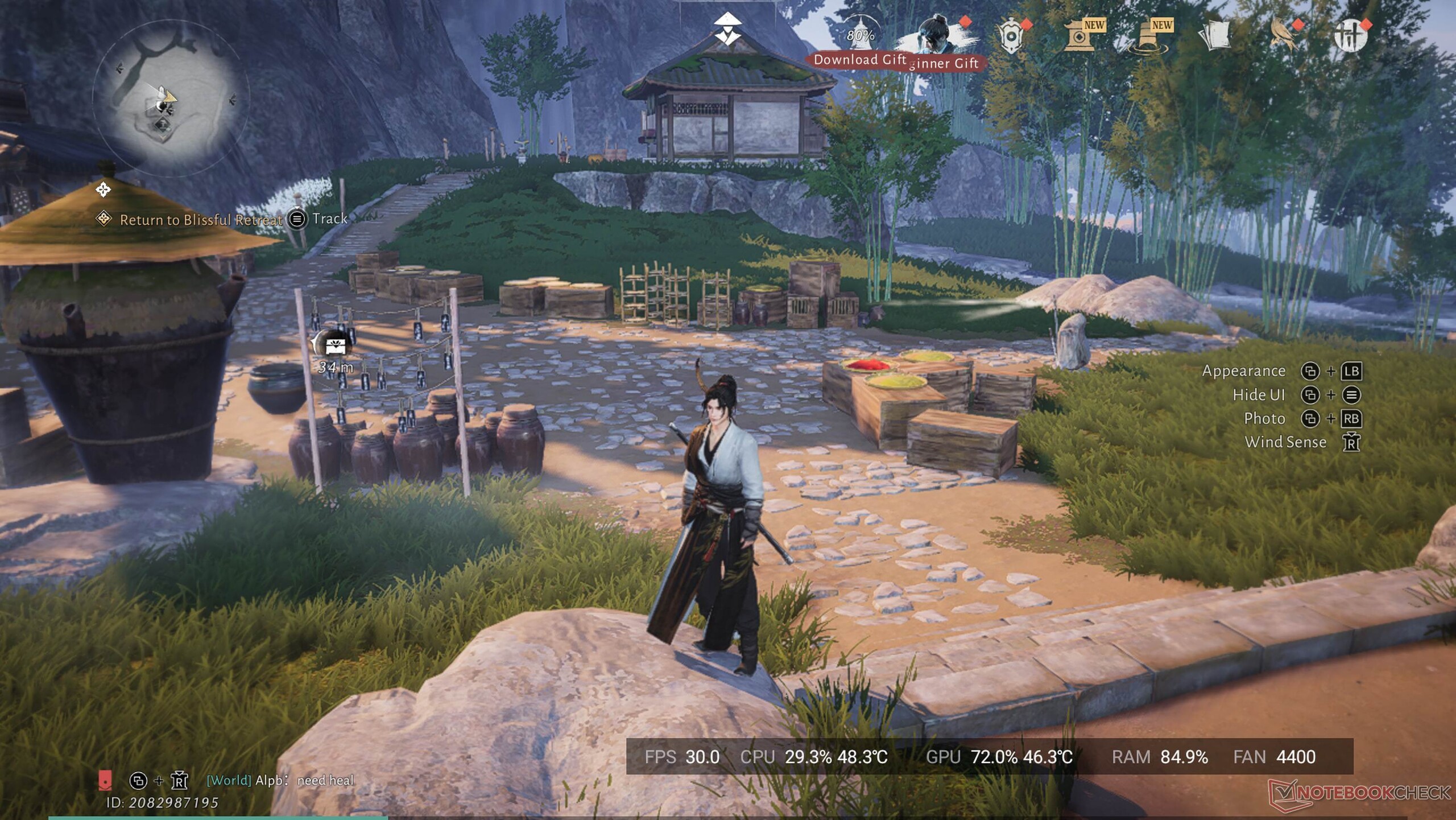
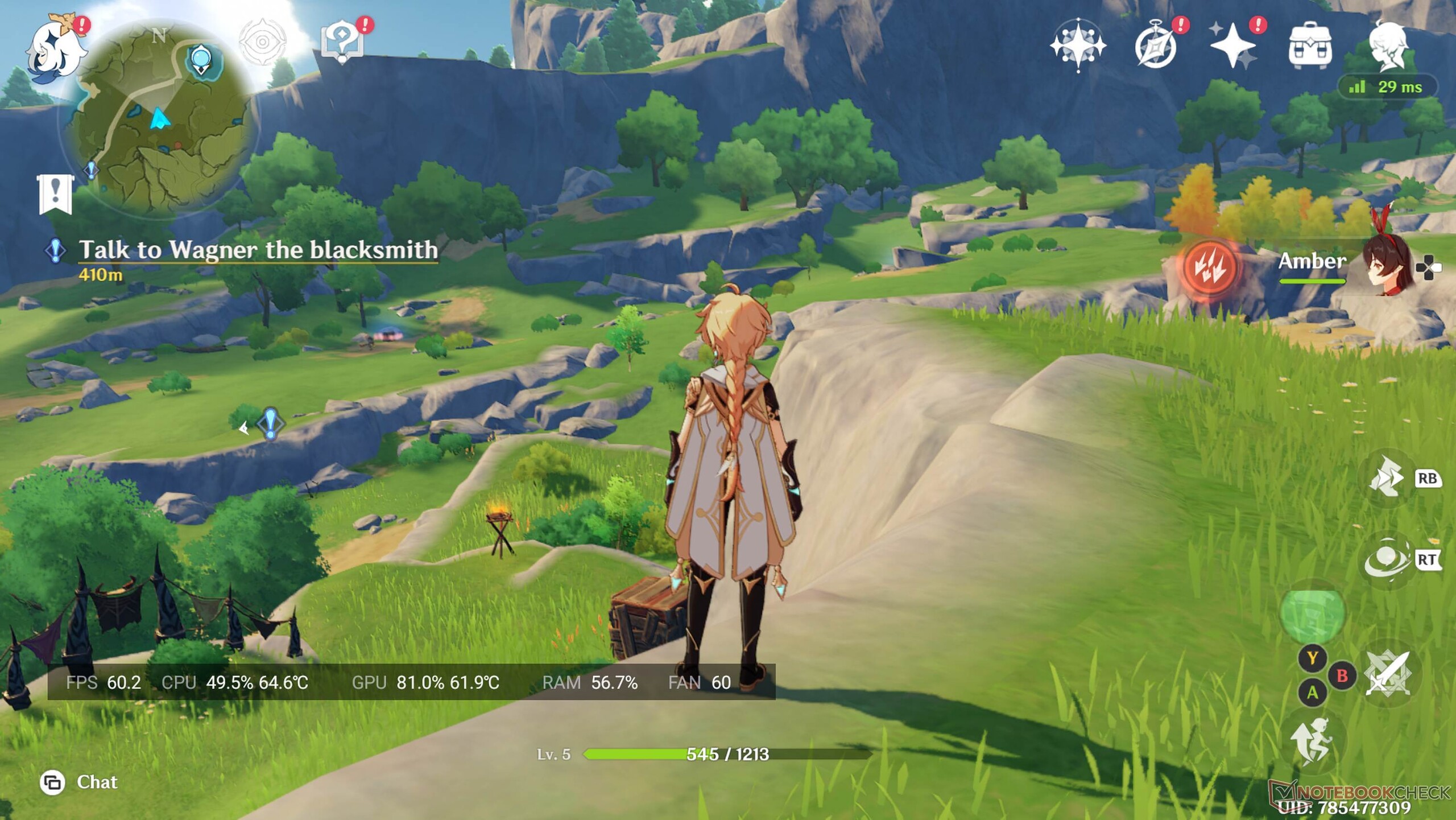
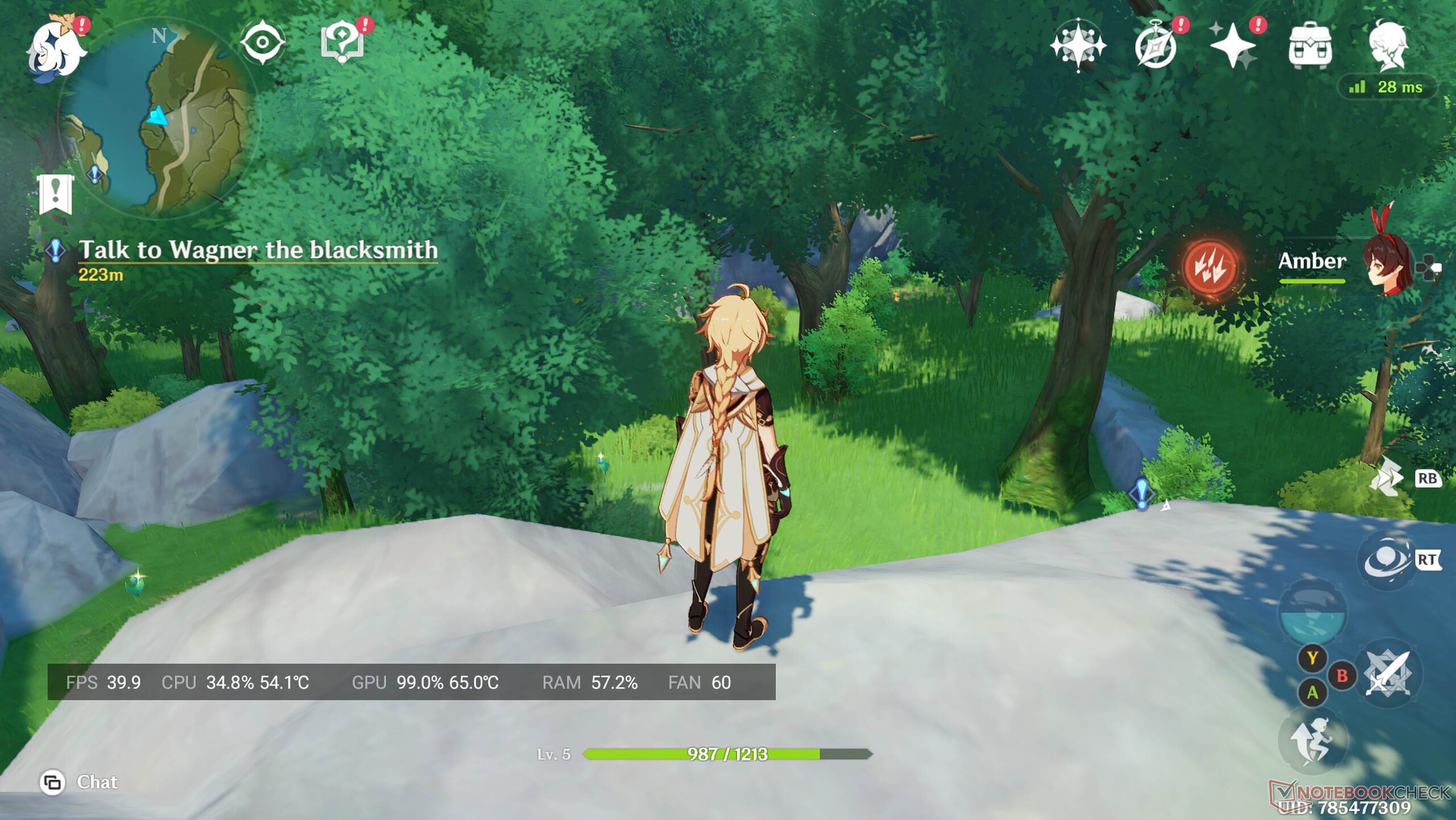
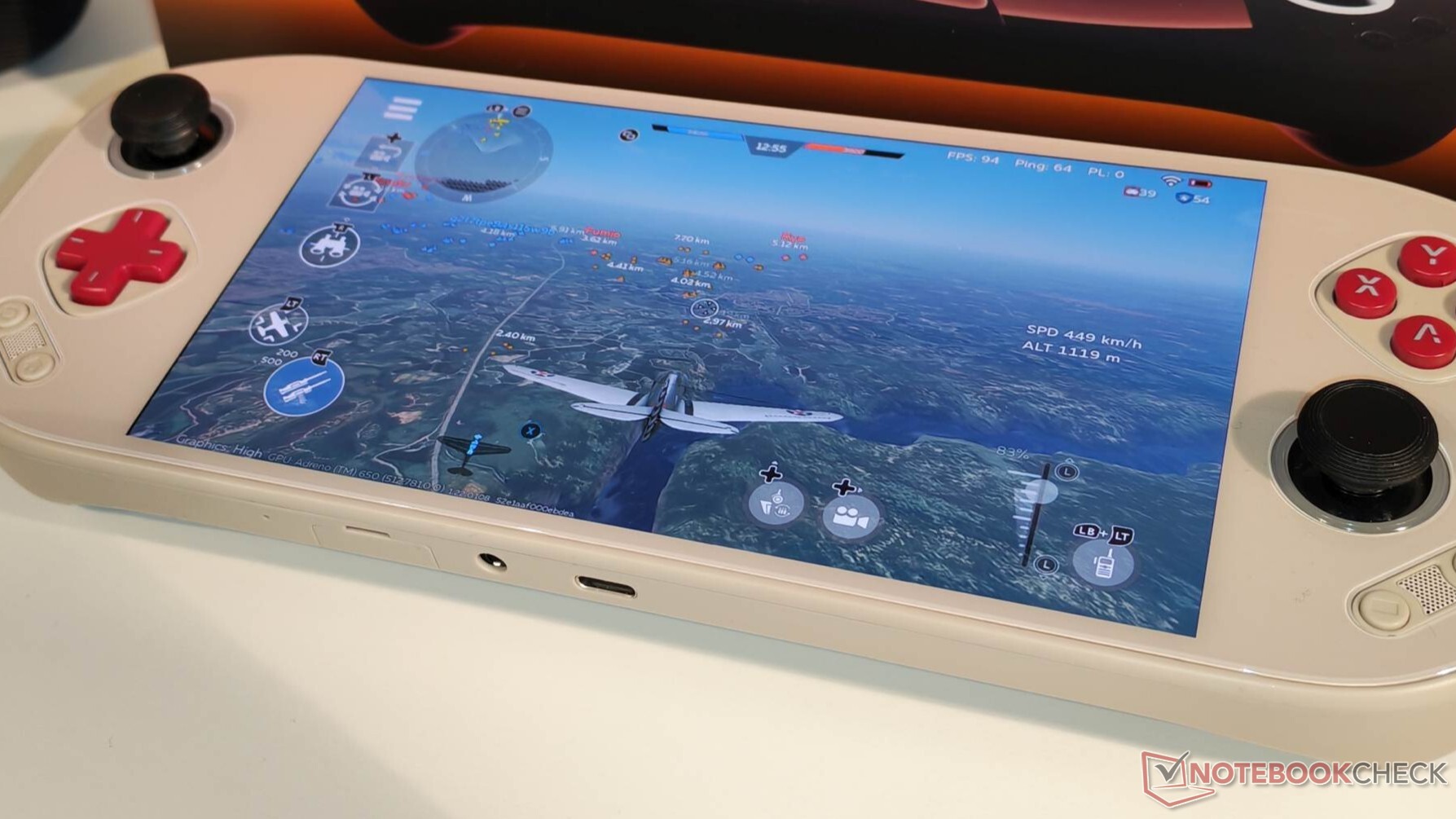
It uses the Qualcomm Snapdragon 865 and thus a computing chip that is already over six years old. At the end of this article, you can find a performance comparison with various current smartphones and also with the Qualcomm Snapdragon 8 Gen 2 used in the Odin2 Portal to get a feel for the performance of the old SoC in 2026. One thing is clear: the Mangmi Pocket Max cannot render current triple-A titles locally, but it is also more of a Android or retro handheld and not an alternative to, for example, an Asus ROG Ally. Nevertheless, the Snapdragon 865 easily manages to accelerate even demanding Android titles with good to excellent playability. In Genshin Impact, for example, a stable 60 frames per second can be achieved at medium-high settings - the title does not support more than this at Android. In War Thunder Mobile, fluid frame rates can also be achieved at all times in air and ground battles at high settings. The frame rate naturally benefits from the resolution of 1,920 × 1,080 pixels, which is significantly lower than on current smartphones. Where Wind Meets, which is also free and graphically quite impressive, is also easy to play. The SoC reaches its limits with the Quality preset, but we had a very good gaming experience with the Balanced preset. Positive: We were also unable to provoke throttling in synthetic benchmarks. The fan is clearly audible at maximum speed. In our experience, however, this is never really necessary, as the smart fan control seems to be a little overly aggressive.

Legally questionable fun through emulation, added value through image output and streaming
The emulation of video games is probably one of the main types of use for a system like the Mangmi Pocket Air. We would like to point out the often very critical legal situation here, unless old Cartridges are read out - which is certainly possible, but is probably rarely actually done. Mangmi itself offers the installation of the corresponding emulators, but does not supply any ROMs. In our experience, the performance of the Mangmi Pocket Max is completely sufficient for displaying titles up to the Nintendo 3DS; depending on the platform, rendering is also possible at a much higher resolution. This makes old games more attractive, but although this results in a higher resolution, the titles are not necessarily more detailed with additional objects. The PlayStation 2 represents the limit here. According to user reports, at least some Switch titles are playable with the Snapdragon 865. The large screen of the Mangmi Pocket X also offers significantly increased playability when emulating Nintendo (3)DS titles, as both screens can be displayed properly.
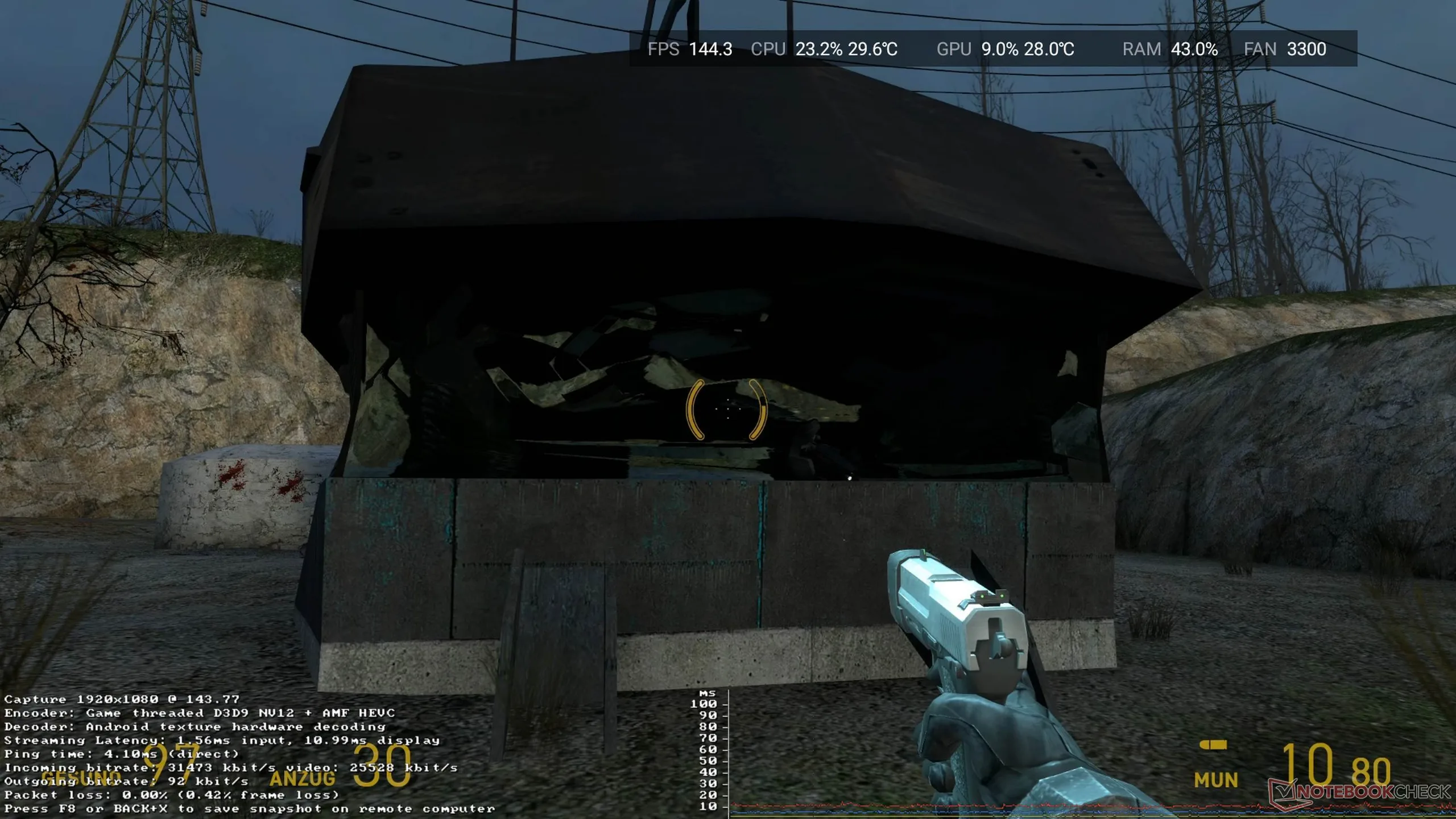
Streaming video games locally is also possible without any problems, and the user experience with Steam Link, for example, is excellent. Half Life: 2, for example, could be streamed at 140 Hz and therefore very smoothly and with little delay. Display latencies of well under 15 milliseconds were achievable in this specific example. We don't want to artificially fabricate any points of criticism at this point, but the Snapdragon 865 only supports WiFi 6, so a poorer connection compared to WiFi 7 is conceivable. Two rooms away and connected to a WiFi repeater, we were still able to achieve latencies of less than 20 milliseconds, which is also absolutely playable.
Image output is supported via USB Type C, but not with 4K resolution. This works very well in principle. It is possible to use a dock or hub, in which case a keyboard and mouse can be used - as well as the freeform mode, which is not yet fully developed under Android 13. The Mangmi Pocket Max is not a real replacement for a PC, but this setup is certainly suitable for writing emails or short research sessions. In our opinion, the positioning of the USB port on the underside has a negative effect on the image output, as no adapted docking station is available.
Benchmarks
At this point, we want to give a classification of the SoC - using only synthetic benchmarks, mind you - in relation to models with an identical SoC as well as modern, more powerful smartphones. The diagram of the 3DMark stress test proves that there is no throttling, meaning that the cooling system is well dimensioned.
3DMark Stress Tests
| 3DMark | |
| Wild Life Stress Test Stability | |
| Mangmi Pocket Max | |
| Huawei MatePad 11 2021 | |
| Vivo iQOO 15 | |
| Wild Life Extreme Stress Test | |
| Huawei MatePad 11 2021 | |
| Mangmi Pocket Max | |
| Vivo iQOO 15 | |
Transparency
The selection of devices to be reviewed is made by our editorial team. The test sample was provided to the author as a loan by the manufacturer or retailer for the purpose of this review. The lender had no influence on this review, nor did the manufacturer receive a copy of this review before publication. There was no obligation to publish this review. As an independent media company, Notebookcheck is not subjected to the authority of manufacturers, retailers or publishers.
 Add as a preferred source on Google


