Notebookcheck Logo
Xiaomi Poco M8 5G
ⓘ Notebookcheck

Battery and display are better, but the Samsung Galaxy A36 remains our favorite - Xiaomi Poco M8 5G review

Buy me?

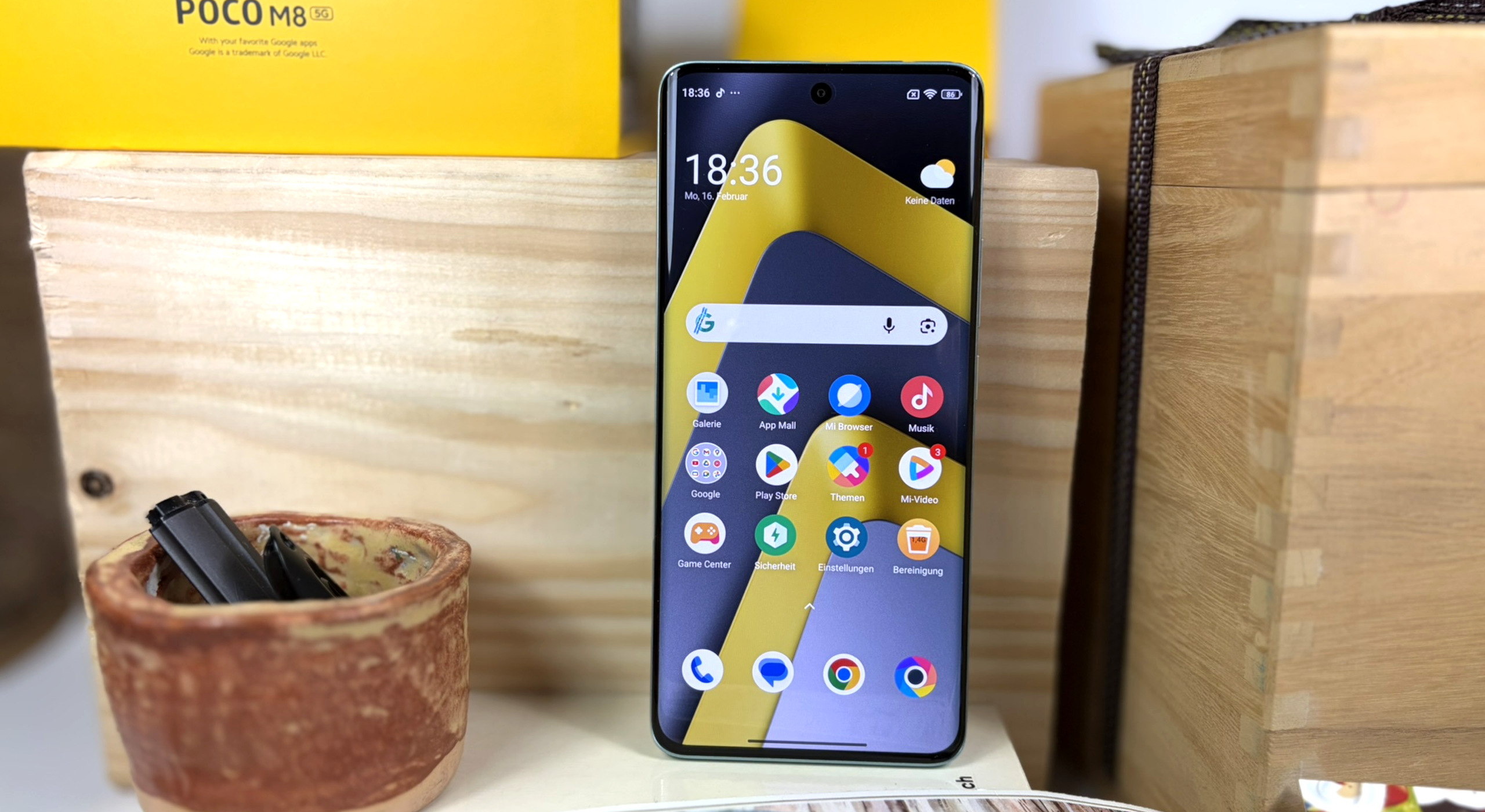
Bright display, good battery life and solid features: the Xiaomi Poco M8 5G actually does everything right. Almost, that is, if it weren't for the annoying competition. The Poco phone often simply gets the short end of the stick against them. To make matters worse, Xiaomi is also cannibalizing itself, as the identical smartphone is currently available at least as cheaply under a different name.
Manuel Masiero, 👁 Daniel Schmidt, Brian Burriston (translated by DeepL / Ninh Duy) Published 🇩🇪
5G Android Smartphone Touchscreen

Conclusion on the Xiaomi Poco M8 5G

Xiaomi doesn't make it easy for buyers to warm to the Poco M8 5G. If you don't have high expectations of a smartphone, the 6.77-inch device is a solid everyday companion. Ultimately, however, it lacks a unique selling point to set it apart from the masses of affordable mid-range smartphones. Its greatest strengths are the above-average battery life and the bright AMOLED display.

However, the Poco M8 5G lacks support for eSIMs and the Wi-Fi data throughput is weak with Wi-Fi 5. Updates are available until 2032, but whether you want to use the smartphone for that long in view of the Snapdragon 6 Gen 3, which is already not exactly fast, is another question.

Pros

+ bright AMOLED display with 120 Hz
+ high-frequency PWM dimming
+ good workmanship
+ very good battery life
+ charging with 45 watts
+ stereo speakers
+ updates until 2032

Cons

- WiFi 5 only
- hybrid Dual SIM only
- no eSIM support
- slow SoC
- no ultra-wide-angle camera

Price and availability

The Xiaomi Poco M8 5G costs 270 Euros (8/256 GB) or 300 Euros (8/512 GB)(~$314/$353 respectively) at Xiaomi. In other online stores, you pay a little less for both versions, for example at Amazon.

Amazon Logo
  • Anoowkoa 2 Pack for Xiaomi Redmi Note 15 Pro+/Note 15 Pro Plus 5G/Xiaomi Poco M8 Pro 3D Screen protector with Camera Lens protector Tempered Glass.9H Hardness.Anti-Fingerprint.No Air-Bubbles.Easy Installation
  • Natbok 2+2 Pack 3D Screen Protector for Xiaomi Redmi Note 15 Pro+ 5G / Note 15 Pro Plus 5G/Xiaomi Poco M8 Pro with Camera Lens Protector, 9H Tempered Glass Film,HD Clear Scratch Resistant,Bubble-Free
  • Natbok 2+2 Pack 3D Screen Protector for Xiaomi Redmi Note 15 5G/4G/Xiaomi Poco M8 with Camera Lens Protector,9H Tempered Glass Film,HD Clear Scratch Resistant,Bubble-Free

Elegant 3D design, large battery, a 120 Hz display and the Snapdragon 6 Gen 3 as the control center: Xiaomi is competing with itself with the Poco M8 5G, as it is technically equivalent to the Xiaomi Redmi Note 15 5G. The Poco phone should therefore also be recommended as an affordable but well-equipped smartphone.

Specifications

Xiaomi Poco M8 5G (Poco M8 Series)
Processor
Qualcomm Snapdragon 6 Gen 3, 4 x 2.4 GHz ARM Cortex-A78, 4 x 1.8 GHz ARM Cortex-A55, Cortex-A78 / A55
Graphics adapter
Memory
8 GB 
, LPDDR4X
Display
6.77 inch 19.9:9, 2392 x 1080 pixel 388 PPI, capacitive touchscreen, AMOLED, 3200 nits peak brightness, 800 nits typical brightness, Touch sampling rate 240 Hz, Instant touch sampling rate 2560 Hz, 3840 Hz PWM dimming, 12 Bit color depth, glossy: yes, 120 Hz
Storage
512 GB UFS 2.2 Flash, 512 GB 
, 467 GB free
Connections
1 USB 2.0, USB-C Power Delivery (PD), 1 Infrared, Audio Connections: USB-C, Card Reader: microSD up to 1 TB (FAT, FAT32, exFAT), 1 Fingerprint Reader, NFC, Brightness Sensor, Sensors: Virtual proximity sensor, Accelerometer, Electronic compass, IR blaster, Gyroscope, DRM Widevine L1, Camera2 API Level 3, Wi-Fi Direct, USB-OTG
Networking
802.11 a/b/g/n/ac (a/b/g/n = Wi-Fi 4/ac = Wi-Fi 5/), Bluetooth 5.1, 2G (Band 2/3/5/8), 3G (Band 1/2/4/5/6/8/19), 4G (Band 1/2/3/4/5/7/8/18/19/20/26/28/38/40/41/42/48/66/71), 5G (Band n1/2/3/5/7/8/20/28/38/40/41/48/66/71/77/78), Dual SIM, LTE, 5G, GPS
Size
height x width x depth (in mm): 7.35 x 164 x 75.42 ( = 0.29 x 6.46 x 2.97 in)
Battery
5520 mAh Lithium-Ion, 45W TurbiCharge, up to 18W reverse charging, silicon-carbon anode
Charging
fast charging / Quickcharge
Operating System
Android 15
Camera
Primary Camera: 50 MPix (Light Fusion 400, f/1.8, 1/2.88" sensor size, 1.22 µm 4-in-1 pixel size) + 2 MP depth camera, video recording up to 4K@30fps
Secondary Camera: 20 MPix f/2.2, 1/4" sensor size, video recording up to 1080p@30fps
Additional features
Speakers: stereo speakers (Dolby Atmos & Hi-Res Audio support), Keyboard: virtual, USB-C cable, Protective case, SIM tool, Quick start guide, Warranty Card, HyperOS 2.0, 12 Months Warranty, plastic back side; IP65 certified; GPS: GPS (L1), Glonass (L1), BeiDou (B1I, B1C), Galileo (E1); Connectivity: Hybrid-Dual-SIM, VoLTE/WiFI calling, no eSIM support; Bluetooth codecs: SBC, AAC, aptX, aptX HD, aptX Adaptive, aptX TWS+, LDAC, LHDC V1-V5; no HDR support; update policy: 4 OS upgrades, 6 years of security updates (EOL 01/2032); Head SAR 0.997 W/kg, Body SAR 0.987 W/kg, fanless
Released
01/08/2026
Weight
178 g ( = 6.28 oz / 0.39 pounds) ( = 0 oz / 0 pounds)
Price
300 Euro
Note: The manufacturer may use components from different suppliers including display panels, drives or memory sticks with similar specifications.


Housing and features - Xiaomi Poco M8 5G with 3D design

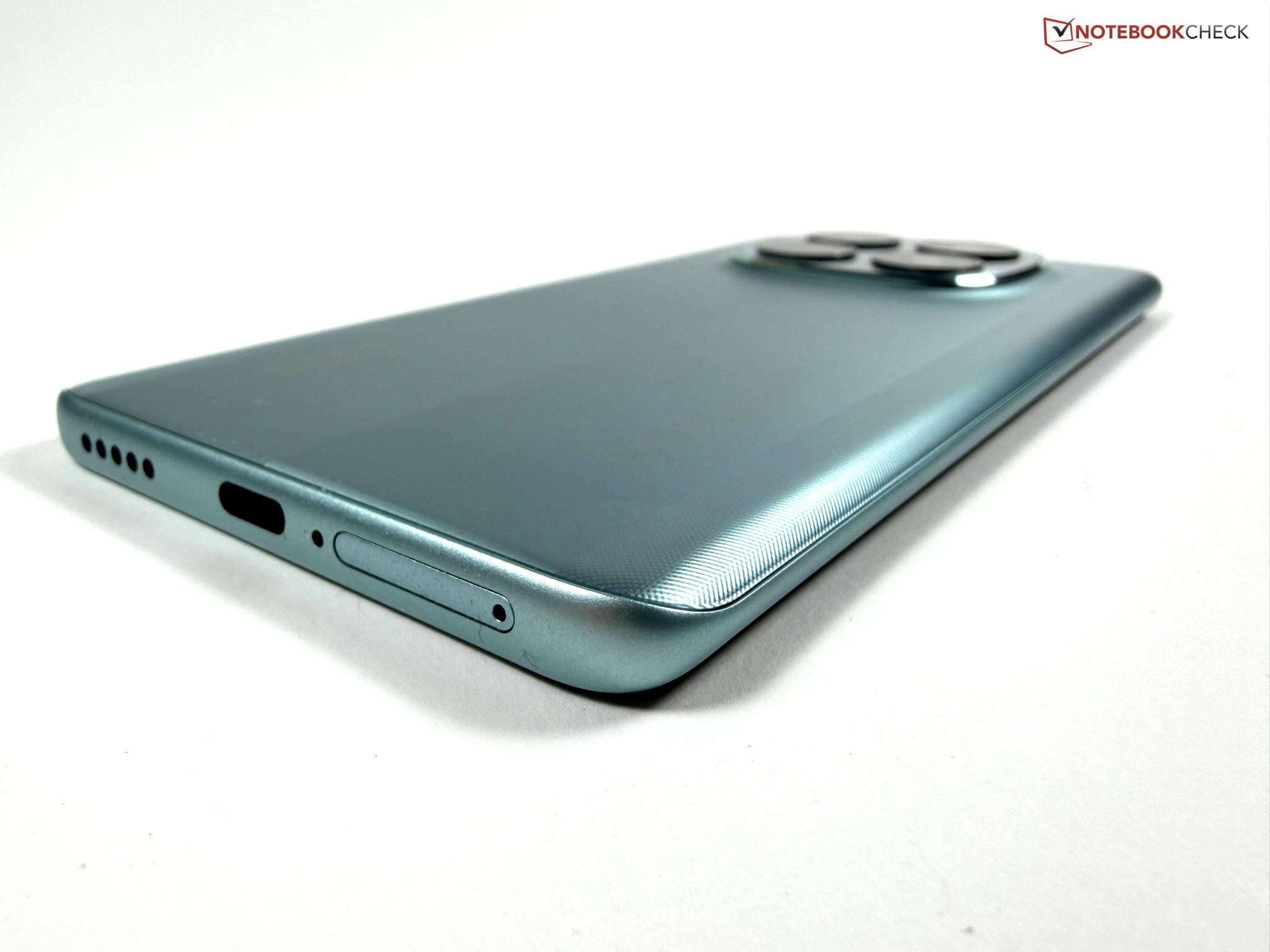
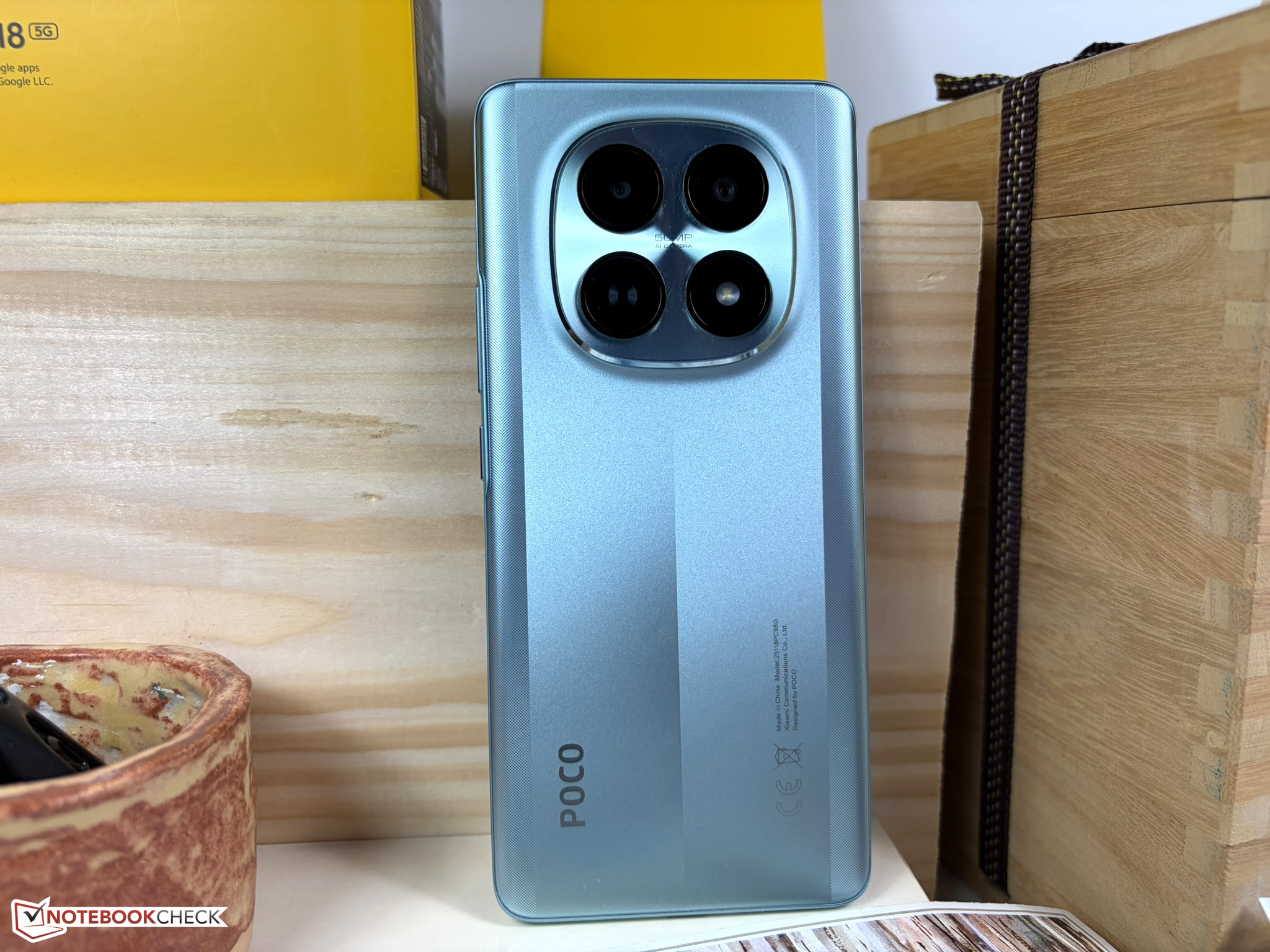
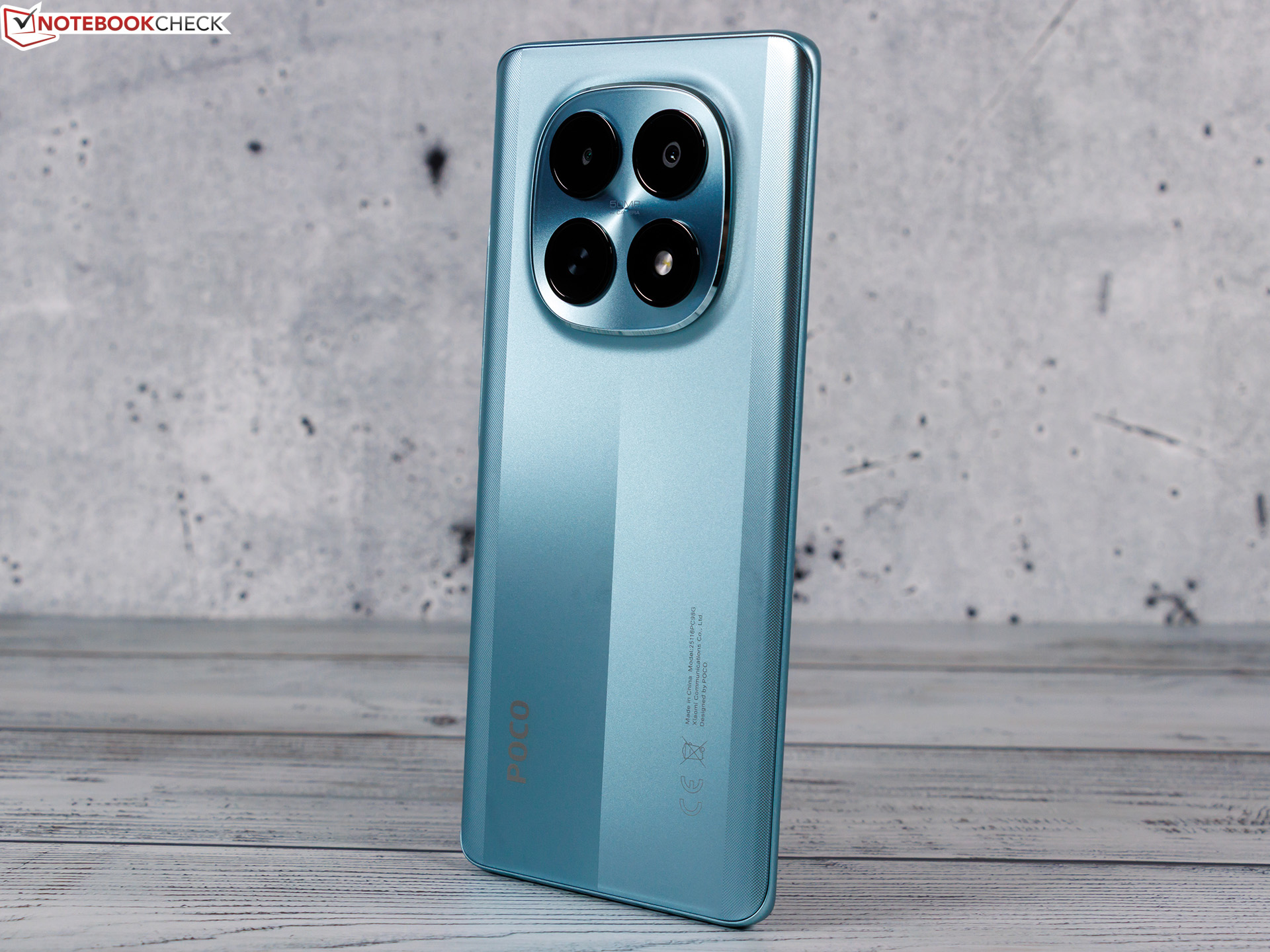
Xiaomi packs the Poco M8 5G into a sturdy and lightweight plastic casing. Its rounded long sides make the back cover and display appear to merge seamlessly. However, the factory-applied screen protector acts as a haptic brake because it can be clearly felt due to the curved design.

Xiaomi does not provide any information on the protection class of the display glass. The Poco M8 5G is protected against dust and water in accordance with IP65, which means that it cannot be harmed by rain, for example. The proximity sensor is only virtual and therefore tends to be less accurate than its physical counterpart.

A microSD card of up to 1 TB fits into the hybrid SIM slot. In the copy test with the Angelbird AV Pro V60 microSD reference card, the card reader achieved a reasonable speed of 32.3 MByte/s on average.
Size comparison

163.52 mm / 6.44 in 77.5 mm / 3.05 in 8.35 mm / 0.3287 in 201 g0.4431 lbs163.6 mm / 6.44 in 76 mm / 2.99 in 8.2 mm / 0.3228 in 199 g0.4387 lbs164 mm / 6.46 in 75.42 mm / 2.97 in 7.35 mm / 0.2894 in 178 g0.3924 lbs162.33 mm / 6.39 in 74.42 mm / 2.93 in 8.4 mm / 0.3307 in 185.5 g0.409 lbs162.4 mm / 6.39 in 75.7 mm / 2.98 in 7.99 mm / 0.3146 in 190 g0.4189 lbs162.9 mm / 6.41 in 78.2 mm / 3.08 in 7.4 mm / 0.2913 in 195 g0.4299 lbs148 mm / 5.83 in 105 mm / 4.13 in 1 mm / 0.03937 in 1.5 g0.00331 lbs
SD Card Reader - average JPG Copy Test (av. of 3 runs)
Xiaomi Poco M7 Pro 5G
MediaTek Dimensity 7025 (Angelbird AV Pro V60)
58.86 MB/s +82%
OnePlus Nord CE 5
MediaTek Dimensity 8350 (Angelbird V60)
37.6 MB/s +16%
Average of class Smartphone
  (5.72 - 58.9, n=72, last 2 years)
32.4 MB/s 0%
Xiaomi Poco M8 5G
Qualcomm Snapdragon 6 Gen 3 (Angelbird AV Pro V60)
32.31 MB/s

Cross Platform Disk Test (CPDT)

05101520253035404550556065707580Tooltip
OnePlus Nord CE 5 Mali-G615 MP6, Dimensity 8350, 128 GB UFS 3.1 Flash; SDCard Sequential Write 0.5 GB; Angelbird V60: Ø30.1 (9.09-41.3)
Xiaomi Poco M7 Pro 5G IMG BXM-8-256, Dimensity 7025, 256 GB UFS 2.2 Flash; SDCard Sequential Write 0.5 GB; Angelbird AV Pro V60: Ø38.1 (26.6-46.5)
OnePlus Nord CE 5 Mali-G615 MP6, Dimensity 8350, 128 GB UFS 3.1 Flash; SDCard Sequential Read 0.5 GB; Angelbird V60: Ø64.9 (40.5-76)
Xiaomi Poco M7 Pro 5G IMG BXM-8-256, Dimensity 7025, 256 GB UFS 2.2 Flash; SDCard Sequential Read 0.5 GB; Angelbird AV Pro V60: Ø73.6 (14.8-83.3)

Communication and operation - WiFi 5 is already over

The Poco M8 5G supports WiFi 5 as the fastest WiFi communication standard. Connected to our reference router Asus ROG Rapture GT-AXE11000, the Xiaomi phone therefore only achieves below-average WiFi transfer rates.

The Poco M8 5G only supports dual SIM if the microSD card is omitted. In the test, the smartphone scored with good voice quality and managed to largely block out distracting ambient noise.

The capacitive touchscreen responds quickly to inputs and works as reliably as the fingerprint sensor underneath it in the test. Alternatively, you can authenticate yourself biometrically using 2D Face Unlock. An ERM vibration motor is responsible for haptic feedback, which can be adjusted in 3 levels.

Networking
Xiaomi Poco M8 5G
802.11 a/b/g/n/ac
iperf3 transmit AXE11000
369 (min: 184) MBit/s ∼39%
iperf3 receive AXE11000
353 (min: 309) MBit/s ∼30%
Nothing Phone (3a)
802.11 a/b/g/n/ac/ax
iperf3 transmit AXE11000
938 (min: 466) MBit/s ∼100%
iperf3 receive AXE11000
831 (min: 777) MBit/s ∼70%
OnePlus Nord CE 5
802.11 a/b/g/n/ac/ax
iperf3 transmit AXE11000
536 (min: 421) MBit/s ∼57%
iperf3 receive AXE11000
1191 (min: 961) MBit/s ∼100%
Samsung Galaxy A36 5G
802.11 a/b/g/n/ac/ax
iperf3 transmit AXE11000
860 (min: 440) MBit/s ∼92%
iperf3 receive AXE11000
752 (min: 713) MBit/s ∼63%
Xiaomi Poco M7 Pro 5G
802.11 a/b/g/n/ac
iperf3 transmit AXE11000
373 (min: 359) MBit/s ∼40%
iperf3 receive AXE11000
365 (min: 359) MBit/s ∼31%
Xiaomi Poco X7
802.11 a/b/g/n/ac/ax
iperf3 transmit AXE11000
398 (min: 193) MBit/s ∼42%
iperf3 receive AXE11000
377 (min: 187) MBit/s ∼32%
Average 802.11 a/b/g/n/ac
 
iperf3 transmit AXE11000
338 (min: 10.5) MBit/s ∼36%
iperf3 receive AXE11000
330 (min: 20.1) MBit/s ∼28%
Average of class Smartphone
 
iperf3 transmit AXE11000
692 (min: 49.8) MBit/s ∼74%
iperf3 receive AXE11000
717 (min: 52) MBit/s ∼60%
050100150200250300350400450500550600650700750800850900Tooltip
Xiaomi Poco M8 5G 802.11 a/b/g/n/ac; iperf3 transmit AXE11000; iperf 3.1.3: Ø363 (184-379)
Samsung Galaxy A36 5G 802.11 a/b/g/n/ac/ax; iperf3 transmit AXE11000; iperf 3.1.3: Ø845 (440-918)
Xiaomi Poco M8 5G 802.11 a/b/g/n/ac; iperf3 receive AXE11000; iperf 3.1.3: Ø351 (309-365)
Samsung Galaxy A36 5G 802.11 a/b/g/n/ac/ax; iperf3 receive AXE11000; iperf 3.1.3: Ø750 (713-779)

Software and sustainability - updates until 2032

Xiaomi's HyperOS 2.0 operating system for the Poco M8 5G is still based on Android 15, displays ads in many places and comes with a lot of bloatware. Xiaomi plans to provide four Android updates for the Poco M8 5G and supply it with security updates until January 2032.

The packaging of the Poco M8 5G is made of recycled paper, but is delivered shrink-wrapped in plastic film. The manufacturer does not provide any information on the recycled materials used in the smartphone. Xiaomi also offers tools and spare parts for the Poco M8 5G.

Cameras - No ultra-wide-angle camera on board

Shot on the selfie camera
ⓘ Notebookcheck
Shot on the selfie camera

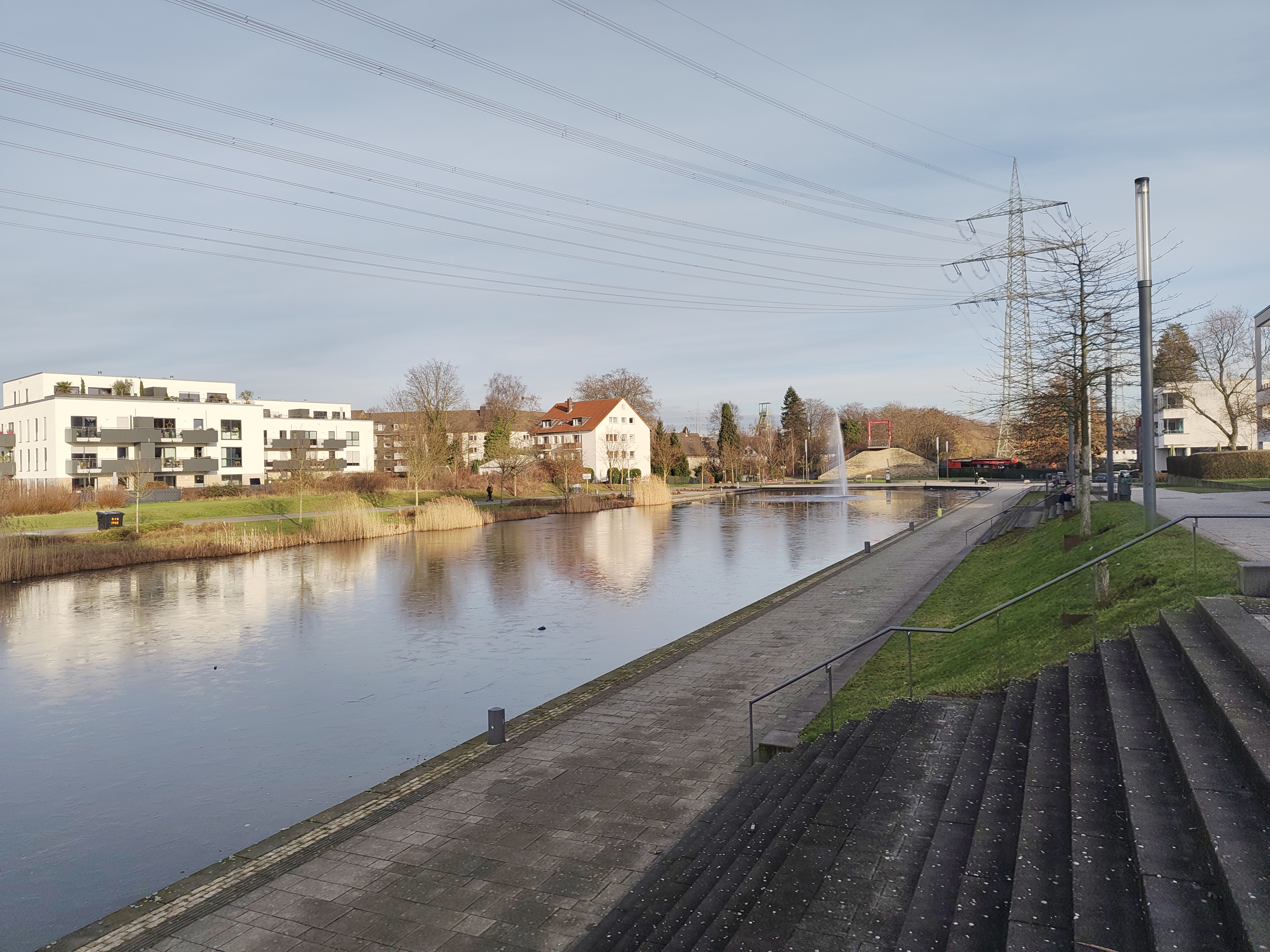
The selfie camera offers a fairly high resolution of 20 MPix. However, the quality of its images is very average and sometimes look artificial due to the pronounced sharpening. However, the quality is fine for occasional video chats, which can take place at up to 1080p at 30 frames per second.

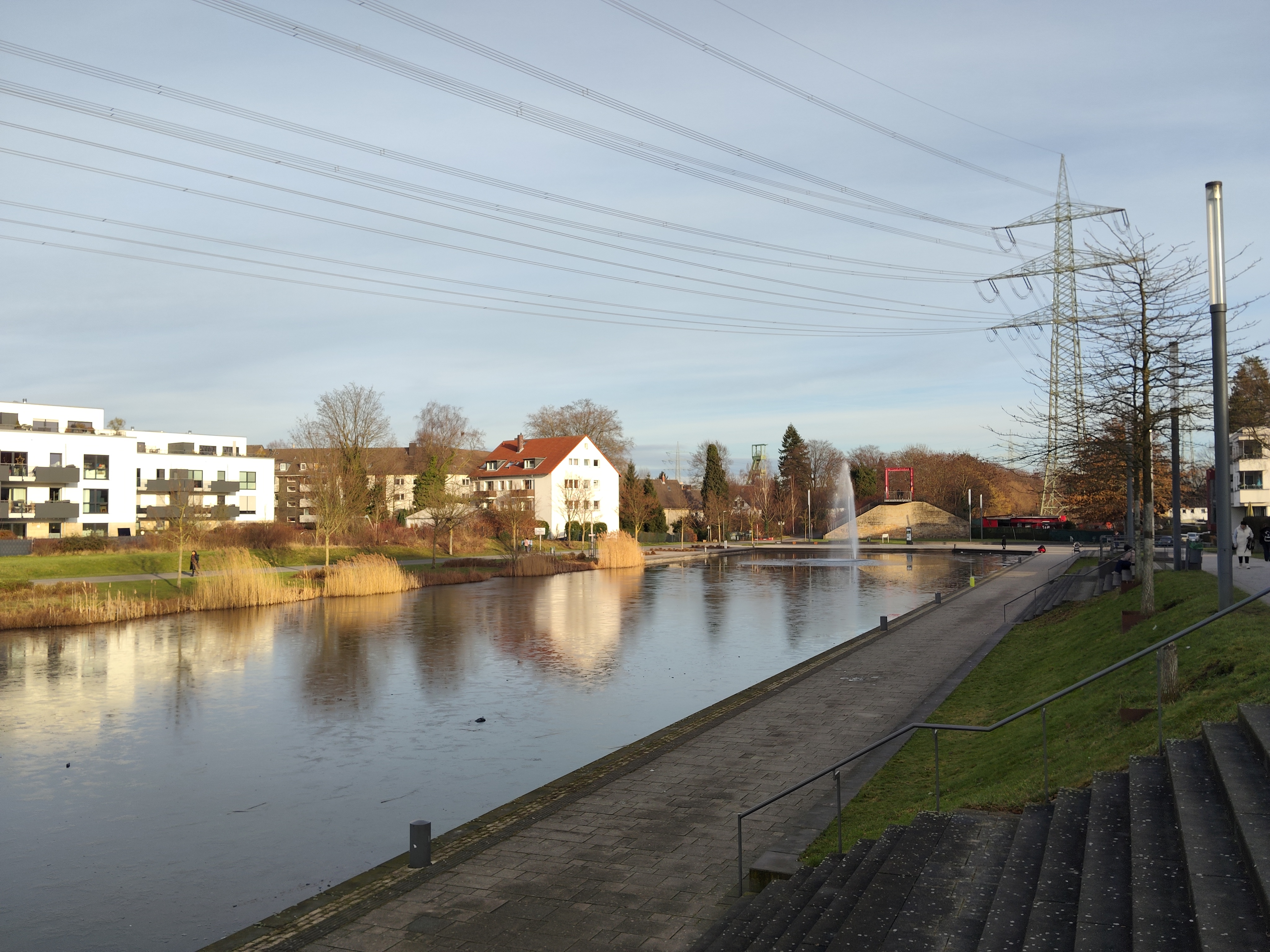
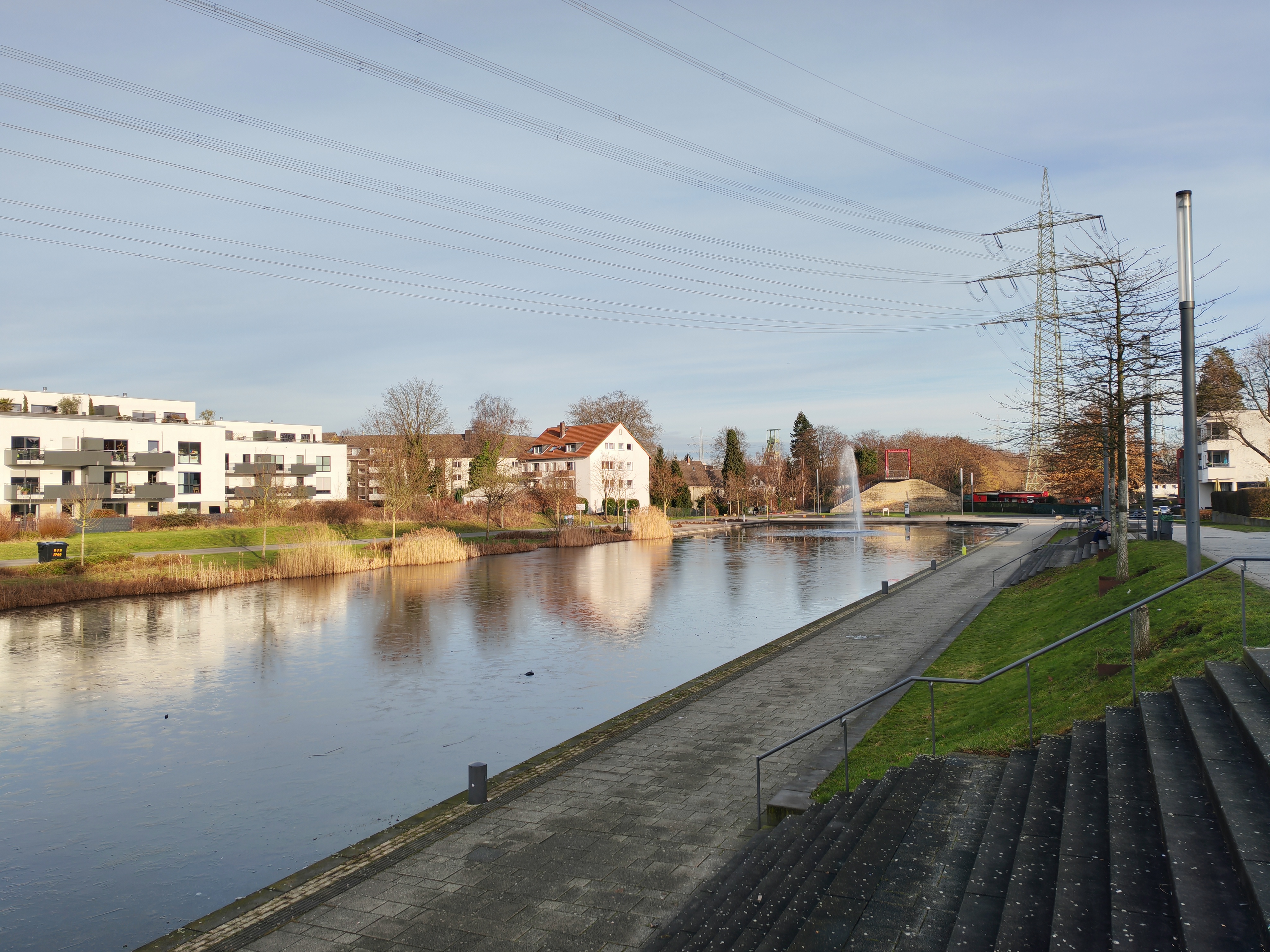
The main camera has a resolution of 50 MPix, uses Light Fusion 400 and takes quite acceptable photos in daylight. However, it does not show much detail and it quickly becomes blurry at higher zoom levels. Video recordings achieve roughly the same image quality, up to 4K at 30 frames per second.

This largely exhausts the Poco M8 5G's photo capabilities, as it does not have an ultra-wide-angle camera. Additional cameras include only a 2 MP camera, which is only used to capture depth information.


Image comparison

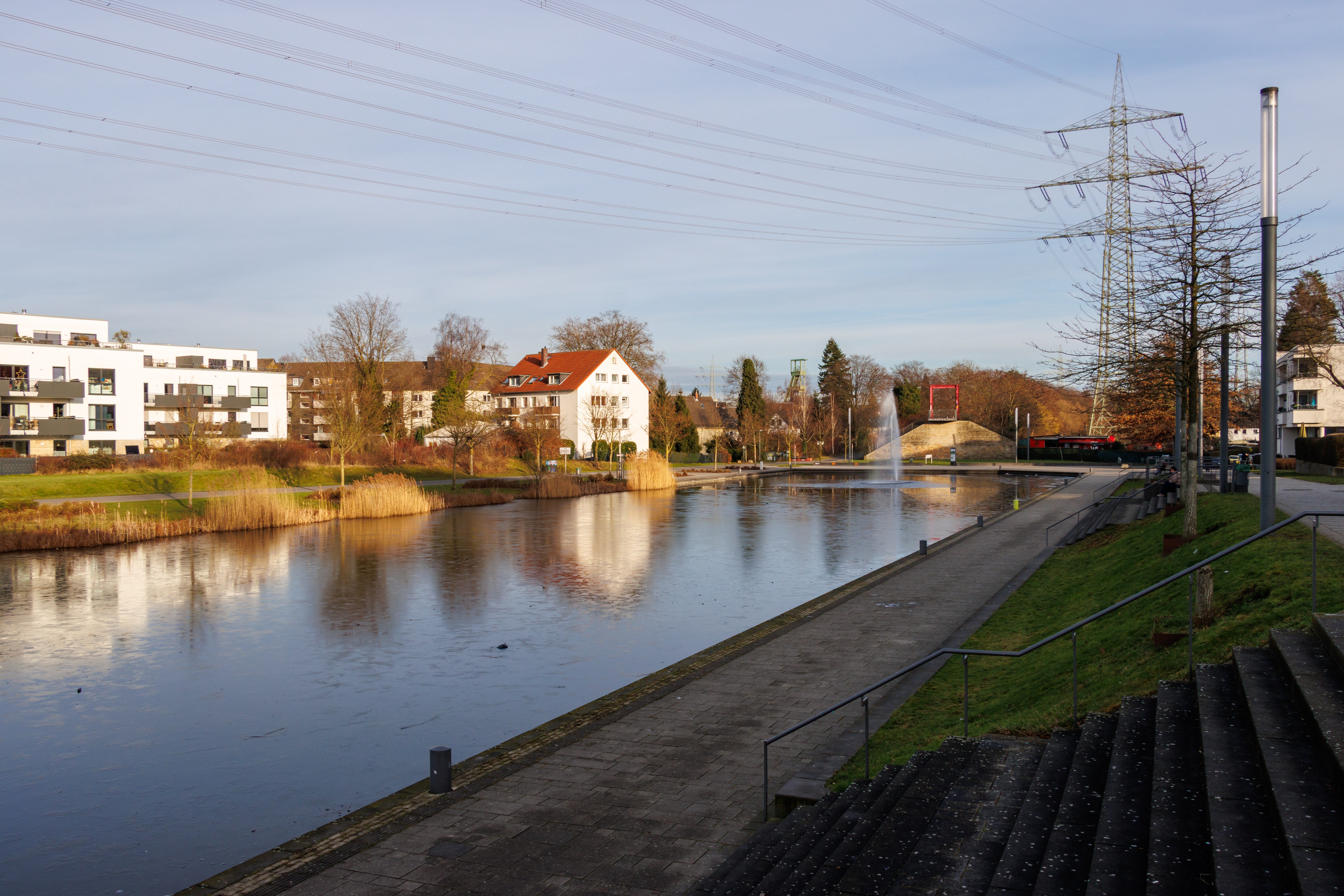
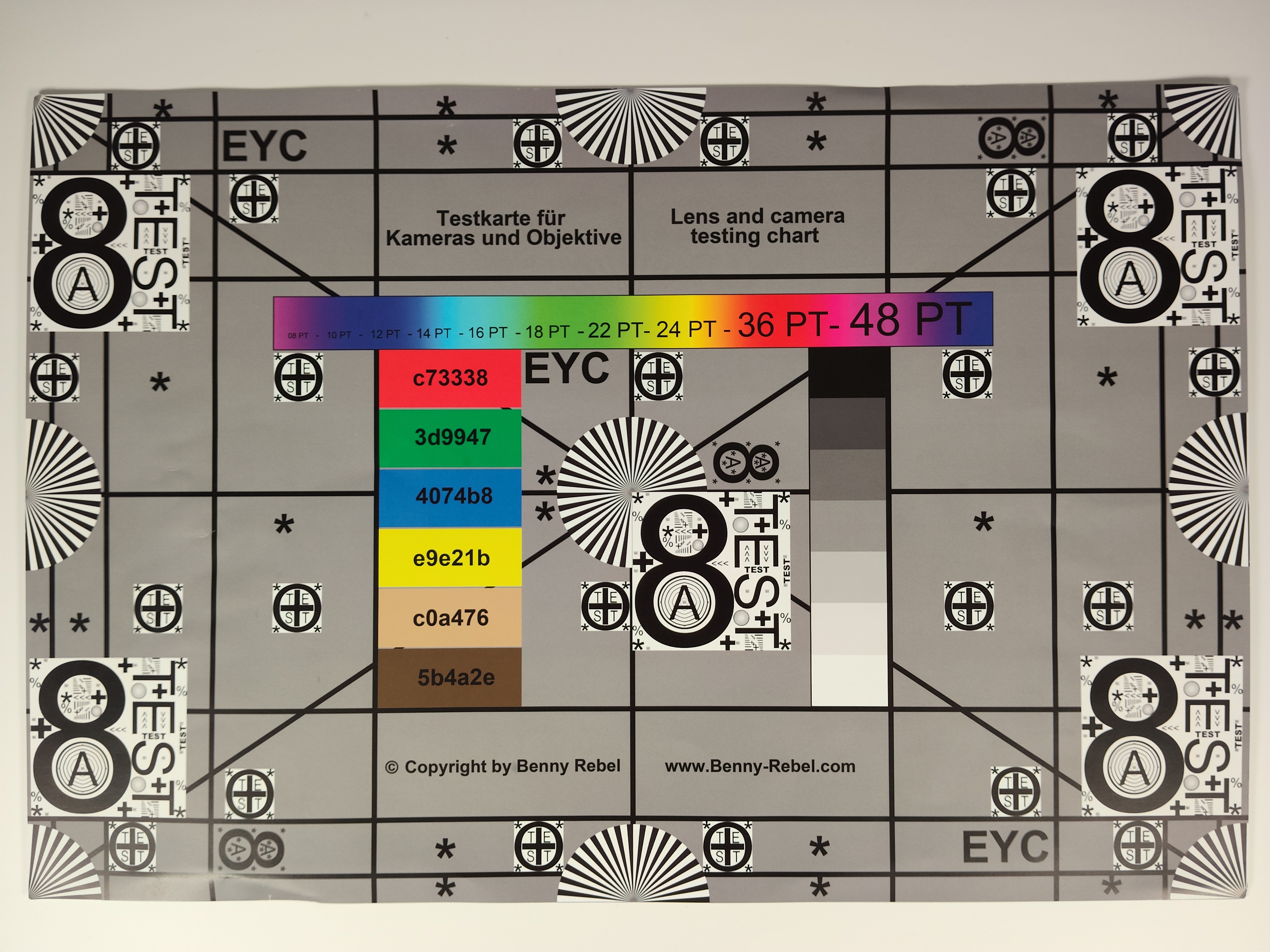
Choose a scene and navigate within the first image. One click changes the position on touchscreens. One click on the zoomed-in image opens the original in a new window. The first image shows the scaled photograph of the test device.

DaylightDaylight5x zoomLow light
orginal image
click to load images
ColorChecker
16.6 ∆E
11.4 ∆E
12.8 ∆E
16.8 ∆E
11.8 ∆E
8.7 ∆E
10.4 ∆E
12.8 ∆E
11.1 ∆E
10 ∆E
11 ∆E
7 ∆E
7.5 ∆E
17.2 ∆E
15.6 ∆E
4.6 ∆E
11.9 ∆E
17.3 ∆E
9.5 ∆E
8.3 ∆E
12.5 ∆E
15.9 ∆E
12 ∆E
3.4 ∆E
ColorChecker Xiaomi Poco M8 5G: 11.5 ∆E min: 3.43 - max: 17.27 ∆E
ColorChecker
29.6 ∆E
54.6 ∆E
39.9 ∆E
36.3 ∆E
45.4 ∆E
63.2 ∆E
53.8 ∆E
36 ∆E
43.7 ∆E
28.3 ∆E
65.3 ∆E
63.9 ∆E
31.4 ∆E
48.8 ∆E
37.3 ∆E
76.7 ∆E
44.8 ∆E
44.9 ∆E
93.7 ∆E
71.4 ∆E
52.5 ∆E
37 ∆E
23.9 ∆E
14 ∆E
ColorChecker Xiaomi Poco M8 5G: 47.35 ∆E min: 13.99 - max: 93.71 ∆E

Display - 3000 nits bright AMOLED panel

According to Xiaomi, the 120 Hz AMOLED panel achieves a peak brightness of 3200 nits, which it also reaches in smaller image sections (APL18 measurement 3355 cd/m²) and in HDR with 3492 cd/m². This is complemented by precise color reproduction and a high PWM dimming frequency of 3840 Hz.

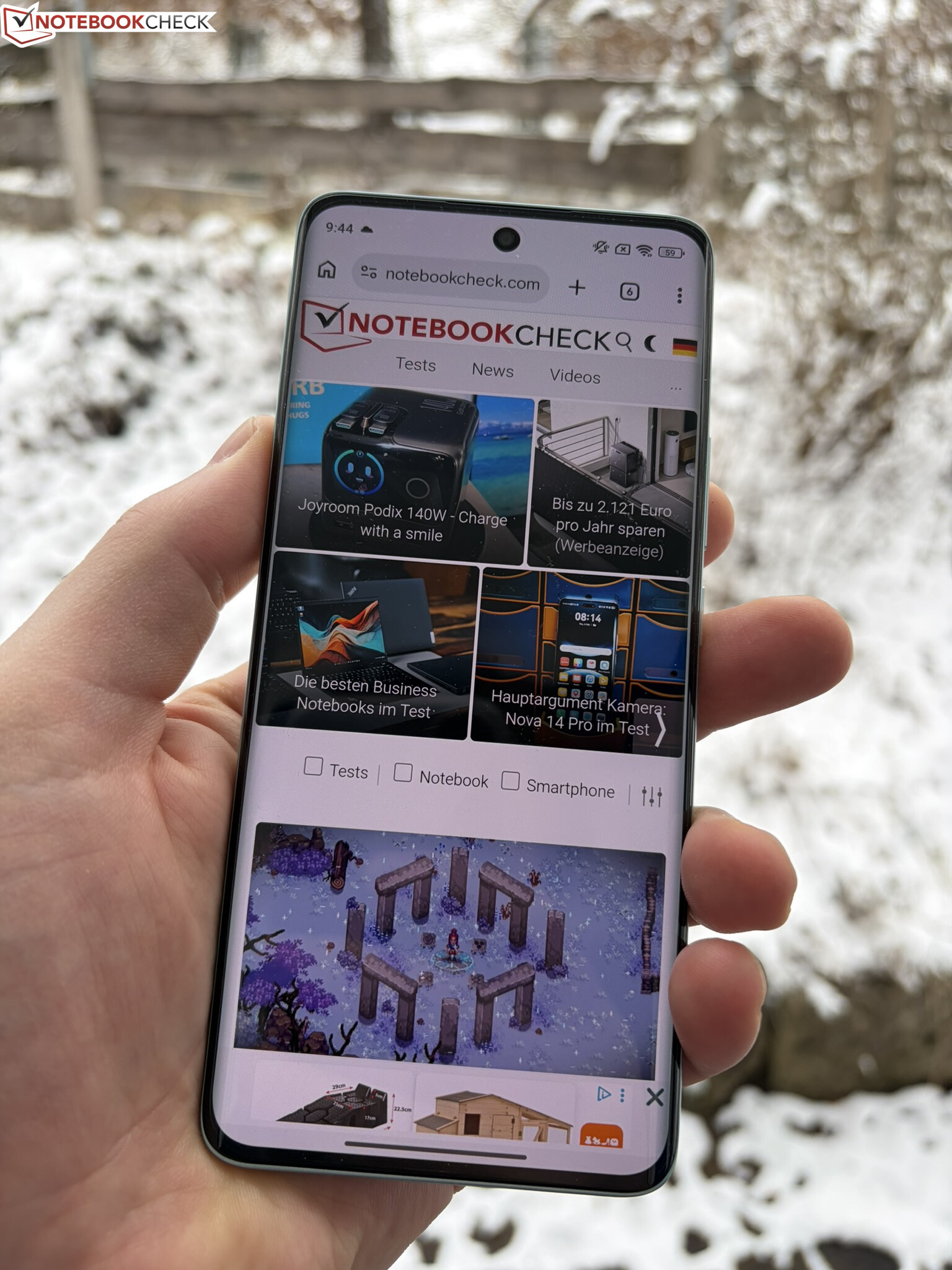
Thanks to its high peak brightness, the Poco M8 is well equipped for outdoor use. In the test, however, it makes no difference whether we activate the sunlight mode or not. This should actually provide a brightness boost, but it does not change the display brightness.

966
cd/m²
957
cd/m²
966
cd/m²
963
cd/m²
953
cd/m²
971
cd/m²
941
cd/m²
924
cd/m²
947
cd/m²
Distribution of brightness
tested with X-Rite i1Pro 3
Maximum: 971 cd/m² (Nits) Average: 954.2 cd/m² Minimum: 2.56 cd/m²
Brightness Distribution: 95 %
Center on Battery: 953 cd/m²
Contrast: ∞:1 (Black: 0 cd/m²)
ΔE ColorChecker Calman: 1 | ∀{0.5-29.43 Ø4.76}
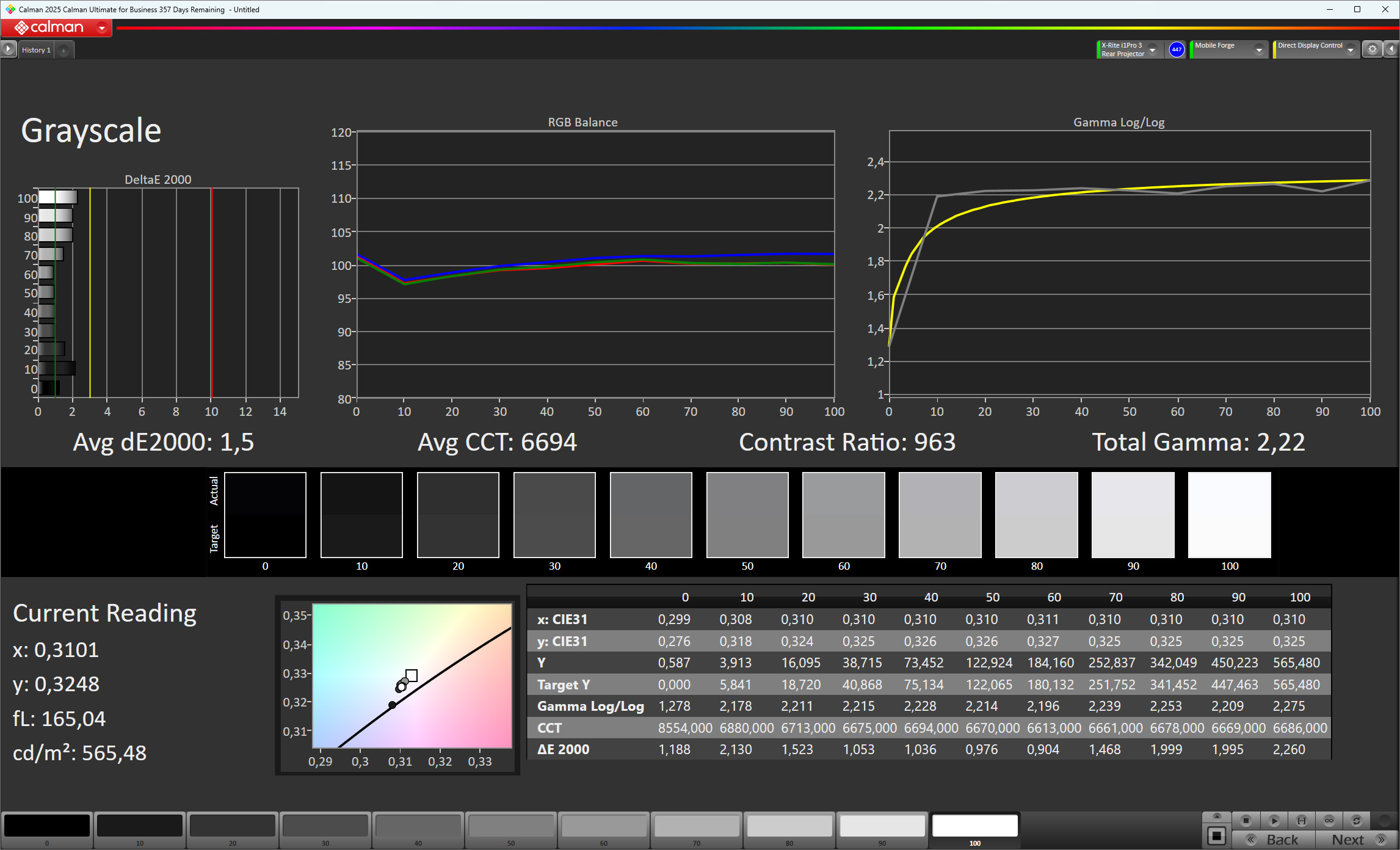
ΔE Greyscale Calman: 1.5 | ∀{0.09-98 Ø5}
96.4% sRGB (Calman 2D)
Gamma: 2.22
CCT: 6694 K
Xiaomi Poco M8 5G
AMOLED, 2392x1080, 6.8"
Nothing Phone (3a)
AMOLED, 2392x1080, 6.8"
OnePlus Nord CE 5
AMOLED, 2392x1080, 6.8"
Samsung Galaxy A36 5G
Super AMOLED, 2340x1080, 6.7"
Xiaomi Poco M7 Pro 5G
AMOLED, 2400x1080, 6.7"
Xiaomi Poco X7
AMOLED, 2712x1220, 6.7"
Screen
-71%
1%
-17%
4%
-1%
Brightness middle (cd/m²)
953
1287
35%
1315
38%
1127
18%
1157
21%
1156
21%
Brightness (cd/m²)
954
1274
34%
1300
36%
1137
19%
1151
21%
1150
21%
Brightness Distribution (%)
95
97
2%
97
2%
98
3%
97
2%
98
3%
Black Level * (cd/m²)
Colorchecker dE 2000 *
1
1.9
-90%
1.22
-22%
1.8
-80%
1.1
-10%
1.1
-10%
Colorchecker dE 2000 max. *
2.3
8.7
-278%
2.7
-17%
2.8
-22%
2.4
-4%
3.1
-35%
Greyscale dE 2000 *
1.5
3.4
-127%
2
-33%
2.1
-40%
1.6
-7%
1.6
-7%
Gamma
2.22 99%
2.26 97%
2.258 97%
2.11 104%
2.21 100%
2.22 99%
CCT
6694 97%
7072 92%
6503 100%
6466 101%
6622 98%
6304 103%

* ... smaller is better

Display / APL18 Peak Brightness
Samsung Galaxy A36 5G
Adreno 710, SD 6 Gen 1, 256 GB UFS 3.1 Flash
1877 cd/m²
Nothing Phone (3a)
Adreno 810, SD 7s Gen 3, 256 GB UFS 3.1 Flash
1202 cd/m²
Xiaomi Poco M7 Pro 5G
IMG BXM-8-256, Dimensity 7025, 256 GB UFS 2.2 Flash
1163 cd/m²
Xiaomi Poco X7
Mali-G615 MP2, Dimensity 7300, 512 GB UFS 2.2 Flash
1156 cd/m²
Display / HDR Peak Brightness
Xiaomi Poco X7
Mali-G615 MP2, Dimensity 7300, 512 GB UFS 2.2 Flash
2563 cd/m²
Xiaomi Poco M7 Pro 5G
IMG BXM-8-256, Dimensity 7025, 256 GB UFS 2.2 Flash
2118 cd/m²
Samsung Galaxy A36 5G
Adreno 710, SD 6 Gen 1, 256 GB UFS 3.1 Flash
2012 cd/m²
Nothing Phone (3a)
Adreno 810, SD 7s Gen 3, 256 GB UFS 3.1 Flash
1179 cd/m²

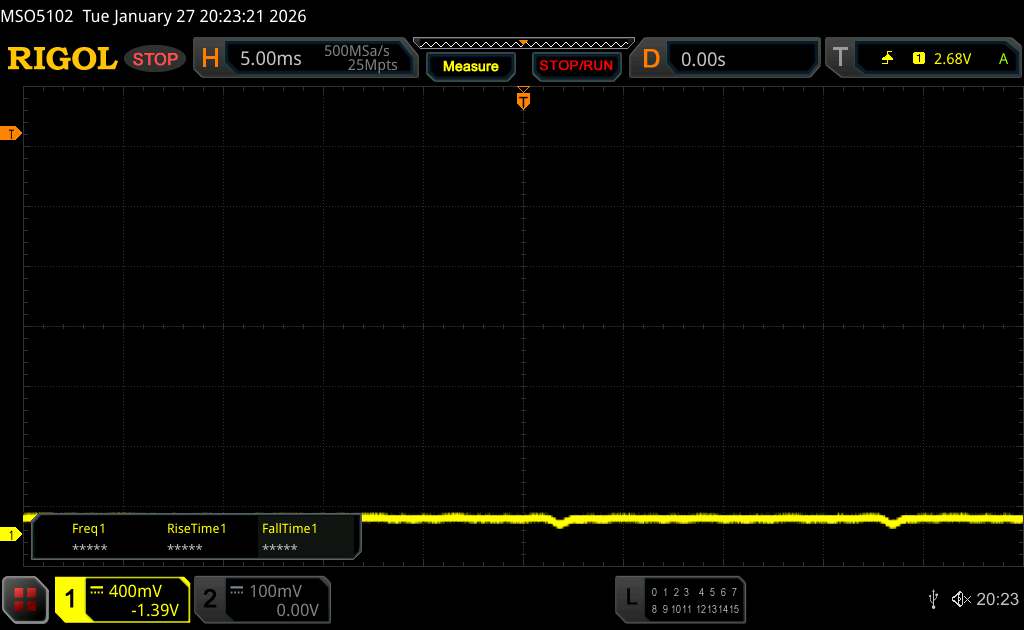
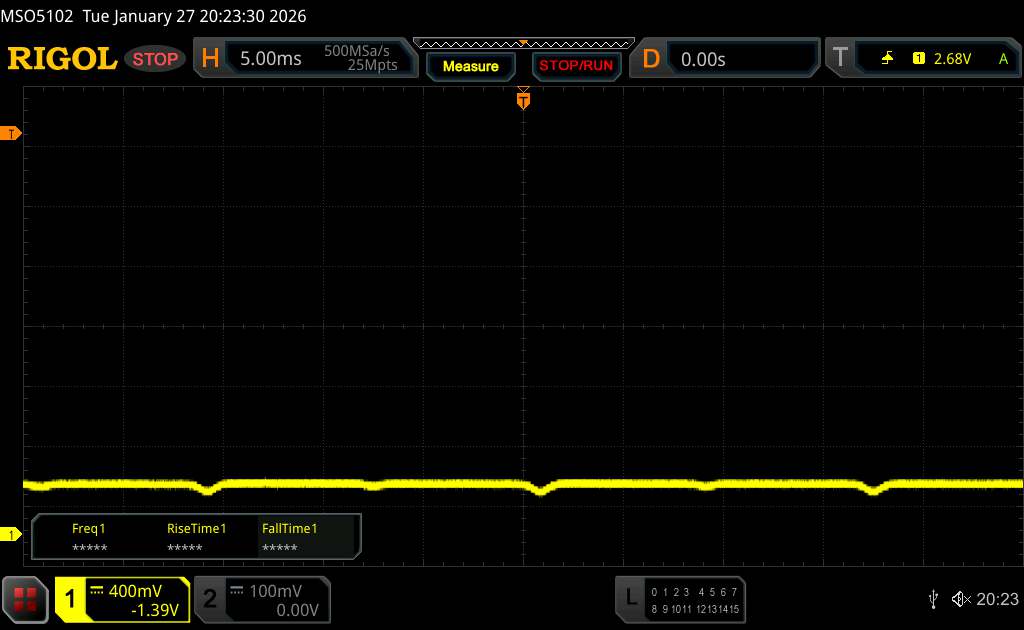
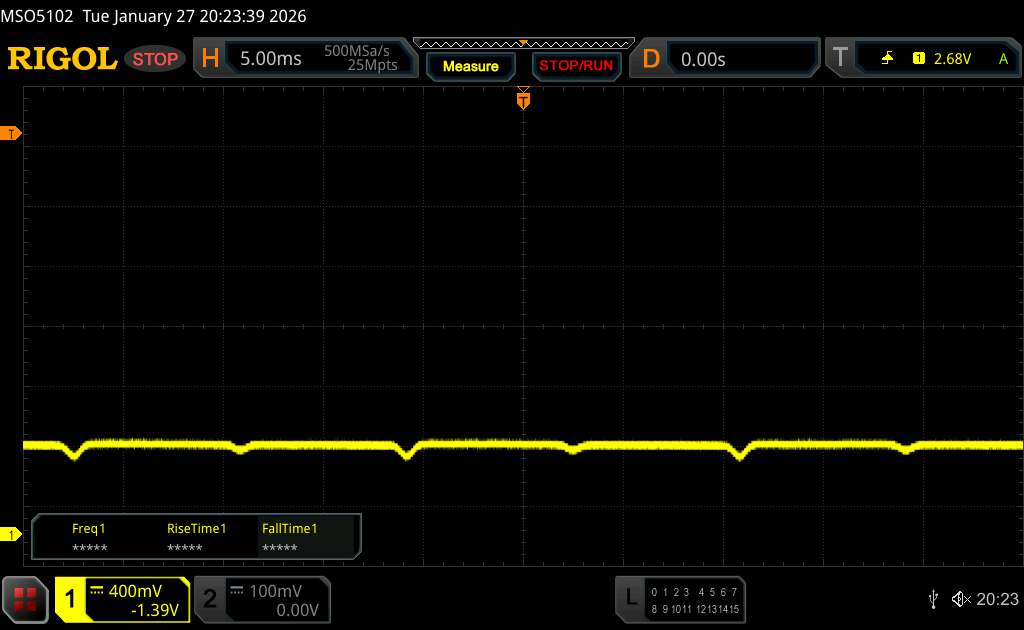
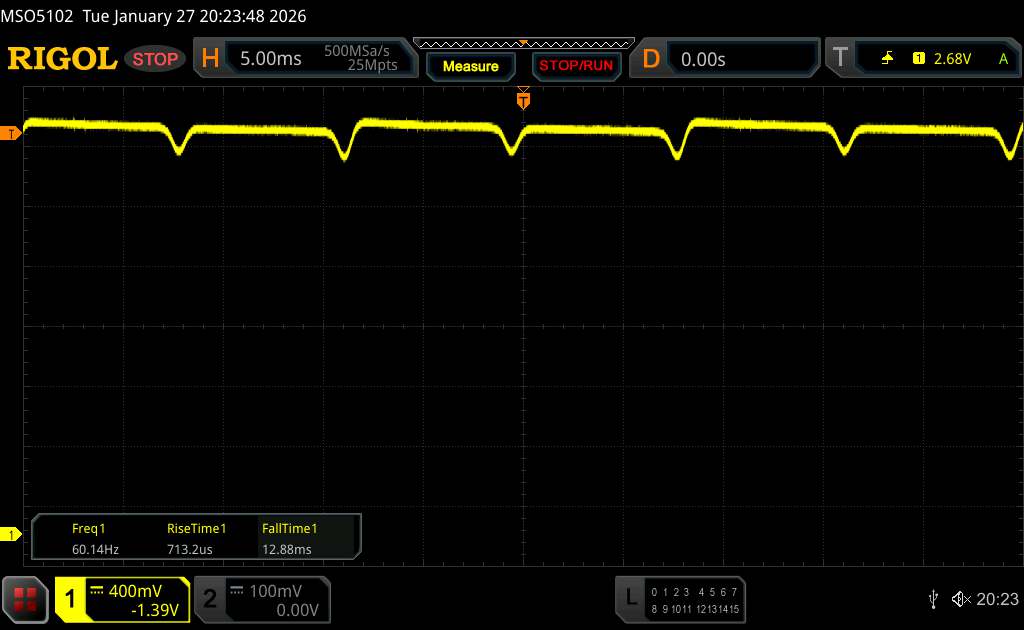
Screen Flickering / PWM (Pulse-Width Modulation)

To dim the screen, some notebooks will simply cycle the backlight on and off in rapid succession - a method called Pulse Width Modulation (PWM) . This cycling frequency should ideally be undetectable to the human eye. If said frequency is too low, users with sensitive eyes may experience strain or headaches or even notice the flickering altogether.
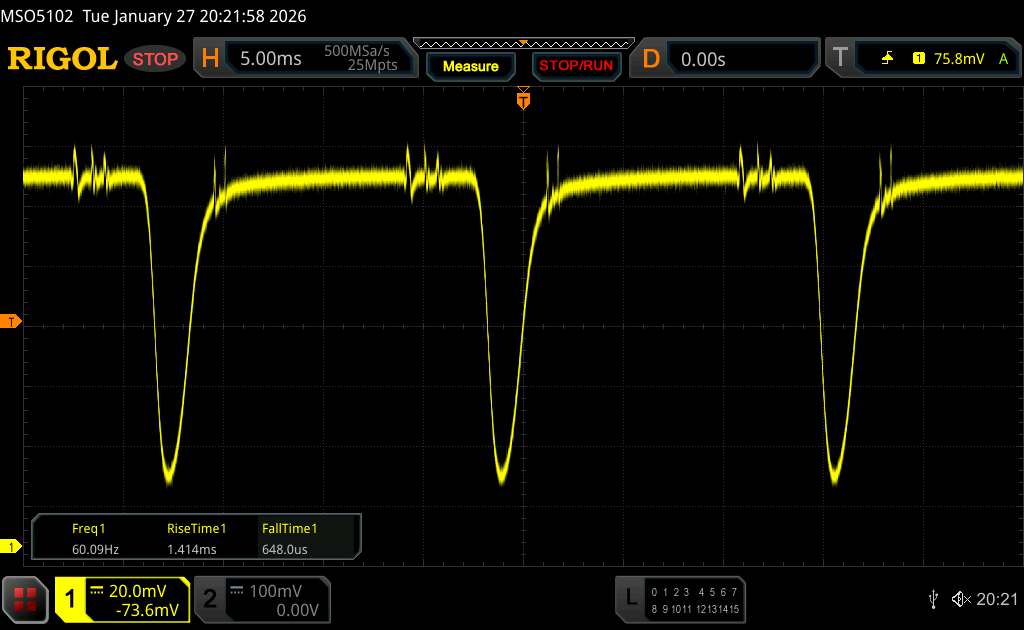
Screen flickering / PWM detected 60 Hz
Amplitude: 14.15 %
Secondary Frequency: 3846 Hz

The display backlight flickers at 60 Hz (worst case, e.g., utilizing PWM) .

The frequency of 60 Hz is very low, so the flickering may cause eyestrain and headaches after extended use.

In comparison: 53 % of all tested devices do not use PWM to dim the display. If PWM was detected, an average of 8016 (minimum: 5 - maximum: 343500) Hz was measured.

minimum display brightness
min.
25 % display brightness
25 %
50 % display brightness
50 %
75 % display brightness
75 %
maximum manual display brightness
100 %

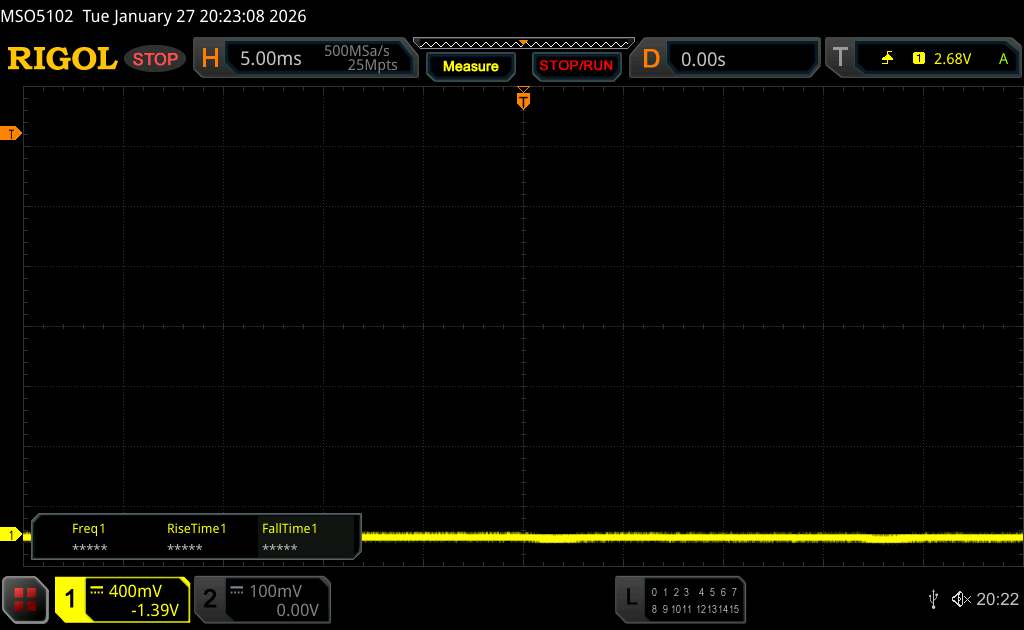
Measurement series with fixed zoom level and different brightness settings (The amplitude curve at minimum brightness looks flat, but this is due to the scaling. The info box shows the enlarged version of the amplitude at minimum brightness)

Color fidelity (color scheme standard, color temperature standard, target color space sRGB)
Color space (color scheme standard, color temperature standard, target color space sRGB)
Grayscale (color scheme standard, color temperature standard, target color space sRGB)

Display Response Times

Display response times show how fast the screen is able to change from one color to the next. Slow response times can lead to afterimages and can cause moving objects to appear blurry (ghosting). Gamers of fast-paced 3D titles should pay special attention to fast response times.
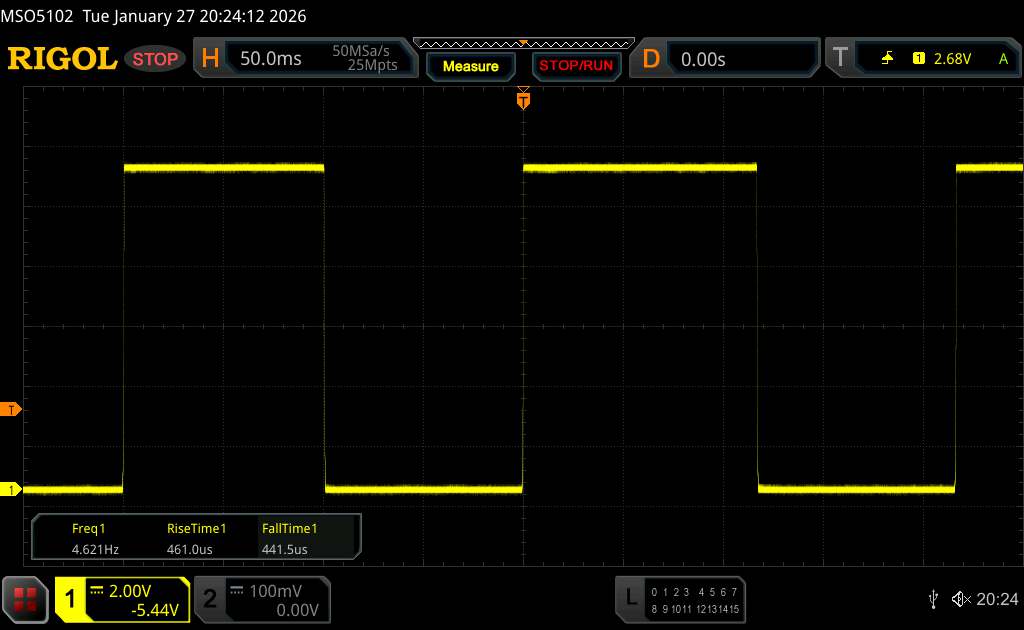
       Response Time Black to White
0.9 ms ... rise ↗ and fall ↘ combined↗ 0.461 ms rise
↘ 0.4415 ms fall
The screen shows very fast response rates in our tests and should be very well suited for fast-paced gaming.
In comparison, all tested devices range from 0.1 (minimum) to 240 (maximum) ms. » 3 % of all devices are better.
This means that the measured response time is better than the average of all tested devices (20.1 ms).
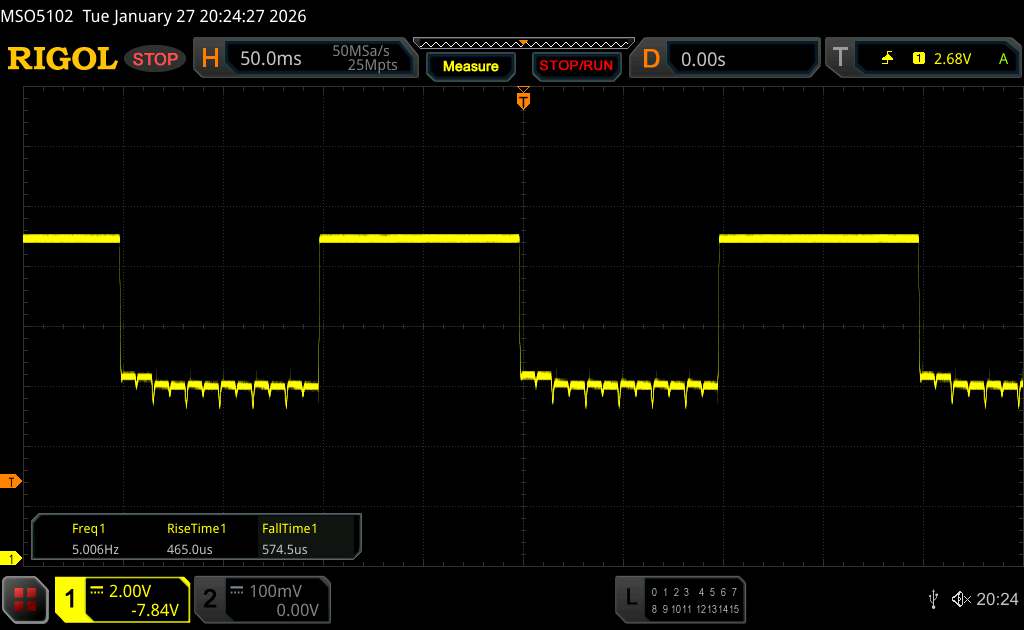
       Response Time 50% Grey to 80% Grey
1.04 ms ... rise ↗ and fall ↘ combined↗ 0.465 ms rise
↘ 0.5745 ms fall
The screen shows very fast response rates in our tests and should be very well suited for fast-paced gaming.
In comparison, all tested devices range from 0.165 (minimum) to 636 (maximum) ms. » 4 % of all devices are better.
This means that the measured response time is better than the average of all tested devices (31.4 ms).
Outdoor use
Point of view

Performance, emissions and battery life - Enduring thanks to silicon technology battery

With the Snapdragon 6 Gen 3 the Poco M8 5G is not fast, but can still get quite warm during operation. The SoC power is not sufficient for complex apps and if you want to play a lot with the smartphone, you are better off with the OnePlus Nord CE 5 for example.

The stereo speakers deliver the typical treble-heavy smartphone sound and sound best at medium volume. USB-C and Bluetooth are available for external sound output.

The 5520 mAh battery helps the Poco M8 5G achieve above-average runtimes. In the WLAN test, only the Nothing Phone (3a) is more enduring. With a suitable power adapter, the Xiaomi can be charged with up to 45 watts. In the test, a full charging cycle takes just under 1.5 hours.

Geekbench 6.5
Single-Core
Average of class Smartphone
  (196 - 3883, n=209, last 2 years)
1727 Points +69%
OnePlus Nord CE 5
MediaTek Dimensity 8350, Mali-G615 MP6, 8192
1325 Points +29%
Nothing Phone (3a)
Qualcomm Snapdragon 7s Gen 3, Adreno 810, 12288
1171 Points +14%
Samsung Galaxy A36 5G
Qualcomm Snapdragon 6 Gen 3, Adreno 710, 6144
1033 Points +1%
Xiaomi Poco X7
MediaTek Dimensity 7300, Mali-G615 MP2, 12288
1030 Points +1%
Xiaomi Poco M8 5G
Qualcomm Snapdragon 6 Gen 3, Adreno 710, 8192
1024 Points
Average Qualcomm Snapdragon 6 Gen 3
  (999 - 1033, n=5)
1017 Points -1%
Xiaomi Poco M7 Pro 5G
MediaTek Dimensity 7025, IMG BXM-8-256, 12288
959 Points -6%
Multi-Core
Average of class Smartphone
  (830 - 11634, n=209, last 2 years)
5083 Points +72%
OnePlus Nord CE 5
MediaTek Dimensity 8350, Mali-G615 MP6, 8192
4201 Points +42%
Nothing Phone (3a)
Qualcomm Snapdragon 7s Gen 3, Adreno 810, 12288
3250 Points +10%
Xiaomi Poco M8 5G
Qualcomm Snapdragon 6 Gen 3, Adreno 710, 8192
2960 Points
Samsung Galaxy A36 5G
Qualcomm Snapdragon 6 Gen 3, Adreno 710, 6144
2955 Points 0%
Average Qualcomm Snapdragon 6 Gen 3
  (2887 - 2963, n=5)
2942 Points -1%
Xiaomi Poco X7
MediaTek Dimensity 7300, Mali-G615 MP2, 12288
2908 Points -2%
Xiaomi Poco M7 Pro 5G
MediaTek Dimensity 7025, IMG BXM-8-256, 12288
2299 Points -22%
3DMark
Wild Life Score
Nothing Phone (3a)
Qualcomm Snapdragon 7s Gen 3, Adreno 810, 12288
3998 Points +22%
Samsung Galaxy A36 5G
Qualcomm Snapdragon 6 Gen 3, Adreno 710, 6144
3484 Points +7%
Average Qualcomm Snapdragon 6 Gen 3
  (3034 - 3484, n=5)
3269 Points 0%
Xiaomi Poco M8 5G
Qualcomm Snapdragon 6 Gen 3, Adreno 710, 8192
3266 Points
Xiaomi Poco X7
MediaTek Dimensity 7300, Mali-G615 MP2, 12288
3141 Points -4%
Average of class Smartphone
  (270 - 13896, n=101, last 2 years)
2870 Points -12%
Xiaomi Poco M7 Pro 5G
MediaTek Dimensity 7025, IMG BXM-8-256, 12288
Points -100%
Wild Life Unlimited Score
Average of class Smartphone
  (271 - 30621, n=191, last 2 years)
11150 Points +239%
OnePlus Nord CE 5
MediaTek Dimensity 8350, Mali-G615 MP6, 8192
9956 Points +203%
Nothing Phone (3a)
Qualcomm Snapdragon 7s Gen 3, Adreno 810, 12288
4186 Points +27%
Samsung Galaxy A36 5G
Qualcomm Snapdragon 6 Gen 3, Adreno 710, 6144
3502 Points +7%
Xiaomi Poco M8 5G
Qualcomm Snapdragon 6 Gen 3, Adreno 710, 8192
3288 Points
Average Qualcomm Snapdragon 6 Gen 3
  (3069 - 3502, n=5)
3287 Points 0%
Xiaomi Poco X7
MediaTek Dimensity 7300, Mali-G615 MP2, 12288
3129 Points -5%
Wild Life Extreme
Average of class Smartphone
  (61 - 8140, n=193, last 2 years)
2934 Points +240%
OnePlus Nord CE 5
MediaTek Dimensity 8350, Mali-G615 MP6, 8192
2774 Points +221%
Nothing Phone (3a)
Qualcomm Snapdragon 7s Gen 3, Adreno 810, 12288
1057 Points +22%
Samsung Galaxy A36 5G
Qualcomm Snapdragon 6 Gen 3, Adreno 710, 6144
907 Points +5%
Xiaomi Poco M8 5G
Qualcomm Snapdragon 6 Gen 3, Adreno 710, 8192
863 Points
Average Qualcomm Snapdragon 6 Gen 3
  (801 - 907, n=5)
862 Points 0%
Xiaomi Poco X7
MediaTek Dimensity 7300, Mali-G615 MP2, 12288
846 Points -2%
Wild Life Extreme Unlimited
Average of class Smartphone
  (62 - 8102, n=192, last 2 years)
2918 Points +242%
OnePlus Nord CE 5
MediaTek Dimensity 8350, Mali-G615 MP6, 8192
2795 Points +228%
Nothing Phone (3a)
Qualcomm Snapdragon 7s Gen 3, Adreno 810, 12288
1063 Points +25%
Samsung Galaxy A36 5G
Qualcomm Snapdragon 6 Gen 3, Adreno 710, 6144
901 Points +6%
Average Qualcomm Snapdragon 6 Gen 3
  (793 - 901, n=5)
856 Points 0%
Xiaomi Poco M8 5G
Qualcomm Snapdragon 6 Gen 3, Adreno 710, 8192
852 Points
Xiaomi Poco X7
MediaTek Dimensity 7300, Mali-G615 MP2, 12288
842 Points -1%
GFXBench
on screen Aztec Ruins Normal Tier Onscreen
OnePlus Nord CE 5
MediaTek Dimensity 8350, Mali-G615 MP6, 8192
69 fps +123%
Average of class Smartphone
  (6.2 - 166, n=206, last 2 years)
59 fps +90%
Nothing Phone (3a)
Qualcomm Snapdragon 7s Gen 3, Adreno 810, 12288
46 fps +48%
Samsung Galaxy A36 5G
Qualcomm Snapdragon 6 Gen 3, Adreno 710, 6144
39 fps +26%
Average Qualcomm Snapdragon 6 Gen 3
  (30 - 39, n=5)
32.4 fps +5%
Xiaomi Poco M8 5G
Qualcomm Snapdragon 6 Gen 3, Adreno 710, 8192
31 fps
Xiaomi Poco X7
MediaTek Dimensity 7300, Mali-G615 MP2, 12288
28 fps -10%
Xiaomi Poco M7 Pro 5G
MediaTek Dimensity 7025, IMG BXM-8-256, 12288
19 fps -39%
1920x1080 Aztec Ruins Normal Tier Offscreen
OnePlus Nord CE 5
MediaTek Dimensity 8350, Mali-G615 MP6, 8192
118 fps +181%
Average of class Smartphone
  (3.4 - 367, n=206, last 2 years)
116.7 fps +178%
Nothing Phone (3a)
Qualcomm Snapdragon 7s Gen 3, Adreno 810, 12288
52 fps +24%
Samsung Galaxy A36 5G
Qualcomm Snapdragon 6 Gen 3, Adreno 710, 6144
44 fps +5%
Xiaomi Poco M8 5G
Qualcomm Snapdragon 6 Gen 3, Adreno 710, 8192
42 fps
Average Qualcomm Snapdragon 6 Gen 3
  (36 - 44, n=5)
40.4 fps -4%
Xiaomi Poco X7
MediaTek Dimensity 7300, Mali-G615 MP2, 12288
40 fps -5%
Xiaomi Poco M7 Pro 5G
MediaTek Dimensity 7025, IMG BXM-8-256, 12288
20 fps -52%
on screen Aztec Ruins High Tier Onscreen
Average of class Smartphone
  (0.85 - 144, n=207, last 2 years)
47.3 fps +125%
OnePlus Nord CE 5
MediaTek Dimensity 8350, Mali-G615 MP6, 8192
47 fps +124%
Nothing Phone (3a)
Qualcomm Snapdragon 7s Gen 3, Adreno 810, 12288
28 fps +33%
Samsung Galaxy A36 5G
Qualcomm Snapdragon 6 Gen 3, Adreno 710, 6144
23 fps +10%
Xiaomi Poco M8 5G
Qualcomm Snapdragon 6 Gen 3, Adreno 710, 8192
21 fps
Average Qualcomm Snapdragon 6 Gen 3
  (19 - 23, n=5)
20.6 fps -2%
Xiaomi Poco X7
MediaTek Dimensity 7300, Mali-G615 MP2, 12288
17 fps -19%
Xiaomi Poco M7 Pro 5G
MediaTek Dimensity 7025, IMG BXM-8-256, 12288
11 fps -48%
2560x1440 Aztec Ruins High Tier Offscreen
OnePlus Nord CE 5
MediaTek Dimensity 8350, Mali-G615 MP6, 8192
49 fps +227%
Average of class Smartphone
  (1.2 - 146, n=206, last 2 years)
44.9 fps +199%
Nothing Phone (3a)
Qualcomm Snapdragon 7s Gen 3, Adreno 810, 12288
20 fps +33%
Samsung Galaxy A36 5G
Qualcomm Snapdragon 6 Gen 3, Adreno 710, 6144
16 fps +7%
Xiaomi Poco X7
MediaTek Dimensity 7300, Mali-G615 MP2, 12288
15 fps 0%
Xiaomi Poco M8 5G
Qualcomm Snapdragon 6 Gen 3, Adreno 710, 8192
15 fps
Average Qualcomm Snapdragon 6 Gen 3
  (13 - 16, n=5)
14.6 fps -3%
Xiaomi Poco M7 Pro 5G
MediaTek Dimensity 7025, IMG BXM-8-256, 12288
6.9 fps -54%
3840x2160 4K Aztec Ruins High Tier Offscreen
OnePlus Nord CE 5
MediaTek Dimensity 8350, Mali-G615 MP6, 8192
21 fps +218%
Average of class Smartphone
  (0.54 - 62, n=207, last 2 years)
20.8 fps +215%
Nothing Phone (3a)
Qualcomm Snapdragon 7s Gen 3, Adreno 810, 12288
8.8 fps +33%
Samsung Galaxy A36 5G
Qualcomm Snapdragon 6 Gen 3, Adreno 710, 6144
7.1 fps +8%
Xiaomi Poco M8 5G
Qualcomm Snapdragon 6 Gen 3, Adreno 710, 8192
6.6 fps
Average Qualcomm Snapdragon 6 Gen 3
  (5.9 - 7.1, n=5)
6.52 fps -1%
Xiaomi Poco X7
MediaTek Dimensity 7300, Mali-G615 MP2, 12288
6.5 fps -2%
Xiaomi Poco M7 Pro 5G
MediaTek Dimensity 7025, IMG BXM-8-256, 12288
2.9 fps -56%
Geekbench AI
Single Precision NPU 1.5
OnePlus Nord CE 5
MediaTek Dimensity 8350, Mali-G615 MP6, 8192
1112 Points +804%
Average of class Smartphone
  (80 - 5210, n=76, last 2 years)
702 Points +471%
Average Qualcomm Snapdragon 6 Gen 3
  (123 - 138, n=3)
132.7 Points +8%
Xiaomi Poco M8 5G
Qualcomm Snapdragon 6 Gen 3, Adreno 710, 8192
123 Points
Half Precision NPU 1.5
OnePlus Nord CE 5
MediaTek Dimensity 8350, Mali-G615 MP6, 8192
4496 Points +3555%
Average of class Smartphone
  (80 - 36297, n=76, last 2 years)
2788 Points +2167%
Average Qualcomm Snapdragon 6 Gen 3
  (123 - 141, n=3)
134 Points +9%
Xiaomi Poco M8 5G
Qualcomm Snapdragon 6 Gen 3, Adreno 710, 8192
123 Points
Quantized NPU 1.5
OnePlus Nord CE 5
MediaTek Dimensity 8350, Mali-G615 MP6, 8192
4547 Points +1195%
Average of class Smartphone
  (133 - 49889, n=76, last 2 years)
4123 Points +1075%
Average Qualcomm Snapdragon 6 Gen 3
  (351 - 398, n=3)
380 Points +8%
Xiaomi Poco M8 5G
Qualcomm Snapdragon 6 Gen 3, Adreno 710, 8192
351 Points
CrossMark
Overall
Average of class Smartphone
  (187 - 2856, n=116, last 2 years)
1153 Points +45%
Samsung Galaxy A36 5G
Qualcomm Snapdragon 6 Gen 3, Adreno 710, 6144
877 Points +10%
Average Qualcomm Snapdragon 6 Gen 3
  (737 - 877, n=4)
813 Points +2%
Xiaomi Poco M8 5G
Qualcomm Snapdragon 6 Gen 3, Adreno 710, 8192
796 Points
Nothing Phone (3a)
Qualcomm Snapdragon 7s Gen 3, Adreno 810, 12288
785 Points -1%
Xiaomi Poco X7
MediaTek Dimensity 7300, Mali-G615 MP2, 12288
759 Points -5%
Xiaomi Poco M7 Pro 5G
MediaTek Dimensity 7025, IMG BXM-8-256, 12288
597 Points -25%
Productivity
Average of class Smartphone
  (198 - 2366, n=116, last 2 years)
1073 Points +64%
Nothing Phone (3a)
Qualcomm Snapdragon 7s Gen 3, Adreno 810, 12288
847 Points +30%
Xiaomi Poco X7
MediaTek Dimensity 7300, Mali-G615 MP2, 12288
837 Points +28%
Average Qualcomm Snapdragon 6 Gen 3
  (654 - 810, n=4)
718 Points +10%
Samsung Galaxy A36 5G
Qualcomm Snapdragon 6 Gen 3, Adreno 710, 6144
717 Points +10%
Xiaomi Poco M7 Pro 5G
MediaTek Dimensity 7025, IMG BXM-8-256, 12288
667 Points +2%
Xiaomi Poco M8 5G
Qualcomm Snapdragon 6 Gen 3, Adreno 710, 8192
654 Points
Creativity
Average of class Smartphone
  (163 - 2123, n=116, last 2 years)
970 Points +68%
Nothing Phone (3a)
Qualcomm Snapdragon 7s Gen 3, Adreno 810, 12288
692 Points +20%
Xiaomi Poco X7
MediaTek Dimensity 7300, Mali-G615 MP2, 12288
654 Points +13%
Samsung Galaxy A36 5G
Qualcomm Snapdragon 6 Gen 3, Adreno 710, 6144
606 Points +5%
Average Qualcomm Snapdragon 6 Gen 3
  (579 - 630, n=4)
604 Points +4%
Xiaomi Poco M8 5G
Qualcomm Snapdragon 6 Gen 3, Adreno 710, 8192
579 Points
Xiaomi Poco M7 Pro 5G
MediaTek Dimensity 7025, IMG BXM-8-256, 12288
487 Points -16%
Responsiveness
Samsung Galaxy A36 5G
Qualcomm Snapdragon 6 Gen 3, Adreno 710, 6144
4856 Points +30%
Xiaomi Poco M8 5G
Qualcomm Snapdragon 6 Gen 3, Adreno 710, 8192
3728 Points
Average Qualcomm Snapdragon 6 Gen 3
  (893 - 4856, n=4)
3414 Points -8%
Average of class Smartphone
  (239 - 13042, n=116, last 2 years)
3060 Points -18%
Nothing Phone (3a)
Qualcomm Snapdragon 7s Gen 3, Adreno 810, 12288
909 Points -76%
Xiaomi Poco X7
MediaTek Dimensity 7300, Mali-G615 MP2, 12288
886 Points -76%
Xiaomi Poco M7 Pro 5G
MediaTek Dimensity 7025, IMG BXM-8-256, 12288
767 Points -79%
Jetstream 2 - 2.0 Total Score
Nothing Phone (3a)
Qualcomm Snapdragon 7s Gen 3, Adreno 810, 12288
161.602 Points +38%
Average of class Smartphone
  (23.8 - 358, n=143, last 2 years)
151.9 Points +30%
Samsung Galaxy A36 5G
Qualcomm Snapdragon 6 Gen 3, Adreno 710, 6144
131.654 Points +13%
Average Qualcomm Snapdragon 6 Gen 3
  (117 - 147.8, n=4)
130.7 Points +12%
OnePlus Nord CE 5
MediaTek Dimensity 8350, Mali-G615 MP6, 8192
122.3 Points +5%
Xiaomi Poco M8 5G
Qualcomm Snapdragon 6 Gen 3, Adreno 710, 8192
116.992 Points
Xiaomi Poco M7 Pro 5G
MediaTek Dimensity 7025, IMG BXM-8-256, 12288
108.784 Points -7%
Xiaomi Poco X7
MediaTek Dimensity 7300, Mali-G615 MP2, 12288
87.225 Points -25%
Xiaomi Poco M8 5GNothing Phone (3a)OnePlus Nord CE 5Samsung Galaxy A36 5GXiaomi Poco M7 Pro 5GXiaomi Poco X7Average 512 GB UFS 2.2 FlashAverage of class Smartphone
AndroBench 3-5
19%
15%
-27%
15%
-16%
10%
82%
Sequential Read 256KB (MB/s)
1042.73
1031.34
-1%
1235
18%
968.34
-7%
987.81
-5%
947.4
-9%
Sequential Write 256KB (MB/s)
893.75
1001.28
12%
795
-11%
166.77
-81%
943.43
6%
915.23
2%
Random Read 4KB (MB/s)
146.5
245.48
68%
222
52%
233.98
60%
243.98
67%
100.16
-32%
Random Write 4KB (MB/s)
294.99
285.24
-3%
302
2%
62.58
-79%
265.26
-10%
226.88
-23%
Max. Load
 44.5 °C
112 F
42.4 °C
108 F
38.2 °C
101 F
 
 42.8 °C
109 F
42.2 °C
108 F
37.3 °C
99 F
 
 42.4 °C
108 F
40.4 °C
105 F
36.4 °C
98 F
 
Maximum: 44.5 °C = 112 F
Average: 40.7 °C = 105 F
37.1 °C
99 F
38.7 °C
102 F
40 °C
104 F
35.6 °C
96 F
38.8 °C
102 F
39.7 °C
103 F
33.8 °C
93 F
37.5 °C
100 F
38.7 °C
102 F
Maximum: 40 °C = 104 F
Average: 37.8 °C = 100 F
Room Temperature 21.8 °C = 71 F | Fluke t3000FC (calibrated) & Voltcraft IR-260
(-) The average temperature for the upper side under maximal load is 40.7 °C / 105 F, compared to the average of 32.9 °C / 91 F for the devices in the class Smartphone.
(±) The maximum temperature on the upper side is 44.5 °C / 112 F, compared to the average of 35.2 °C / 95 F, ranging from 21.9 to 247 °C for the class Smartphone.
(±) The bottom heats up to a maximum of 40 °C / 104 F, compared to the average of 34 °C / 93 F
(+) In idle usage, the average temperature for the upper side is 26 °C / 79 F, compared to the device average of 32.9 °C / 91 F.

3DMark Stress Tests

3DMark
Wild Life Stress Test Stability
Nothing Phone (3a)
Adreno 810, SD 7s Gen 3, 256 GB UFS 3.1 Flash
99.6 % +1%
Xiaomi Poco X7
Mali-G615 MP2, Dimensity 7300, 512 GB UFS 2.2 Flash
99.4 % 0%
Samsung Galaxy A36 5G
Adreno 710, SD 6 Gen 1, 256 GB UFS 3.1 Flash
99.4 % 0%
Xiaomi Poco M8 5G
Adreno 710, SD 6 Gen 1, 512 GB UFS 2.2 Flash
99 %
Wild Life Extreme Stress Test
Nothing Phone (3a)
Adreno 810, SD 7s Gen 3, 256 GB UFS 3.1 Flash
99.8 % +1%
Xiaomi Poco X7
Mali-G615 MP2, Dimensity 7300, 512 GB UFS 2.2 Flash
99.6 % 0%
Xiaomi Poco M8 5G
Adreno 710, SD 6 Gen 1, 512 GB UFS 2.2 Flash
99.2 %
Samsung Galaxy A36 5G
Adreno 710, SD 6 Gen 1, 256 GB UFS 3.1 Flash
99 % 0%
OnePlus Nord CE 5
Mali-G615 MP6, Dimensity 8350, 128 GB UFS 3.1 Flash
97.1 % -2%
Steel Nomad Light Stress Test Stability
Nothing Phone (3a)
Adreno 810, SD 7s Gen 3, 256 GB UFS 3.1 Flash
99.3 % 0%
Xiaomi Poco M8 5G
Adreno 710, SD 6 Gen 1, 512 GB UFS 2.2 Flash
99.1 %
Xiaomi Poco X7
Mali-G615 MP2, Dimensity 7300, 512 GB UFS 2.2 Flash
98.6 % -1%
0510152025Tooltip
Xiaomi Poco M8 5G Adreno 710, SD 6 Gen 1, 512 GB UFS 2.2 Flash; Wild Life Extreme Stress Test; 1.1.14.3: Ø5.17 (5.15-5.19)
Nothing Phone (3a) Adreno 810, SD 7s Gen 3, 256 GB UFS 3.1 Flash; Wild Life Extreme Stress Test; 1.1.4.1: Ø6.28 (6.27-6.29)
OnePlus Nord CE 5 Mali-G615 MP6, Dimensity 8350, 128 GB UFS 3.1 Flash; Wild Life Extreme Stress Test; 1.1.14.1: Ø18.1 (17.7-18.2)
Samsung Galaxy A36 5G Adreno 710, SD 6 Gen 1, 256 GB UFS 3.1 Flash; Wild Life Extreme Stress Test; 1.1.4.1: Ø5.42 (5.38-5.44)
Xiaomi Poco X7 Mali-G615 MP2, Dimensity 7300, 512 GB UFS 2.2 Flash; Wild Life Extreme Stress Test; 1.1.4.1: Ø5.06 (5.05-5.07)
Xiaomi Poco M8 5G Adreno 710, SD 6 Gen 1, 512 GB UFS 2.2 Flash; Wild Life Stress Test Stability; 0.0.0.0: Ø19.5 (19.3-19.5)
Nothing Phone (3a) Adreno 810, SD 7s Gen 3, 256 GB UFS 3.1 Flash; Wild Life Stress Test Stability; 0.0.0.0: Ø23.8 (23.8-23.9)
Samsung Galaxy A36 5G Adreno 710, SD 6 Gen 1, 256 GB UFS 3.1 Flash; Wild Life Stress Test Stability; 0.0.0.0: Ø20.7 (20.6-20.8)
Xiaomi Poco X7 Mali-G615 MP2, Dimensity 7300, 512 GB UFS 2.2 Flash; Wild Life Stress Test Stability; 0.0.0.0: Ø18.7 (18.7-18.8)
Xiaomi Poco M8 5G Adreno 710, SD 6 Gen 1, 512 GB UFS 2.2 Flash; Wild Life Unlimited Stress Test Stability; 0.0.0.0: Ø19.7 (19.6-19.7)
Nothing Phone (3a) Adreno 810, SD 7s Gen 3, 256 GB UFS 3.1 Flash; Wild Life Unlimited Stress Test Stability; 0.0.0.0: Ø24.7 (24.7-25)
Samsung Galaxy A36 5G Adreno 710, SD 6 Gen 1, 256 GB UFS 3.1 Flash; Wild Life Unlimited Stress Test Stability; 0.0.0.0: Ø20.8 (20.7-20.9)
Xiaomi Poco X7 Mali-G615 MP2, Dimensity 7300, 512 GB UFS 2.2 Flash; Wild Life Unlimited Stress Test Stability; 0.0.0.0: Ø18.7 (18.7-18.8)
Xiaomi Poco M8 5G Adreno 710, SD 6 Gen 1, 512 GB UFS 2.2 Flash; Steel Nomad Light Stress Test Stability; 1.0.6.2: Ø2.26 (2.26-2.28)
Nothing Phone (3a) Adreno 810, SD 7s Gen 3, 256 GB UFS 3.1 Flash; Steel Nomad Light Stress Test Stability; 1.1.1.3: Ø2.81 (2.8-2.81)
Xiaomi Poco X7 Mali-G615 MP2, Dimensity 7300, 512 GB UFS 2.2 Flash; Steel Nomad Light Stress Test Stability; 1.1.1.3: Ø2.56 (2.54-2.57)
dB(A) 0102030405060708090Deep BassMiddle BassHigh BassLower RangeMidsHigher MidsLower HighsMid HighsUpper HighsSuper Highs2036.634.92526.227.23120.226.74034.331.45039.234.7632427.6801425.910013.726.712514.427.81601839.520014.545.125014.75231513.255.640012.350.250010.956.263011.559.380011.365.4100011.470.5125011.680.7160011.678.1200011.780.5250012.181.7315012.380.9400012.772.1500013.176.9630013.176.880001373.31000013.174.81250013.175.1160001363SPL24.589.8N0.673.1median 13median 72.1Delta1.311.937.839.528.134.724.429.720.53029.53518.930.917.734.815.836.213.439.613.953.611.251.910.453.711.759.110.163.28.865.88.965.49.271.79.876.610.378.510.879.611.880.211.380.212811381.912.677.512.877.412.975.513.375.413.559.513.656.523.890.50.582.1median 11.8median 75.41.510.6hearing rangehide median Pink NoiseXiaomi Poco M8 5GSamsung Galaxy A36 5G
Frequency diagram (checkboxes can be checked and unchecked to compare devices)
Xiaomi Poco M8 5G audio analysis

(+) | speakers can play relatively loud (89.8 dB)
Bass 100 - 315 Hz
(-) | nearly no bass - on average 31% lower than median
(±) | linearity of bass is average (8.4% delta to prev. frequency)
Mids 400 - 2000 Hz
(±) | reduced mids - on average 10.2% lower than median
(±) | linearity of mids is average (8.7% delta to prev. frequency)
Highs 2 - 16 kHz
(+) | balanced highs - only 4.5% away from median
(+) | highs are linear (5% delta to prev. frequency)
Overall 100 - 16.000 Hz
(±) | linearity of overall sound is average (22.3% difference to median)
Compared to same class
» 47% of all tested devices in this class were better, 7% similar, 46% worse
» The best had a delta of 11%, average was 35%, worst was 134%
Compared to all devices tested
» 64% of all tested devices were better, 6% similar, 29% worse
» The best had a delta of 4%, average was 24%, worst was 134%

Samsung Galaxy A36 5G audio analysis

(+) | speakers can play relatively loud (90.5 dB)
Bass 100 - 315 Hz
(-) | nearly no bass - on average 26.4% lower than median
(±) | linearity of bass is average (7.3% delta to prev. frequency)
Mids 400 - 2000 Hz
(±) | reduced mids - on average 6.1% lower than median
(+) | mids are linear (4.3% delta to prev. frequency)
Highs 2 - 16 kHz
(+) | balanced highs - only 3% away from median
(+) | highs are linear (1.8% delta to prev. frequency)
Overall 100 - 16.000 Hz
(±) | linearity of overall sound is average (17.9% difference to median)
Compared to same class
» 15% of all tested devices in this class were better, 8% similar, 76% worse
» The best had a delta of 11%, average was 35%, worst was 134%
Compared to all devices tested
» 36% of all tested devices were better, 8% similar, 56% worse
» The best had a delta of 4%, average was 24%, worst was 134%

Battery Runtime
WiFi Websurfing (Chrome 144.0.7559.132)
19h 18min
Battery runtime - WiFi v1.3
Xiaomi Poco M8 5G
5520 mAh
19.3 h
Nothing Phone (3a)
5000 mAh
20.6 h
OnePlus Nord CE 5
5200 mAh
16.9 h
Samsung Galaxy A36 5G
5000 mAh
14.8 h
Xiaomi Poco M7 Pro 5G
5110 mAh
17.4 h
Xiaomi Poco X7
5110 mAh
17.5 h

Notebookcheck overall rating

Buyers who want to spend little money on a smartphone are undoubtedly well served with the Xiaomi Poco M8 5G. However, competitors such as the Samsung Galaxy A36 5G offer even more value for the same money.

Xiaomi Poco M8 5G - 02/19/2026 v8
Manuel Masiero

Chassis
86%
Keyboard
67 / 75 → 89%
Pointing Device
90%
Connectivity
45 / 69 → 65%
Weight
91%
Battery
92%
Display
89%
Games Performance
14 / 55 → 25%
Application Performance
62 / 85 → 73%
AI Performance
9%
Temperature
88%
Noise
100%
Audio
74 / 90 → 82%
Camera
57%
Average
62%
76%
Smartphone - Weighted Average
CO2 Emissions
No Data
Materials
0%
Packaging
50%
Power Use
96.1%
Repairability
60%
Software Updates
89%
Recycle Logo Total Sustainability Score: 49.2%

Possible alternatives in comparison

Image
Model / Review
Price
Weight
Drive
Display
1.
76.3%
Xiaomi Poco M8 5G
Xiaomi Poco M8 5G
Qualcomm Snapdragon 6 Gen 3 ⎘
Qualcomm Adreno 710 ⎘
8 GB Memory, 512 GB UFS 2.1
Amazon:
1. 
Anoowkoa 2 Pack for Xiaomi R...
2. 
Natbok 2+2 Pack 3D Screen Pr...
3. 
Natbok 2+2 Pack 3D Screen Pr...
List Price: 300€
178 g512 GB UFS 2.2 Flash6.77"
2392x1080
388 PPI
AMOLED
2.
79.2%
Nothing Phone (3a)
Nothing Phone (3a)
Qualcomm Snapdragon 7s Gen 3 ⎘
Qualcomm Adreno 810 ⎘
12 GB Memory, 256 GB 
Amazon:
1. 
Nothing Phone (3) Cell Phone...
2. 
Nothing Phone (3) Cell Phone...
3. 
JETech Screen Protector for ...
201 g256 GB UFS 3.1 Flash6.77"
2392x1080
387 PPI
AMOLED
3.
80.8%
OnePlus Nord CE 5
OnePlus Nord CE 5
MediaTek Dimensity 8350 ⎘
ARM Mali-G615 MP6 ⎘
8 GB Memory, 128 GB 
Amazon:
List Price: 349€
199 g128 GB UFS 3.1 Flash6.77"
2392x1080
388 PPI
AMOLED
4.
78%
Samsung Galaxy A36 5G
Qualcomm Snapdragon 6 Gen 3 ⎘
Qualcomm Adreno 710 ⎘
6 GB Memory, 256 GB 
Amazon:
1. 
Samsung Galaxy A36 5G A Seri...
2. 
SAMSUNG Galaxy A36 5G 2025 |...
3. 
Samsung Galaxy A36 5G 2025 |...
List Price: 379€
195 g256 GB UFS 3.1 Flash6.70"
2340x1080
385 PPI
Super AMOLED
5.
76.1%
Xiaomi Poco M7 Pro 5G
MediaTek Dimensity 7025 ⎘
IMG BXM-8-256 ⎘
12 GB Memory, 256 GB UFS 2.1
Amazon:
1. 
Suttkue for Xiaomi Poco M7 P...
2. 
Ibywind Screen Protector For...
3. 
XIAOMI Poco X7 PRO 5G + 4G L...
List Price: 240€
190 g256 GB UFS 2.2 Flash6.67"
2400x1080
395 PPI
AMOLED
6.
77.7%
Xiaomi Poco X7
Xiaomi Poco X7
MediaTek Dimensity 7300 ⎘
ARM Mali-G615 MP2 ⎘
12 GB Memory, 512 GB UFS 2.1
Amazon:
1. 
XIAOMI Poco X7 PRO 5G + 4G L...
2. 
XIAOMI Poco X7 PRO 5G + 4G L...
3. 
Suttkue for Xiaomi Poco X7 P...
185.5 g512 GB UFS 2.2 Flash6.67"
2712x1220
446 PPI
AMOLED

Transparency

The selection of devices to be reviewed is made by our editorial team. The test sample was provided to the author as a loan by the manufacturer or retailer for the purpose of this review. The lender had no influence on this review, nor did the manufacturer receive a copy of this review before publication. There was no obligation to publish this review. As an independent media company, Notebookcheck is not subjected to the authority of manufacturers, retailers or publishers.

This is how Notebookcheck is testing

Every year, Notebookcheck independently reviews hundreds of laptops and smartphones using standardized procedures to ensure that all results are comparable. We have continuously developed our test methods for around 20 years and set industry standards in the process. In our test labs, high-quality measuring equipment is utilized by experienced technicians and editors. These tests involve a multi-stage validation process. Our complex rating system is based on hundreds of well-founded measurements and benchmarks, which maintains objectivity. Further information on our test methods can be found here.

Please share our article, every link counts!
Mail Logo
Google Logo Add as a preferred
source on Google
static version load dynamic
Loading Comments
Comment on this article
> Expert Reviews and News on Laptops, Smartphones and Tech Innovations > Reviews > Battery and display are better, but the Samsung Galaxy A36 remains our favorite - Xiaomi Poco M8 5G review
Manuel Masiero, 2026-02-20 (Update: 2026-02-20)