Asus crams a Radeon RX 9060 XT into a tiny box — then cuts its speed nearly in half
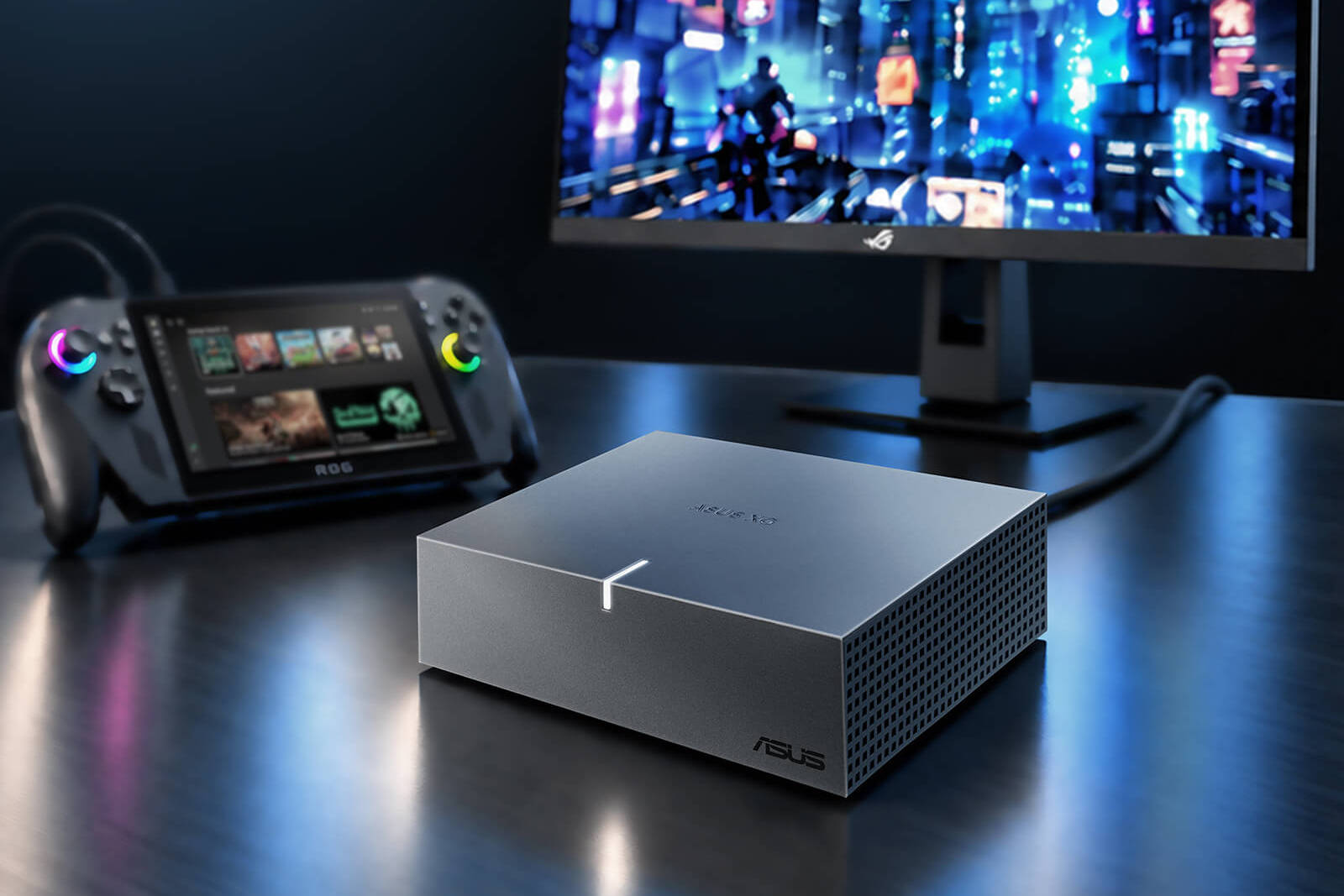
Asus has squeezed a desktop-class AMD Radeon RX 9060 XT into an unusually compact external graphics card, but keeping the GPU within a 75 W power budget has required substantial clock speed reductions. The XG Core Radeon RX 9060 XT LP 16GB reaches a boost clock of just 1.6 GHz, nearly half the frequency of conventional desktop versions of the GPU.
Asus has updated the specifications of its XG Core, which was announced in June. The external GPU operates at a default game clock of 1,010 MHz and a boost clock of 1,600 MHz. Enabling OC mode through Asus GPU Tweak III raises these figures slightly, to 1,030 MHz and 1,620 MHz, respectively.
The reduced frequencies are a consequence of the device's 75 W power limit. For comparison, Vastarmor's relatively compact low-profile Radeon RX 9060 XT LP has a 140 W power rating, a 2,450 MHz game clock and a 3,050 MHz boost clock. AMD's reference specifications of the Radeon RX 9060 XT list a game clock of 2,530 MHz and a boost clock of up to 3,130 MHz. This means Asus has cut the XG Core's game and boost clocks by 59 % and 48 %, respectively, compared with Vastarmor's card. Against AMD's reference specifications, the reductions are even greater, at approximately 60 % and 49 %.
Despite the reduced power limit, the XG Core retains the same 2,048 Stream Processors, 16 GB of GDDR6 memory, 20 Gbps memory speed and 128-bit memory bus as the desktop Radeon RX 9060 XT.
The XG Core measures just 144 × 117 × 39 mm and connects to laptops, mini PCs and gaming handhelds through a 40 Gbps USB-C interface. The enclosure also features a separate USB-C power input, HDMI 2.1b and DisplayPort 2.1a outputs, allowing users to connect up to two external monitors.
However, the lower clock speeds are not the only potential performance limitation. Unlike a conventional desktop graphics card, the XG Core relies on a 40 Gbps external connection rather than a native PCIe 5.0 interface.
Asus previously claimed that the XG Core could deliver more than 60 FPS in selected AAA games at 1440p, but did not provide detailed testing conditions or comparisons with desktop graphics cards. Clock speeds alone cannot show exactly how much slower the external GPU will be in games.
Asus has yet to announce pricing or a release date for the XG Core Radeon RX 9060 XT LP 16GB.
Source(s)
Asus via VideoCardz
 Add as a preferred source on Google