


Apple's PROLED XDR display is the new benchmark, but the touchscreen is just a gimmick
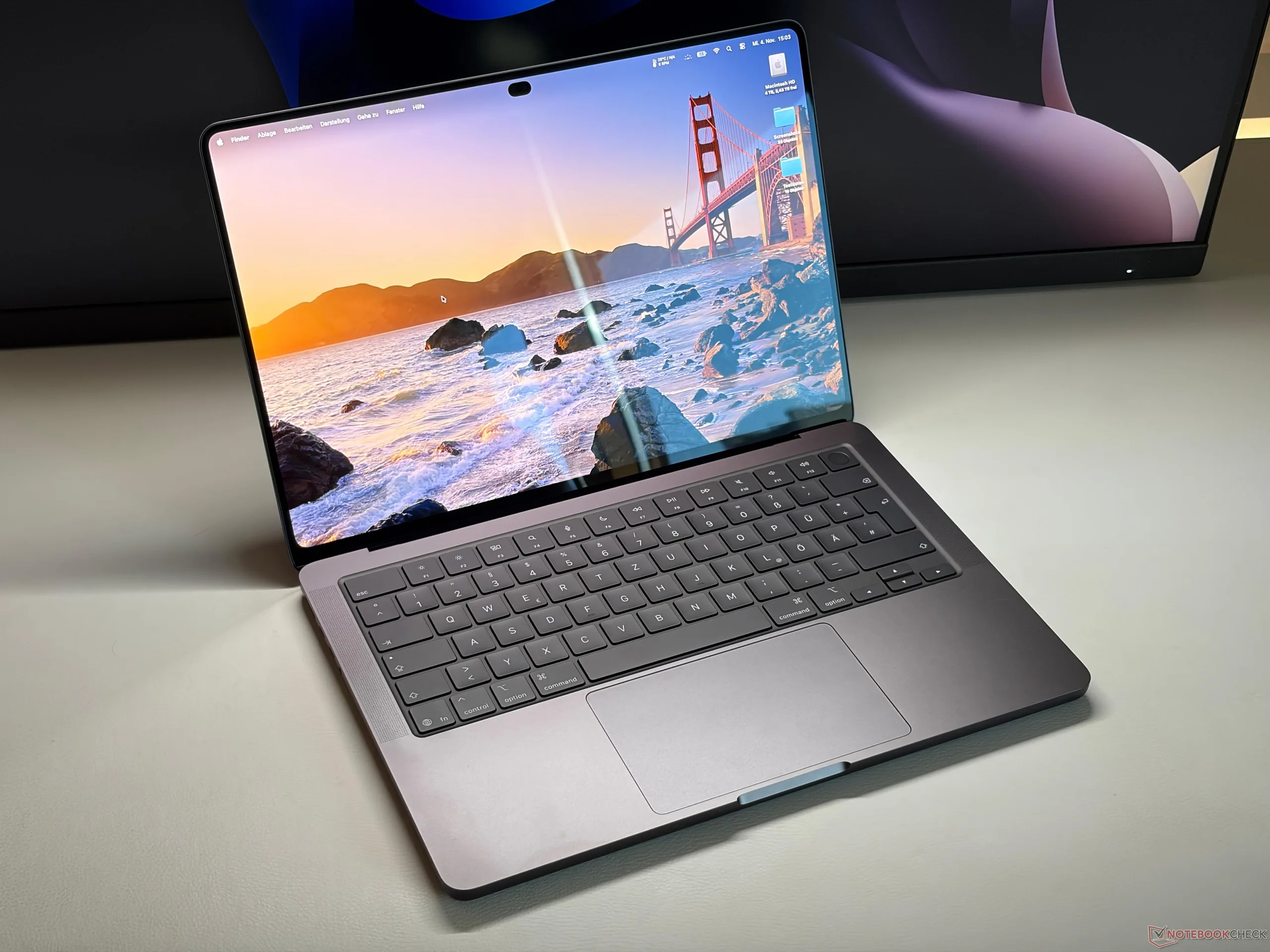
PROLED XDR - behind this somewhat unwieldy name is the first tandem OLED display that Apple uses in its MacBooks. It outperforms the previous Mini-LED panel in virtually every respect and also comfortably surpasses other tandem OLED laptops. For many years, the previous Mini-LED display impressed with its incredible brightness and accurate color reproduction. However, its design also had drawbacks, such as blooming, and its response times could not match those of OLED panels either. The Mini-LED panels also consumed a lot of power at high brightness levels. It was only last year that notebooks with tandem OLED displays capable of matching the brightness of Apple's Mini-LED panels came onto the market.
Color reproduction also benefits from the special design of a tandem OLED panel, which stacks two layers on top of each other. Apple's tandem OLED display delivers further noticeable improvements here, extending its lead over the Windows competition. Maximum brightness in HDR mode exceeds 2,000 nits. This puts Apple ahead of even the Mini-LED panel in the Microsoft Surface Laptop Ultra.
In addition to the usual P3 color space, the panel also covers the AdobeRGB color space, providing a noticeable advantage for image editing. No other OLED panel on the market can currently match it in this respect. As expected, the color profiles are very accurate, and overall image quality is simply outstanding. The OLED display is also relatively efficient, resulting in better battery life than the Mini-LED version of the MacBook Pro.
Apple now also includes a touchscreen. In principle, we see this as more of a gimmick, since the ergonomics of a conventional laptop without a display that folds all the way back are not particularly good. Apple co-founder Steve Jobs explained this back in 2010. If Apple had been truly serious about the touchscreen, it would also support the Apple Pencil. As it stands, however, it remains a gimmick. At least the touchscreen does not negatively affect image quality, unlike many Windows competitors, where bright content often looks slightly grainy.
Overall, Apple raises the bar considerably for laptop displays with this panel. It will likely take a while for the competition to close the gap. All further information, including detailed measurements and analyses of the various color profiles, is available in our review of the new Apple MacBook Pro 14 OLED.
 Add as a preferred source on Google


