




These failed stars could merge to form a new star
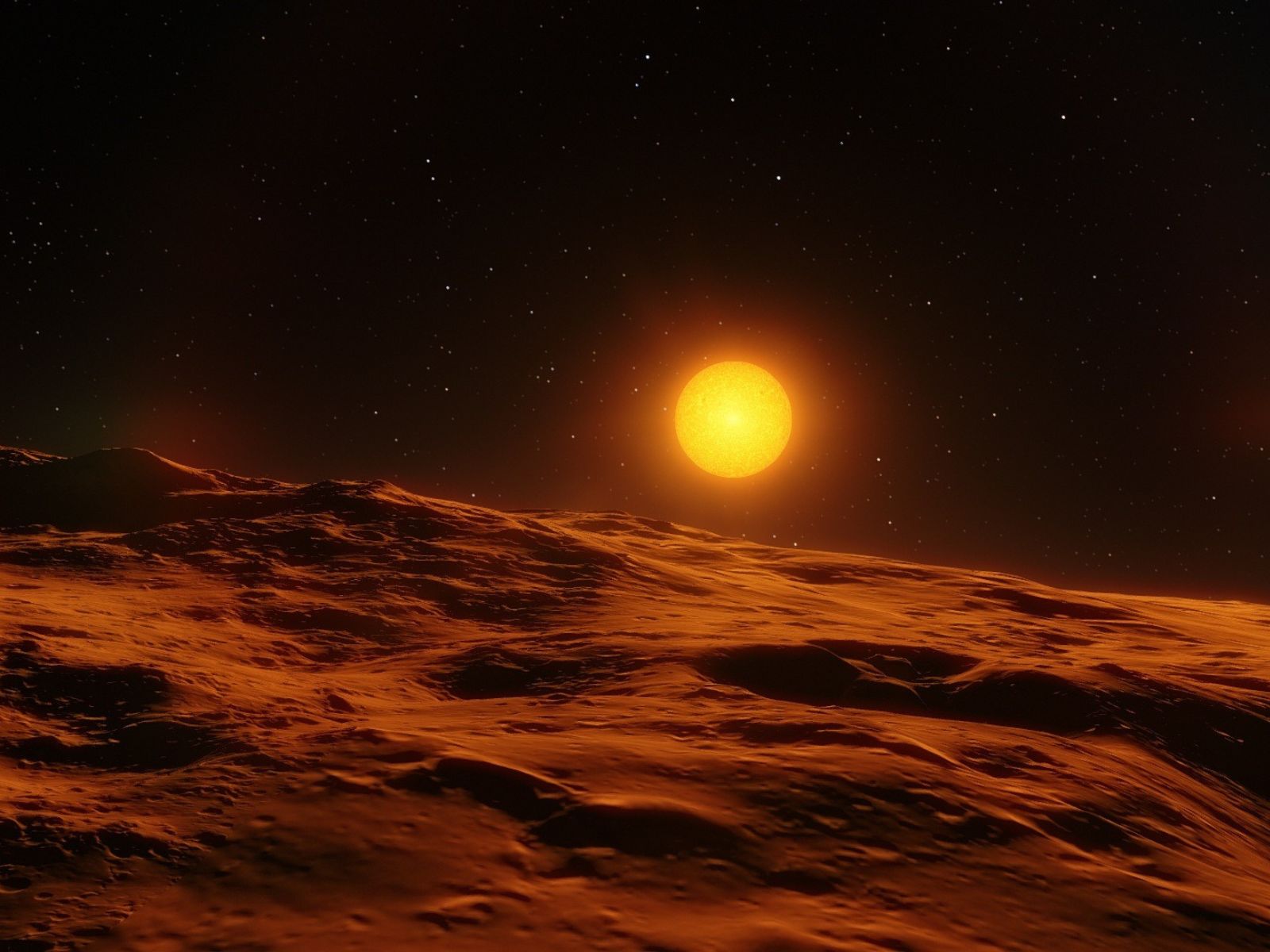
There are many stars in the universe, and they are also very different. Some are white dwarfs, yellow dwarfs like the Sun, and red dwarfs. But there are also brown dwarfs, which are commonly called failed stars. With masses between 13 and 80 times that of Jupiter, they cannot become stars. But recently, astronomers observed an astonishing event, as two brown dwarfs may merge to create a new star.
It was by analyzing data from the Zwicky Transient Facility (ZTF) at the Palomar Observatory in California that scientists noticed that the two brown dwarfs were very close. Located about 1,000 light-years from Earth and named ZTF J1239+8347 (ZTF J1239), these celestial objects have a mass between 60 and 80 times that of Jupiter and could fit within the Moon’s orbit around Earth.
As a result, with such proximity, the most massive brown dwarf pulls matter from its companion, which could allow it to reach the mass needed to trigger nuclear fusion. But according to astronomers, they could also merge, forming a new star.
However, their origin remains a mystery, although certain hypotheses have been put forward. Indeed, after a long journey through the universe, they may have moved closer under the gravitational influence of a larger star. But further observations will be needed to determine their origin, and observe their fate.
Source(s)
 Add as a preferred source on Google


