




Project Zenith: Microsoft’s new Windows 11 developer platform demands 64 GB RAM and 250 GB/s bandwidth
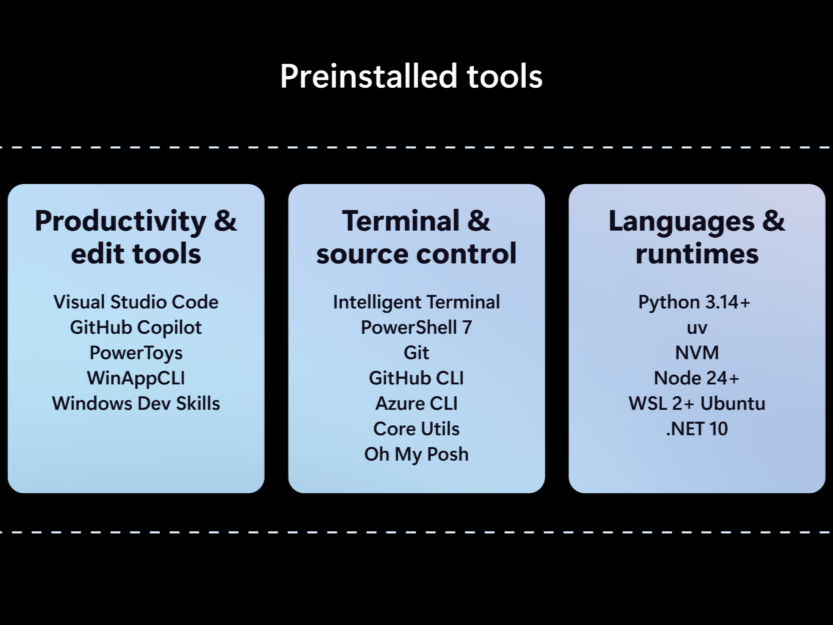
Microsoft has announced Project Zenith, a new Windows 11 configuration designed specifically for developers. It combines developer-oriented Windows settings, pre-installed tools, and high-end hardware requirements into what Microsoft calls a “ready-to-code” PC experience. Windows Terminal and Visual Studio Code will be pinned to the taskbar, while File Explorer will show file extensions, hidden files, the full path in the title bar and the details pane by default. Long-path support will also be enabled. Meanwhile, recently used files and folders, sync-provider tips, Start menu tips, and account notifications will be disabled to keep the interface relatively distraction-free. Command Palette will be enabled in Search and Start.
Project Zenith builds on Microsoft's ongoing efforts to make Windows more developer-friendly. It is the year of the Linux desktop, after all. Windows Subsystem for Linux and WSL containers are good starting points, but the platform still has a way to go. Microsoft is positioning the platform heavily around local AI and agentic software development, with support for technologies such as Microsoft Execution Containers intended to provide OS-level isolation for agents. One can only hope Microsoft actually listened to its user base and reduces bloat instead of shoehorning Copilot everywhere.
Unsurprisingly, Project Zenith has rather steep hardware requirements. Systems will need at least 64 GB of unified memory and more than 250 GB/s of memory bandwidth to qualify. Microsoft says this is enough to run AI models with more than 30 billion parameters locally, although you can stretch that figure a little if needed. The first Project Zenith devices will use AMD's Ryzen AI Halo platform, although Microsoft says additional systems from other OEM and silicon partners will arrive in the coming months. Nvidia’s RTX Spark platform is a potential future candidate, as is the Strix Halo successor Gorgon Halo. Multiple OEMs have already shown off their Gorgon Halo/RTX Spark offerings, and it's reasonable to assume at least some of them would be Project Zenith-certified.
Microsoft argues that running smaller coding models locally can reduce developers' reliance on paid cloud tokens. It is a perfect split: menial tasks for on-device agents and the more demanding jobs for frontier models hosted remotely. For now, Microsoft has not announced specific Project Zenith pricing or an exact release date. On paper, the standards can apply to both mini-PCs and laptops, but some developers may prefer the former due to better performance under sustained workloads.
Source(s)
 Add as a preferred source on Google


