PC market grows due to fears of tariffs and DRAM prices, Lenovo remains market leader

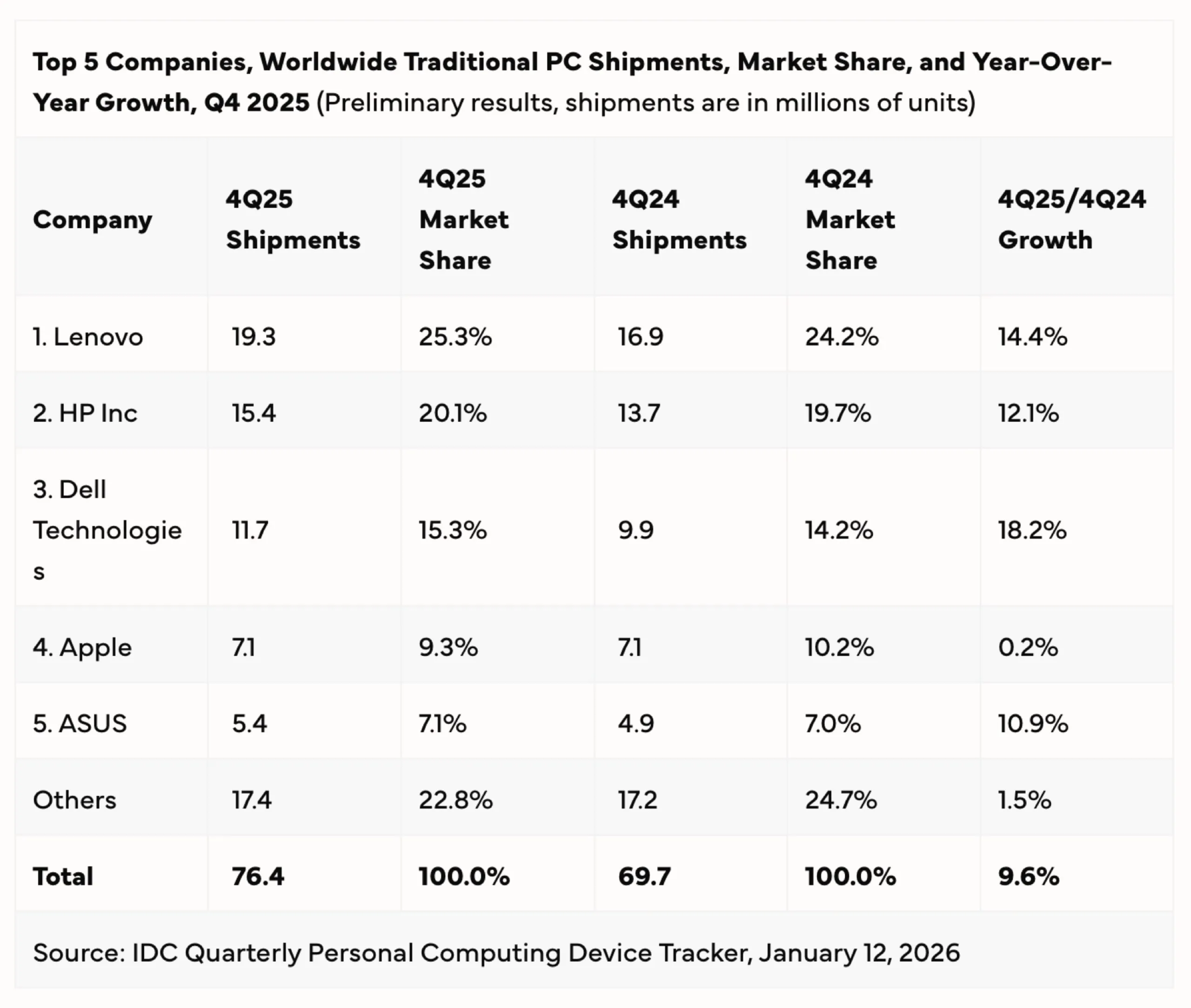
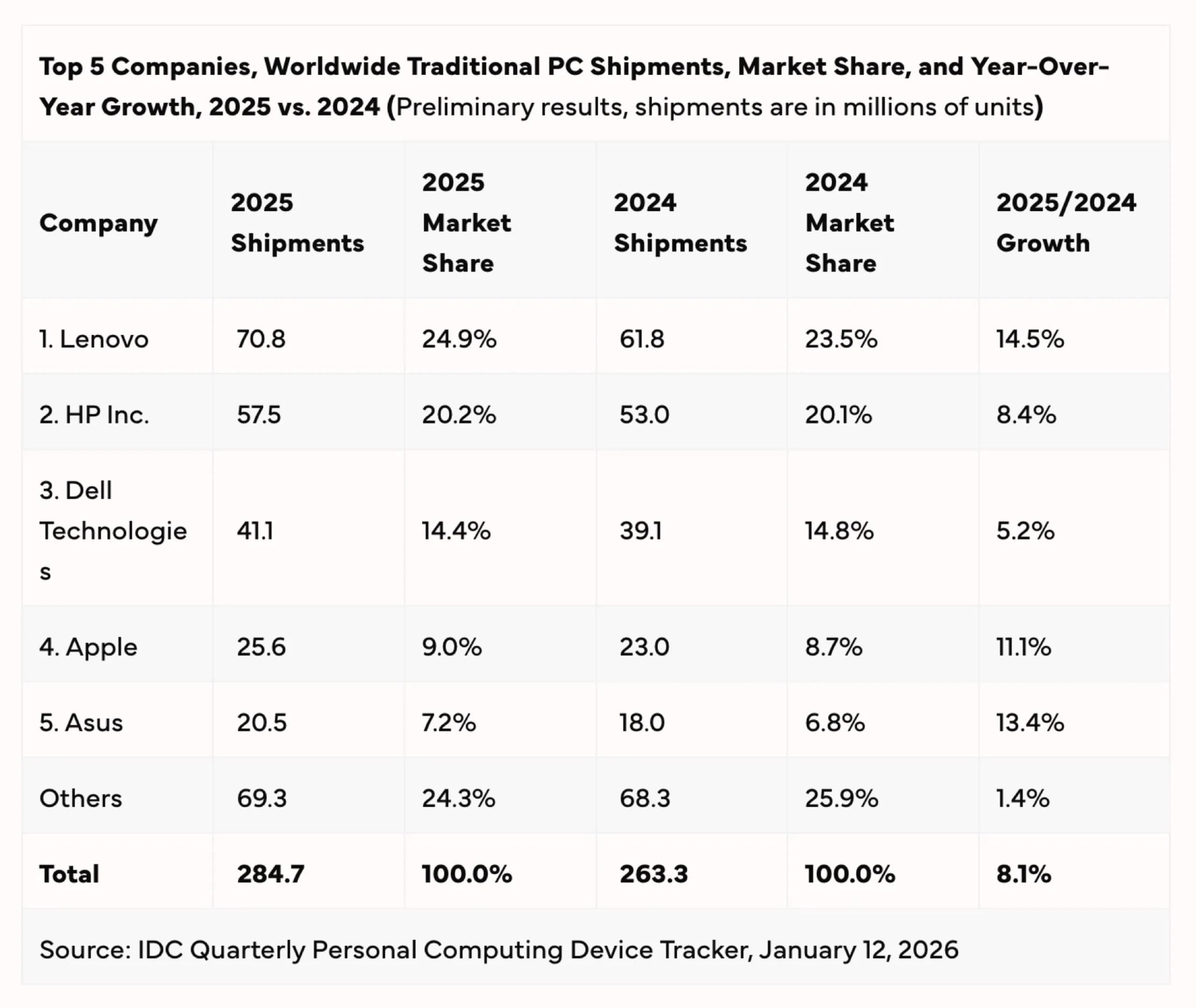
According to the latest data from International Data Corporation (IDC), the global PC market grew by 9.6% in the fourth quarter of 2025, with an overall growth of 8.1% for the year, reaching 284.7 million units. Two factors are primarily responsible for this growth in the first half of the year: the end of support for Windows 10, which prompted many users to upgrade to a new PC, and the US tariffs, which created consumer uncertainty.
Toward the end of the year, the DRAM shortage was apparently the main reason for the increased sales; customers wanted to get ahead of the expected price increases and get their hands on a PC at a more affordable price. Lenovo remains the world's leading PC manufacturer, having sold 70.8 million computers last year, achieving a market share of 24.9% and growth of 14.5%.
HP ranks second with 57.5 million sales and a 20.2% market share, followed by Dell with 41.1 million units sold and a 14.4% market share. Apple ranks fourth with 25.6 million Macs sold and a market share of 9.0%, but the gap to Asus in fifth place has narrowed, as Asus sold 20.5 million PCs last year and achieved a market share of 7.2%.
IDC analysts expect 2026 to be very volatile. Rising DRAM prices and limited availability of RAM chips could not only lead to higher prices, but also to laptops and desktop PCs being offered with less RAM. While large corporations will have strong bargaining power with DRAM suppliers, end consumers who assemble their own PCs in particular will have to dig much deeper into their pockets.
Source(s)
 Add as a preferred source on Google