




NASA detects a record-breaking explosion — 420 times longer than usual
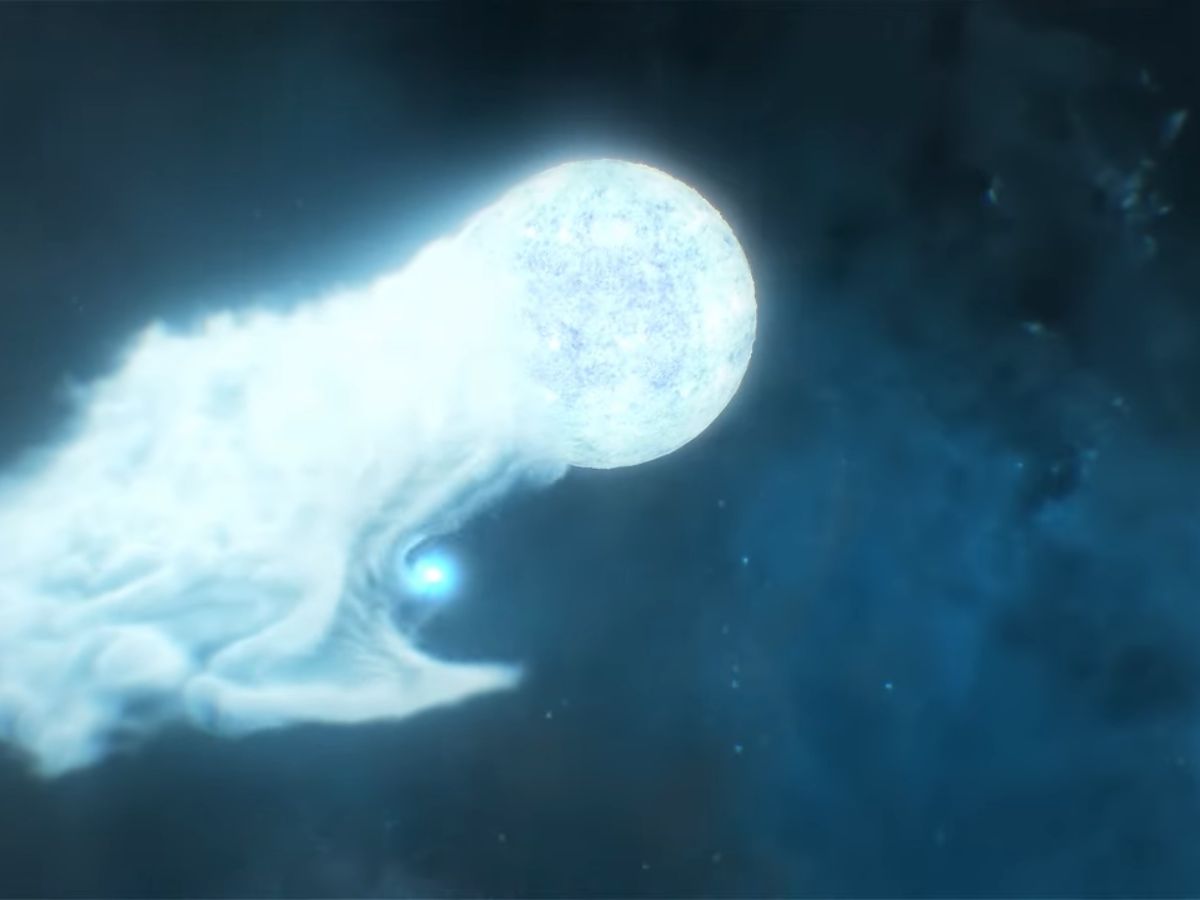
Astronomers detected this cosmic outburst on July 2. They called it GRB 250702B. This wasn’t the first GRB to be discovered, though. Astronomers have observed about 15,000 of them since the first one was discovered in 1973. These events usually come from the merging of two neutron stars or a massive star collapsing into a black hole.
But GRB 250702B outdid its companions. Most GRBs last only a minute, but this one stretched as long as 7 hours. Scientists agree that this unusual GRB was caused by a black hole eating a star. But how did it happen, and how come it managed to leave such a lasting impact?
One school of thought believes that this GRB was the product of the interaction between a star and a rare intermediate-mass black hole. This category of black holes is a few thousand times the Sun’s mass. The theory holds that a star passed too close and the black hole rapidly fed on it.
Another theory holds that a smaller black hole, only about three times the Sun’s mass, was responsible. The astronomers believe that the black hole was orbiting a helium star (whose hydrogen atmosphere has been stripped away) and was pulling gas from it over time. Eventually, the black hole plunged inside the star and fed on it.
No conclusions have been made. The conflicting evidence even makes the data more confusing. For example, astronomers found that the host galaxy is huge. This is unlike GRB galaxies. But scientists will continue exploring the data picked up from this GRB, whose energy is equivalent to a thousand Suns shining for 10 billion years.
 Add as a preferred source on Google


