




The James Webb Space Telescope sets a record with the discovery of a 13 billion-year-old supernova
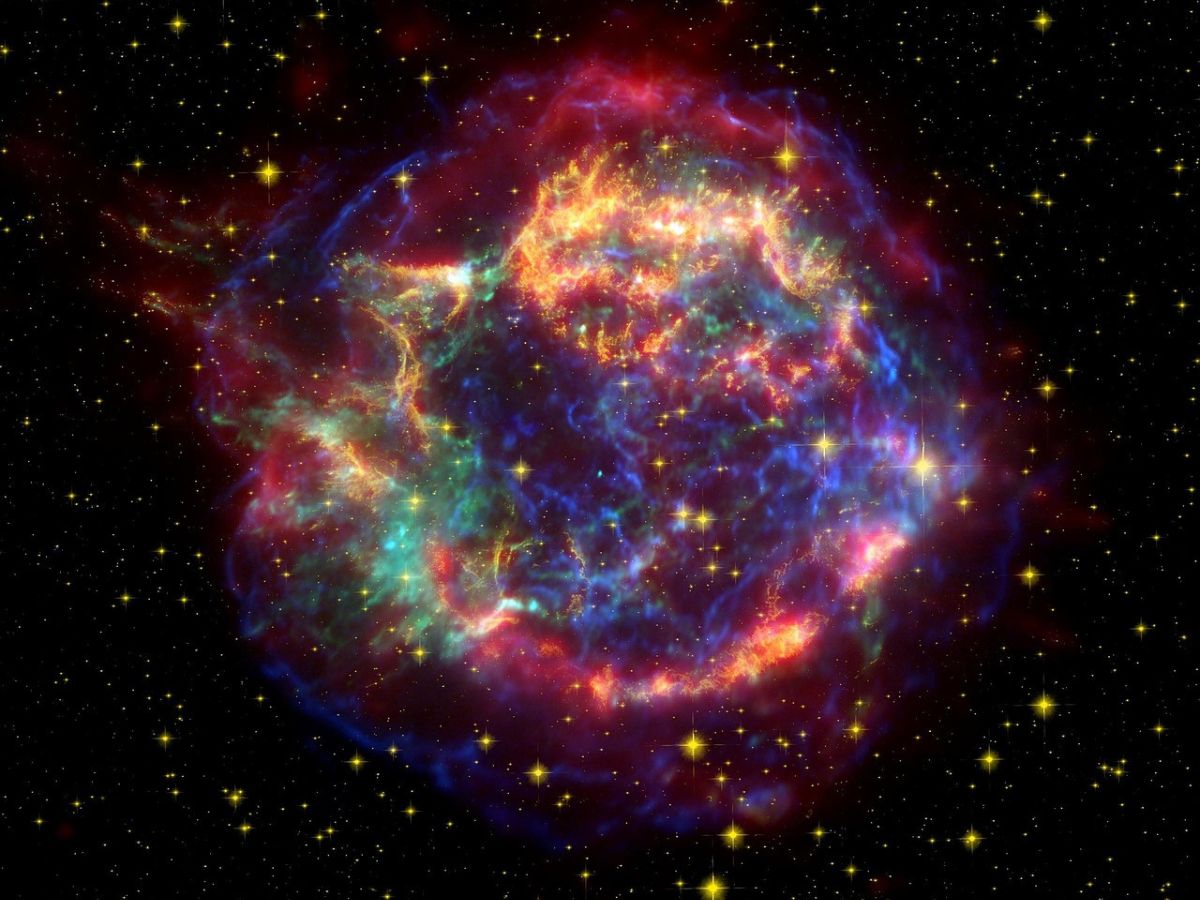
The James Webb Space Telescope continues to revolutionize the observation and understanding of the universe, thanks to its many instruments. And while it has already allowed us to see unique structures in space, it recently discovered the oldest supernova ever observed.
In reality, this discovery is linked to a series of events. In March 2025, the SVOM satellite detected a powerful gamma-ray burst in space, and an hour and a half later, the Neil Gehrels Swift Observatory detected this burst, allowing astronomers to identify and locate this event.
Subsequently, the Nordic Optical Telescope, located in the Canary Islands, also detected a faint light coming from this gamma-ray burst. And this, before the Very Large Telescope could estimate the date of this supernova, which occurred 13 billion years ago.
Finally, the James Webb Space Telescope used its Near-Infrared Camera to observe this supernova, revealing unique details. Indeed, thanks to this device, astronomers were able to see that the supernova named GRB 250314A was similar to those occurring today in an older universe.
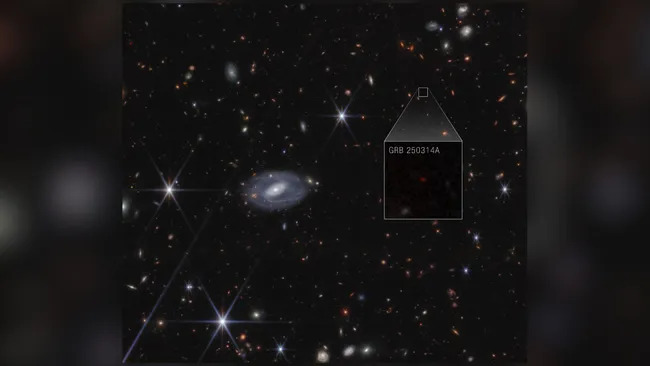
In addition, they were able to see the galaxy in which this star was located, which allowed them to better understand the supernova's environment. And according to Emeric Le Floc'h at CEA Paris-Saclay in France:
"Webb's observations indicate that this distant galaxy is similar to other galaxies that existed at the same time.”
This is also a record for the James Webb Space Telescope, because previously, the oldest supernova was discovered in a universe that was 1.8 billion years old. However, this recent discovery occurred only 730 million years after its formation, at a time when heavy elements were rarer.
Source(s)
 Add as a preferred source on Google


