




It’s getting close to Usain Bolt: Humanoid robot hits 10.1 m/s in 100-meter sprint
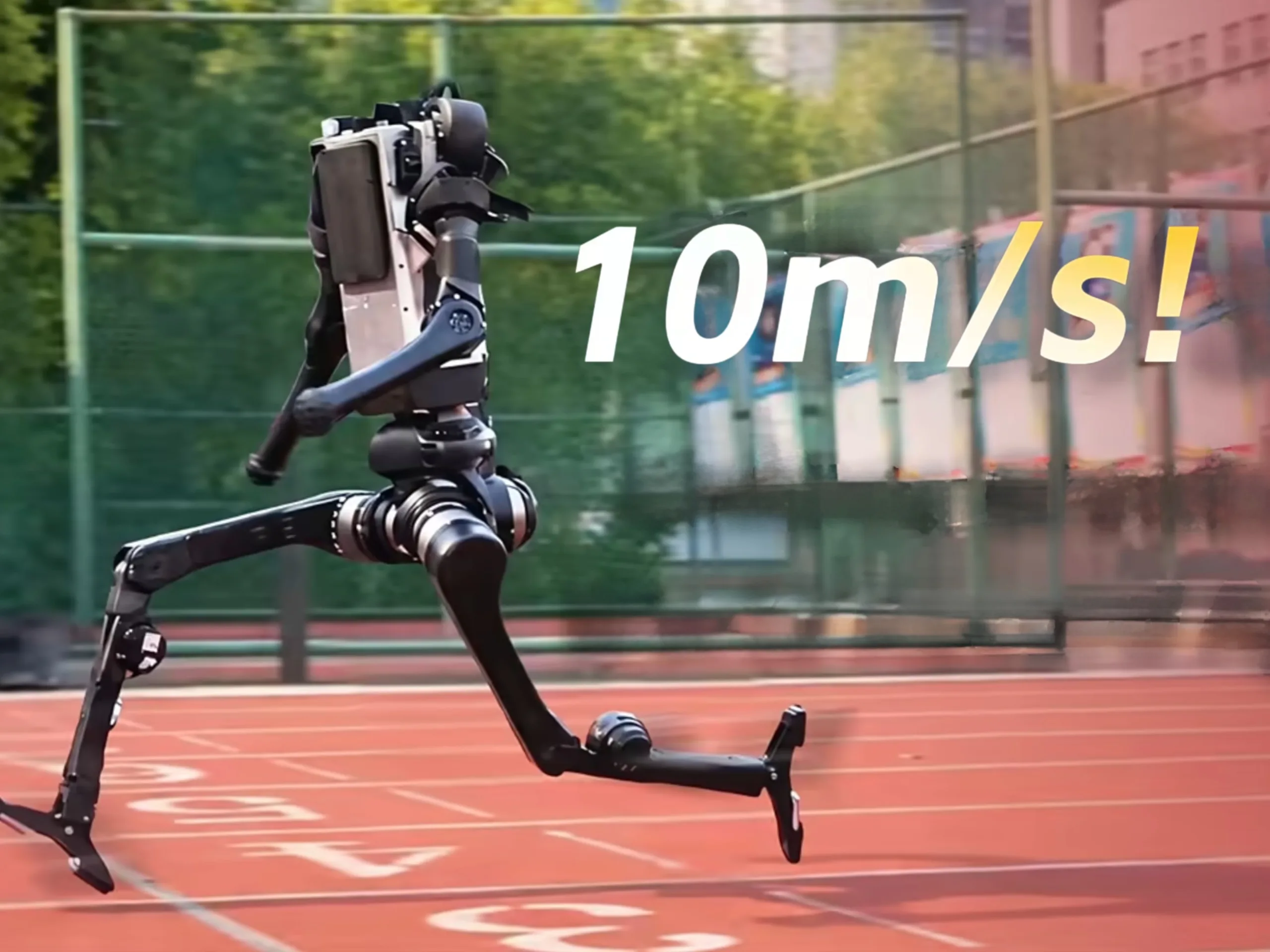
Usain Bolt may raise an eyebrow when he reads this: Unitree’s humanoid H1 reached 10.1 m/s on a 100-meter track. For now, however, the world record holder can breathe easy. Unitree appears to be framing the figure somewhat deliberately. Despite the wording of the video title, no world record was actually broken. The claim refers only to the robot’s peak speed during the run. When it comes to the much more important overall time, Bolt is still comfortably ahead with his 9.58-second world record. Even so, the sprint remains technically fascinating. Unitree published a video of the run on YouTube.
The Unitree H1 is a human-sized humanoid robot standing 1.78 meters (5 ft 10 in) tall and weighing 62 kilograms (137 lb). According to Unitree, both the upper and lower leg measure 40 centimeters, giving it a total leg length of 0.8 meters (31.5 inches). The robot relies on specially developed gear systems, powerful motors, a depth camera and 3D lidar, all intended to help it complete the sprint autonomously. Compared with the basketball-playing Unitree G1, however, its movements look less like those of a top athlete. While the robot is already capable of reaching a high peak speed, Unitree still appears to have a great deal of work ahead before it can come close to Bolt’s level.
To complete the 100-meter sprint in under 9.58 seconds, the H1 would need to do more than briefly hit a high speed. It would also have to accelerate quickly from a standing start and maintain a high average speed throughout the race. In Bolt’s case, that average was 10.44 m/s. The robot would also need to stay cleanly within its lane. In the video, it drifts slightly off course, something that would likely not be accepted in an official race. Reaching true elite sprinting performance would therefore also require further improvements to its sensor system. Still, it does not seem unlikely that a humanoid robot could compete at a professional level in the near future.
Source(s)
Unitree via YouTube
 Add as a preferred source on Google


