





Verdict on the Motorola Razr Fold
You could say that Motorola is playing it safe with the Razr Fold, the company’s first full-size foldable: a processor similar to those of the competition, similar dimensions, similar camera specs, a sleek but relatively simple design, and hardly any surprises when it comes to features.
There is, however, something unique: the stylus.
Motorola is taking a confident stance on pricing: Despite lower market prices, this phone is by no means the cheapest foldable.
People with sensitivity to PWM will have to put up with it on the screens. Photography enthusiasts will likely opt for a conventional high-end phone instead. The fact that the statements regarding updates contradict each other also doesn’t make a good impression.
The Motorola Razr Fold is an exciting addition to the foldable market and will appeal to people looking for something special.
Pros
Cons
Price and Availability

Motorola charges around US$ 1,900 for the Razr Fold.
It is for example available at lenovo.com.

Table of Contents
- Verdict on the Motorola Razr Fold
- Specifications
- Design and features – Stylish flip phone with IP certification
- Communication and operation – Even with pen input
- Software and sustainability – Unclear update situation
- Cameras – Lenses everywhere
- Display – Razr Fold with HDR screens
- Performance, emissions, and battery life – Decent endurance
- Notebookcheck overall rating
- Comparison of Possible Alternatives
Specifications
Design and features – Stylish flip phone with IP certification
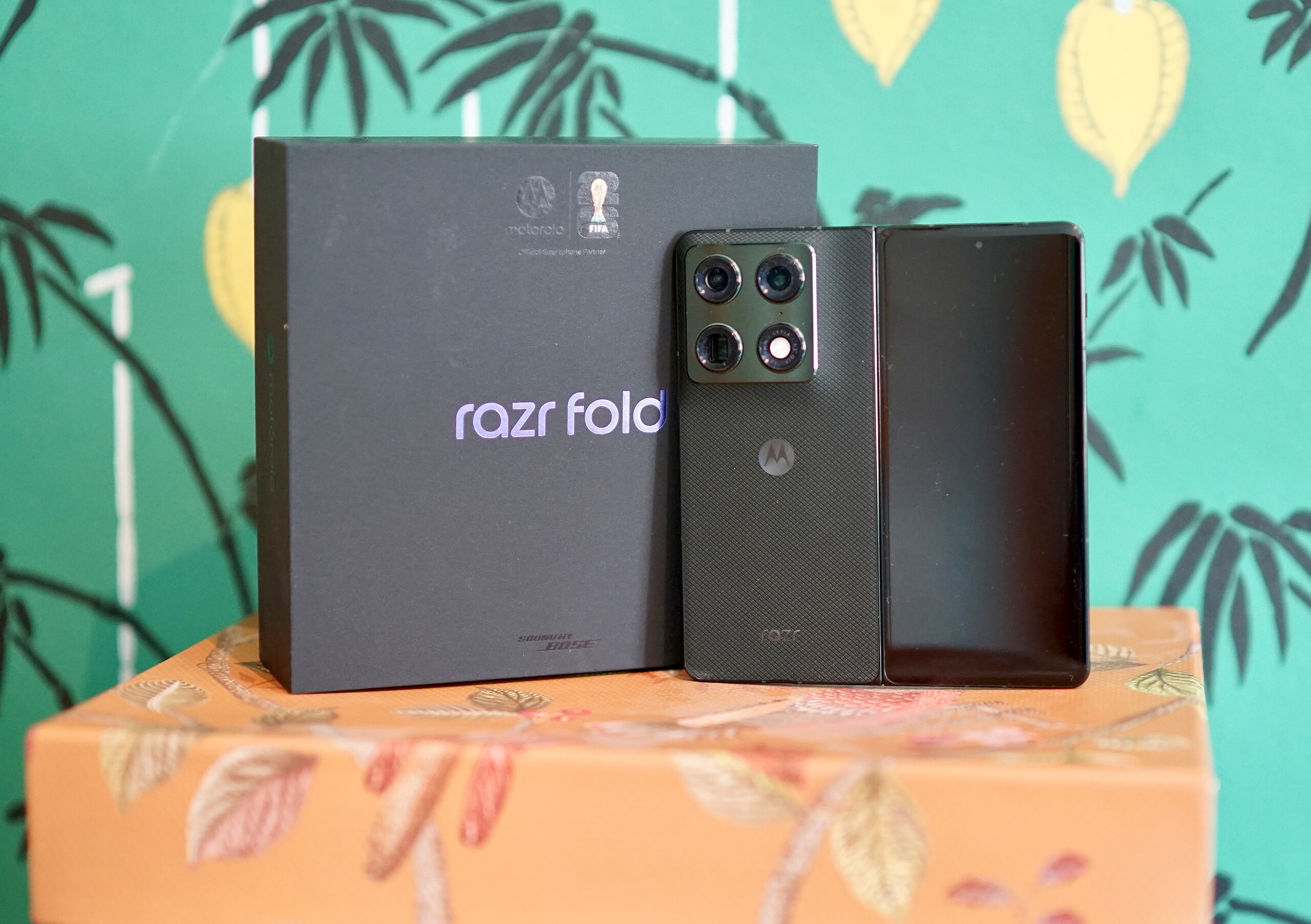
The Motorola Razr Fold is a full-size foldable; until now, the manufacturer has only offered clamshell models reminiscent of earlier flip phones. For its debut, Motorola is offering two trendy Pantone colors: Blackend Blue, a very dark blue with a slightly textured back, and Lily White, a delicate beige-white with a smooth back.
The phone is sturdy and bends only minimally, if at all. The hinge creaks a little when the phone is open and you slide the sides against each other.
An IP48/IP49 certification confirms that the Razr Fold can even be submerged in water. At the same time, you should avoid dusty or dirty environments, as these can damage the delicate screen glass on the inside or the hinge.
The foldable comes with 16 GB of RAM and 512 GB of storage. A lower-capacity version with 12 GB/256 GB is also available.




Communication and operation – Even with pen input
The Motorola Razr Fold features WiFi 7, the fastest Wi-Fi standard available. Data download speeds can exceed 2 Gbit/s.
It supports every 4G and 5G frequency you could want, so you shouldn’t have any trouble using mobile internet even when traveling internationally. Reception was good during our two-week testing period, though not quite perfect.
Operating both displays is smooth and responsive. The outer display offers a potential refresh rate of 165 Hz, though this is rarely utilized. The inner display’s 120 Hz refresh rate is also more than sufficient for very quick responses.
Our test unit came with the Moto Pen Ultra; unfortunately, it cannot be stored directly on the device. The stylus weighs less than 5 grams and pairs via Bluetooth. It supports 4,096 pressure levels, making it well-suited for everyday use. You can draw or take notes—all of which works just as well on the large inner display as it does on the outer display.
| Networking | |
| Motorola Razr Fold | |
| iperf3 transmit Wi-Fi6/7 RT-BE96U | |
| iperf3 receive Wi-Fi6/7 RT-BE96U | |
| Samsung Galaxy Z Fold7 | |
| iperf3 transmit AXE11000 6GHz | |
| iperf3 receive AXE11000 6GHz | |
| Honor Magic V6 | |
| iperf3 transmit AXE11000 | |
| iperf3 receive AXE11000 | |
| iperf3 transmit AXE11000 6GHz | |
| iperf3 receive AXE11000 6GHz | |
| Oppo Find N6 | |
| iperf3 transmit AXE11000 | |
| iperf3 receive AXE11000 | |
| iperf3 transmit AXE11000 6GHz | |
| iperf3 receive AXE11000 6GHz | |
| Huawei Mate X7 | |
| iperf3 transmit AXE11000 | |
| iperf3 receive AXE11000 | |
| Average 802.11 a/b/g/n/ac/ax/be | |
| iperf3 transmit AXE11000 | |
| iperf3 receive AXE11000 | |
| iperf3 transmit AXE11000 6GHz | |
| iperf3 receive AXE11000 6GHz | |
| iperf3 transmit Wi-Fi6/7 RT-BE96U | |
| iperf3 receive Wi-Fi6/7 RT-BE96U | |
| Average of class Smartphone | |
| iperf3 transmit AXE11000 | |
| iperf3 receive AXE11000 | |
| iperf3 transmit AXE11000 6GHz | |
| iperf3 receive AXE11000 6GHz | |
| iperf3 transmit Wi-Fi6/7 RT-BE96U | |
| iperf3 receive Wi-Fi6/7 RT-BE96U | |
Software and sustainability – Unclear update situation
Motorola’s Foldable comes with Android 16.
The manufacturer provides conflicting information regarding update support: On the one hand, they mention seven years; on the other hand, the support page states that updates will only be provided for four years.
This aligns with Motorola’s interpretation of the EU directive, which states that security updates must only be downloadable but do not need to be up-to-date.
The packaging is plastic-free; unfortunately, no other sustainability information about the device is available.
Cameras – Lenses everywhere
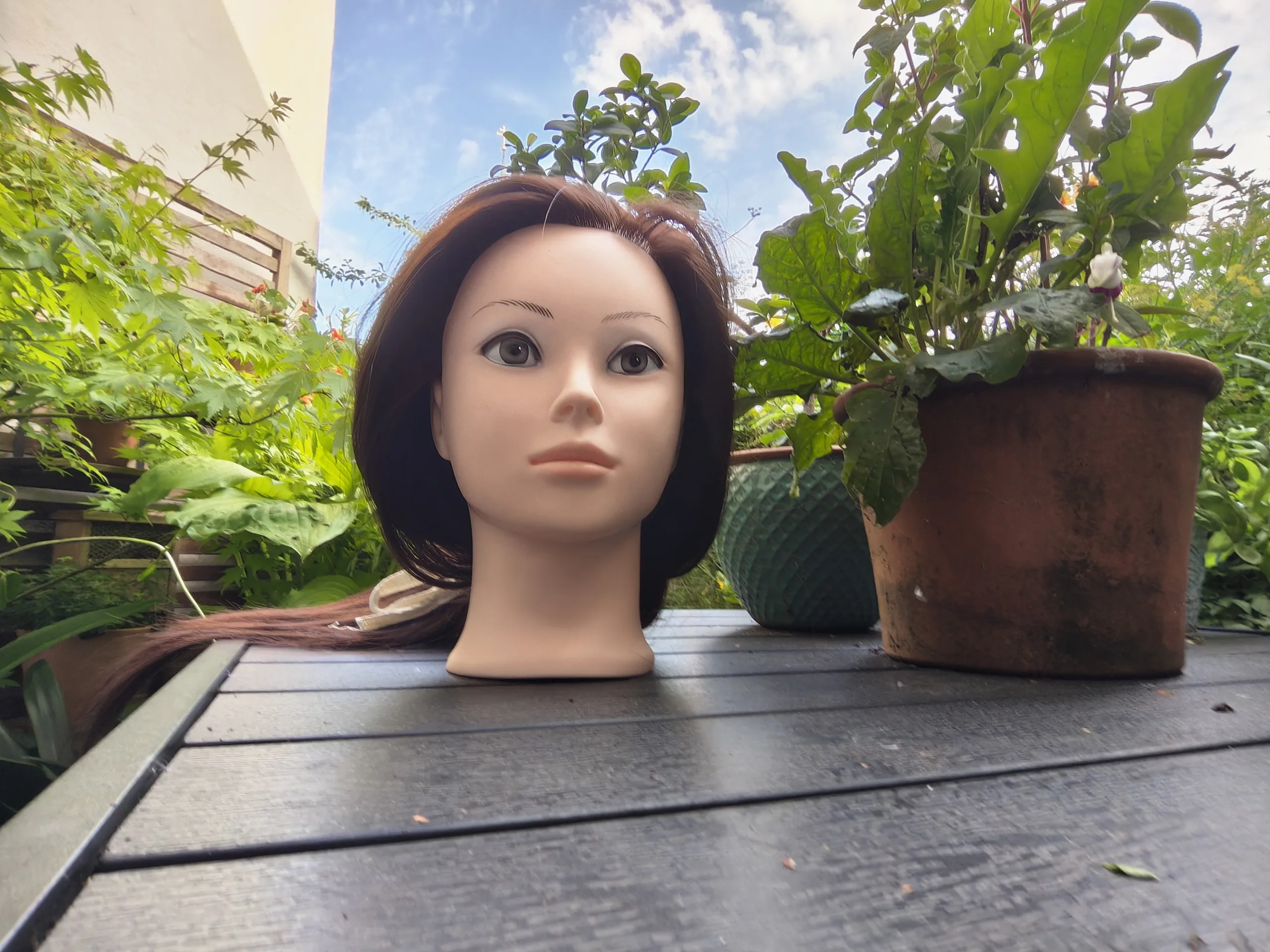
The Motorola Razr Fold features cameras in three different locations on the body, ensuring that they are available for virtually any use case. The rear houses the most powerful sensors, each with 50 megapixels: the high-sensitivity main camera, the periscope telephoto camera, and an ultra-wide-angle camera.
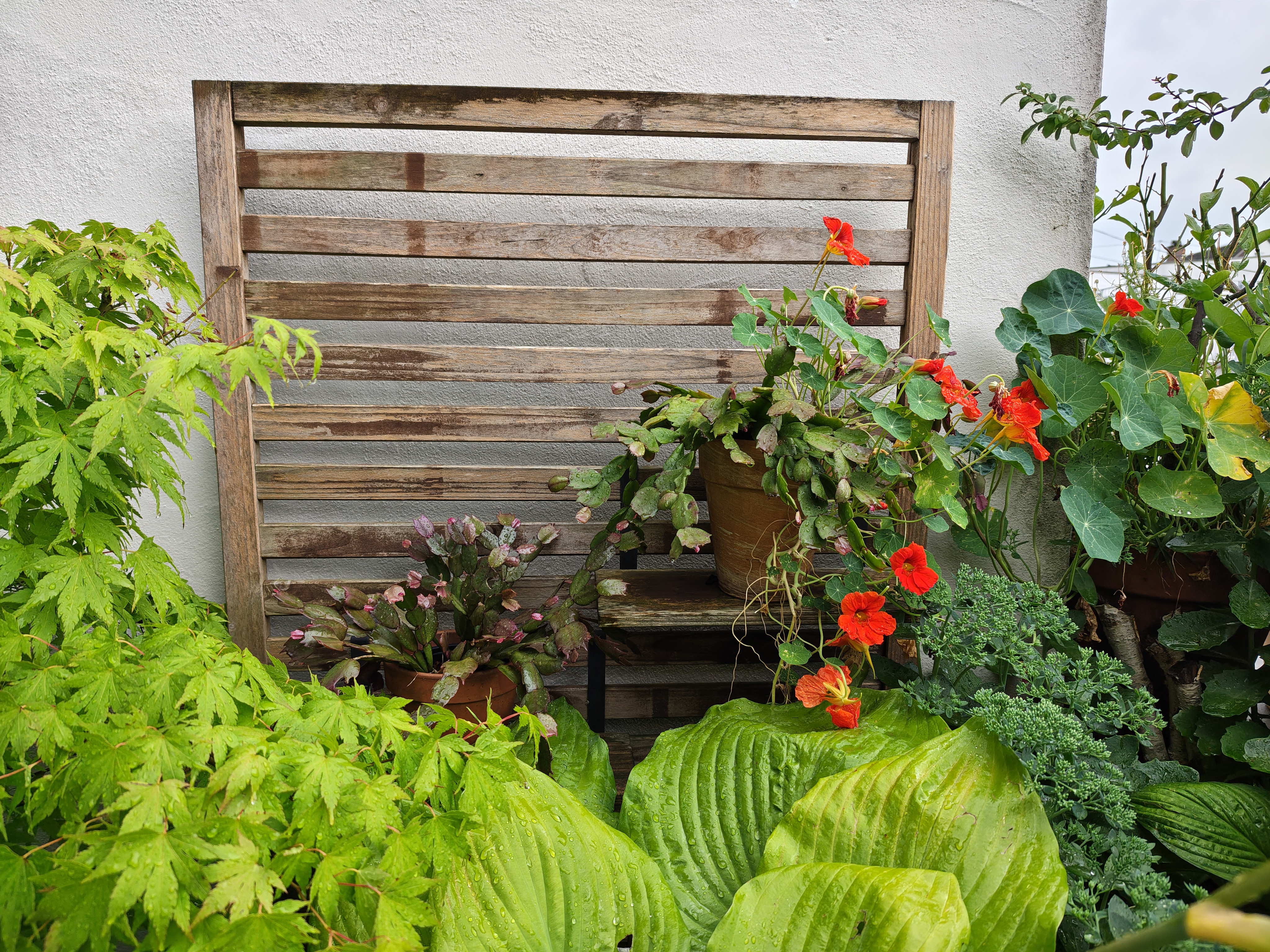
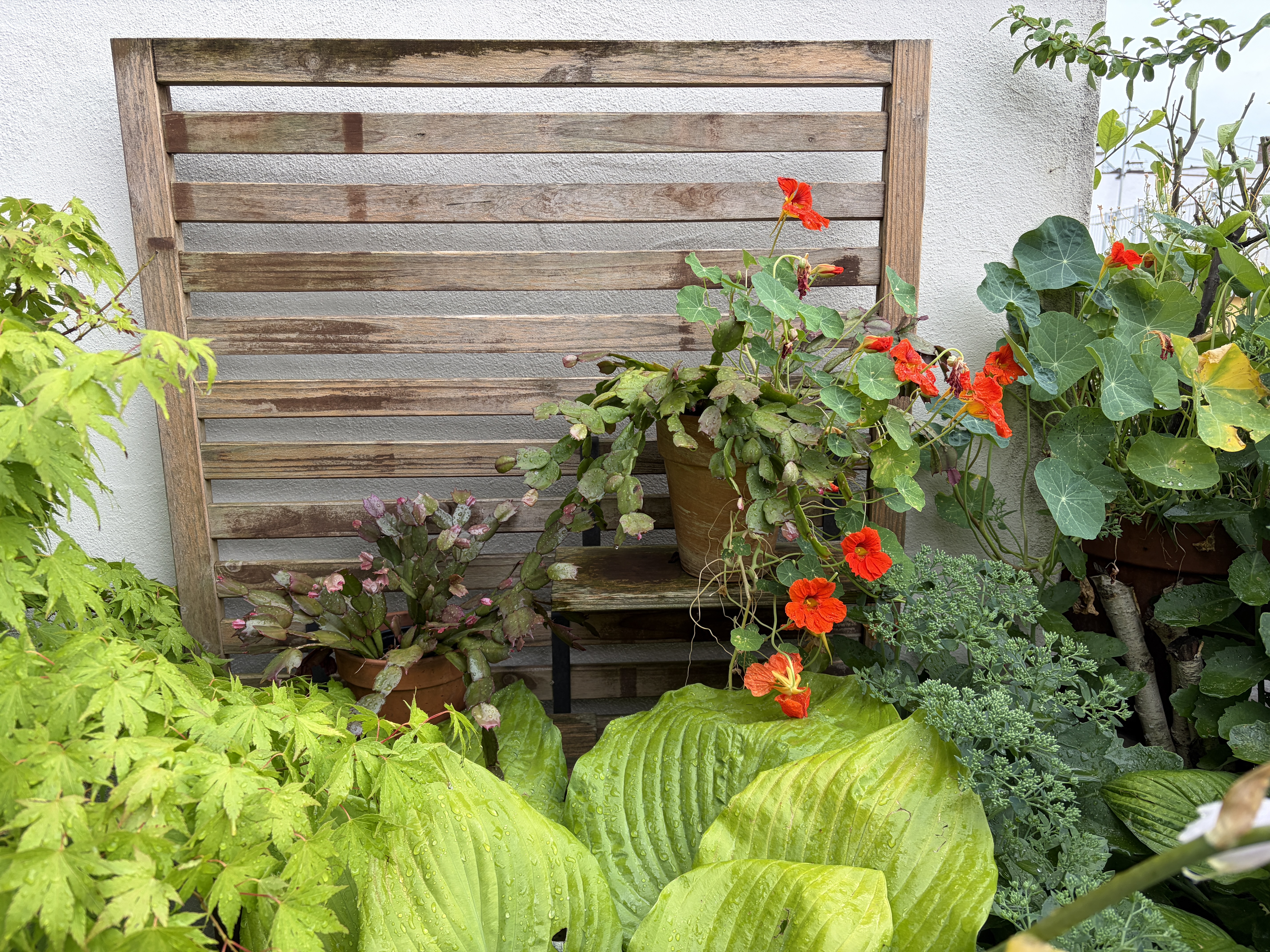
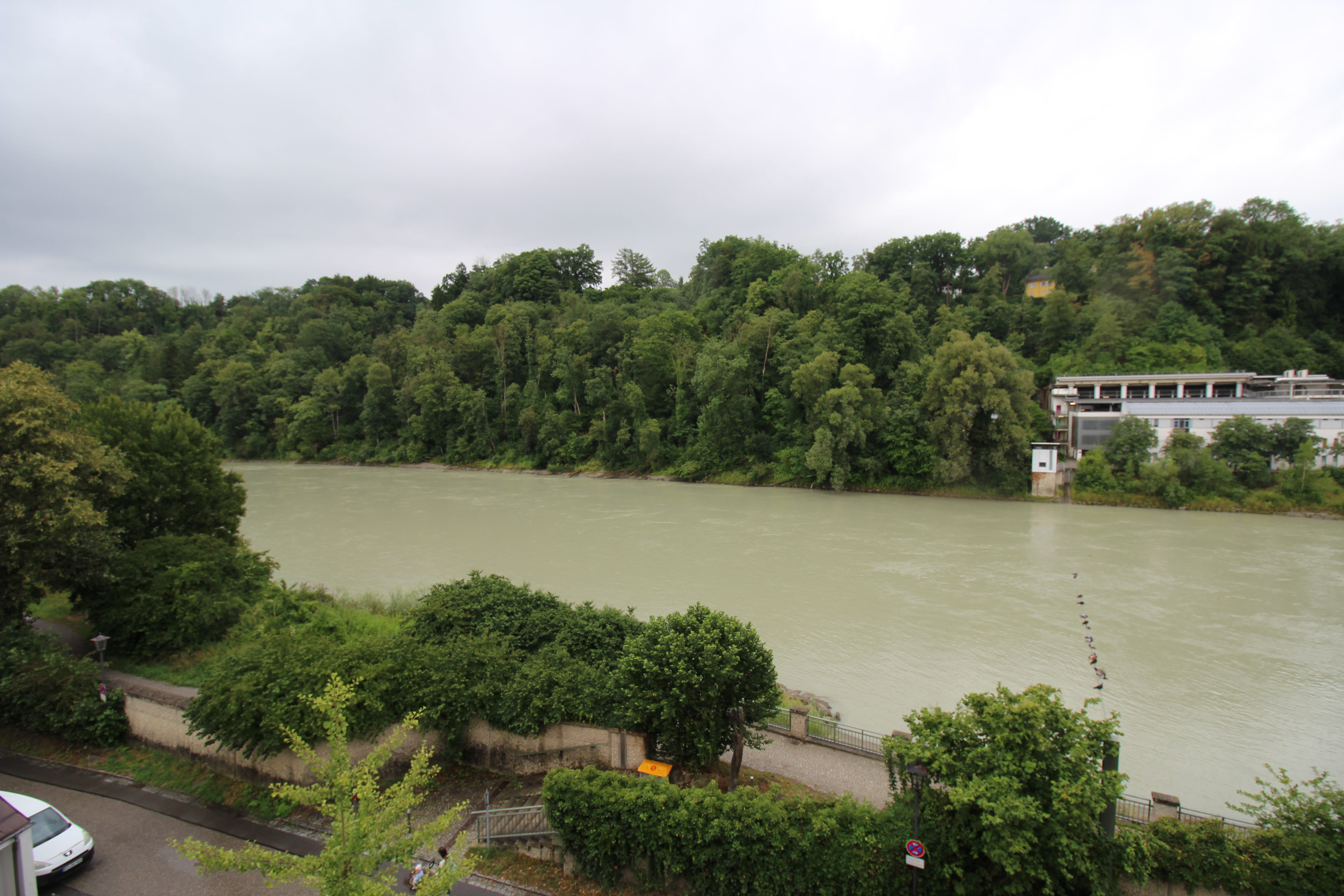
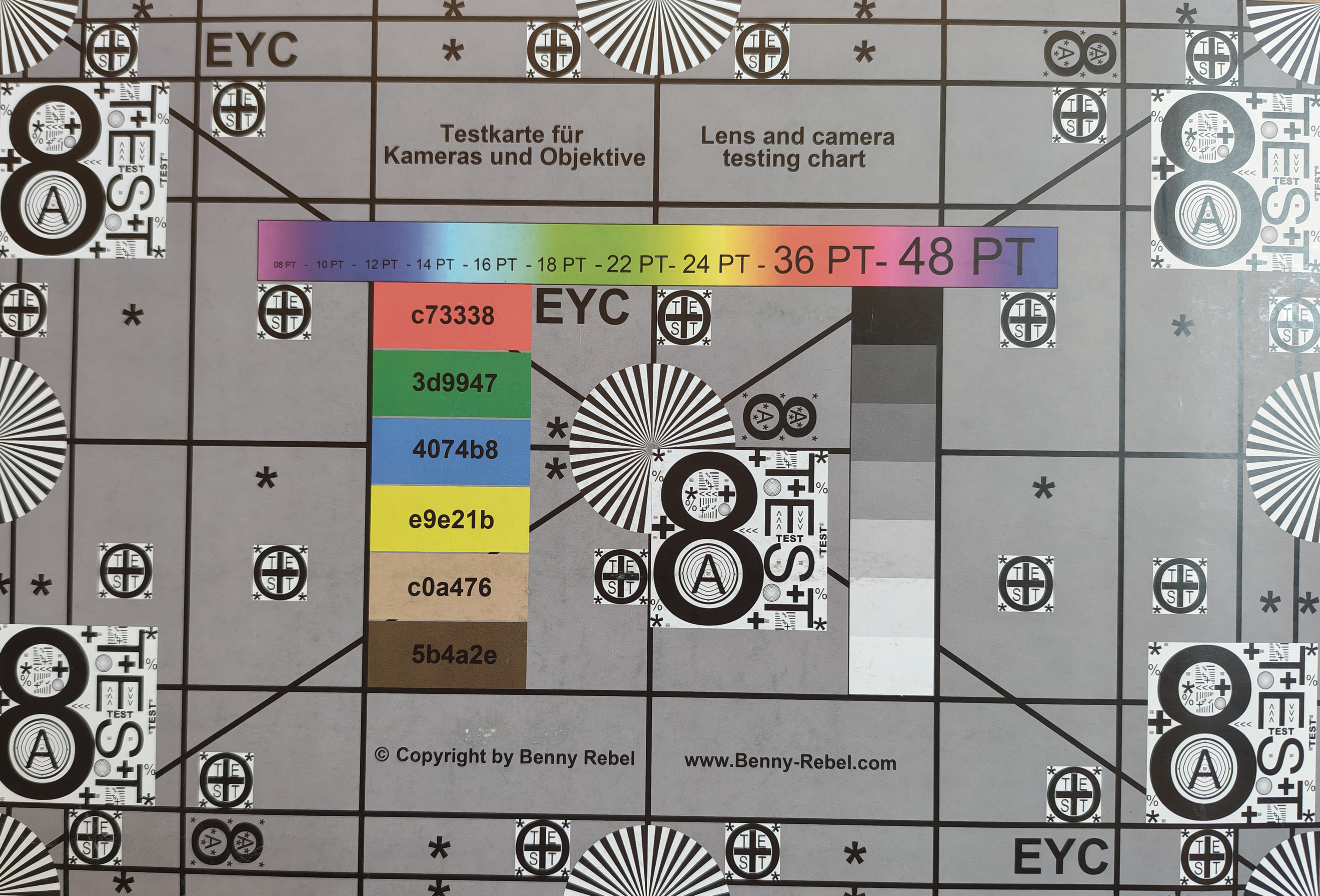
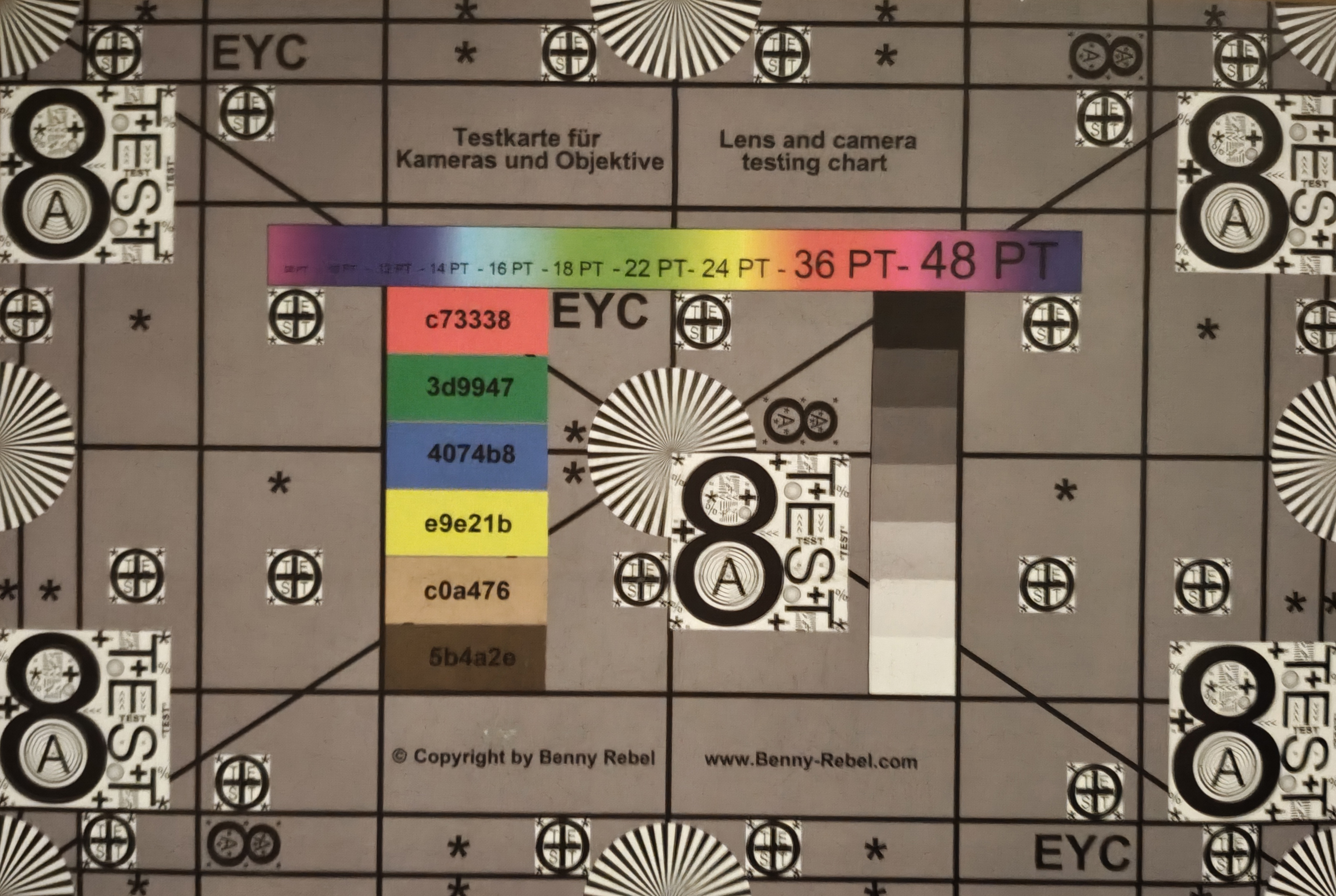
The main camera takes good pictures, but the sharpness isn’t quite on par with that of conventional high-end phones. In low-light conditions, it delivers very good exposure. The wide-angle camera produces decent panoramas, but you shouldn’t zoom in too much, or you’ll notice that details are barely visible.
Selfies are best taken with the front-facing camera or the inner camera. Both take decent selfies, but the quality of the inner camera is noticeably better.
Image comparison
Choose a scene and navigate within the first image. One click changes the position on touchscreens. One click on the zoomed-in image opens the original in a new window. The first image shows the scaled photograph of the test device.
PlantSurroundingLow LightUltra wide angle
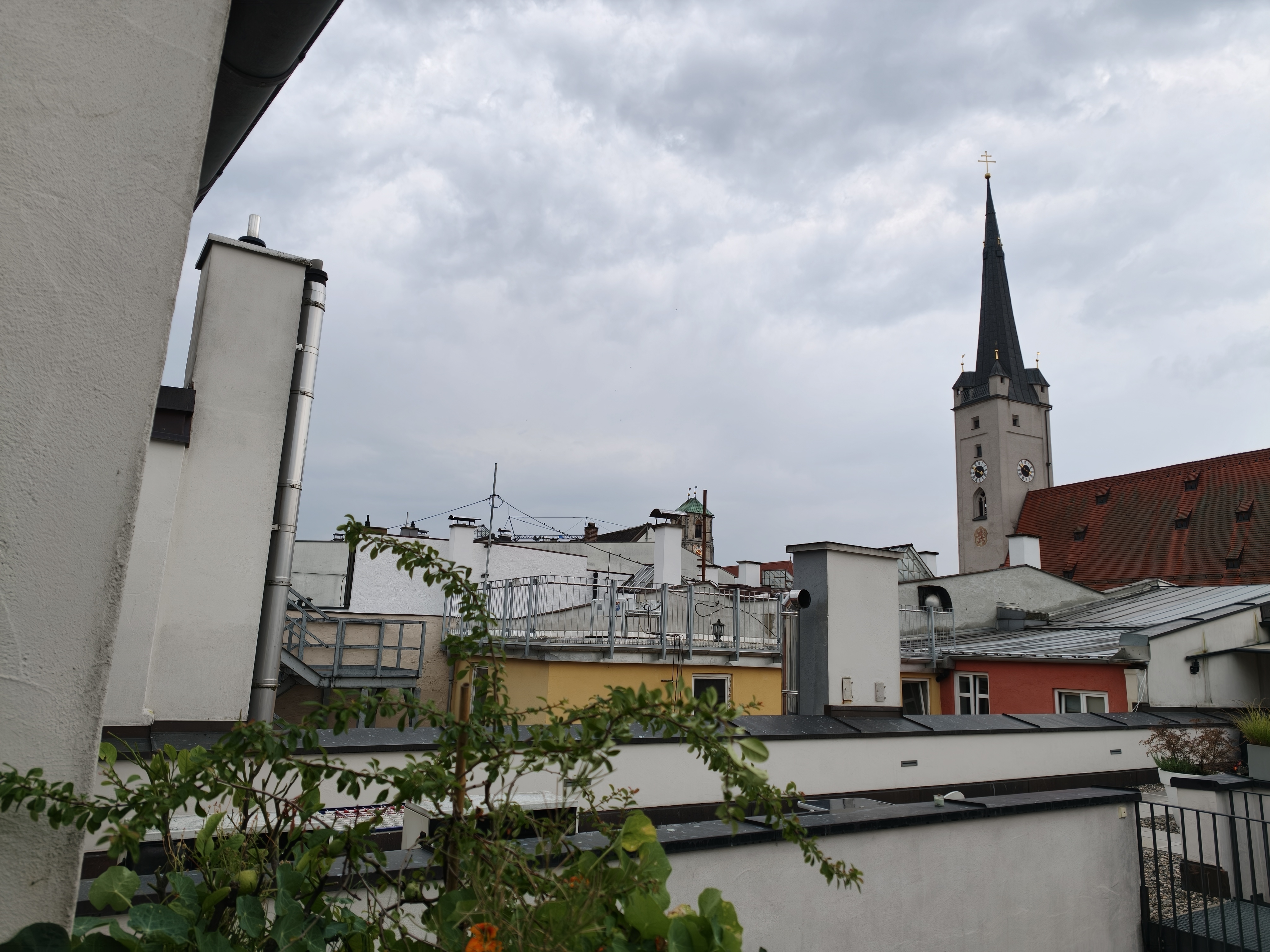
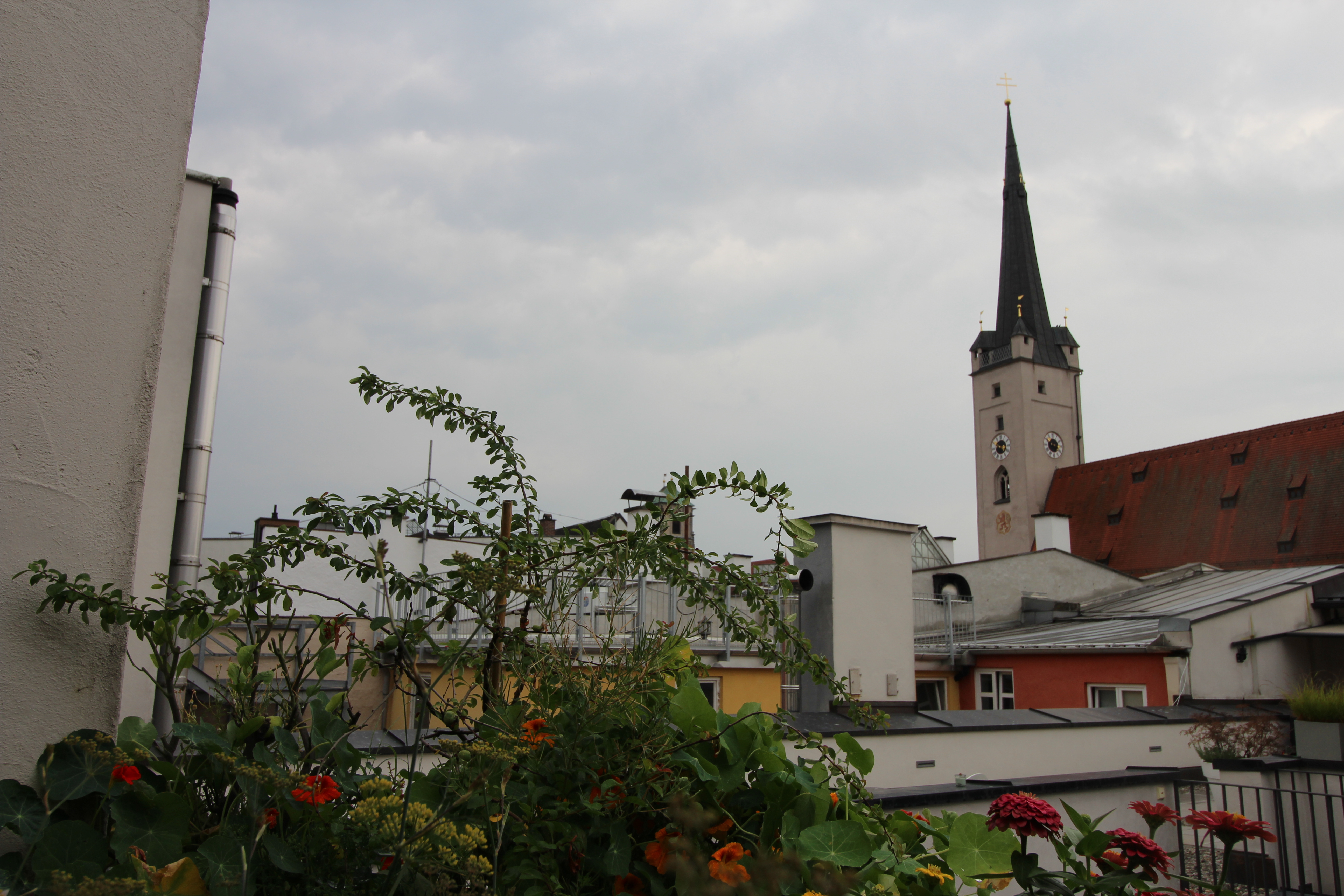




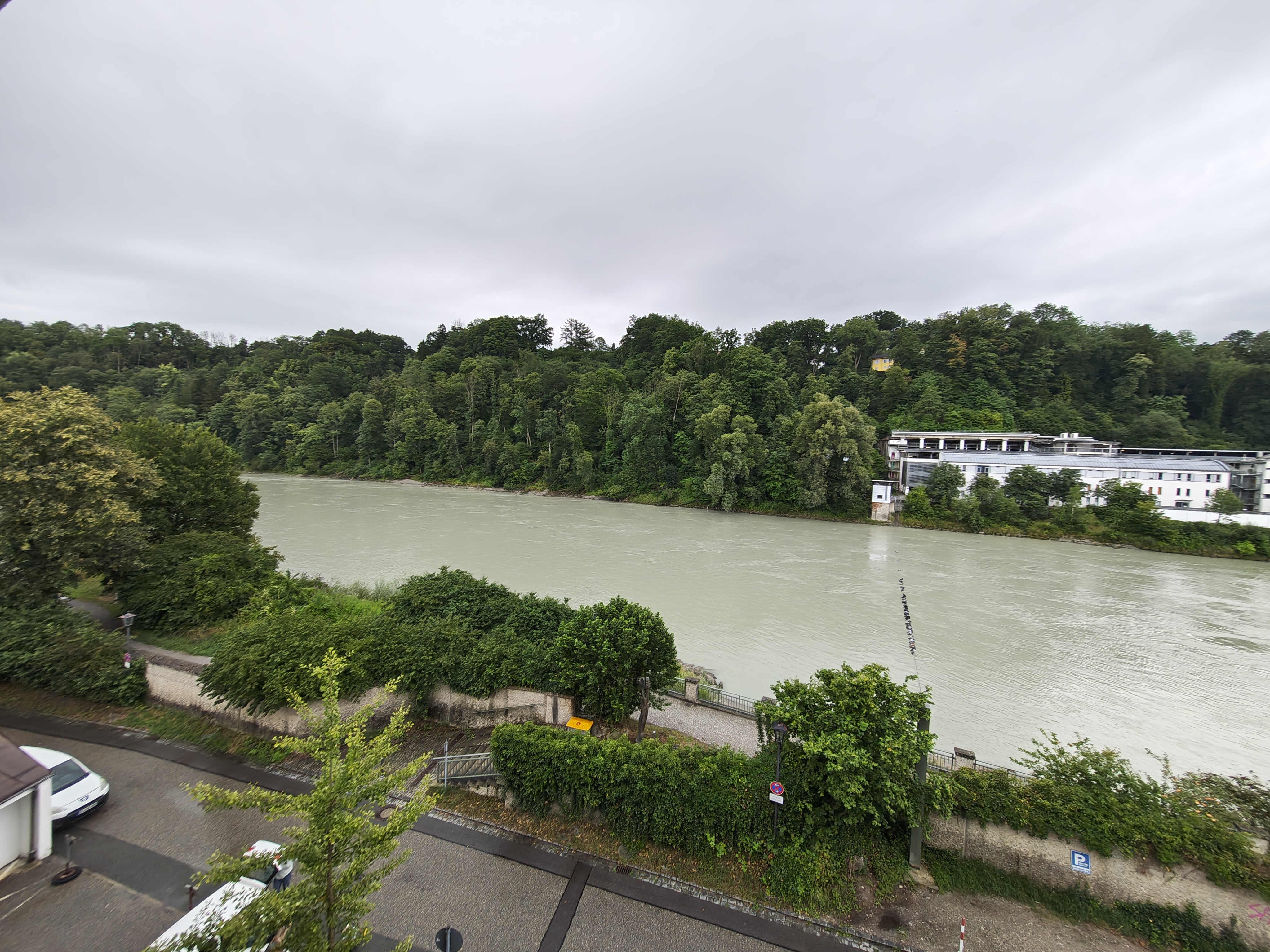
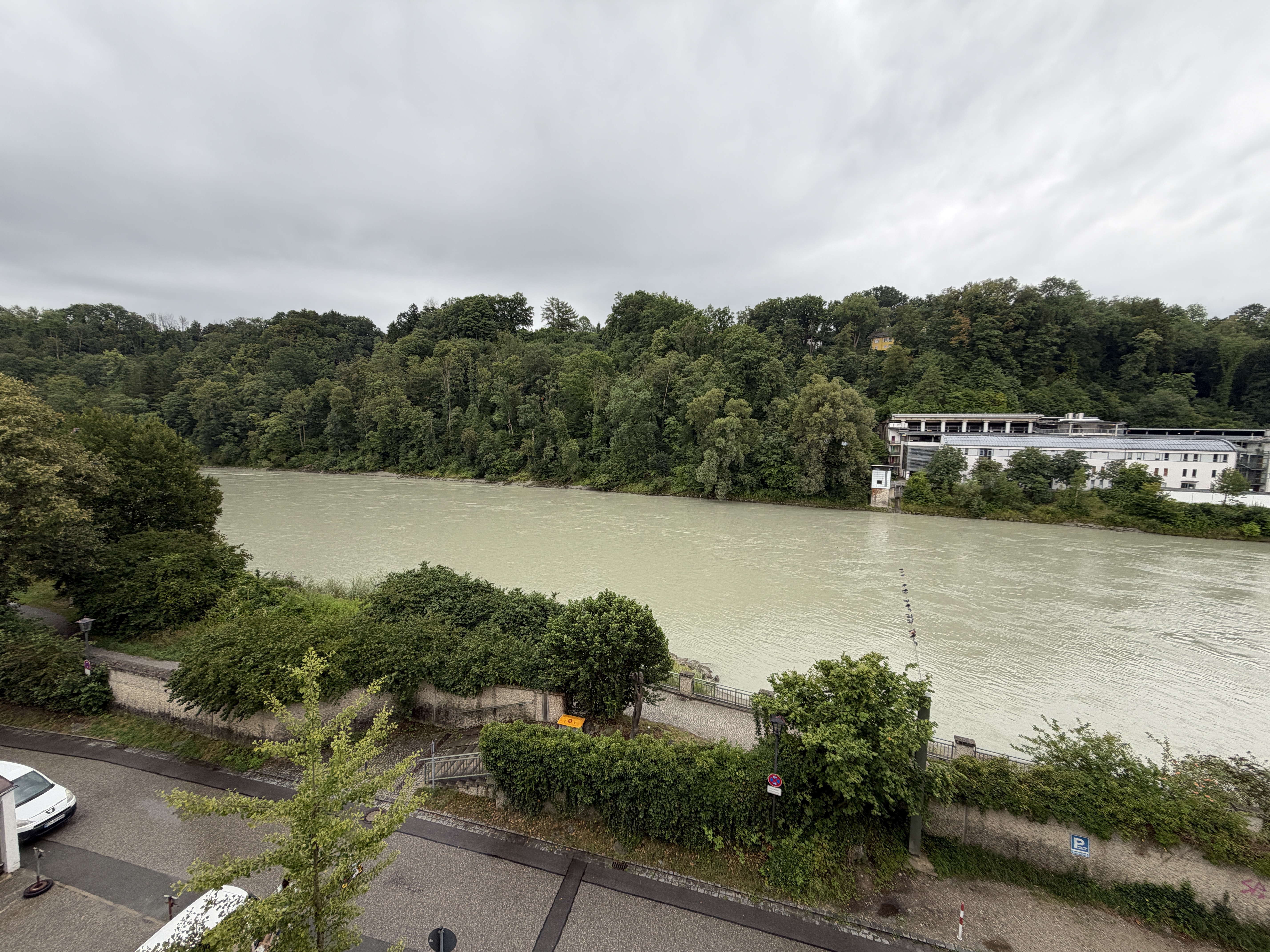





Display – Razr Fold with HDR screens
The massive 8.1-inch foldable display can get very bright and offers HDR values well over 3,000 cd/m².
The resolution is high, resulting in a crisp image. Additionally, the crease is barely visible, at least after two weeks of use.
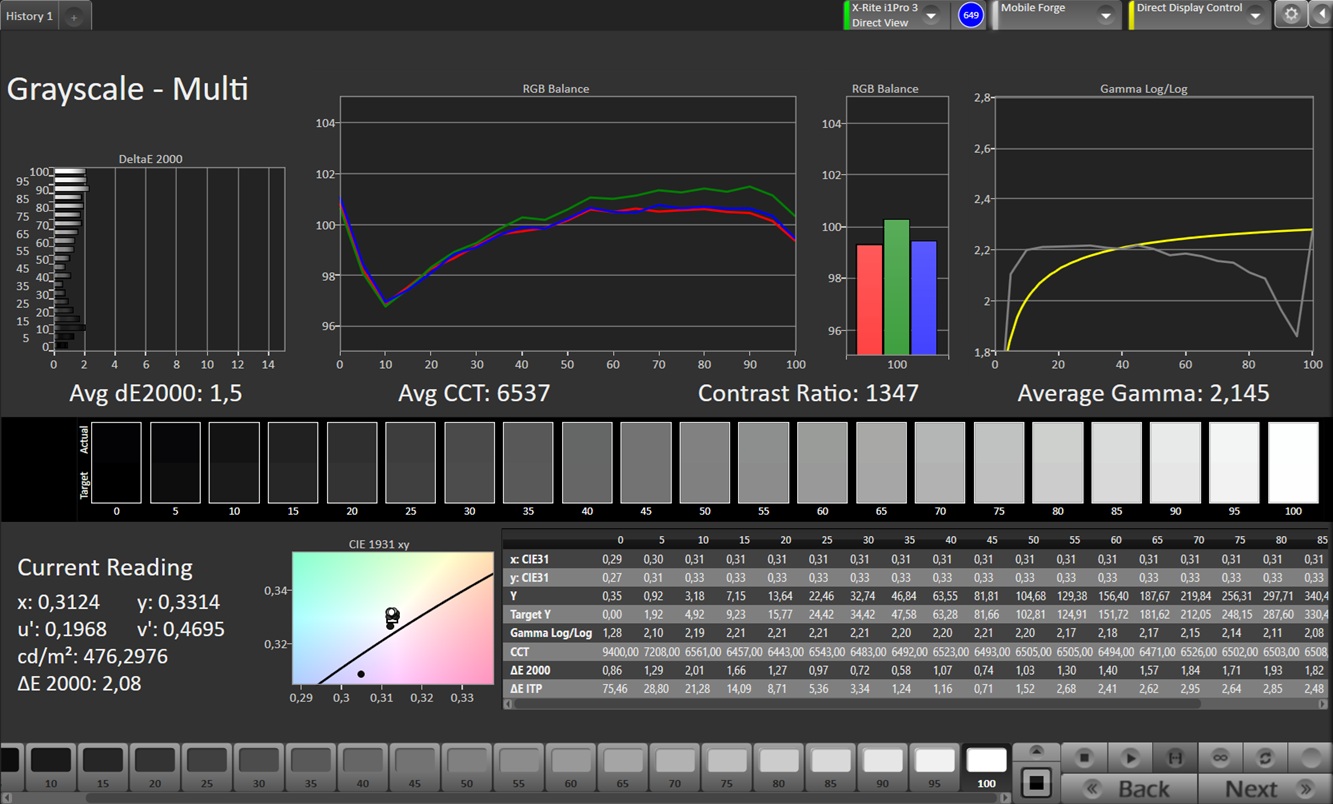
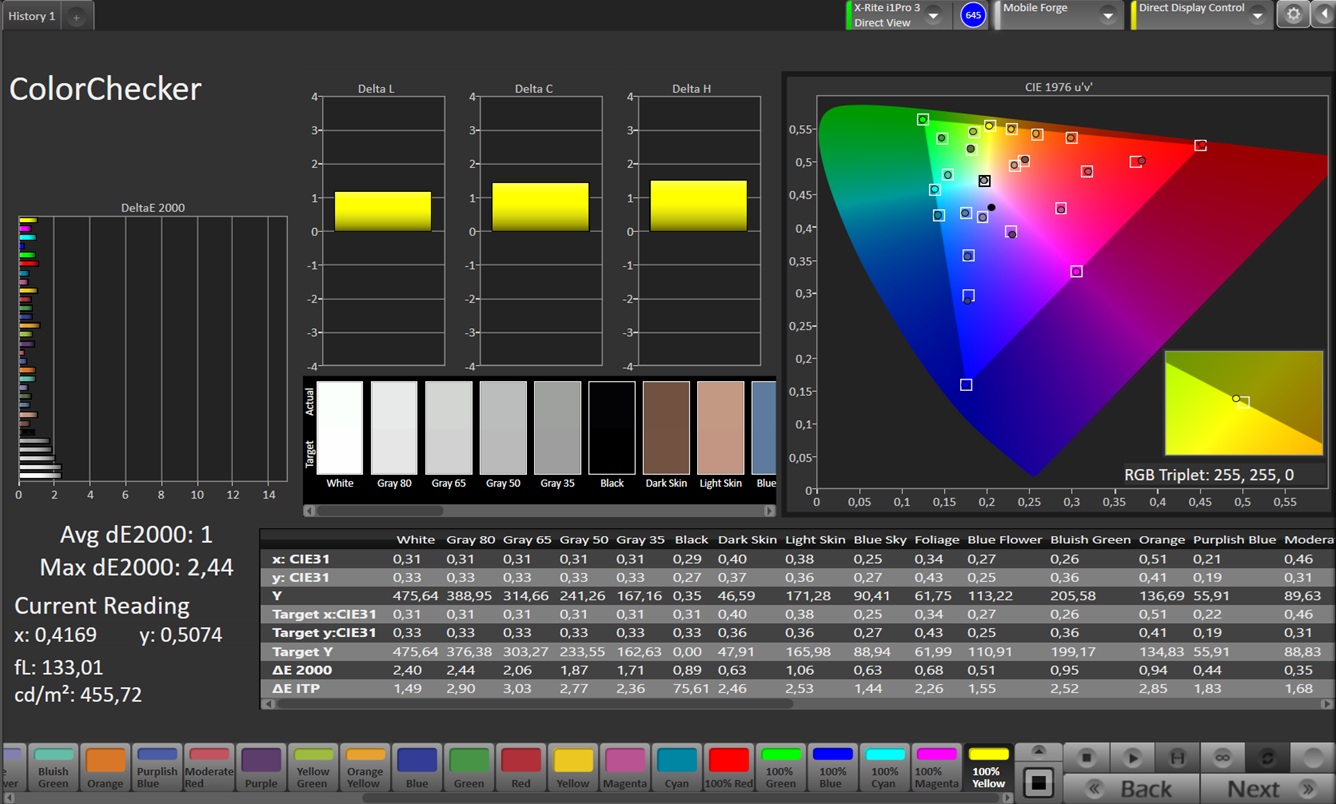
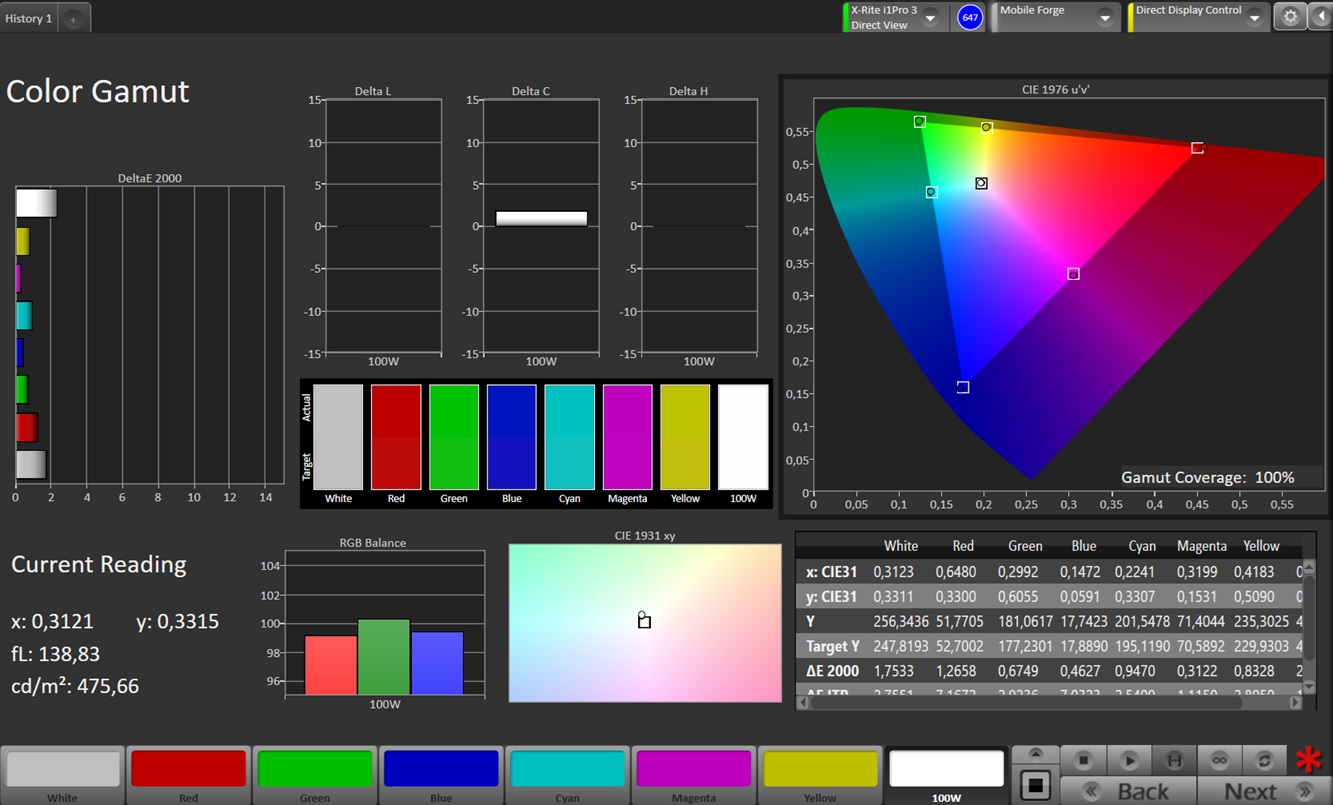
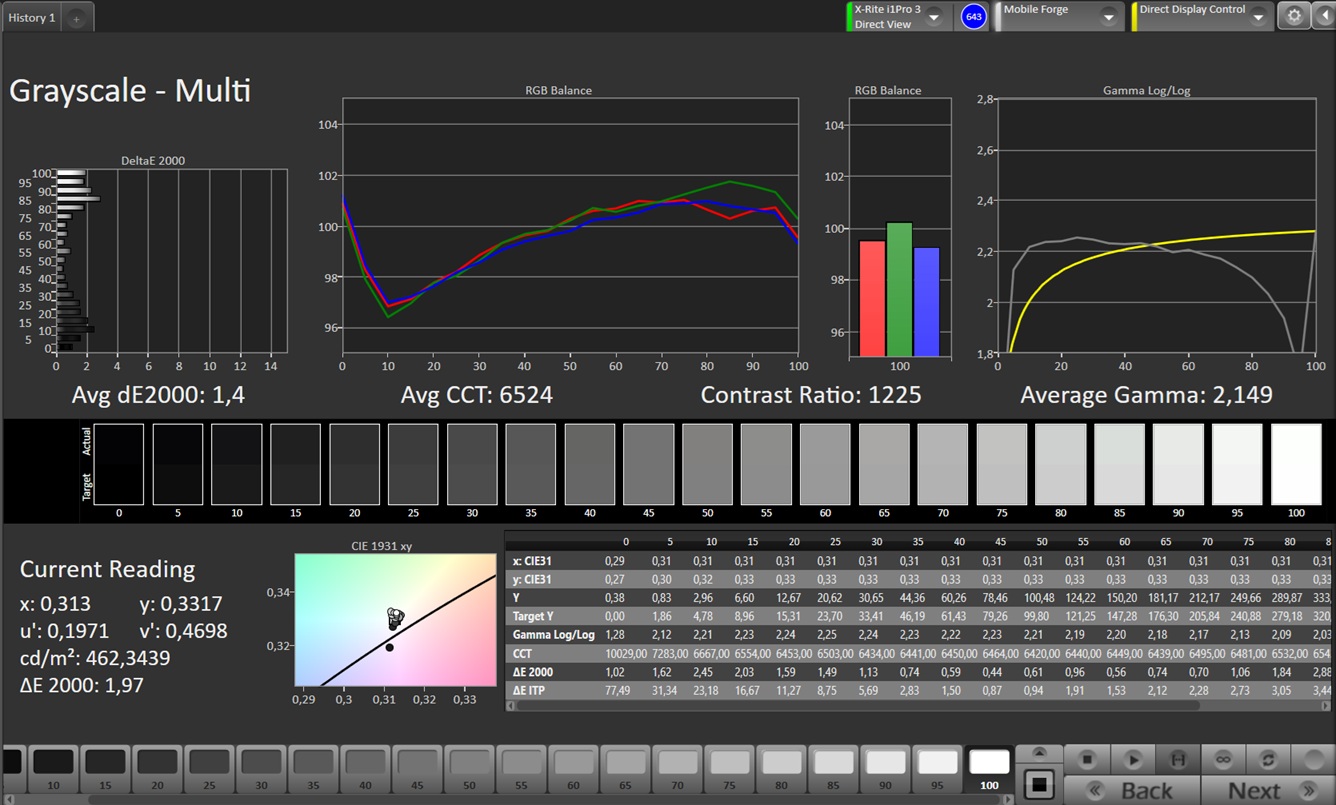
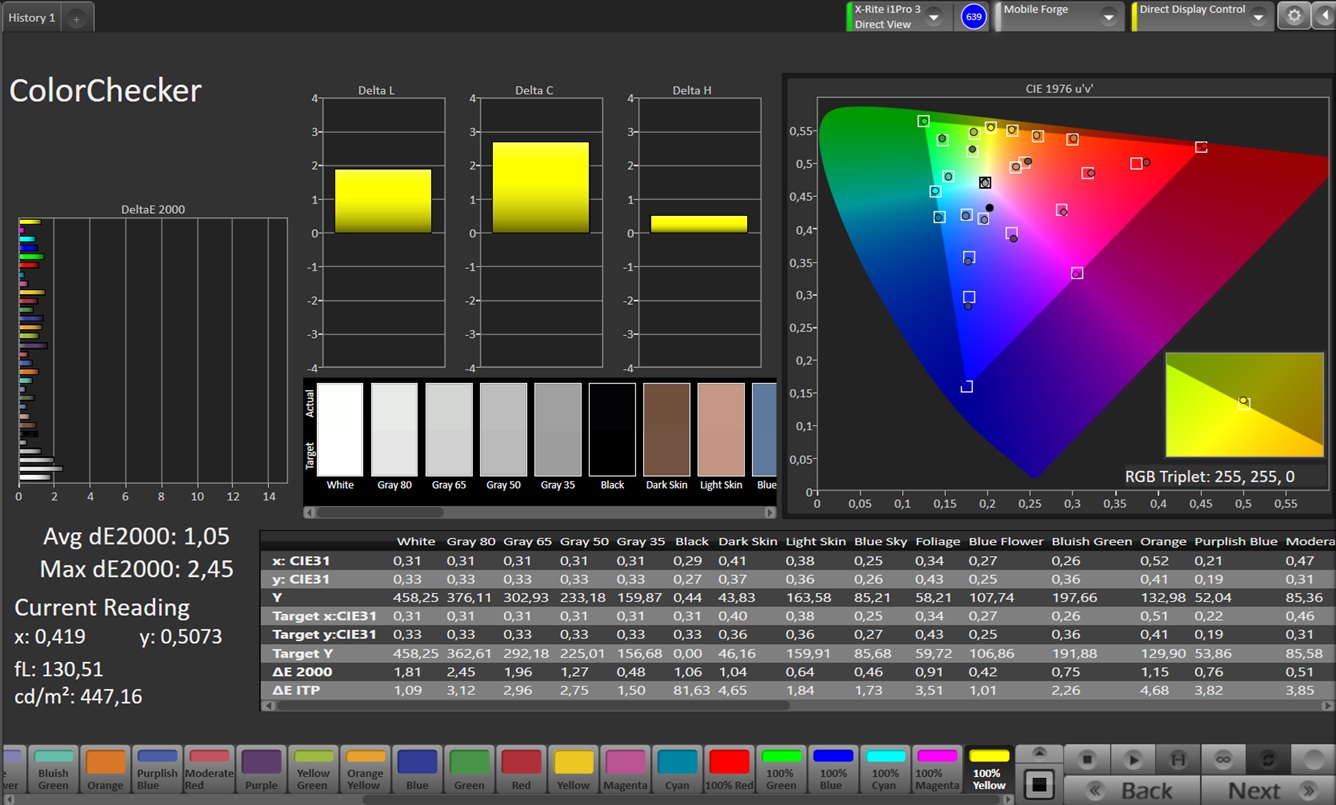
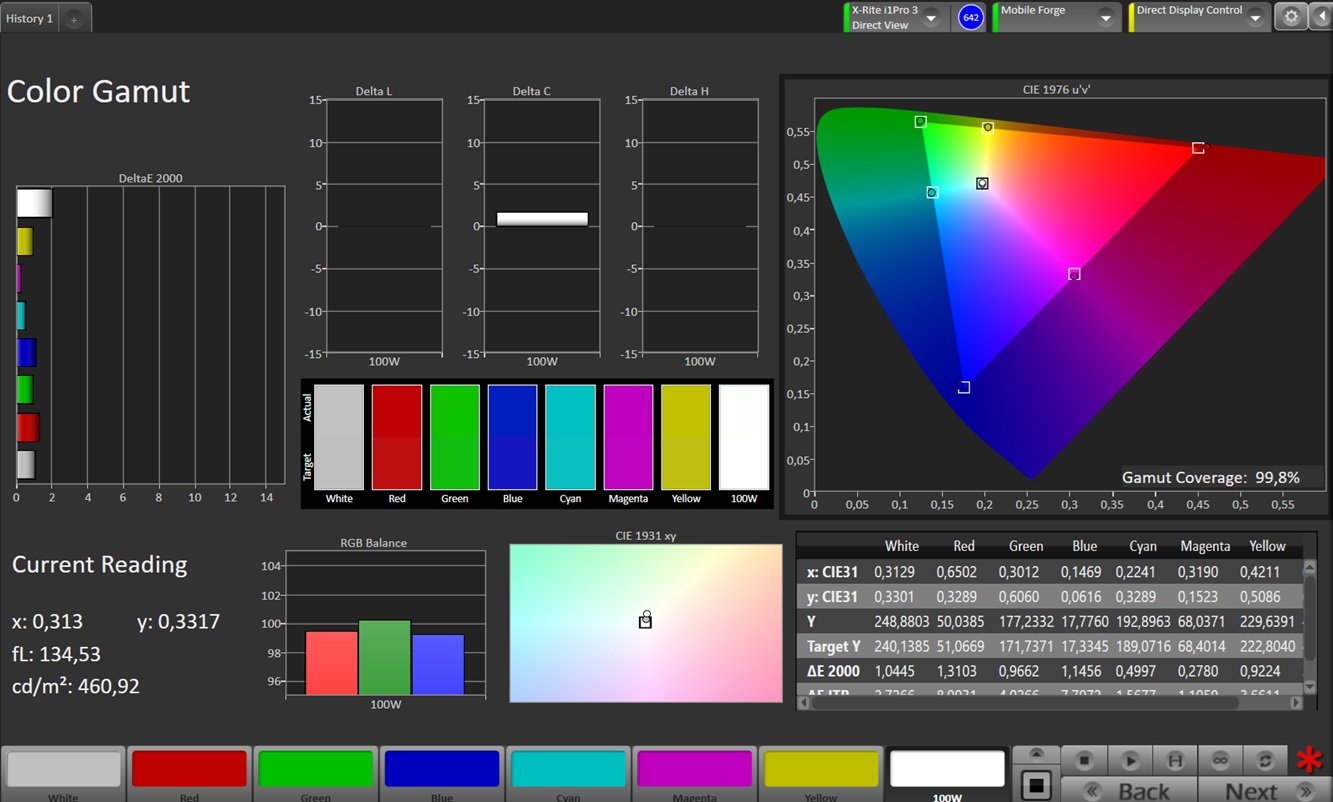
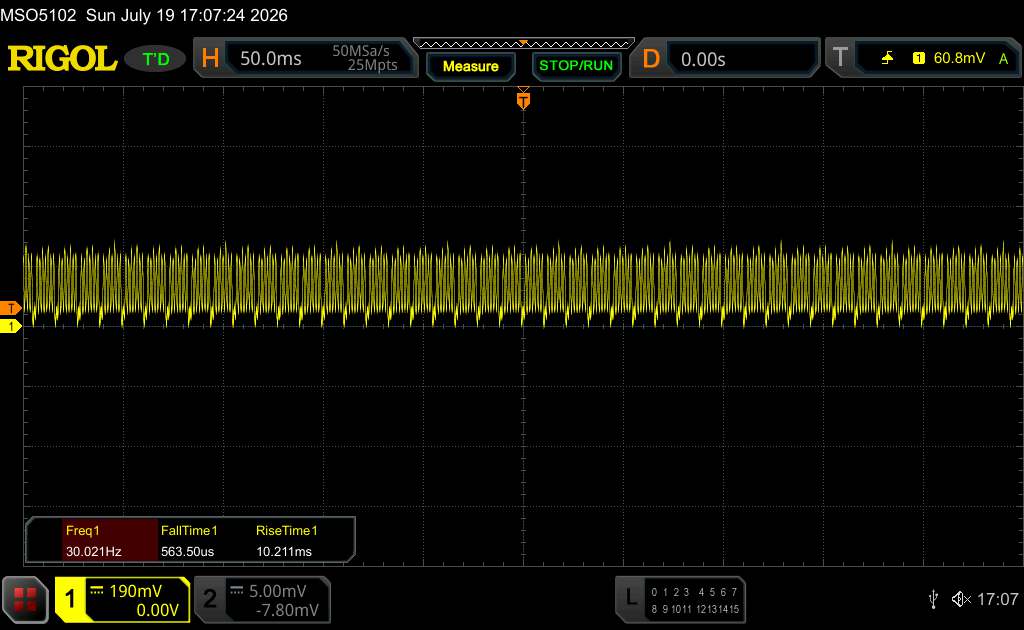
The color reproduction is very accurate, but you’ll have to put up with PWM flicker at around 180 Hz. The outer display shows even lower frequencies, so people who are sensitive to this should test the screens before buying.
| |||||||||||||||||||||||||
Center on Battery: 1236 cd/m²
Contrast: ∞:1 (Black: 0 cd/m²)
ΔE ColorChecker Calman: 1 | ∀{0.5-29.43 Ø4.7}
ΔE Greyscale Calman: 1.5 | ∀{0.09-98 Ø4.95}
100% sRGB (Calman 2D)
Gamma: 2.145
CCT: 6537 K
| Motorola Razr Fold OLED, 2484x2232, 8.1" | Samsung Galaxy Z Fold7 Dynamic AMOLED 2X, 2184x1968, 8" | Honor Magic V6 OLED, 2352x2172, 8" | Oppo Find N6 OLED, 2480x2248, 8.1" | Huawei Mate X7 OLED, 2416x2210, 8" | |
|---|---|---|---|---|---|
| Display | -25% | 1% | -57% | -58% | |
| APL18 Peak Brightness (cd/m²) | 3568 | 2570 -28% | 1229 -66% | 1353 -62% | 1467 -59% |
| HDR Peak Brightness (cd/m²) | 3466 | 2708 -22% | 5773 67% | 1697 -51% | 1496 -57% |
| Response Times | 25% | 37% | 35% | 32% | |
| Response Time Grey 50% / Grey 80% * (ms) | 1.6 ? | 0.67 ? 58% | 0.65 ? 59% | 0.52 ? 67% | 0.71 ? 56% |
| Response Time Black / White * (ms) | 1.3 ? | 1.4 ? -8% | 0.84 ? 35% | 1.05 ? 19% | 0.93 ? 28% |
| PWM Frequency (Hz) | 180 | 240 | 120 | 180 | 360 |
| PWM Amplitude * (%) | 18 | 13.73 24% | 15.15 16% | 14.43 20% | 15.59 13% |
| Screen | -55% | -35% | -23% | -33% | |
| Brightness middle (cd/m²) | 1236 | 1311 6% | 1291 4% | 1179 -5% | 1005 -19% |
| Black Level * (cd/m²) | |||||
| Colorchecker dE 2000 * | 1 | 2.4 -140% | 1.4 -40% | 1.6 -60% | 1.4 -40% |
| Colorchecker dE 2000 max. * | 2.44 | 3.4 -39% | 3.5 -43% | 2.9 -19% | 3.1 -27% |
| Greyscale dE 2000 * | 1.5 | 2.2 -47% | 2.4 -60% | 1.6 -7% | 2.2 -47% |
| Gamma | 2.145 103% | 2.03 108% | 2.26 97% | 2.24 98% | 2.25 98% |
| CCT | 6537 99% | 6413 101% | 6804 96% | 6662 98% | 6890 94% |
| Brightness (cd/m²) | 1307 | 1184 | 1021 | ||
| Brightness Distribution (%) | 95 | 98 | 97 | ||
| Total Average (Program / Settings) | -18% /
-22% | 1% /
-3% | -15% /
-11% | -20% /
-17% |
* ... smaller is better
| Display / APL18 Peak Brightness | |
| Motorola Razr Fold | |
| Samsung Galaxy Z Fold7 | |
| Huawei Mate X7 | |
| Oppo Find N6 | |
| Honor Magic V6 | |
| Display / HDR Peak Brightness | |
| Honor Magic V6 | |
| Motorola Razr Fold | |
| Samsung Galaxy Z Fold7 | |
| Oppo Find N6 | |
| Huawei Mate X7 | |
Screen Flickering / PWM (Pulse-Width Modulation)
| Screen flickering / PWM detected | 180 Hz Amplitude: 18 % | 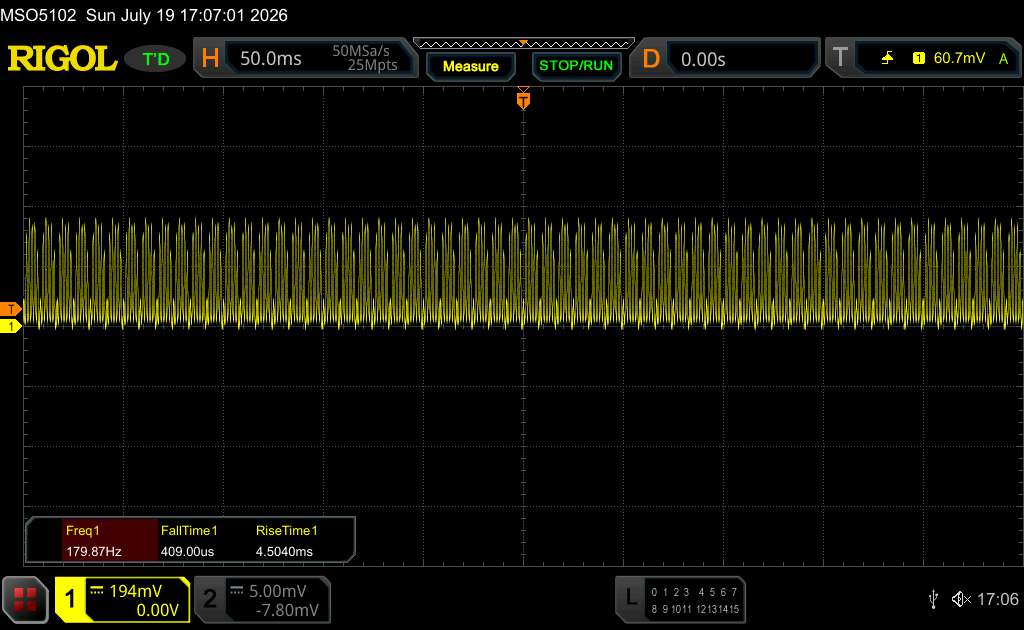 | |
The display backlight flickers at 180 Hz (worst case, e.g., utilizing PWM) . The frequency of 180 Hz is relatively low, so sensitive users will likely notice flickering and experience eyestrain at the stated brightness setting and below. In comparison: 52 % of all tested devices do not use PWM to dim the display. If PWM was detected, an average of 7659 (minimum: 5 - maximum: 343500) Hz was measured. | |||
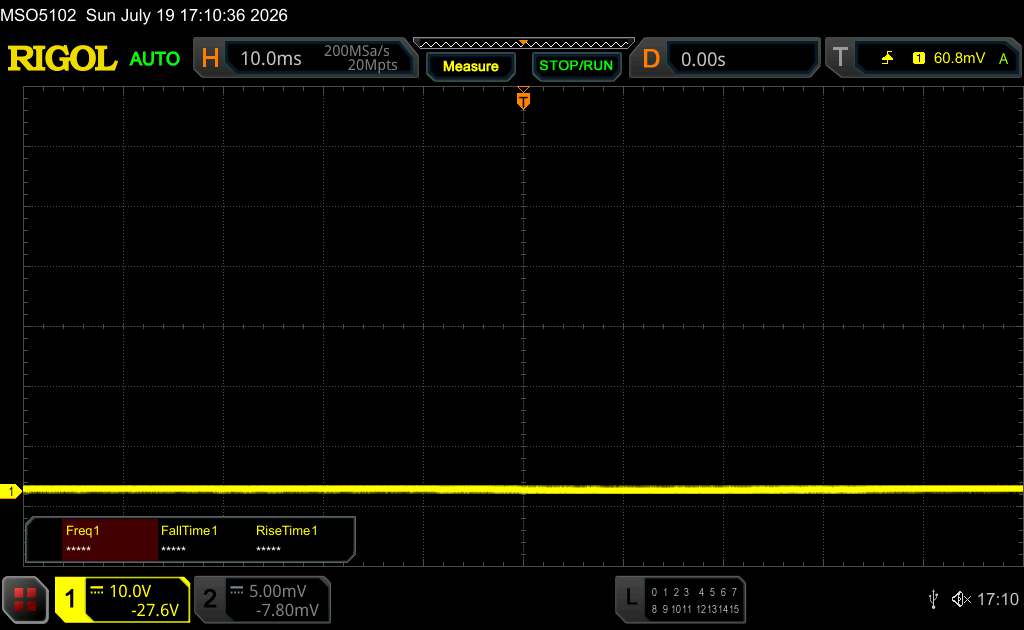
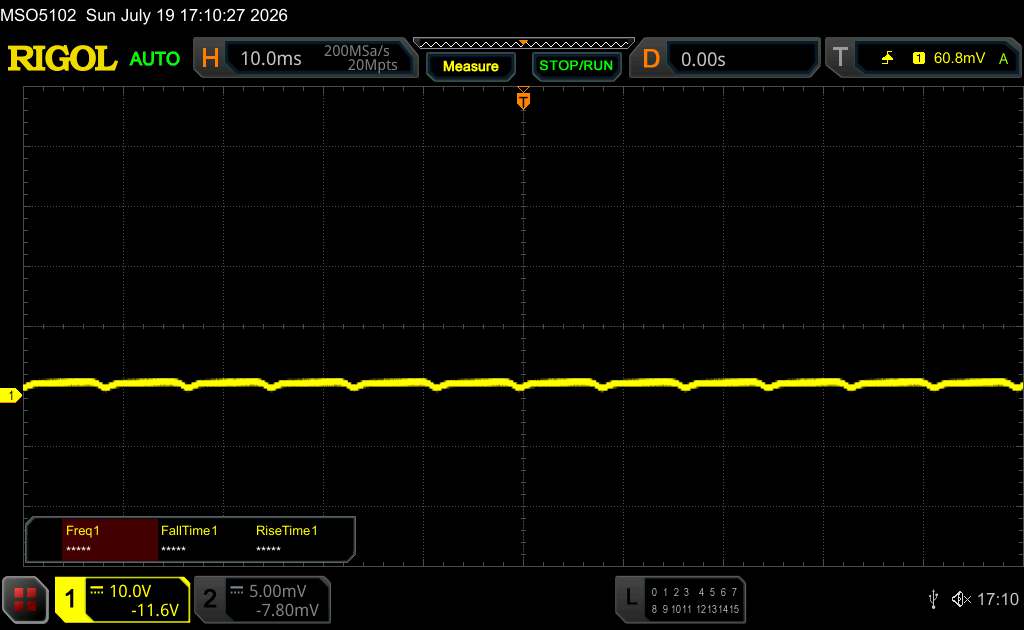
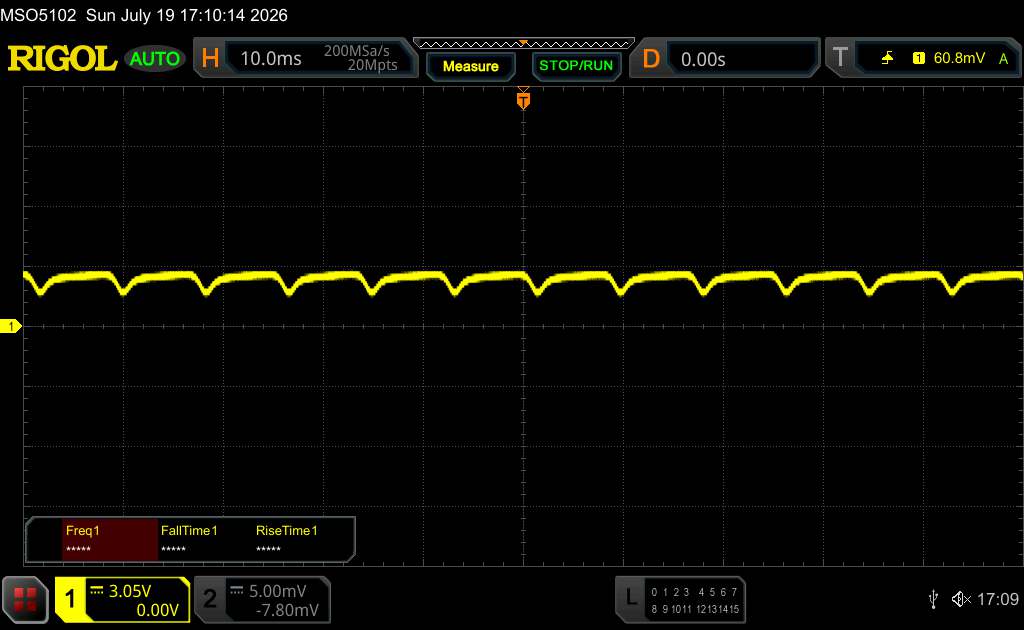
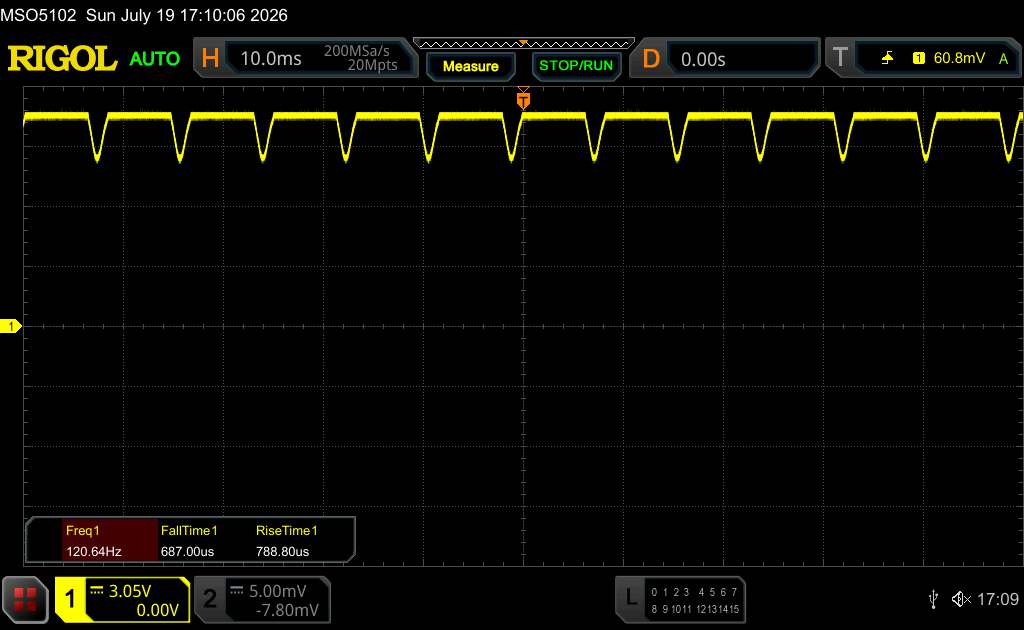
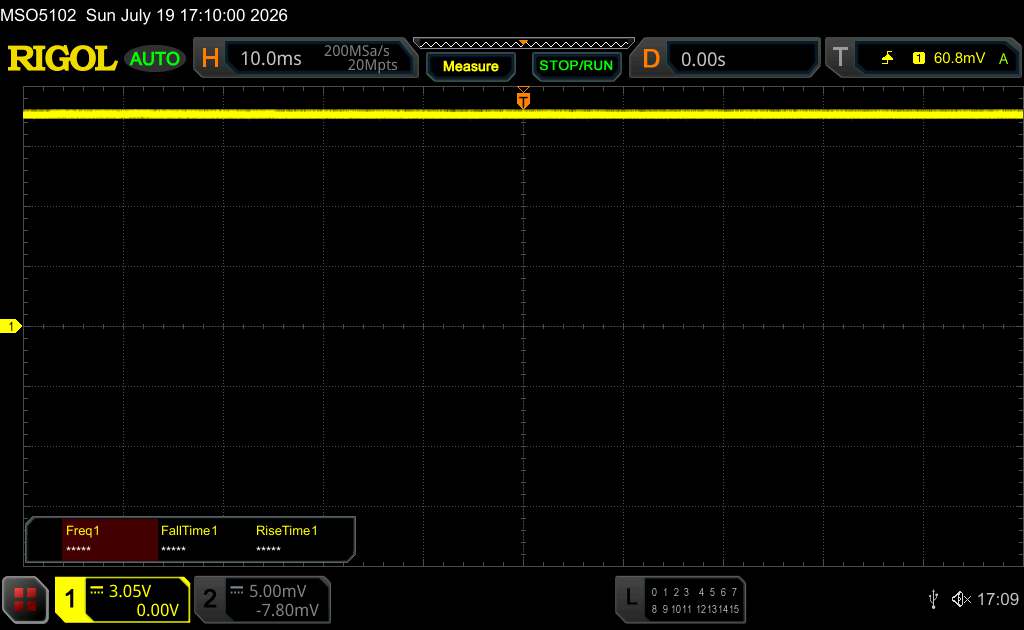
Series of measurements taken at a fixed zoom level and with different brightness settings (Although the amplitude curve at minimum brightness appears flat, this is due to the scaling. The info box shows a magnified version of the amplitude at minimum brightness.)
Display Response Times
| ↔ Response Time Black to White | ||
|---|---|---|
| 1.3 ms ... rise ↗ and fall ↘ combined | ↗ 0.6 ms rise | 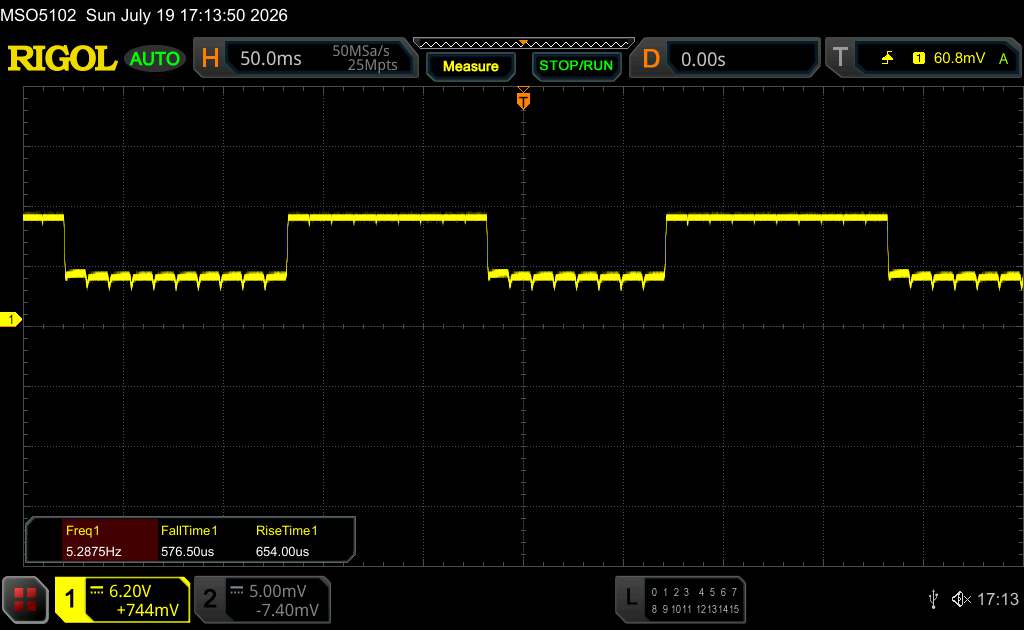 |
| ↘ 0.7 ms fall | ||
| The screen shows very fast response rates in our tests and should be very well suited for fast-paced gaming. In comparison, all tested devices range from 0.1 (minimum) to 240 (maximum) ms. » 8 % of all devices are better. This means that the measured response time is better than the average of all tested devices (19.7 ms). | ||
| ↔ Response Time 50% Grey to 80% Grey | ||
| 1.6 ms ... rise ↗ and fall ↘ combined | ↗ 0.7 ms rise | 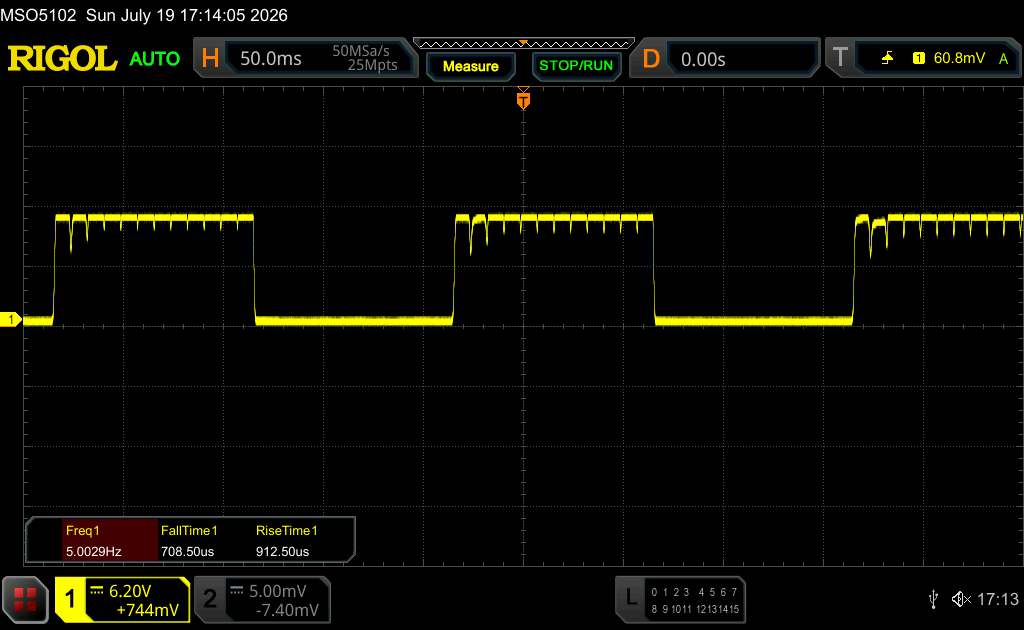 |
| ↘ 0.9 ms fall | ||
| The screen shows very fast response rates in our tests and should be very well suited for fast-paced gaming. In comparison, all tested devices range from 0.13 (minimum) to 636 (maximum) ms. » 8 % of all devices are better. This means that the measured response time is better than the average of all tested devices (30.8 ms). | ||
Outdoor display
| |||||||||||||||||||||||||
Center on Battery: 1144 cd/m²
Contrast: ∞:1 (Black: 0 cd/m²)
ΔE ColorChecker Calman: 1.05 | ∀{0.5-29.43 Ø4.7}
ΔE Greyscale Calman: 1.4 | ∀{0.09-98 Ø4.95}
99.8% sRGB (Calman 2D)
Gamma: 2.149
CCT: 6345 K
Performance, emissions, and battery life – Decent endurance
The Qualcomm Snapdragon 8 Gen 5 is a high-end processor that, while not quite delivering top-tier performance, handles even more demanding apps with ease in everyday use. When it comes to gaming, you can play demanding titles smoothly.
Heat buildup is significant, and after prolonged use, there is also a noticeable performance throttling of over 30%.
The device features built-in stereo speakers. They reach only moderate volumes and deliver little bass, but they reproduce the midrange and treble well, resulting in solid sound quality. Those who want to connect speakers or headphones via Bluetooth will find a wide range of supported codecs.
With its 6,000-mAh battery, the Razr Fold achieves good battery life of over 18 hours in our Wi-Fi test. This means you can go several days without needing to plug it in, provided you don’t use your phone too much. A full charge takes about an hour with the appropriate charger.
| Motorola Razr Fold | Samsung Galaxy Z Fold7 | Honor Magic V6 | Oppo Find N6 | Huawei Mate X7 | Average 512 GB UFS 4.1 Flash | Average of class Smartphone | |
|---|---|---|---|---|---|---|---|
| AndroBench 3-5 | -31% | 2% | 0% | 24% | -11% | -39% | |
| Sequential Read 256KB (MB/s) | 3719.8 | 4080.35 10% | 3921.41 5% | 3861.06 4% | 4365.76 17% | 3608 ? -3% | 2283 ? -39% |
| Sequential Write 256KB (MB/s) | 3758 | 2239.55 -40% | 3992.25 6% | 3531.83 -6% | 4112.78 9% | 3219 ? -14% | 1965 ? -48% |
| Random Read 4KB (MB/s) | 403.4 | 403.69 0% | 411.38 2% | 446.52 11% | 463.43 15% | 412 ? 2% | 316 ? -22% |
| Random Write 4KB (MB/s) | 695.6 | 51.23 -93% | 667.68 -4% | 637.68 -8% | 1071.05 54% | 496 ? -29% | 362 ? -48% |
(-) The maximum temperature on the upper side is 49.1 °C / 120 F, compared to the average of 35.3 °C / 96 F, ranging from 21.9 to 247 °C for the class Smartphone.
(-) The bottom heats up to a maximum of 46.9 °C / 116 F, compared to the average of 34.1 °C / 93 F
3DMark Stress Tests
| 3DMark | |
| Wild Life Stress Test Stability | |
| Samsung Galaxy Z Fold7 | |
| Oppo Find N6 | |
| Huawei Mate X7 | |
| Wild Life Extreme Stress Test | |
| Motorola Razr Fold | |
| Honor Magic V6 | |
| Huawei Mate X7 | |
| Oppo Find N6 | |
| Solar Bay Stress Test Stability | |
| Motorola Razr Fold | |
| Huawei Mate X7 | |
| Oppo Find N6 | |
| Solar Bay Extreme Stress Test Stability | |
| Motorola Razr Fold | |
| Oppo Find N6 | |
| Steel Nomad Light Stress Test Stability | |
| Huawei Mate X7 | |
| Motorola Razr Fold | |
| Samsung Galaxy Z Fold7 | |
| Honor Magic V6 | |
| Oppo Find N6 | |
Motorola Razr Fold audio analysis
(±) | speaker loudness is average but good (79.9 dB)
Bass 100 - 315 Hz
(-) | nearly no bass - on average 18% lower than median
(±) | linearity of bass is average (13.2% delta to prev. frequency)
Mids 400 - 2000 Hz
(+) | balanced mids - only 4.3% away from median
(±) | linearity of mids is average (7.4% delta to prev. frequency)
Highs 2 - 16 kHz
(+) | balanced highs - only 3.4% away from median
(+) | highs are linear (5.7% delta to prev. frequency)
Overall 100 - 16.000 Hz
(±) | linearity of overall sound is average (17.6% difference to median)
Compared to same class
» 14% of all tested devices in this class were better, 8% similar, 78% worse
» The best had a delta of 11%, average was 34%, worst was 136%
Compared to all devices tested
» 35% of all tested devices were better, 8% similar, 57% worse
» The best had a delta of 4%, average was 23%, worst was 136%
Samsung Galaxy Z Fold7 audio analysis
(+) | speakers can play relatively loud (89.5 dB)
Bass 100 - 315 Hz
(-) | nearly no bass - on average 21.4% lower than median
(±) | linearity of bass is average (10% delta to prev. frequency)
Mids 400 - 2000 Hz
(±) | reduced mids - on average 5% lower than median
(+) | mids are linear (5.2% delta to prev. frequency)
Highs 2 - 16 kHz
(±) | higher highs - on average 5.9% higher than median
(+) | highs are linear (4.4% delta to prev. frequency)
Overall 100 - 16.000 Hz
(±) | linearity of overall sound is average (17.1% difference to median)
Compared to same class
» 10% of all tested devices in this class were better, 8% similar, 82% worse
» The best had a delta of 11%, average was 34%, worst was 136%
Compared to all devices tested
» 31% of all tested devices were better, 8% similar, 60% worse
» The best had a delta of 4%, average was 23%, worst was 136%
| Off / Standby |   0.1 / 0.2 Watt 0.1 / 0.2 Watt |
| Idle |  1.1 / 1.3 / 1.7 Watt 1.1 / 1.3 / 1.7 Watt |
    
| |
Key:
min: ,
med: ,
max: Metrahit Energy | |
| Motorola Razr Fold 6000 mAh | Samsung Galaxy Z Fold7 4400 mAh | Honor Magic V6 6660 mAh | Oppo Find N6 6000 mAh | Huawei Mate X7 5525 mAh | Average Qualcomm Snapdragon 8 Gen 5 | Average of class Smartphone | |
|---|---|---|---|---|---|---|---|
| Power Consumption | 13% | 6% | 2% | 14% | -72% | 4% | |
| Idle Minimum * (Watt) | 1.1 | 0.63 43% | 0.92 16% | 0.79 28% | 0.53 52% | 1.81 ? -65% | 0.878 ? 20% |
| Idle Average * (Watt) | 1.3 | 1.48 -14% | 1.39 -7% | 1.6 -23% | 1.53 -18% | 2.46 ? -89% | 1.46 ? -12% |
| Idle Maximum * (Watt) | 1.7 | 1.55 9% | 1.53 10% | 1.66 2% | 1.56 8% | 2.75 ? -62% | 1.655 ? 3% |
| Load Average * (Watt) | 10.75 | 11.5 ? | 6.85 ? | ||||
| Load Maximum * (Watt) | 11.31 | 15.2 ? | 11.2 ? |
* ... smaller is better
| Motorola Razr Fold 6000 mAh | Samsung Galaxy Z Fold7 4400 mAh | Honor Magic V6 6660 mAh | Oppo Find N6 6000 mAh | Huawei Mate X7 5525 mAh | |
|---|---|---|---|---|---|
| Battery runtime | -22% | -12% | -2% | -8% | |
| Reader / Idle (h) | 27.4 | ||||
| WiFi v1.3 (h) | 18.4 | 14.3 -22% | 16.2 -12% | 18 -2% | 17 -8% |
| Load (h) | 5.6 |
Notebookcheck overall rating
The Motorola Razr Fold makes its debut and can hold its own against the competition.
Although it sets new standards in only a few areas, it may be an attractive option, when the price is reduced.

Motorola Razr Fold
- 08/02/2026 v8
Florian Schmitt
 Total Sustainability Score:
 Comparison of Possible Alternatives
Image | Model / Review | Price | Weight | Drive | Display |
|---|---|---|---|---|---|
1. 85.8%  | Motorola Razr Fold Qualcomm Snapdragon 8 Gen 5 ⎘ Qualcomm Adreno 829 ⎘ 16 GB Memory, 512 GB UFS 4.x | List Price: 1999€ | 243 g | 512 GB UFS 4.1 Flash | 8.10" 2484x2232 412 PPI OLED |
2. 87.2%  | Samsung Galaxy Z Fold7 Qualcomm Snapdragon 8 Elite for Galaxy ⎘ Qualcomm Adreno 830 ⎘ 12 GB Memory, 256 GB UFS 4.x | List Price: 2099€ | 215 g | 256 GB UFS 4.0 Flash | 8.00" 2184x1968 367 PPI Dynamic AMOLED 2X |
3. 88.1%  | Honor Magic V6 Qualcomm Snapdragon 8 Elite Gen 5 ⎘ Qualcomm Adreno 840 ⎘ 16 GB Memory, 512 GB UFS 4.x | Amazon: 1. $1,999.00 HONOR Magic V6 5G PNM-N49 (G... 2. $1,999.00 HONOR Magic V6 5G PNM-N49 (G... 3. $2,100.00 HONOR Magic V6 Dual-SIM 1TB ... List Price: 2300€ | 224 g | 512 GB UFS 4.1 Flash | 7.95" 2352x2172 403 PPI OLED |
4. 86.4%  | Oppo Find N6 Qualcomm Snapdragon 8 Elite Gen 5 ⎘ Qualcomm Adreno 840 ⎘ 16 GB Memory, 512 GB UFS 4.x | 225 g | 512 GB UFS 4.1 Flash | 8.12" 2480x2248 412 PPI OLED | |
5. 84.5%  | Huawei Mate X7 HiSilicon Kirin 9030 Pro ⎘ HiSilicon Maleoon 935 ⎘ 16 GB Memory, 512 GB UFS 4.x | List Price: 2099€ | 236 g | 512 GB UFS 4.1 Flash | 8.00" 2416x2210 409 PPI OLED |
Transparency
The selection of devices to be reviewed is made by our editorial team. The test sample was provided to the author as a loan by the manufacturer or retailer for the purpose of this review. The lender had no influence on this review, nor did the manufacturer receive a copy of this review before publication. There was no obligation to publish this review. As an independent media company, Notebookcheck is not subjected to the authority of manufacturers, retailers or publishers.
This is how Notebookcheck is testing
Every year, Notebookcheck independently reviews hundreds of laptops and smartphones using standardized procedures to ensure that all results are comparable. We have continuously developed our test methods for around 20 years and set industry standards in the process. In our test labs, high-quality measuring equipment is utilized by experienced technicians and editors. These tests involve a multi-stage validation process. Our complex rating system is based on hundreds of well-founded measurements and benchmarks, which maintains objectivity. Further information on our test methods can be found here.
 Add as a preferred source on Google


