




Inside Samsung’s Gamescom booth: Fast monitors and next-gen SSDs

 Gamescom
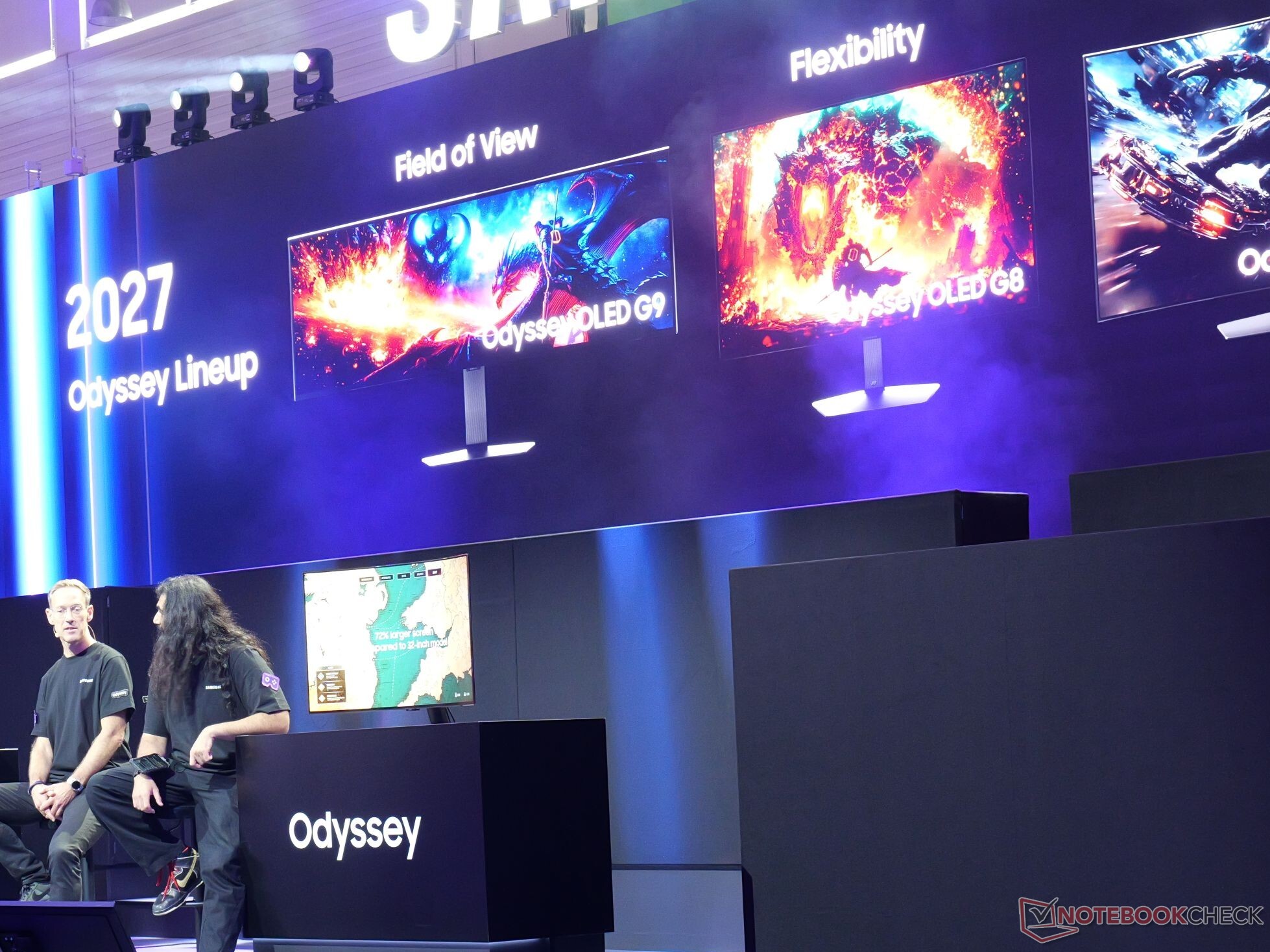
Samsung regularly attends Gamescom, and in 2026 it can be found in Hall 9 at Booth B020 through Sunday. Unsurprisingly, the focus is clearly on its gaming portfolio, particularly its monitors. New to the lineup is the 49-inch, extra-wide Odyssey OLED G9 G95SJ, which features a fifth-generation QD-OLED panel with an RGB stripe subpixel layout. The model has a resolution of 5,120 x 1,440 pixels and supports refresh rates of up to 360 Hz at this resolution. If users reduce the resolution to 2,560 x 720 pixels, the maximum refresh rate doubles. The specified peak brightness is 1,300 cd/m² across 3 percent of the screen area.
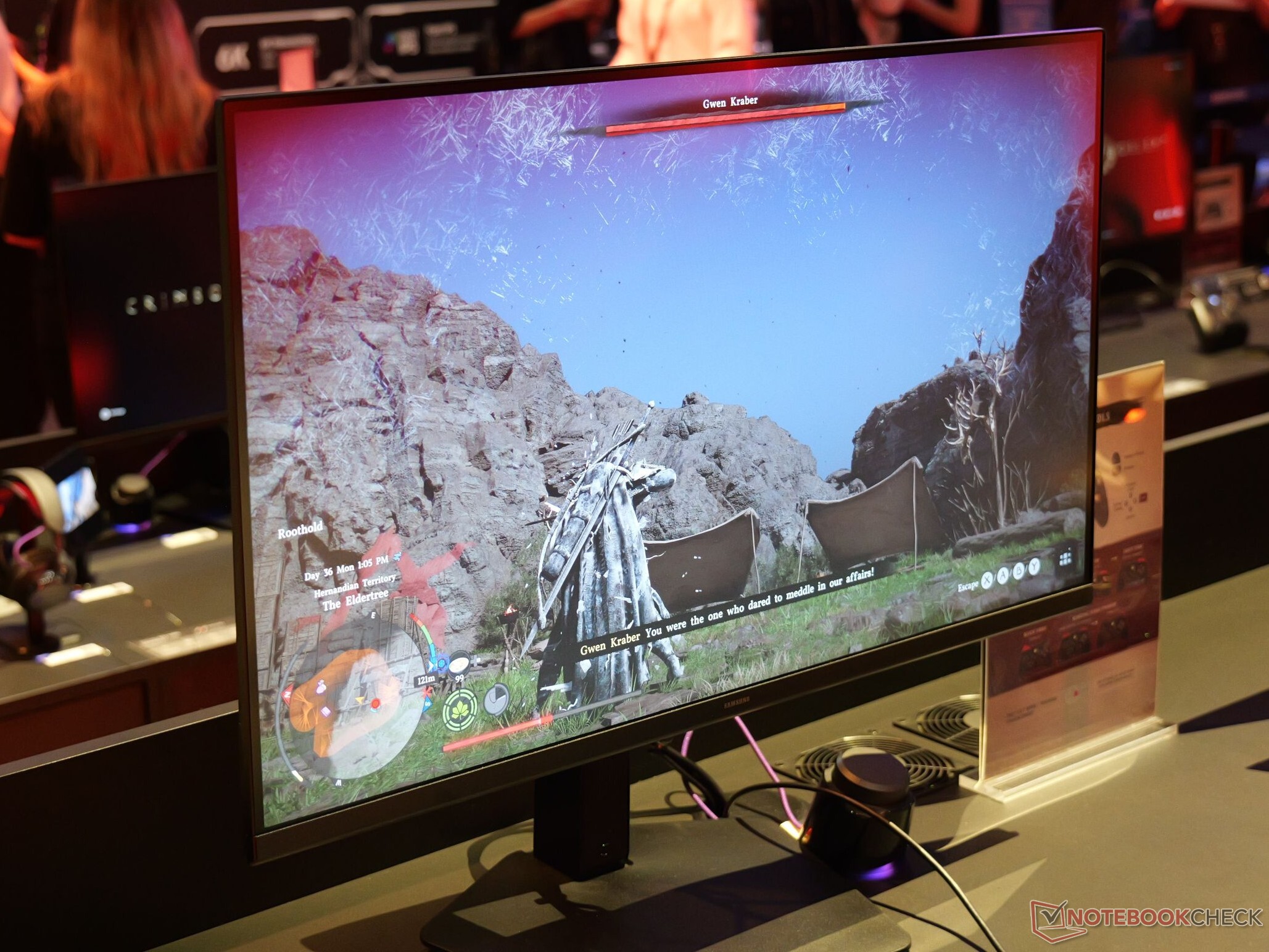
The Odyssey OLED G8 G80SJ offers not just two but three resolution modes. It supports UHD at up to 360 Hz, WHD at 520 Hz, and Full HD at 680 Hz—depending on the viewing distance, the image on the 32-inch QD-OLED panel is likely to appear noticeably pixelated. As with the G9, a GtG response time of 0.03 milliseconds is specified. AMD FreeSync Premium Pro is supported, and the monitor is compatible with G-Sync. A USB Type-C port is included and can supply connected source devices with up to 98 watts; a KVM function is also integrated. The Odyssey OLED G7 measures 42 inches, features 4K resolution, offers a refresh rate of up to 165 Hz, and has a curvature radius of 1,000 millimeters. The Odyssey G6, which is due to be released later in 2026, offers a refresh rate of up to 1,100 Hz—at least at HD resolution. The Odyssey G6 features a Fast IPS panel with a gray-to-gray response time of one millisecond. Also on display, though not new, is the Odyssey 3D (available on Amazon) —it offers a highly convincing glasses-free 3D effect. Samsung has not announced any new 3D monitors, but the selection of compatible titles is gradually expanding.


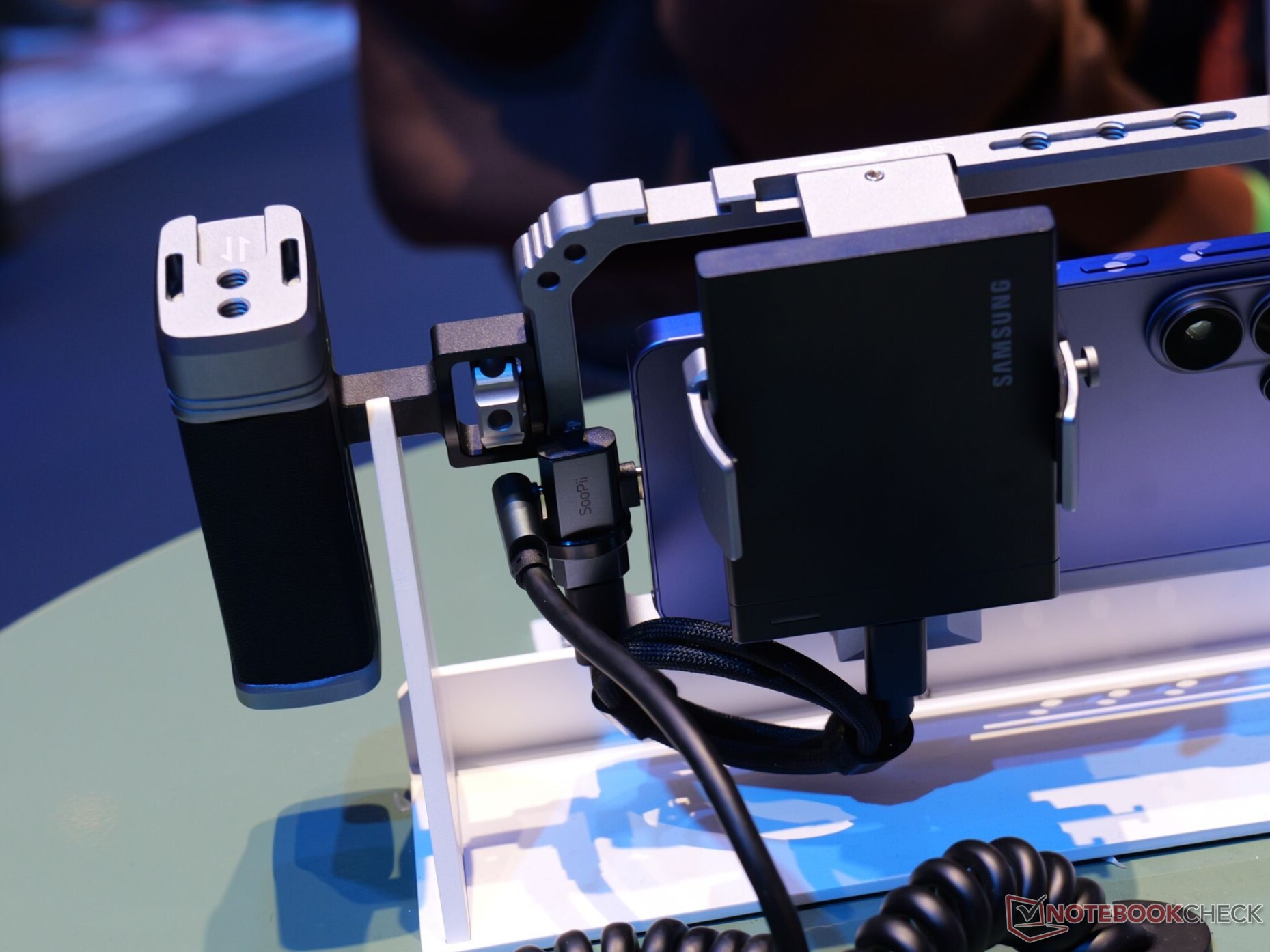
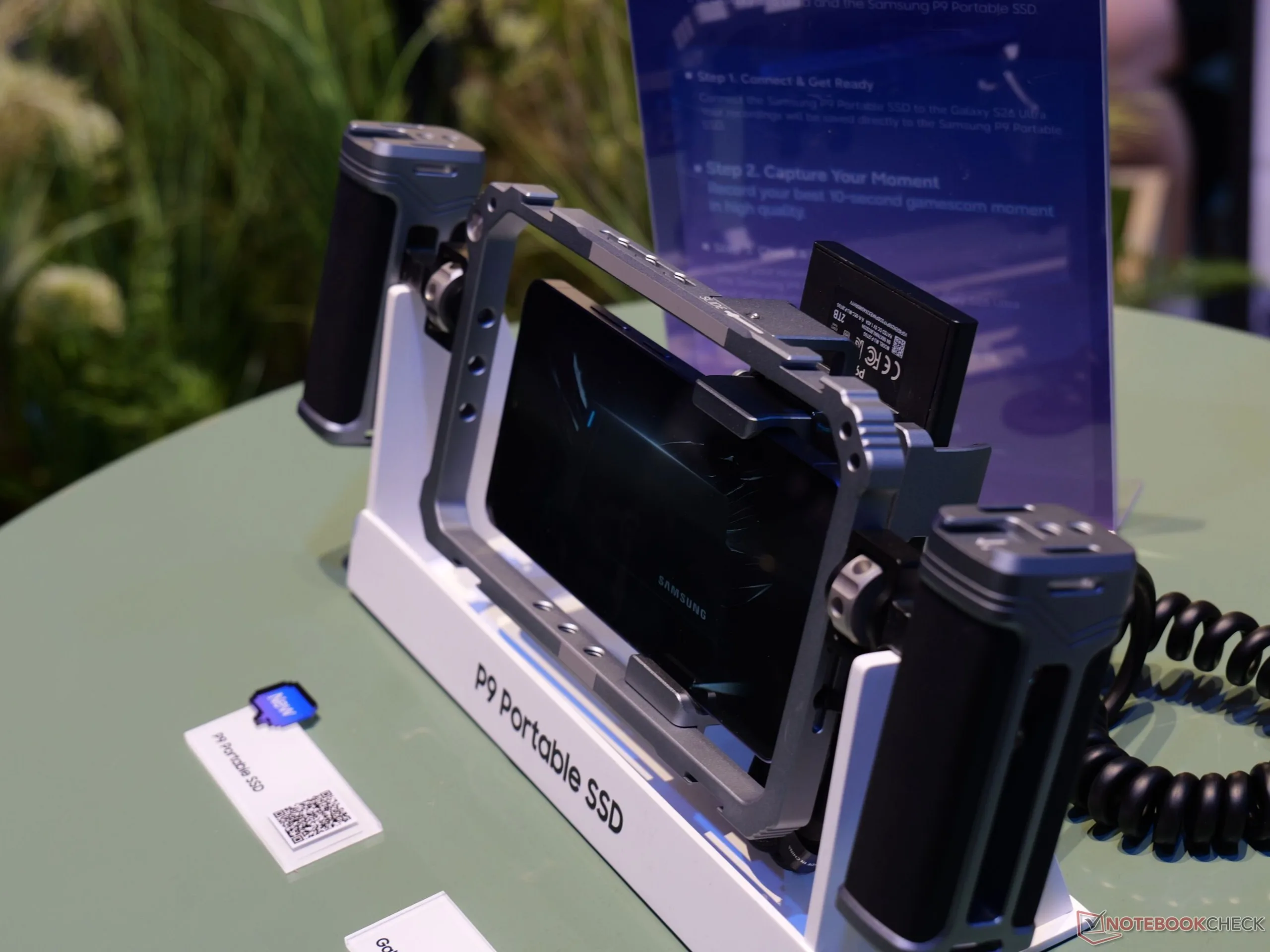
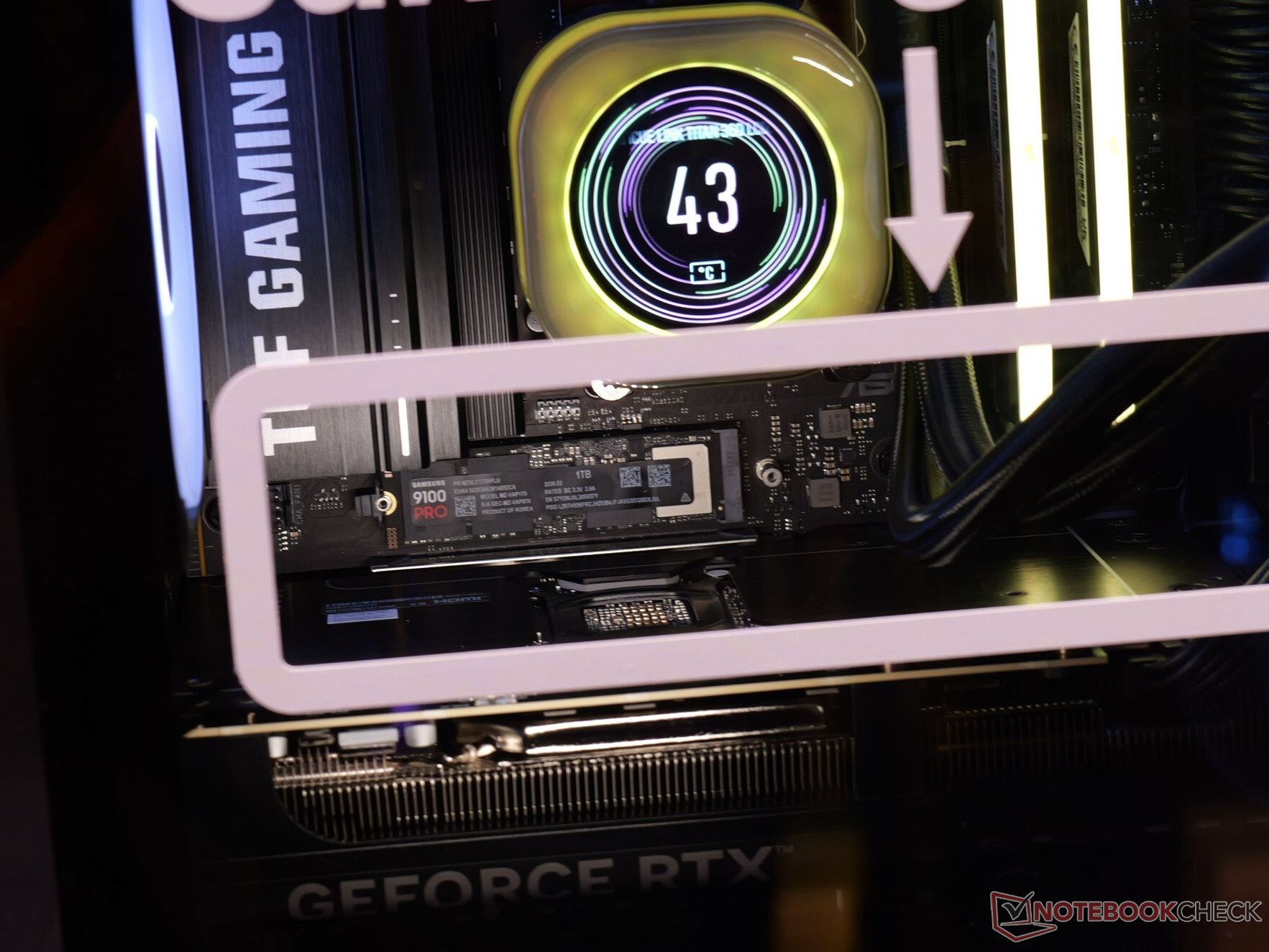
Samsung is also showcasing several new storage solutions. With the two external P9 and P7 SSDs, Samsung is probably no longer targeting typical consumers. Given sequential data transfer rates of up to 4,000 MByte/s when reading and 3,800 MByte/s when writing, the drives are aimed more at users who want to record long videos with a smartphone or camera. Accordingly, the P9 is being demonstrated on a smartphone rig at Samsung's booth. The SSDs measure 90 x 65 x 8.3 millimeters, are listed with capacities of up to 8 TByte, and communicate via USB4 Gen 3x2 at up to 40 Gbit/s. Also on display is the already available Samsung 9100 Pro SSD. With this PCIe 5.0 SSD, Samsung is targeting gamers as well as users who require exceptionally high data transfer rates for tasks like AI workloads or workstation applications.

Source(s)
Own research, Samsung
 Add as a preferred source on Google


