




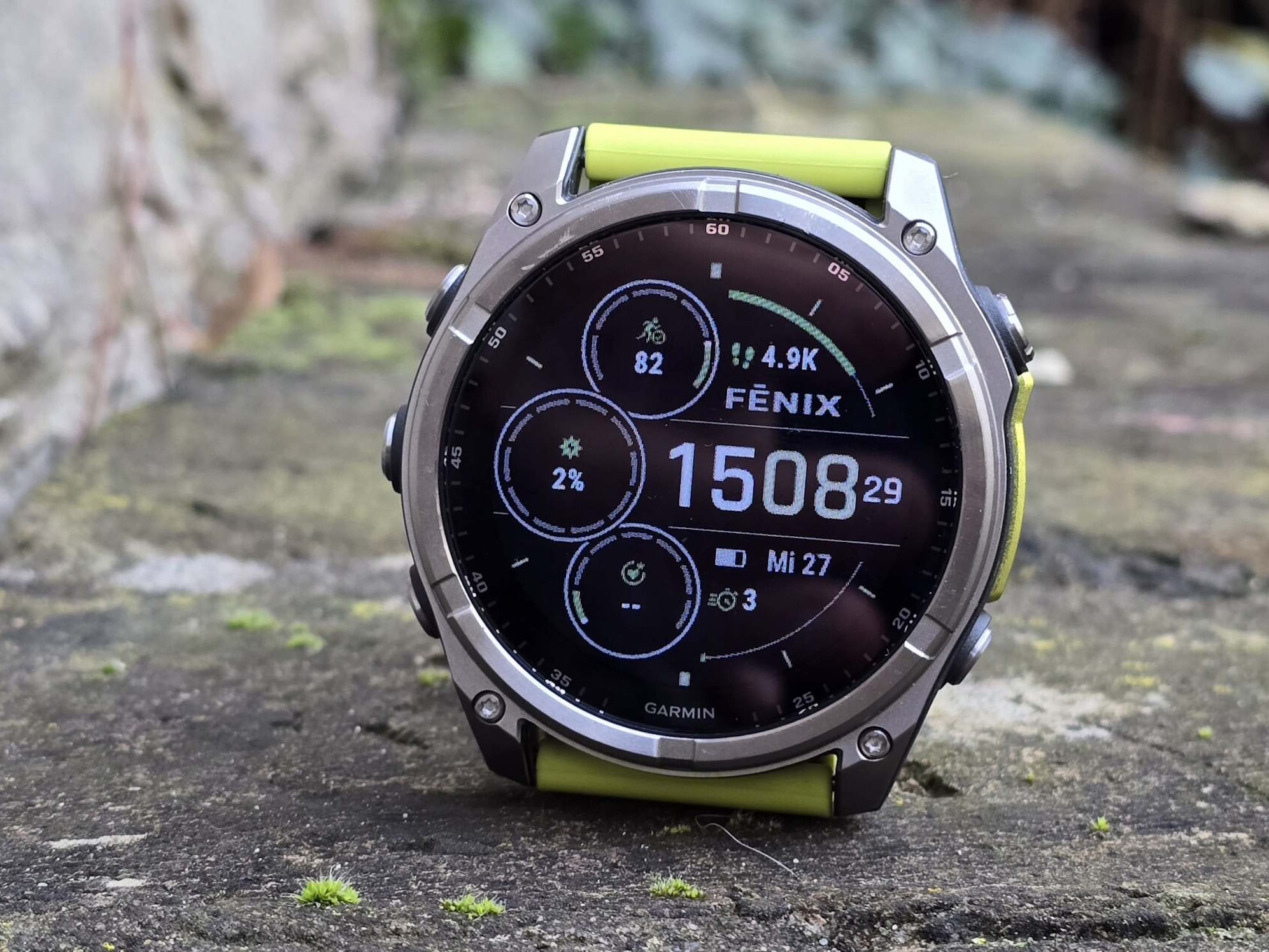
Garmin plans an antenna revolution: What it could mean for the Fenix 9
Patents are always an excellent way to get a look at current technological developments and possibly also the priorities of companies. These patents are basically public and show that a company is working on certain technologies. At the same time, not every patent ends up becoming a technology that is actually used.
A current and detailed report from the5krunner covers the three Garmin patents US 20260086505, US 20260088493, and US 20260086506. They were published on March 26, though they are already nearly a year old. These are three separate patents, but they are quite similar in terms of subject, which is also reflected in their respective first figures. At their core, they all deal with antenna arrangement. In mobile devices, and especially in smartwatches, that is naturally not a trivial issue because of the limited space. A large external antenna like the kind used in a Wi-Fi router simply cannot be used. At the same time, smartwatches are expected to meet high standards, for example in terms of positioning accuracy.
Patent US 20260086505 describes the use of two planar antennas. Specifically, that could mean using the bezel and the bottom of the case. Patent US 20260086506, in turn, describes how antennas can be integrated into structurally essential components themselves. Patent US 20260088493 describes an antenna with adjustable length, meaning the effective length. This is intended to allow antenna performance to be tuned for different requirements. Garmin is effectively keeping all options open in terms of the data being transmitted. These technologies could therefore be used both for positioning (GNSS) and for cellular connectivity, for example.
Improving positioning is naturally important for Garmin, with both accuracy and the robustness of position determination being relevant. If positioning does not work in the woods, the watch quickly becomes useless. We already reported on this kind of improvement in mid-2025. It is entirely possible that Garmin will integrate these technologies into the Garmin Fenix 9.
Source(s)
Garmin, the5krunner, Image: Marcus Herbrich, Notebookcheck
 Add as a preferred source on Google


