




A supernova remnant may have been discovered in the Milky Way
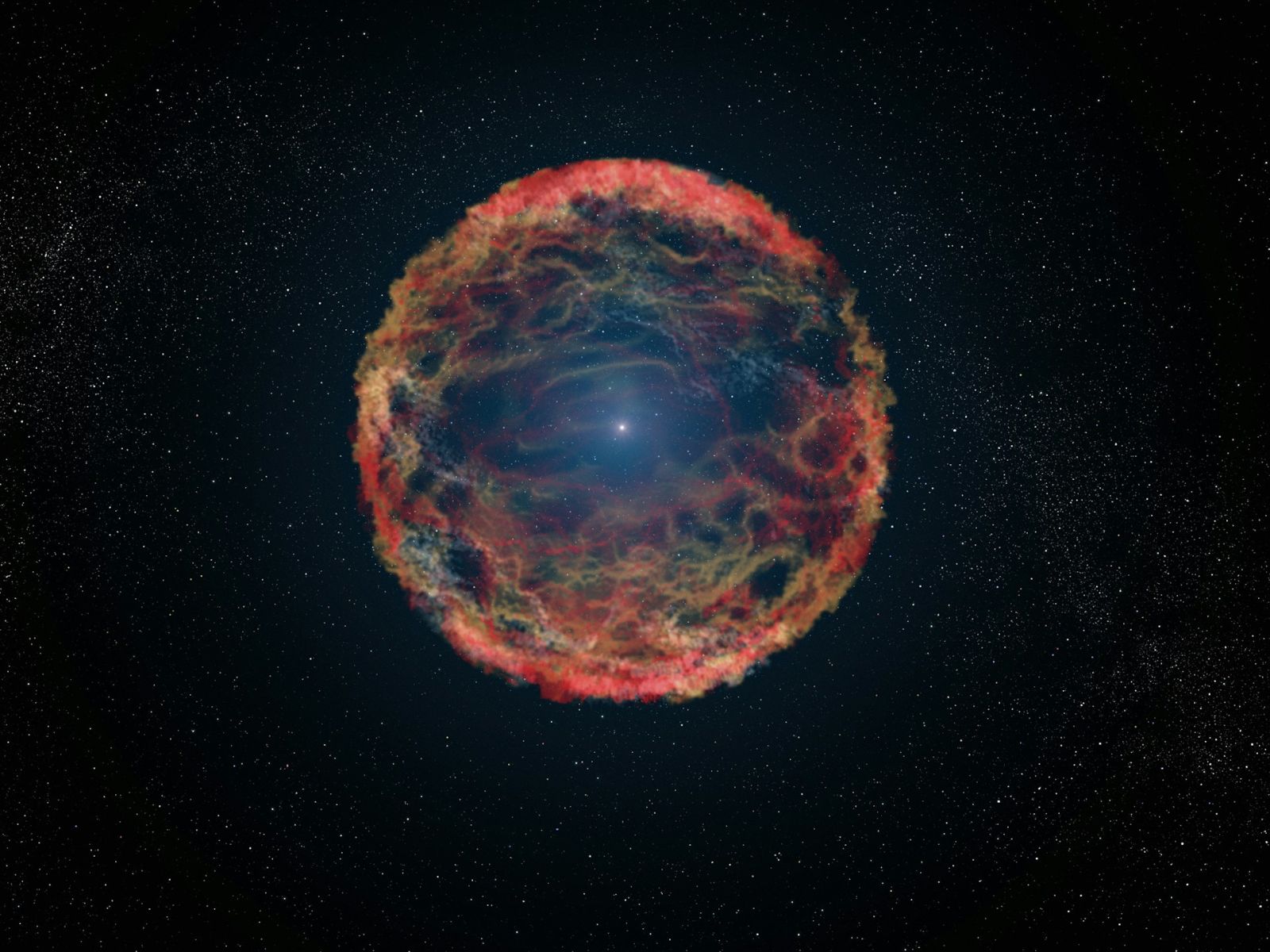
The Chandra X-ray Observatory was launched in 1999 aboard the space shuttle Columbia and is one of the most powerful space telescopes. Thanks to instruments such as the Advanced CCD Imaging Spectrometer and the High Resolution Camera, it is capable of observing X-rays emitted by celestial objects. Recently, NASA released an image captured by this telescope, showing what may be the remnant of a supernova in our galaxy.
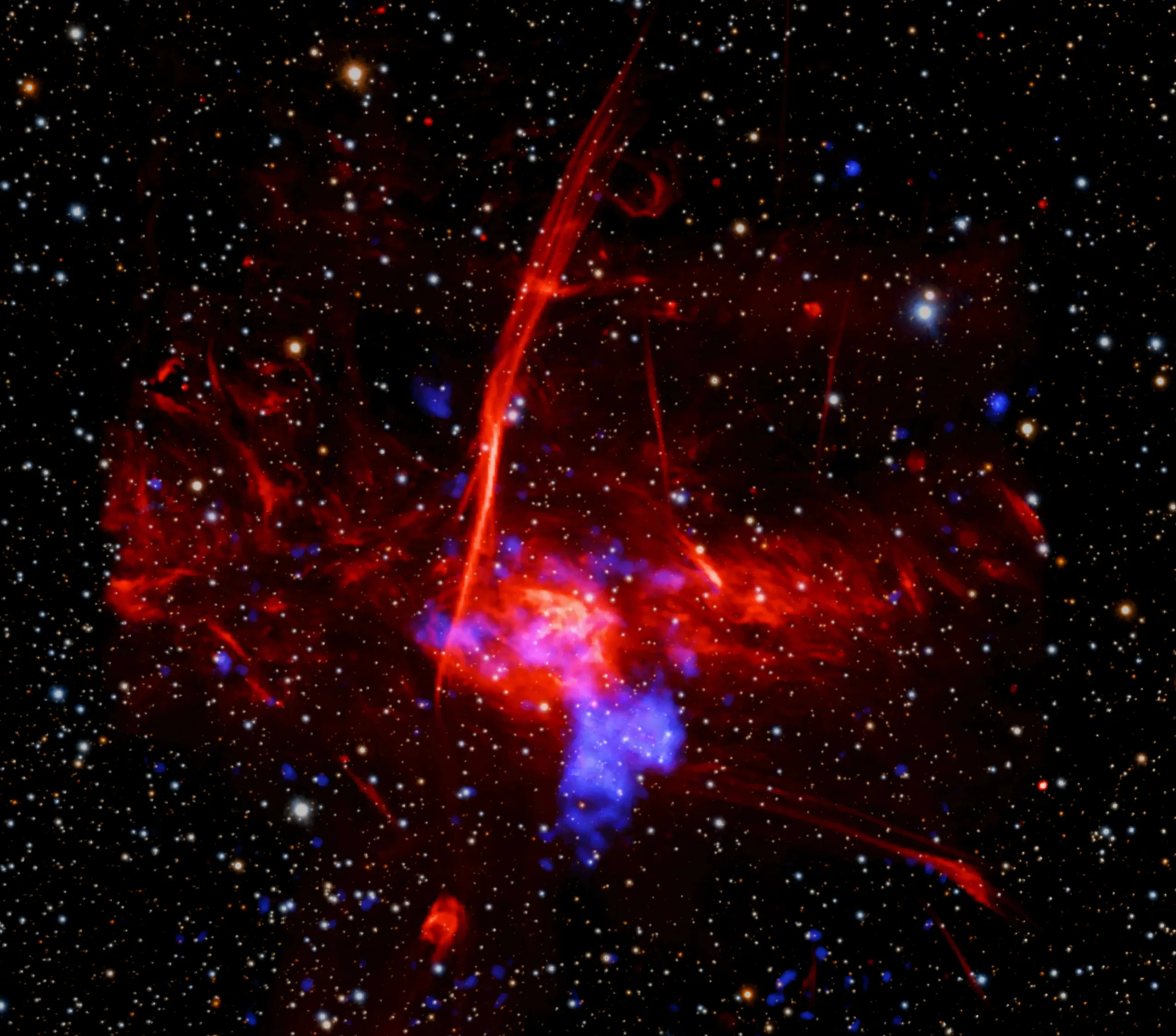
This structure is located about 26,000 light-years from Earth, within a bubble of gas surrounding a massive star. According to astronomers, it is expanding at a speed of two million miles per hour and is thought to have formed about 1,700 years ago.
In this image, which combines X-ray data from the Chandra and XMM-Newton telescopes with radio data from the MeerKAT telescope, it is possible to see long filaments caused by particles.
However, this remnant could be of interest to astronomers. Indeed, during these events, huge amounts of matter are ejected into space, allowing the formation of new stars and planets. Nevertheless, another hypothesis has been put forward regarding this structure.
According to some astronomers, it could also be a cluster of massive stars. But its brightness is ten times greater than that of other star clusters, making this hypothesis unlikely.
Source(s)
Image source: NASA Hubble Space Telescope – Unsplash / X-ray: NASA/CXC/UCLA/Z. Zhu et al.; ESA/XMM-Newton; Optical: PanSTARRS; Radio: MeerKAT; Image processing: NASA/CXC/SAO/L. Frattare and P. Edmonds
 Add as a preferred source on Google


