Researchers develop method for reviving dead lithium batteries to near 100% capacity
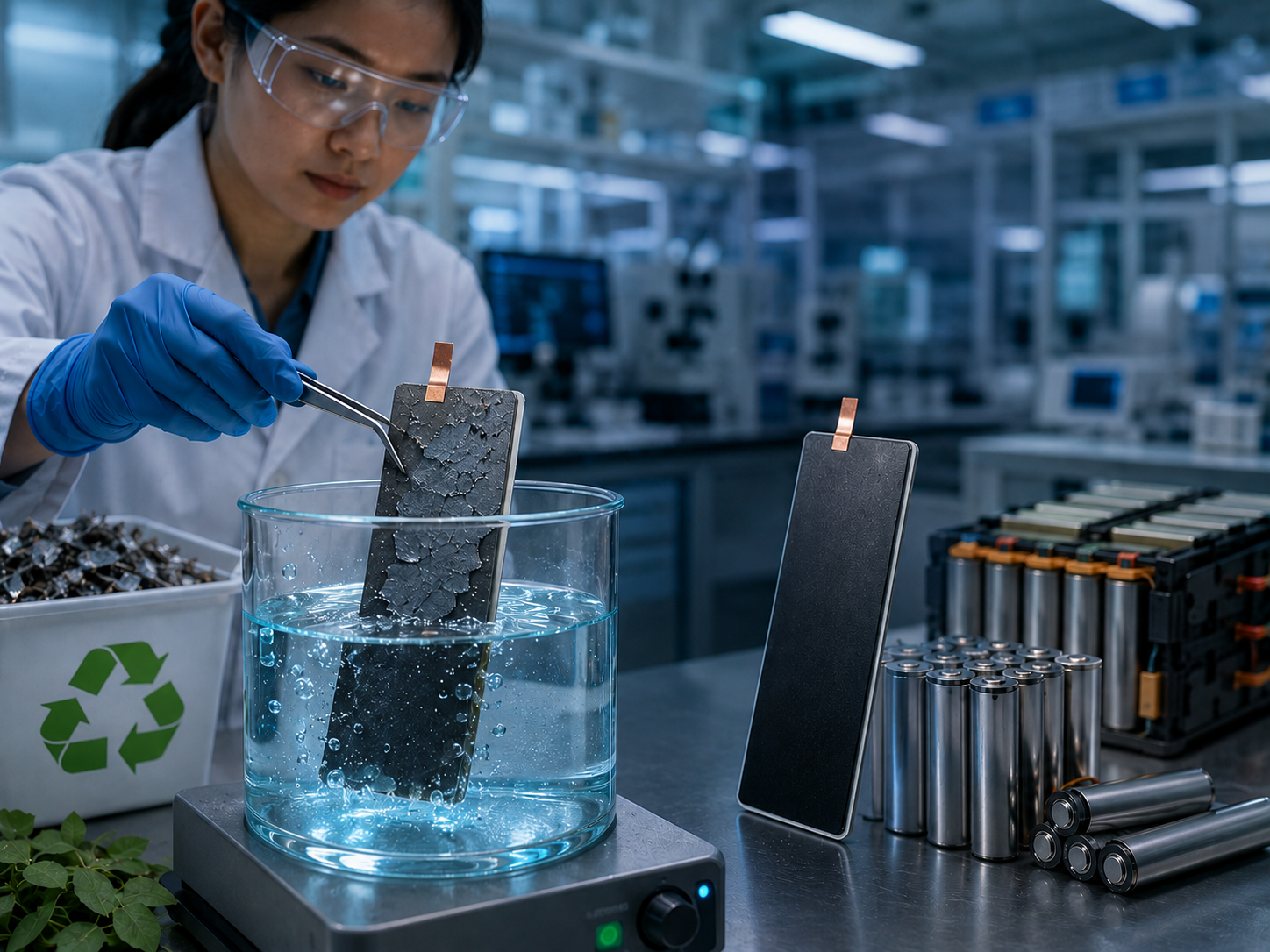
Conventional battery recycling typically involves complete disassembly of batteries, followed by complicated, energy-intensive methods of extracting the key materials needed to make new ones. A team of researchers at Cornell University has developed a new process for restoring worn lithium-ion batteries without the need for shredding, potentially extending battery life while cutting recycling costs.
The process, called Direct Electrode-to-Electrode Regeneration (DEER), takes a fundamentally different approach: it immerses batteries in a electrochemical solution that dissolves the thick layer of buildup — known as the solid electrolyte interphase (SEI) — that accumulates over hundreds of charge cycles. While a thin SEI layer is essential for battery function, it gradually thickens over repeated charge cycles, increasing resistance and sapping capacity, and is ultimately one of the main reasons batteries are decommissioned, even if the rest of the battery's physical structure remains intact.
In tests, restored batteries recovered up to 95% of their original capacity. The treatment also applies a thin protective layer that slows future degradation. Batteries that underwent a further round of regeneration retained around 90% capacity, suggesting the process could give batteries multiple extended lifespans. The potential economic and environmental benefits are also compelling: an analysis predicts that DEER could cut the cost of recycled cell manufacturing by 56% while also reducing harmful air pollutants and water use compared to conventional recycling methods.
The team is now working to expand the technology beyond SEI-related degradation to address other forms of battery wear, such as lithium loss, with the long-term goal of making battery recycling faster, cheaper and more sustainable for electric vehicles and large-scale energy storage systems.
Source(s)
 Add as a preferred source on Google