




Why are mobile workstations like the ThinkPad P16v Gen 3 not equipped with the fastest components?

We recently reviewed the mobile workstation ThinkPad P16v Gen 3, which is sitting below the ThinkPad P16 as well as the ThinkPad P1 in Lenovo's hierarchy. This means we do not get the most powerful components, but the combination of the Core Ultra 7 255H as well as the Nvidia RTX PRO 2000 (Blackwell Generation) is no slouch, either. The professional GPU in particular is a big difference compared to consumer models, because they also get certified drivers to ensure stability and reliability for professional applications (including apps from AutoDesk, Adobe, Blender, Dassault Systems, Siemens Digital industries Software, etc.).
Priced at around €2,800, our review unit of the ThinkPad P16v Gen 3 is not a bargain by any means, and the RTX PRO 2000 obviously plays a role as well. However, if you look at the performance of the GPU, you might be surprised that Lenovo only implements the 60W version of the RTX PRO 2000, even though the TGP limit is 115 Watts. During our review, we compared the performance figures of the RTX PRO 2000 with the 115W version of the consumer GPU GeForce RTX 5060 (same specs) and the raw GPU performance is around 30 % higher. This means you pay the full price for the RTX PRO 2000, but you do not get the full performance.

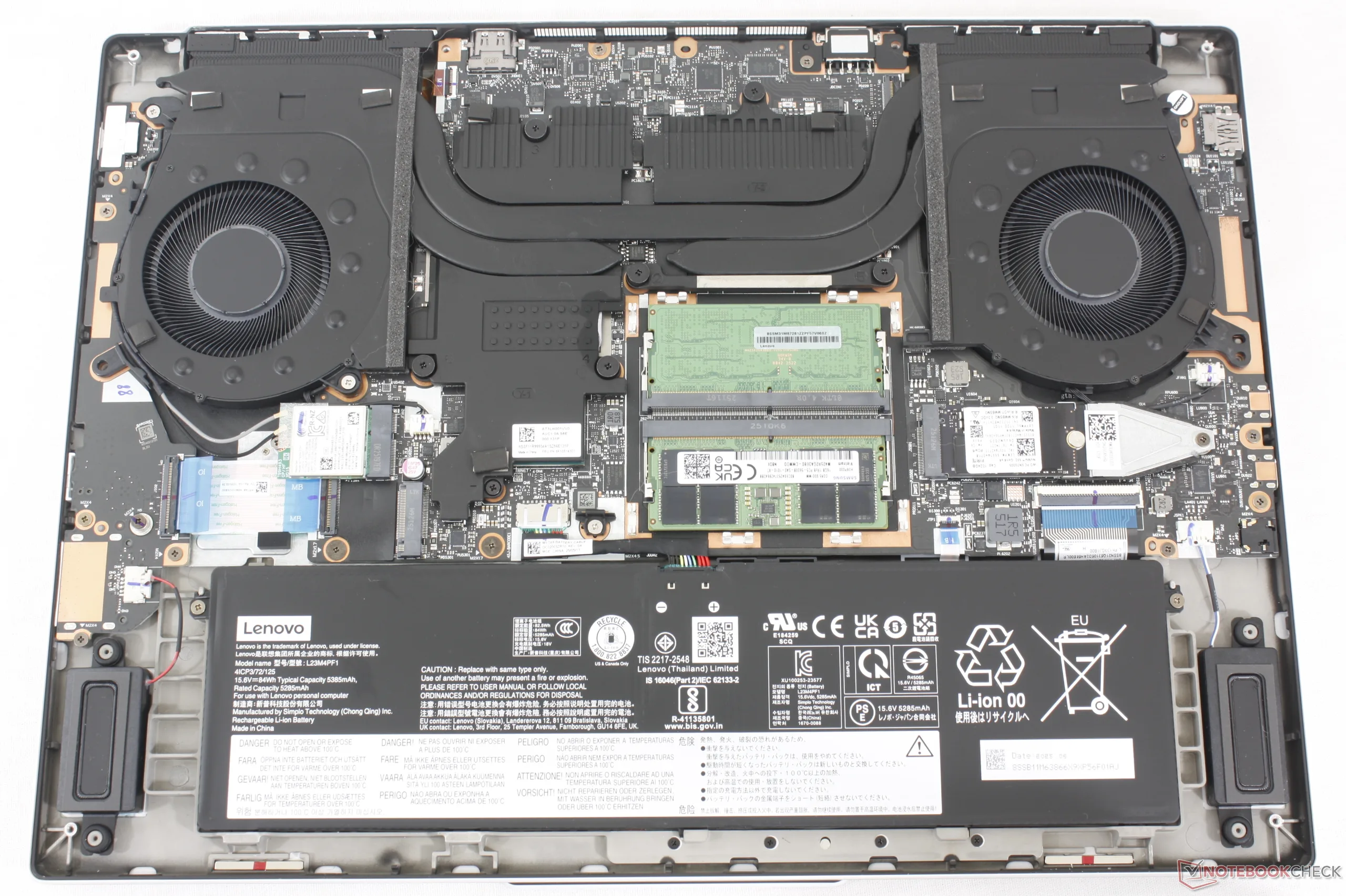
The reason is the comparatively weak cooling solution. During combined workloads, the CPU and GPU can only consume up to 80 Watts in total, which is not a good result considering the large 16-inch chassis. For comparison: The gaming laptop Lenovo Legion 7 16, which combines a much faster processor with the 115W version of the GeForce RTX 5060 can handle up to 145 Watts, so almost twice the value of the much more expensive ThinkPad P16v Gen 3. We do not want to hide the fact that the Legion is also much noisier under load, but the performance gap is still pretty significant.
Please see our comprehensive review for more information about the Lenovo ThinkPad P16v Gen 3.
 Add as a preferred source on Google


