




This ROG Xbox Ally look-alike is actually a reverse-engineered portable PlayStation 2 handheld
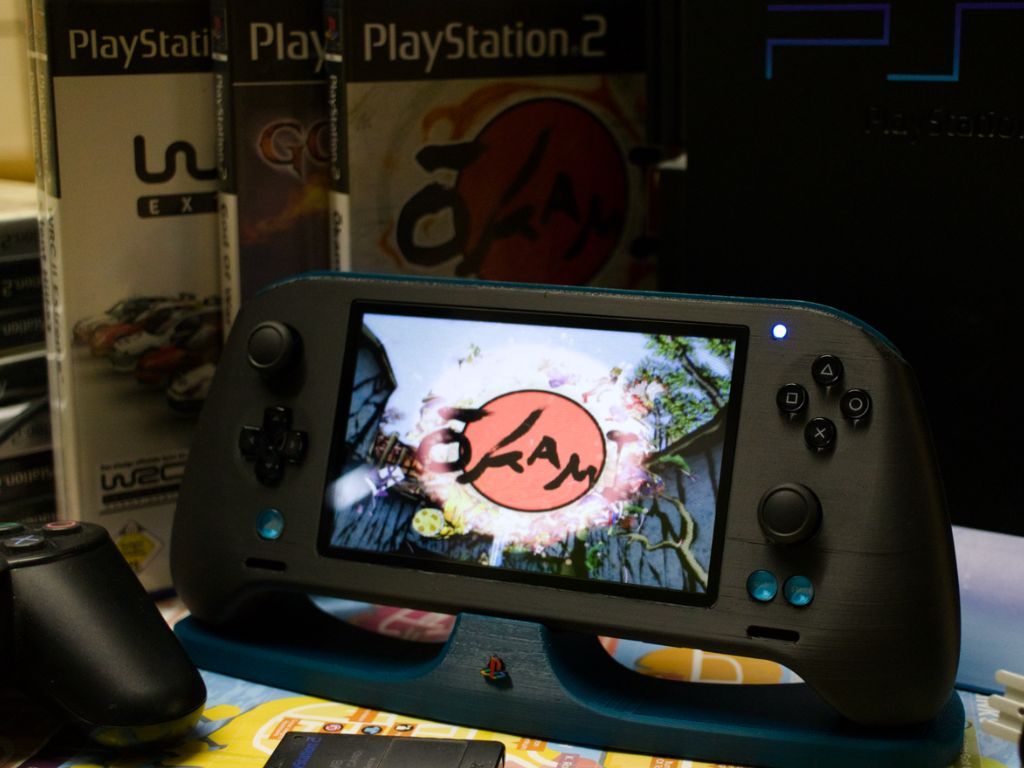
A solo builder and modder named Tschicki recently created what many retro enthusiasts would consider the ultimate DIY portable PlayStation 2 handheld. Designed, soldered, reverse-engineered, and crafted from scratch, it draws design inspiration from the Asus ROG Xbox Ally and incorporates that Windows gaming handheld's ergonomics into the outer shell.
Tschicki started the PlayStation 2 handheld project early in 2022, and it went public last year. The project has garnered newfound attention this week. What makes this particular portable PlayStation 2 handheld special is the fact that it uses a reverse-engineered motherboard that is not sourced from a PS2 or made by Sony. Tschicki explained in their GitHub repository:
“This portable contains, presumably, the world’s first custom reverse-engineered mainboard not made by Sony. It only reuses six ICs from an original PS2, salvaged from SCPH-7900x or SCPH-9000x mainboards.”
Most of the components inside the handheld are brand new. A Trion T20 FPGA handles the digital video output with its own motion-adaptive deinterlacer, line doubler, and bilinear scaler, so the PS2’s original interlaced signal is converted into a crisp image on the handheld’s LCD.
All power is managed by an RP2040 microcontroller, which also handles charging and even emulates a DualShock 2 controller, complete with old-school rumble.
Furthermore, the PS2 portable runs on two 21700 batteries, providing about 4.5 hours of playtime, which is pretty respectable. The handheld charges over USB-C and includes an undervolting configuration to keep things cool and stable.
The controller looks surprisingly premium, with PS Vita-inspired face buttons and Hall-effect analog sticks.
While this is an impressive DIY project, it’s not for the faint of heart, and Tschicki makes this clear in the GitHub project description. Every PCB, the FPGA code, the 3D files, and the firmware are freely available on GitHub, but you’ll need fine-pitch BGA soldering skills, a chip programmer, and plenty of patience for troubleshooting issues down the line.
Tschicki stated, “I would highly recommend not building one, even if you know what you are getting yourself into.”
At the end of the day, it’s still a pretty impressive portable PS2 DIY project with reverse-engineered hardware, not just a retro gaming handheld running a PS2 emulator.
Source(s)
 Add as a preferred source on Google


