


Roco Kingdom preview: How Tencent’s creature collector ditches the gacha paywall
Tencent’s Morefun Studios is taking Roco Kingdom global after the open-world creature collector became one of China’s biggest launches of 2026 under the name Roco Kingdom: World. Announced for a worldwide release during Gamescom Opening Night Live in August, it is coming to PC, PlayStation, Xbox, iOS and Android, with a release date still to be confirmed. We spent time with the English PC build during the “Quack Quack” closed beta, which began on October 27, to see how it translates for Western players and how it runs.
A 16-year-old franchise goes open-world
Roco Kingdom started life as a browser game in July 2010 and has since built up 350 million cumulative registered players, with monthly active users peaking at 30 million. The IP has spawned four theatrical films with a combined box office of over 200 million RMB, 152 episodes across several animated series, more than 100 books, and two touring stage plays that have passed 100 performances.
The open-world revival launched in China on March 26, 2026, on PC, iOS, Android, and HarmonyOS after more than 60 million pre-registrations. It passed 15 million registered users within 13 hours and 30 million by day nine, topping China’s App Store free chart on day one and its top grossing chart on day two. Tencent’s earnings report says it averaged over 13 million daily active users across PC and mobile in its first month and ranked among the top 10 mobile games by gross receipts.
Morefun says more than half of players are aged 18 to 25, with a 6:4 male-to-female split. Related content on Douyin passed 10 billion views within 21 days of launch, and the game has run collaborations with brands including KFC, Meituan, and QQ.
Exploring Carosia
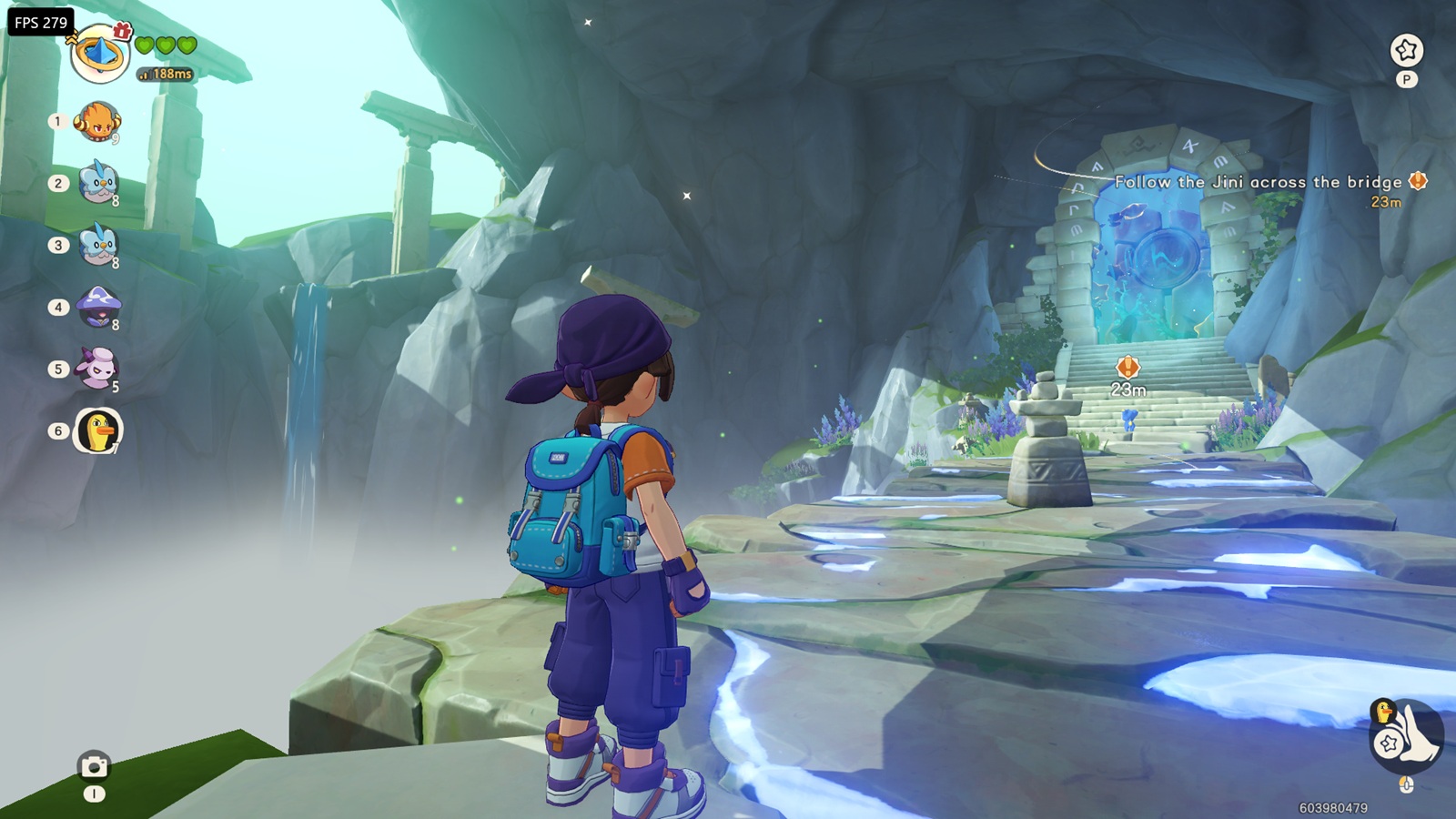
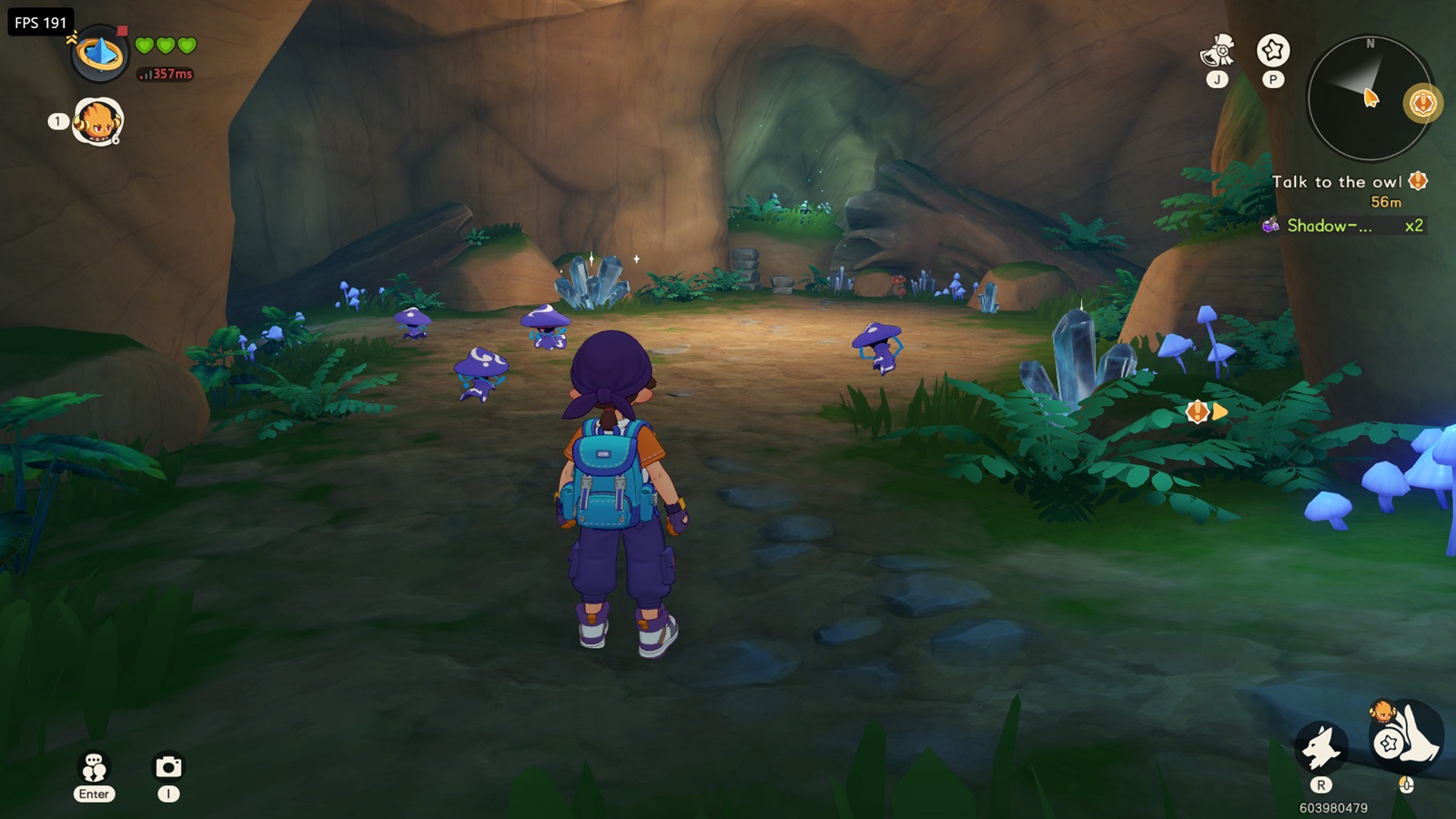
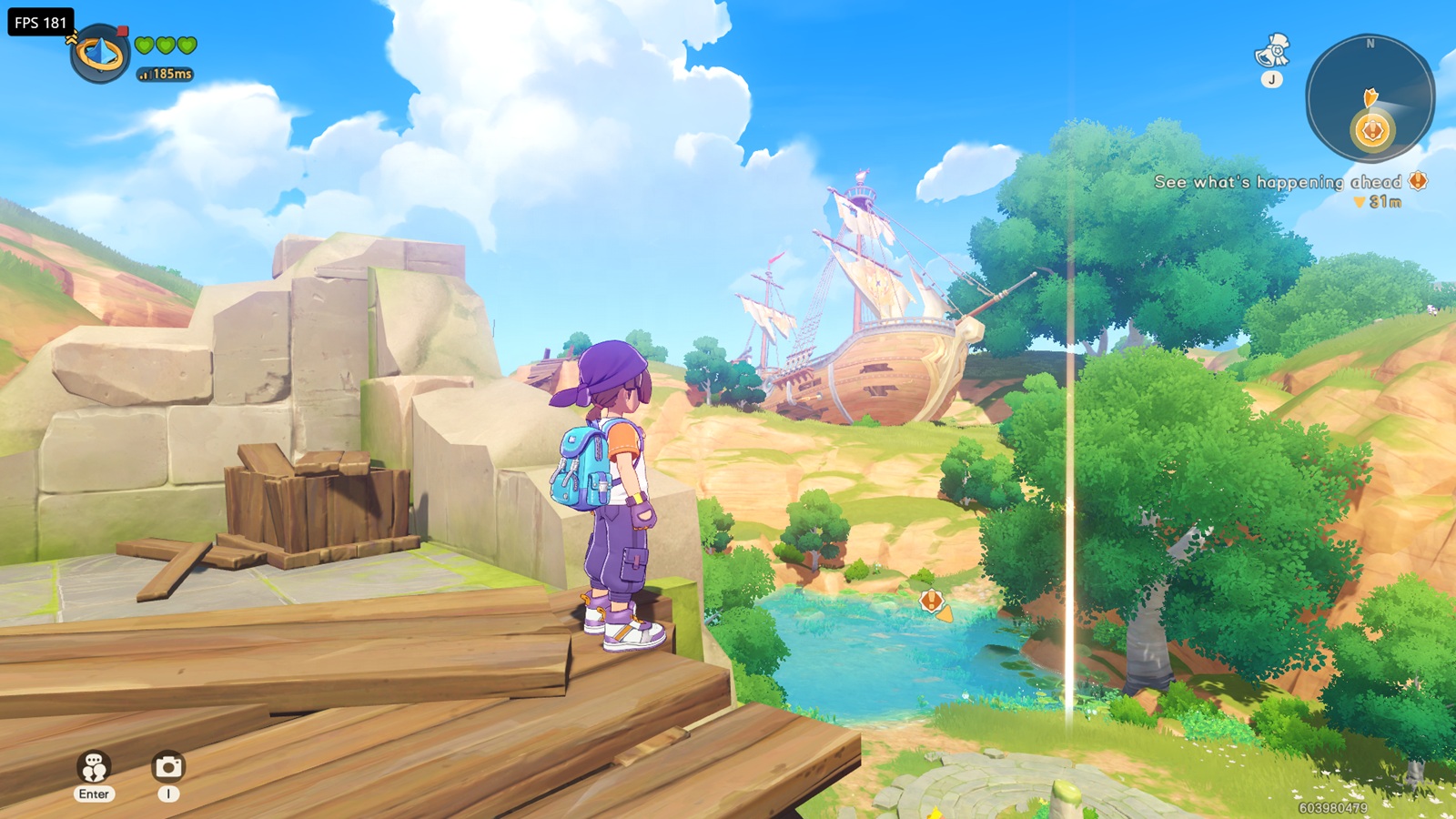
Roco Kingdom is set on the magical continent of Carosia, and players start as young Roco in the series’ signature look of a purple cap, star-print tee, and backpack. Early objectives such as “Find the fallen meteor” and “See what’s happening ahead” took us through carved stone arches framing a waterfall and up to a lookout over a wooden galleon stranded on a hillside beyond a turquoise pond. A later “Talk to the owl” quest led into a cave dotted with crystals and glowing mushrooms, while “Follow the Jini across the bridge” sent us along a misty cliffside path toward a glowing, rune-ringed stone gateway.
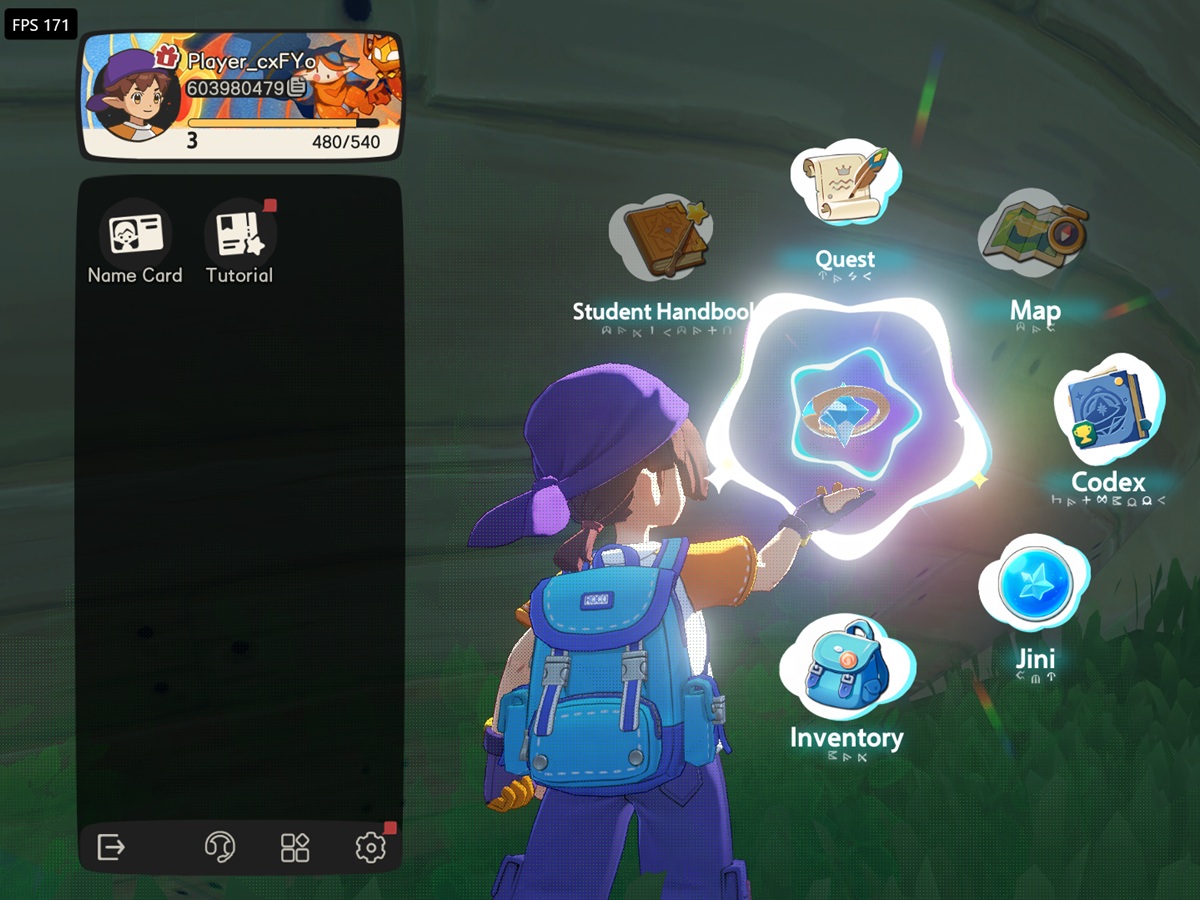
The HUD stays clean, with health hearts, ping, your Jini party, and a compass tucked into the corners alongside shortcuts for the camera and your companion Jini. A radial menu built around the protagonist’s glowing compass opens the Quest, Map, Codex, Jini, Inventory, and Student Handbook screens. More fun highlights Chinese player praise for the clean UI layout, and it shows.
A storybook look with real polish
Roco Kingdom’s art direction is its strongest asset. Rocks, timber, and foliage have a soft, hand-painted quality, with chunky shapes and saturated color that keep the world readable at a glance. Lighting does a lot of the work. Sunlight throws crisp, dappled shadows through the forest canopy; blue crystals and mushrooms add cool accents to the cave’s warm, earthy rock, and the bridge area pairs drifting fog in the chasm below with luminous blue streams running through the stone and floating motes of light in the air.
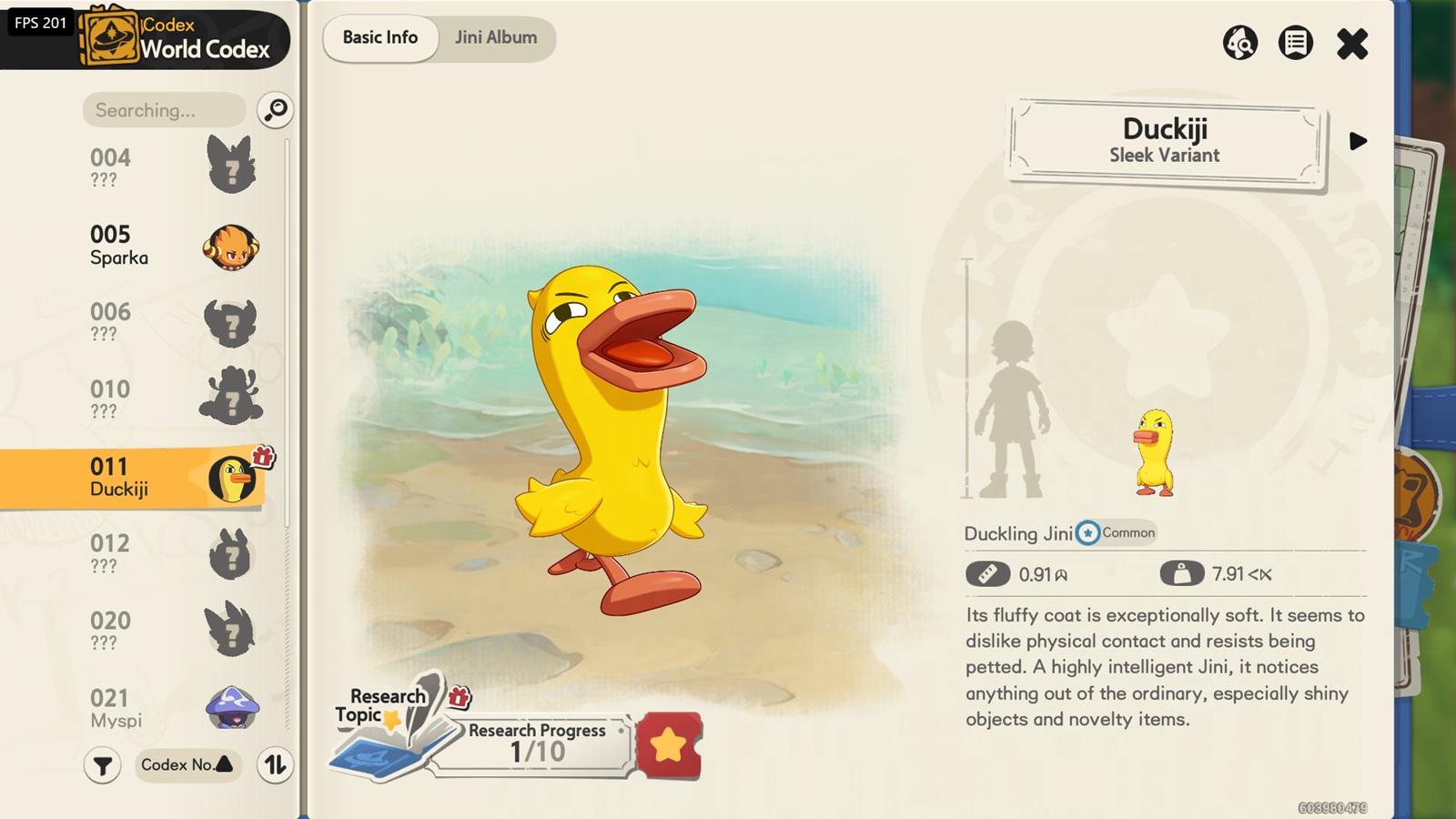
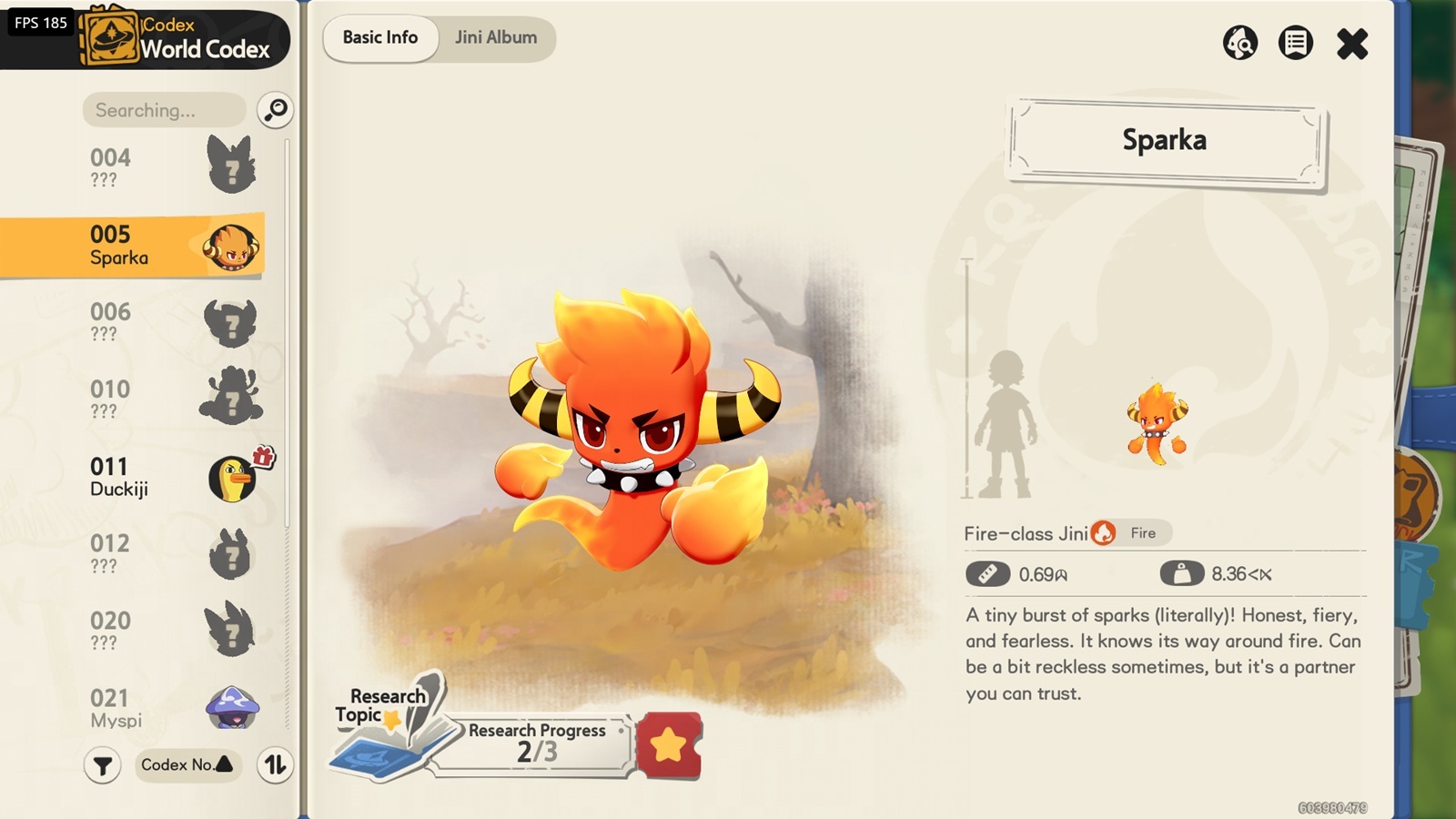
Small touches tie the world together. The runic script ringing the bridge gateway also sits beneath each option in the radial menu, while the Codex presents Jinies against watercolor-style backdrops alongside a silhouette of the player for scale. Jini models are expressive, from Sparka’s scowl to Duckiji’s deadpan stare, and distant hills and trees stay detailed from the galleon lookout. Promotional material also shows snowfields, golden grasslands, and pink-tinged landscapes beyond the areas we explored.
400+ Jinies and no gacha
The game’s creatures are called Jinies, and Morefun says all 400+ can be caught for free, with no gacha and no creature sales. The closed beta includes more than 210 of them, among them two Legendary Jinies and 16 Chromatic variants. Dropping the genre's typical paywall has clearly landed in China, where players have turned not knowing how to spend money in the game into a running joke.
Wild Jinies react as you approach, with some disguising themselves as fallen leaves to ambush players. In the cave, we came across a group of mushroom-capped Myspi (#021) wandering between the crystals, and our party had grown to six Jinies by the time we reached the bridge. Nearly every Jini also gains an exploration ability once caught, such as flight or fruit tree detection, and Jinies can be ridden.
The World Codex logs each Jini’s class, height, weight, a short description, and research topic progress. Sparka (#005), a horned Fire-class Jini, is described as a tiny burst of sparks that is honest and fearless but a little reckless, and ultimately a partner you can trust. Duckiji (#011), a common-class duckling jini shown in its sleek variant, has an exceptionally soft coat yet dislikes being petted. The Codex also calls it highly intelligent, with an eye for anything unusual, especially shiny objects.
Turn-based battles and fair PvP
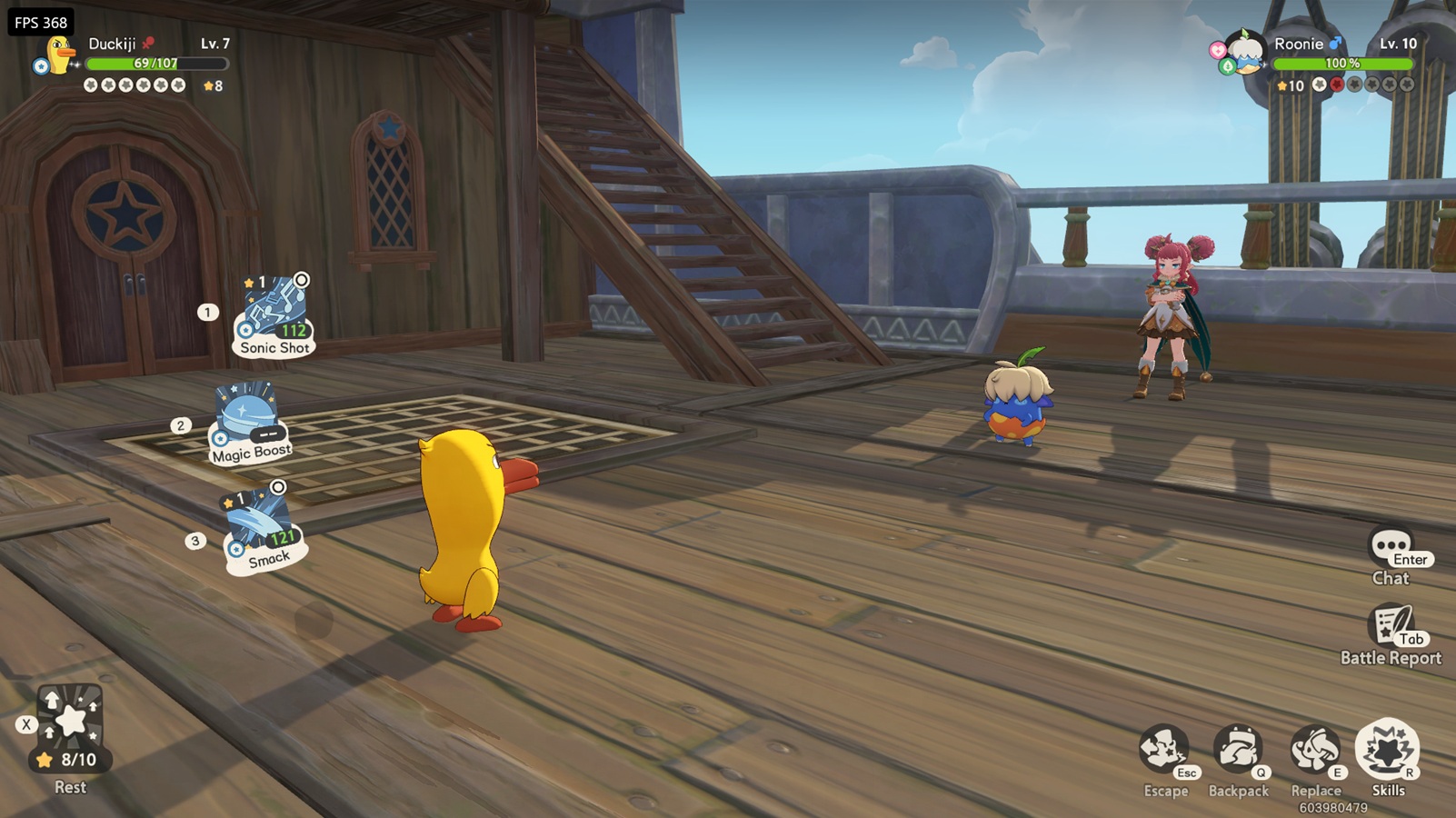
Combat uses 1v1 turn-based battles built on an 18-class advantage system, and Morefun says nearly every Jini has a distinct role in team composition. In one battle aboard a ship, our level 7 Duckiji faced an NPC trainer’s level 10 Roonie. Moves like Sonic Shot and Smack each cost 1 point from a 10-point energy pool, with options to rest, swap Jinies, use backpack items, or escape.
Jinies vary in attribute tendencies, individual stats, height, chromatic coloring, and regional forms, while personalities shift stats, such as raising magic attack by 10% at the cost of 10% physical attack. A fair-play PvP mode lets players field any Jini without training it first, which keeps the focus on lineup building rather than grinding. Real-time data sync lets players switch between PC and mobile at any time, solo or in co-op, and social activities include egg hatching, crop stealing, and outfit customization.
PC performance
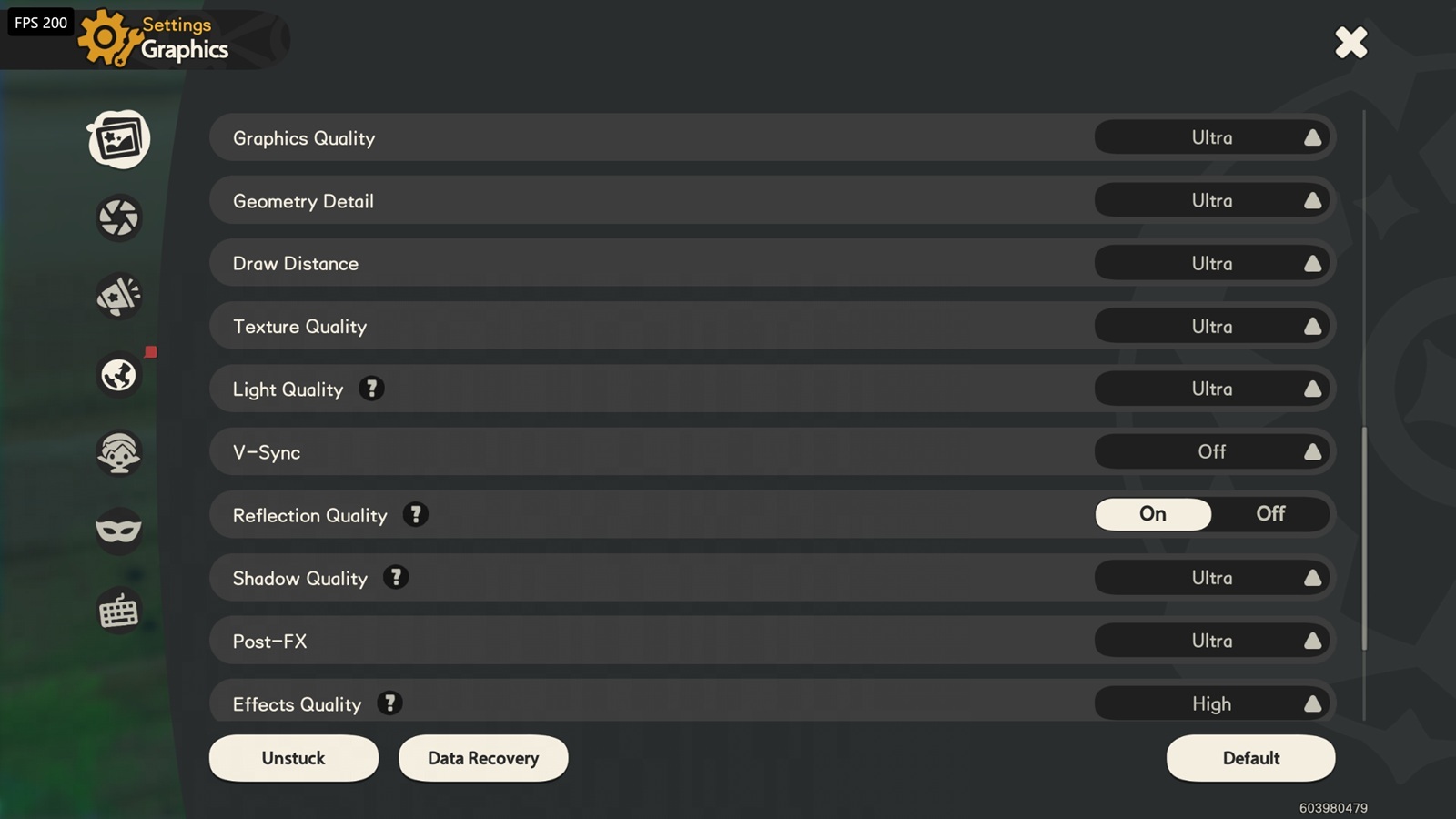
We tested the game on a Lenovo LOQ 15IRX10 with an RTX 5060 Laptop GPU at 1080p, with most graphics options on Ultra, effects quality on High, and V-Sync off. The in-game counter read 181 FPS at the stone arches and the galleon lookout, 191 FPS in the cave, and 279 FPS on the cliffside bridge. It hit 368 FPS during a battle, while menus sat between 171 and 201 FPS. Pings to the beta servers ranged from 185 ms to 357 ms, yet movement and camera panning felt responsive throughout.
Early impressions
Roco Kingdom’s free-to-collect approach, handsome art direction, and smooth PC performance make for a promising first showing. Exploring Carosia is relaxing, the Codex gives collectors plenty to chase, and the turn-based battles and fair PvP add depth beyond exploration.
The beta is still only a slice of the full game, with just over half of the 400+ Jinies at launch. Console versions will only arrive with the full release, which still has no date. Morefun has promised that the global version will be free-to-play, with no Jinies behind paywalls, no pay-to-win mechanics in PvP, and all story content unlockable at launch. Whether that player-friendly model carries over intact from China will decide how far Roco Kingdom goes globally.
Source(s)
Hands-on Gameplay
 Add as a preferred source on Google


