



Resident Evil creator Shinji Mikami is experimenting with AI, but wishes it would "vanish entirely"
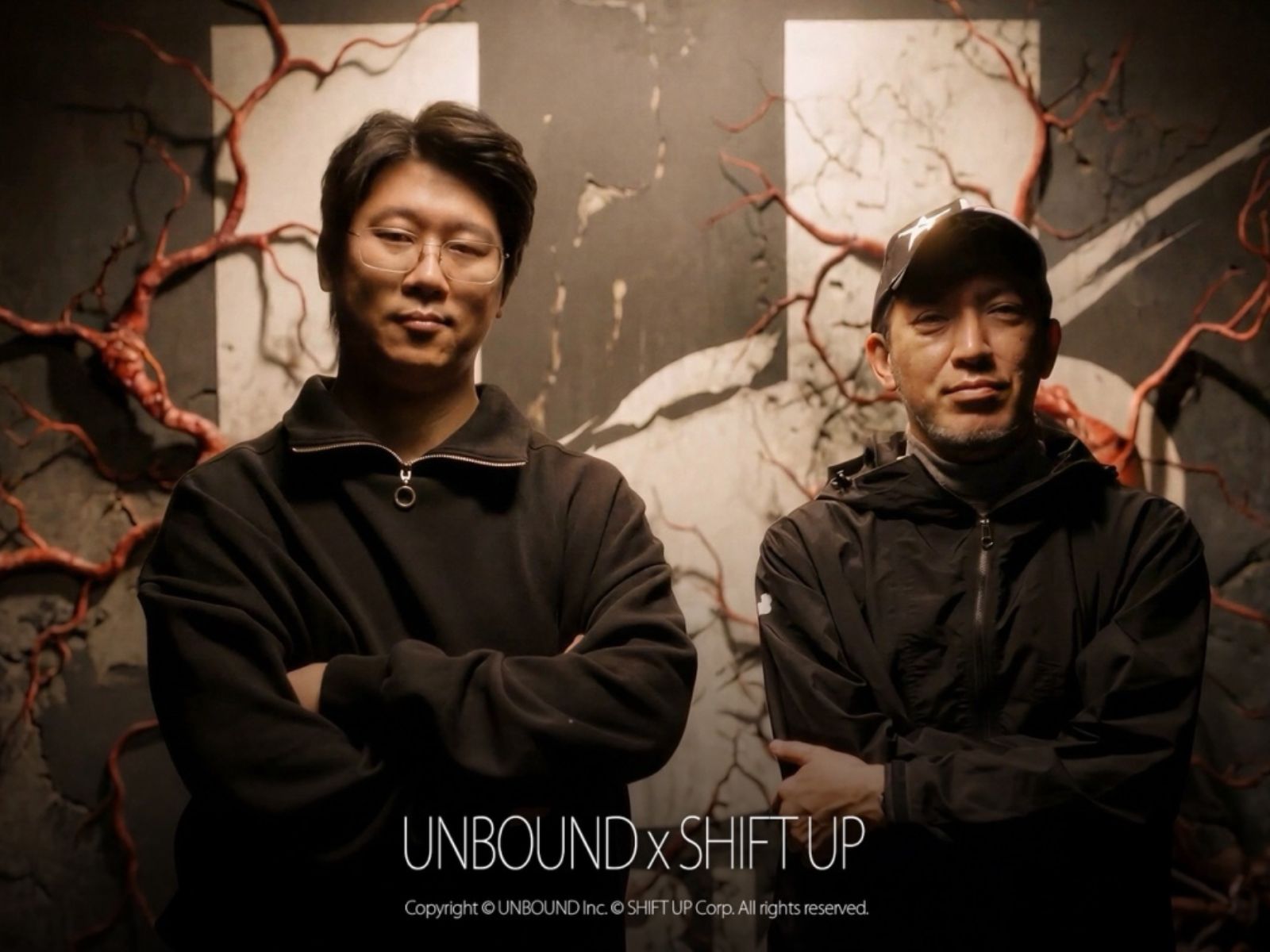
G-STAR 2026, South Korea's largest gaming exhibition, ran from November 19 to 22 at BEXCO in Busan, with its G-CON conference taking place over the first two days. The day-one keynote paired Shift Up CEO and Stellar Blade director Kim Hyung-tae with Unbound CEO and Resident Evil creator Shinji Mikami, whose Tokyo-based studio Shift Up acquired in April. Much of the session covered narrative design, but the two creators also spent considerable time on generative AI, and they did not land in quite the same place.
AI in the middle, humans at both ends
Kim told the audience that developing games without AI is no longer possible, describing it as essential to Shift Up's programming, QA, code review, and debugging work. Following the backlash over the AI-generated "Wanna be in LOVE" music video for Stellar Blade: Blood Rain in July, however, the studio adopted an internal philosophy of "handmade from start to finish." Kim, who had already apologized at Tokyo Game Show in September for releasing internal experiments as official content, said the episode taught Shift Up how much human touches in the final product shape whether players accept it.
Under the new approach, human artists lay the foundation, AI handles intermediate tasks such as testing lighting variations, applying texture weathering, and reducing polygon counts through retopology, and humans then refine the result. Kim ruled out using AI for story writing, arguing that its tone remains recognizable even after it is told to revise. He also took aim at the artificial cadence of AI-written YouTube scripts.
That stance marks a notable shift from January, when Kim told a national economic briefing that with AI, "one person can perform the work of 100 people." At G-CON, he instead warned studios against prioritizing efficiency, since players do not love a game simply because it was made efficiently. Shift Up, he said, uses AI to push quality beyond its usual limits rather than to speed up production.
A month of 3D modeling reduced to 20 minutes
Mikami offered the most concrete example of the session. At Unbound, artists first create a character in 2D, and AI then turns it into a 3D preview inside the game, which takes around 20 minutes to evaluate. If the design holds up, modelers go on to build the final asset. Previously, developers could spend nearly a month modeling a character only to discover that it clashed with the 2D art, forcing them to scrap it and start over. According to Yonhap's report on the session, Mikami also agreed with Kim that design work itself should not be handed to AI, arguing that fixing its output ultimately wastes time.
Why Mikami still wishes AI would disappear
Mikami was noticeably more conflicted than the executive who now owns his studio. He said he experiments with AI because using it well can deliver higher quality within the same budget, yet admitted that he sometimes wishes it would vanish entirely, not only from games but from the world. He also said nobody can predict what the next five or ten years will bring, including whether developers will lose their jobs to the technology.
Looking ahead to 2027, Kim expects AI-generated games to flood the market, though he believes low-quality releases will fade on their own and handcrafted titles will gain value as a result. Mikami, meanwhile, predicted that conversational AI characters will eventually appear in games, with early implementations likely limited to more casual characters.
Source(s)
 Add as a preferred source on Google


