





Verdict on the Motorola Moto G67
The Motorola Moto G67 is a slim smartphone that still packs a relatively large battery and delivers good runtimes of more than 20 hours in our Wi-Fi test. It is lightweight, stylish, well made, and is already available online in Germany for less than €200.
It features an ultra-wide-angle camera and a solid main camera, while the selfie camera even takes fairly good pictures.
Its biggest highlight, however, is the very bright and colour-accurate AMOLED display, which is also capable of showing HDR content properly. The only drawback is the 90 Hz flickering, which is likely due to PWM.
In terms of performance, Motorola would need to offer more to stand out, and users will occasionally have to put up with stuttering. The four years of software updates also feel rather limited compared with what other manufacturers now offer.
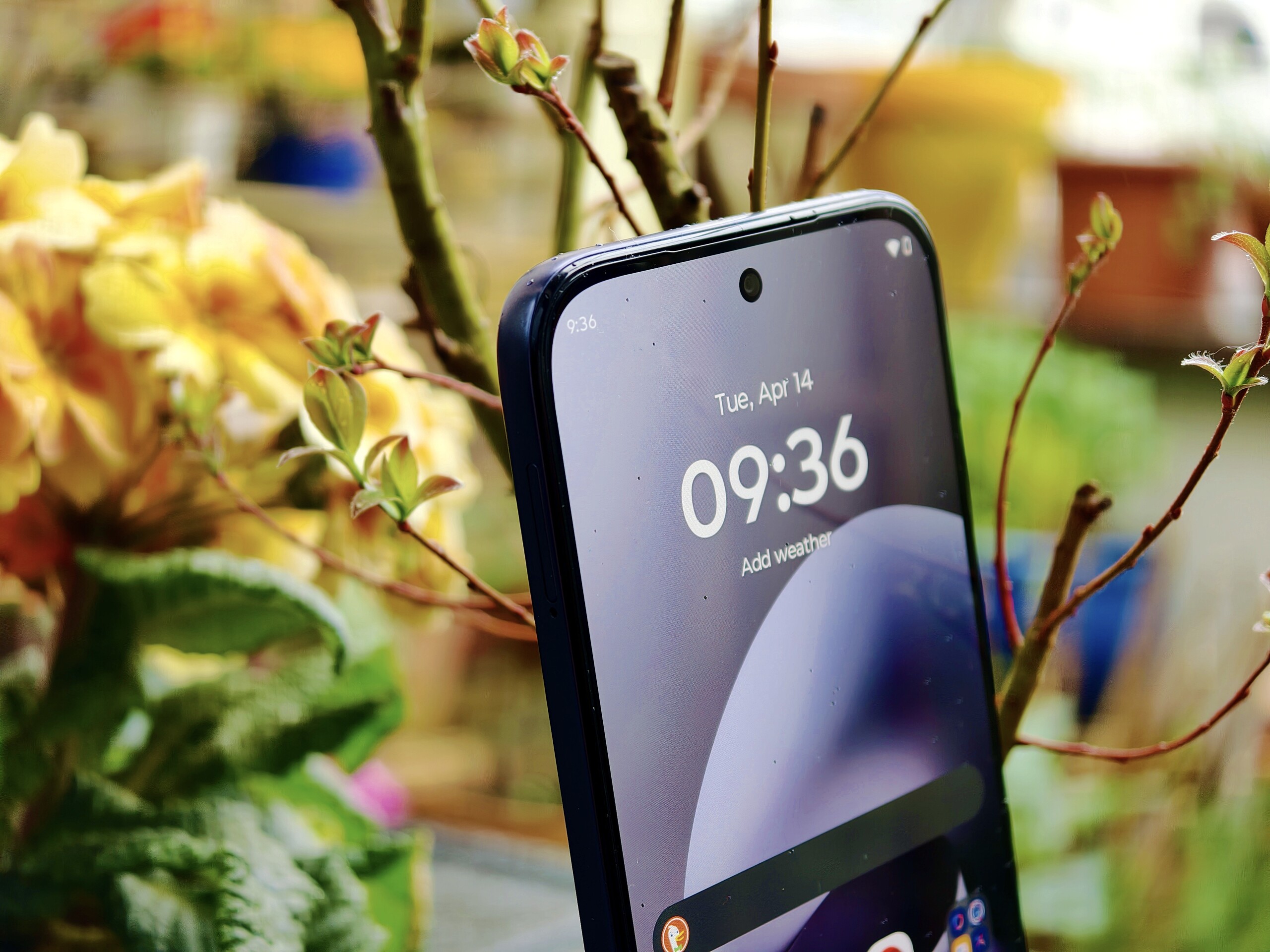
Overall, the Moto G67 is a stylish lower mid-range smartphone that stands out mainly for its bright display.
Pros
Cons
Price and availability
In Germany, the Moto G67 is already widely available online for under €200, including from retailers such as Amazon Germany. Availability and pricing may vary in other markets.

- $161.62Motorola Moto g - 2026 | Unlocked | Made for US 4/128GB | 50MP Camera | Pantone Slipstream, Cellular_Phone
- $489.00Motorola Moto G67 Dual-SIM 256GB ROM + 4GB RAM (GSM Only | No CDMA) Factory Unlocked 5G Smartphone (Pantone Nile) - International Version
- $269.97Motorola Moto G Power - 2026 | Unlocked | Made for US 8/128GB | 50MP Camera | Pantone Evening Blue | AI Camera System, Military Grade, Ram Boost
Table of Contents
- Verdict on the Motorola Moto G67
- Specifications
- Case and connectivity: includes eSIM support
- Communication and operation: suitable for international use
- Software and sustainability: few updates
- Cameras: surprisingly good selfie camera
- Display: very good in almost every respect
- Performance, emissions and battery life: more power, please
- Notebookcheck overall rating
- Possible alternatives at a glance
Specifications
Case and connectivity: includes eSIM support
Like almost all current Motorola smartphones, the Moto G67 features a soft plastic rear panel with a leather-like texture. It feels pleasantly slim in the hand and is well made. The camera module is seamlessly integrated into the rear panel via an elegant curve. The two available colour options are light green and blue-grey.
The phone is available with either 128 GB or 256 GB of storage. Both variants come with 4 GB of RAM, which is rather limited. The limited amount of RAM is likely due to current memory prices.
In addition to the nano-SIM slot, the phone also supports eSIM.


| SD Card Reader - average JPG Copy Test (av. of 3 runs) | |
| Samsung Galaxy A17 5G (Angelbird V60) | |
| Motorola Moto G67 (Angelbird V60) | |
| OnePlus Nord CE 5 (Angelbird V60) | |
| Average of class Smartphone (5.72 - 58.9, n=54, last 2 years) | |
| Xiaomi Redmi Note 15 5G (Angelbird AV Pro V60) | |
Cross Platform Disk Test (CPDT)
Communication and operation: suitable for international use
Wi-Fi is not particularly fast, but with transfer rates of around 300 Mbps in both send and receive directions and stable connections, it is perfectly adequate for most home networks.
A wide range of mobile frequencies is available, so the Moto G67 can also be used while travelling for mobile internet access abroad. In our test, however, reception proved a little unstable at times.
Thanks to its refresh rate of up to 120 Hz, the touchscreen is very responsive and works reliably. A fingerprint sensor is integrated into the power button and unlocks the phone quickly and with good recognition accuracy.
| Networking | |
| Motorola Moto G67 | |
| iperf3 transmit RT-BE96U WiFi7 | |
| iperf3 receive RT-BE96U WiFi7 | |
| Motorola Moto G77 | |
| iperf3 transmit AXE11000 | |
| iperf3 receive AXE11000 | |
| Xiaomi Redmi Note 15 5G | |
| iperf3 transmit AXE11000 | |
| iperf3 receive AXE11000 | |
| Samsung Galaxy A17 5G | |
| iperf3 transmit AXE11000 | |
| iperf3 receive AXE11000 | |
| OnePlus Nord CE 5 | |
| iperf3 transmit AXE11000 | |
| iperf3 receive AXE11000 | |
| Average 802.11 a/b/g/n/ac | |
| iperf3 transmit AXE11000 | |
| iperf3 receive AXE11000 | |
| iperf3 transmit RT-BE96U WiFi7 | |
| iperf3 receive RT-BE96U WiFi7 | |
| Average of class Smartphone | |
| iperf3 transmit AXE11000 | |
| iperf3 receive AXE11000 | |
| iperf3 transmit RT-BE96U WiFi7 | |
| iperf3 receive RT-BE96U WiFi7 | |
Software and sustainability: few updates
Android 16 comes preinstalled, and software updates are set to be provided until 2030. That is not especially long, particularly in light of EU regulations, which Motorola appears to ignore for almost all of its devices.
The packaging is free of plastic, but no other information on the device's sustainability is available.
Cameras: surprisingly good selfie camera

The 50 MP main camera takes attractive pictures in good lighting. However, you should not zoom in too much, and bright areas often lose dynamic range. Even in shaded areas on sunny days, image quality starts to suffer, with photos becoming noticeably grainier and less detailed.
The ultra-wide-angle camera has a resolution of just 8 MP and produces decent panoramas. However, it is already clear from looking at them on the phone's display that detail is in short supply.
Selfies taken with the 32 MP front-facing camera are quite convincing, even in somewhat lower light.
Image comparison
Choose a scene and navigate within the first image. One click changes the position on touchscreens. One click on the zoomed-in image opens the original in a new window. The first image shows the scaled photograph of the test device.
Main camera - plantMain camera - outdoorsMain camera - Low LightWide-angle camera


Display: very good in almost every respect
The bright AMOLED display is certainly one of the Moto G67's highlights: it reaches more than 1,400 cd/m² with full-screen brightness and can become significantly brighter still when displaying HDR content or in smaller image areas. Colour reproduction is also very accurate, and the resolution is noticeably higher than that of comparable phones.
The only annoyance for sensitive users is the PWM flickering, which we measured at 90 Hz.
| |||||||||||||||||||||||||
Brightness Distribution: 93 %
Center on Battery: 1423 cd/m²
Contrast: ∞:1 (Black: 0 cd/m²)
ΔE ColorChecker Calman: 0.84 | ∀{0.5-29.43 Ø4.69}
ΔE Greyscale Calman: 1.3 | ∀{0.09-98 Ø4.94}
99.9% sRGB (Calman 2D)
Gamma: 2.258
CCT: 6467 K
| Motorola Moto G67 AMOLED, 2772x1272, 6.8" | Motorola Moto G77 AMOLED, 2772x1272, 6.8" | Xiaomi Redmi Note 15 5G AMOLED, 2392x1080, 6.8" | Samsung Galaxy A17 5G AMOLED, 2340x1080, 6.7" | OnePlus Nord CE 5 AMOLED, 2392x1080, 6.8" | |
|---|---|---|---|---|---|
| Screen | 4% | -22% | -102% | -18% | |
| Brightness middle (cd/m²) | 1423 | 1558 9% | 979 -31% | 691 -51% | 1315 -8% |
| Brightness (cd/m²) | 1380 | 1526 11% | 969 -30% | 672 -51% | 1300 -6% |
| Brightness Distribution (%) | 93 | 96 3% | 95 2% | 92 -1% | 97 4% |
| Black Level * (cd/m²) | |||||
| Colorchecker dE 2000 * | 0.84 | 0.79 6% | 1.3 -55% | 3.15 -275% | 1.22 -45% |
| Colorchecker dE 2000 max. * | 2.77 | 2.97 -7% | 2.6 6% | 4.41 -59% | 2.7 3% |
| Greyscale dE 2000 * | 1.3 | 1.3 -0% | 1.6 -23% | 3.6 -177% | 2 -54% |
| Gamma | 2.258 97% | 2.24 98% | 2.23 99% | 2.041 108% | 2.258 97% |
| CCT | 6467 101% | 6489 100% | 6688 97% | 6507 100% | 6503 100% |
* ... smaller is better
| Display / APL18 Peak Brightness | |
| Motorola Moto G77 | |
| Xiaomi Redmi Note 15 5G | |
| Motorola Moto G67 | |
| Display / HDR Peak Brightness | |
| Motorola Moto G77 | |
| Motorola Moto G67 | |
| Xiaomi Redmi Note 15 5G | |
Screen Flickering / PWM (Pulse-Width Modulation)
| Screen flickering / PWM detected | 90 Hz Amplitude: 12 % |  | |
The display backlight flickers at 90 Hz (worst case, e.g., utilizing PWM) . The frequency of 90 Hz is very low, so the flickering may cause eyestrain and headaches after extended use. In comparison: 52 % of all tested devices do not use PWM to dim the display. If PWM was detected, an average of 7597 (minimum: 5 - maximum: 343500) Hz was measured. | |||


Measurement series with fixed zoom level and different brightness settings (The amplitude curve at minimum brightness looks flat, but this is due to the scaling. The info box shows the enlarged version of the amplitude at minimum brightness)


Display Response Times
| ↔ Response Time Black to White | ||
|---|---|---|
| 1.2 ms ... rise ↗ and fall ↘ combined | ↗ 0.6 ms rise |  |
| ↘ 0.6 ms fall | ||
| The screen shows very fast response rates in our tests and should be very well suited for fast-paced gaming. In comparison, all tested devices range from 0.1 (minimum) to 240 (maximum) ms. » 7 % of all devices are better. This means that the measured response time is better than the average of all tested devices (19.6 ms). | ||
| ↔ Response Time 50% Grey to 80% Grey | ||
| 1.4 ms ... rise ↗ and fall ↘ combined | ↗ 0.7 ms rise |  |
| ↘ 0.7 ms fall | ||
| The screen shows very fast response rates in our tests and should be very well suited for fast-paced gaming. In comparison, all tested devices range from 0.13 (minimum) to 636 (maximum) ms. » 7 % of all devices are better. This means that the measured response time is better than the average of all tested devices (30.7 ms). | ||

Performance, emissions and battery life: more power, please
The MediaTek Dimensity 6300 is not exactly the fastest processor, and that shows in everyday use: occasional stutters and waiting times are normal on the Moto G67. Samsung and Xiaomi, for example, offer significantly faster phones for a similar price.
The UFS 2.2 storage delivers acceptable speeds, but other manufacturers also offer more in this area.
In the stress test, the phone proves to be fairly stable in terms of performance and does not get excessively hot under load either.
The speaker offers a very mid-heavy sound, but it can reach a fairly high volume. There is no 3.5 mm audio jack, but Bluetooth support includes quite a wide range of codecs for wireless audio transmission.
The battery is slightly larger than in most comparable devices, with Motorola fitting a 5,200 mAh unit here. As a result, the phone lasts for more than 20 hours in our Wi-Fi test and performs very well compared with the competition. Two days without recharging is realistic with normal use. A full charge takes around 1.5 hours.
| Motorola Moto G67 | Motorola Moto G77 | Xiaomi Redmi Note 15 5G | Samsung Galaxy A17 5G | OnePlus Nord CE 5 | Average 128 GB UFS 2.2 Flash | Average of class Smartphone | |
|---|---|---|---|---|---|---|---|
| AndroBench 3-5 | -3% | 45% | -46% | 57% | 6% | 180% | |
| Sequential Read 256KB (MB/s) | 543.2 | 522.1 -4% | 911.87 68% | 528.2 -3% | 1235 127% | 742 ? 37% | 2264 ? 317% |
| Sequential Write 256KB (MB/s) | 503.1 | 494.6 -2% | 867.34 72% | 170.7 -66% | 795 58% | 543 ? 8% | 1966 ? 291% |
| Random Read 4KB (MB/s) | 220.1 | 217.2 -1% | 222.77 1% | 134.7 -39% | 222 1% | 195.6 ? -11% | 316 ? 44% |
| Random Write 4KB (MB/s) | 215.6 | 206.2 -4% | 302.72 40% | 56.4 -74% | 302 40% | 189.3 ? -12% | 362 ? 68% |
(±) The maximum temperature on the upper side is 44.7 °C / 112 F, compared to the average of 35.4 °C / 96 F, ranging from 21.9 to 247 °C for the class Smartphone.
(±) The bottom heats up to a maximum of 43.7 °C / 111 F, compared to the average of 34.1 °C / 93 F
(+) In idle usage, the average temperature for the upper side is 24.1 °C / 75 F, compared to the device average of 33 °C / 91 F.
3DMark Stress Tests
| 3DMark | |
| Wild Life Stress Test Stability | |
| Xiaomi Redmi Note 15 5G | |
| Motorola Moto G77 | |
| Motorola Moto G67 | |
| Samsung Galaxy A17 5G | |
| Wild Life Extreme Stress Test | |
| Xiaomi Redmi Note 15 5G | |
| Motorola Moto G67 | |
| Motorola Moto G77 | |
| OnePlus Nord CE 5 | |
| Samsung Galaxy A17 5G | |
| Steel Nomad Light Stress Test Stability | |
| Xiaomi Redmi Note 15 5G | |
Motorola Moto G67 audio analysis
(+) | speakers can play relatively loud (87.4 dB)
Bass 100 - 315 Hz
(-) | nearly no bass - on average 35.9% lower than median
(-) | bass is not linear (18% delta to prev. frequency)
Mids 400 - 2000 Hz
(±) | higher mids - on average 9.9% higher than median
(±) | linearity of mids is average (10.3% delta to prev. frequency)
Highs 2 - 16 kHz
(±) | higher highs - on average 5.9% higher than median
(±) | linearity of highs is average (9.8% delta to prev. frequency)
Overall 100 - 16.000 Hz
(-) | overall sound is not linear (33% difference to median)
Compared to same class
» 84% of all tested devices in this class were better, 1% similar, 15% worse
» The best had a delta of 11%, average was 34%, worst was 136%
Compared to all devices tested
» 92% of all tested devices were better, 1% similar, 7% worse
» The best had a delta of 4%, average was 23%, worst was 136%
OnePlus Nord CE 5 audio analysis
(+) | speakers can play relatively loud (90 dB)
Bass 100 - 315 Hz
(-) | nearly no bass - on average 30.3% lower than median
(±) | linearity of bass is average (10.1% delta to prev. frequency)
Mids 400 - 2000 Hz
(±) | reduced mids - on average 6.6% lower than median
(+) | mids are linear (5.8% delta to prev. frequency)
Highs 2 - 16 kHz
(+) | balanced highs - only 4% away from median
(+) | highs are linear (3.8% delta to prev. frequency)
Overall 100 - 16.000 Hz
(±) | linearity of overall sound is average (21.4% difference to median)
Compared to same class
» 43% of all tested devices in this class were better, 8% similar, 49% worse
» The best had a delta of 11%, average was 34%, worst was 136%
Compared to all devices tested
» 60% of all tested devices were better, 7% similar, 33% worse
» The best had a delta of 4%, average was 23%, worst was 136%
| Motorola Moto G67 5200 mAh | Motorola Moto G77 5200 mAh | Xiaomi Redmi Note 15 5G 5520 mAh | Samsung Galaxy A17 5G 5000 mAh | OnePlus Nord CE 5 5200 mAh | |
|---|---|---|---|---|---|
| Battery runtime | 2% | -16% | -25% | -17% | |
| Reader / Idle (h) | 48.3 | 50 4% | 36.6 -24% | 33.7 -30% | |
| WiFi v1.3 (h) | 20.4 | 20 -2% | 19 -7% | 13.2 -35% | 16.9 -17% |
| Load (h) | 5 | 5.2 4% | 4.2 -16% | 4.5 -10% | |
| H.264 (h) | 21.1 | 17.9 |
Notebookcheck overall rating
The Motorola Moto G67 is slim, stylish and impressively bright.
It would have benefited from a little more power.

Motorola Moto G67
- 04/14/2026 v8
Florian Schmitt
 Total Sustainability Score:
 Possible alternatives at a glance
Image | Model / Review | Price | Weight | Drive | Display |
|---|---|---|---|---|---|
1. 74.7%  | Motorola Moto G67 Mediatek Dimensity 6300 ⎘ ARM Mali-G57 MP2 ⎘ 4 GB Memory, 128 GB UFS 2.2 | List Price: 239€ | 182 g | 128 GB UFS 2.2 Flash | 6.78" 2772x1272 450 PPI AMOLED |
2. 76.7%  | Motorola Moto G77 Mediatek Dimensity 6400 ⎘ ARM Mali-G57 MP2 ⎘ 8 GB Memory, 256 GB UFS 2.1 | List Price: 300€ | 182 g | 256 GB UFS 2.1 Flash | 6.78" 2772x1272 450 PPI AMOLED |
3. 76.5%  | Xiaomi Redmi Note 15 5G Qualcomm Snapdragon 6 Gen 3 ⎘ Qualcomm Adreno 710 ⎘ 8 GB Memory, 256 GB UFS 2.2 | Amazon: $279.50 List Price: 300€ | 178 g | 256 GB UFS 2.2 Flash | 6.77" 2392x1080 388 PPI AMOLED |
4. 73.3%  | Samsung Galaxy A17 5G Samsung Exynos 1330 ⎘ ARM Mali-G68 MP2 ⎘ 4 GB Memory, 128 GB eMMC | List Price: 209€ | 192 g | 128 GB eMMC Flash | 6.70" 2340x1080 385 PPI AMOLED |
5. 80.8%  | OnePlus Nord CE 5 MediaTek Dimensity 8350 ⎘ ARM Mali-G615 MP6 ⎘ 8 GB Memory, 128 GB UFS 3.1 | List Price: 349€ | 199 g | 128 GB UFS 3.1 Flash | 6.77" 2392x1080 388 PPI AMOLED |
Transparency
The selection of devices to be reviewed is made by our editorial team. The test sample was provided to the author as a loan by the manufacturer or retailer for the purpose of this review. The lender had no influence on this review, nor did the manufacturer receive a copy of this review before publication. There was no obligation to publish this review. As an independent media company, Notebookcheck is not subjected to the authority of manufacturers, retailers or publishers.
This is how Notebookcheck is testing
Every year, Notebookcheck independently reviews hundreds of laptops and smartphones using standardized procedures to ensure that all results are comparable. We have continuously developed our test methods for around 20 years and set industry standards in the process. In our test labs, high-quality measuring equipment is utilized by experienced technicians and editors. These tests involve a multi-stage validation process. Our complex rating system is based on hundreds of well-founded measurements and benchmarks, which maintains objectivity. Further information on our test methods can be found here.
 Add as a preferred source on Google


