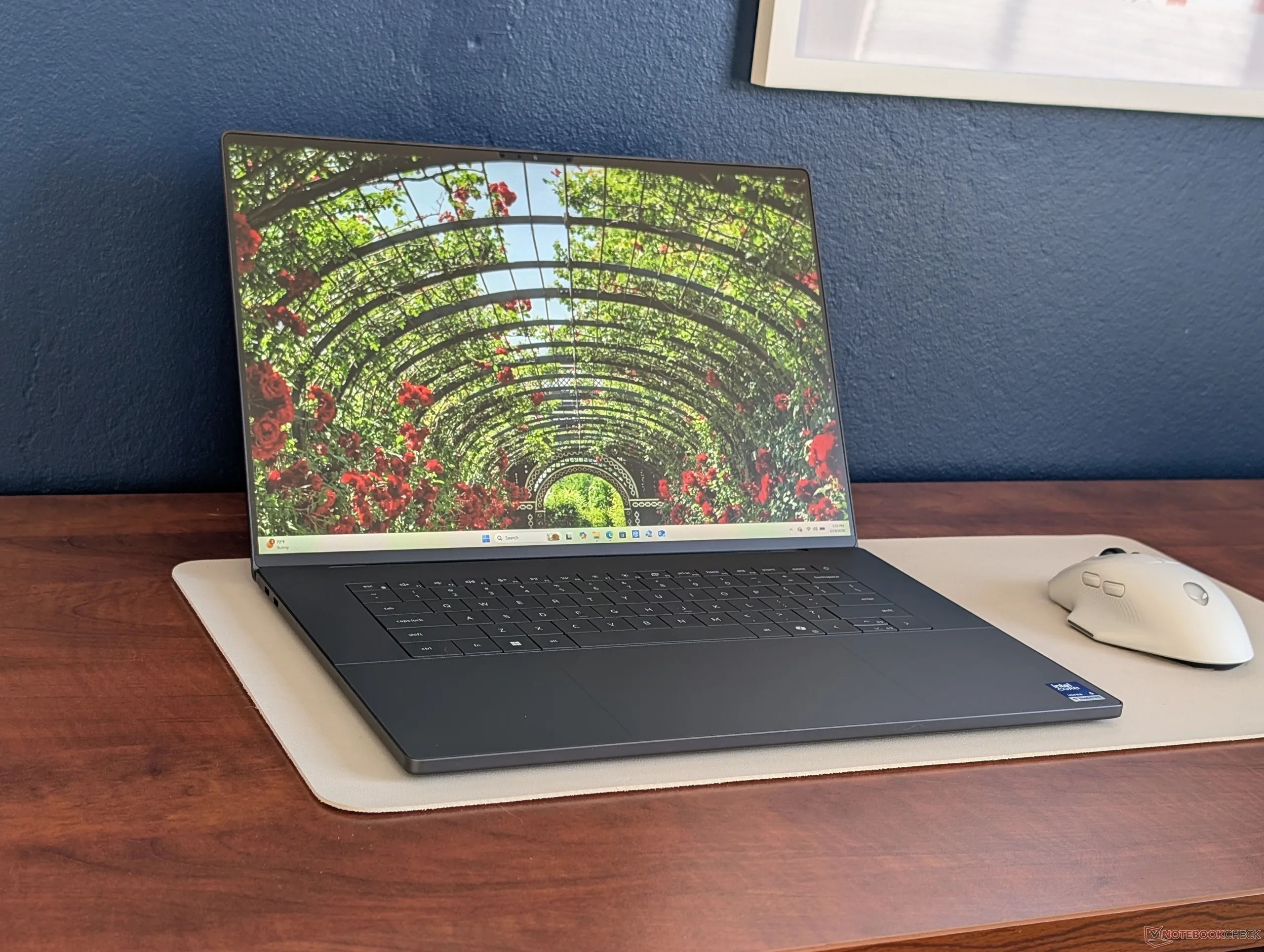
The 2026 XPS 16 is one of the most power efficient laptops available with an extra-long battery life to prove it
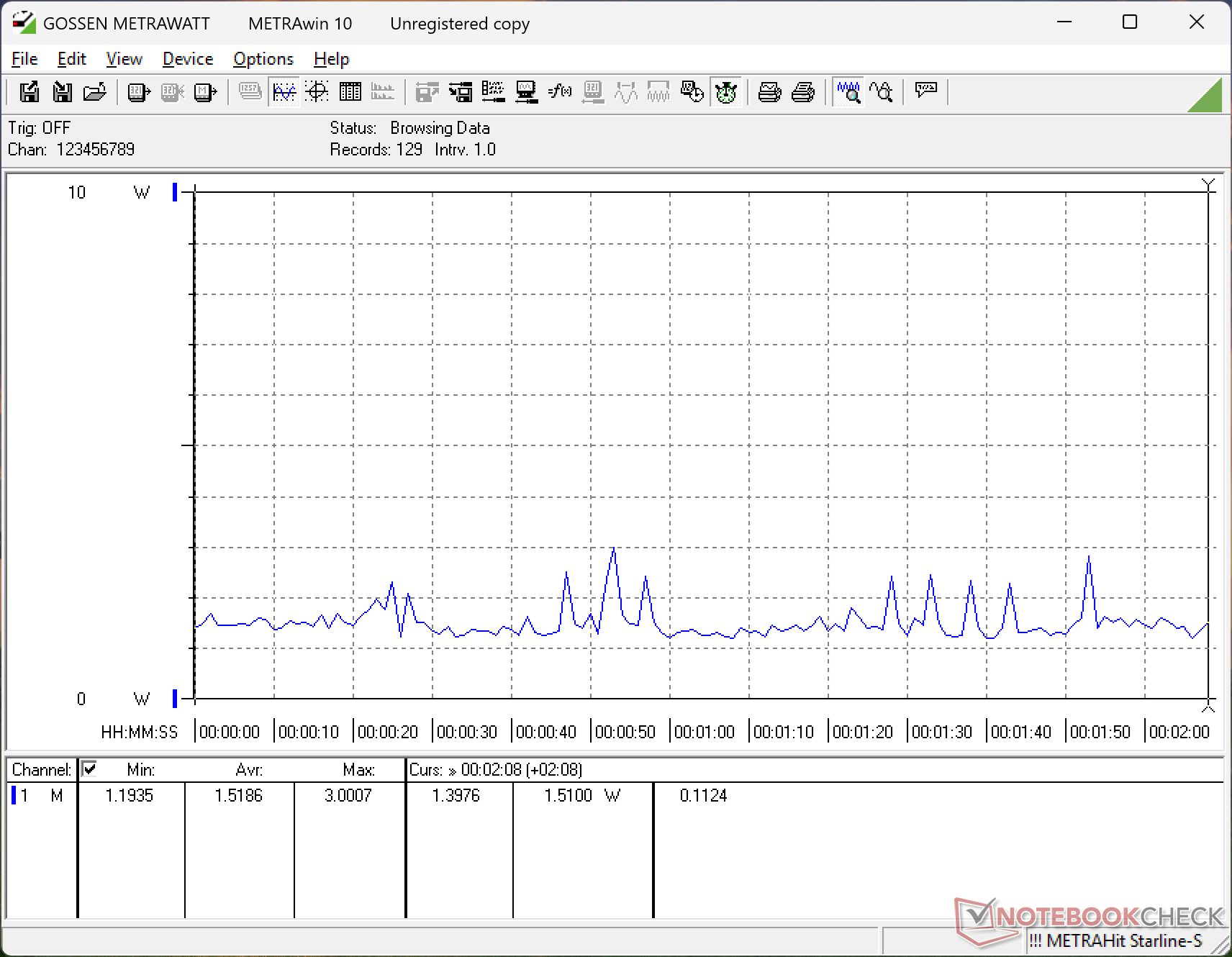
The 16-inch laptop just barely cracks 1 W when idling to be much more efficient than most competitors. Real-world battery life tests show the system lasting for more than 24 hours of constant web browsing.
The 2026 XPS 16 introduces major changes to the series both inside and out. Internally, Dell has swapped out Arrow Lake and Nvidia GeForce options for solely Panther Lake. By dropping discrete graphics, Dell was able to both slim down the chassis and improve efficiency by significant margins.
The graph below shows the power consumption of the XPS 16 FHD+ configuration over a two-minute period when idling on desktop at the lowest brightness setting and with VRR enabled. The system would average just 1.5 W which is very impressive for a large 16-inch screen size. Competing models like the Asus ZenBook S16 or MSI Prestige 16 would each draw between 3 W and 5 W when under similar conditions.
Increasing the brightness from minimum to maximum on the new XPS 16 would increase average consumption from 1.5 W to 4.5 W which would still be much lower than many competitors.
Naturally, the high efficiency of Panther Lake can extend battery life quite noticeably. For example, our test unit would last for almost 27 hours when running our WLAN loop test on the Balanced power profile with VRR enabled and the brightness set to 150 nits. Results are easily several hours longer than previous generation XPS 16 models even after accounting for the fact that the new XPS 16 ships with a smaller 70 Wh battery.
Nonetheless, all the changes to the new XPS 16 have entailed some notable drawbacks especially in regards to graphics performance. More benchmarks and comparisons can be found on our recent review of the 2026 XPS 16.
Allen Ngo - Managing Editor Laptops / Mobile - 5599 articles published on Notebookcheck since 2011
After graduating with a B.S. in environmental hydrodynamics from the University of California, I studied reactor physics to become licensed by the U.S. NRC to operate nuclear reactors. There's a striking level of appreciation you gain for everyday consumer electronics after working with modern nuclear reactivity systems astonishingly powered by computers from the 80s. When I'm not managing day-to-day activities and US review articles on Notebookcheck, you can catch me following the eSports scene and the latest gaming news.





 Add as a preferred source on Google


