




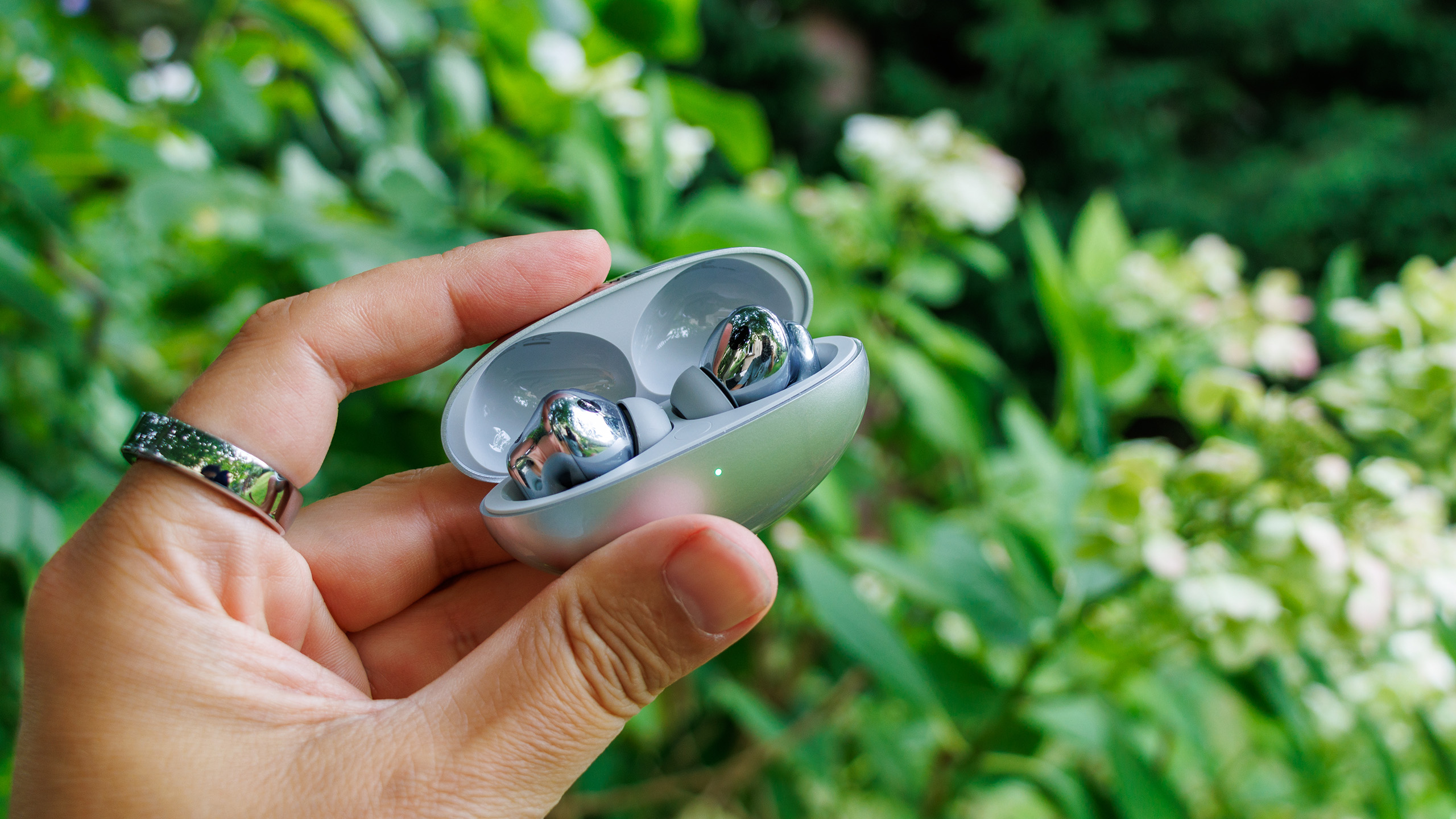
Conclusion on the Huawei FreeBuds Neo
Overall, the Huawei FreeBuds Neo make a good impression. These lightweight in-ear headphones are particularly impressive in terms of sound quality: the powerful, prominent bass delivers a rich sound, while voices and instruments come through clearly. Only in the highest frequency range do they lack a bit of clarity and airiness.
The effective ANC and good voice quality during phone calls are also among their strengths. Less successful, however, is the transparency mode, whose clearly audible background noise is particularly distracting in quiet environments. The extensive feature set with LDAC, multipoint, spatial audio, an equalizer, and convenient touch controls is also impressive. The earbuds, weighing just 4.8 grams, score high on comfort, though they could sit a bit more securely for sports activities.
The biggest trade-off is in battery life. With LDAC and ANC enabled, the FreeBuds Neo lasted only about 4.5 hours in our test. Users who regularly use these two features will need to recharge them frequently. Nevertheless, the FreeBuds Neo are well-equipped true wireless earbuds that deliver impressive sound quality; their weaknesses lie primarily in the transparency mode and battery life under demanding conditions.
Pros
Cons
Table of Contents
Specifications: Huawei FreeBuds Neo
| Wearing Style | In-ear |
| Connectivity | Bluetooth 6.0 (Multipoint) |
| Speakers | 11 mm dynamic drivers, 20–40,000 Hz |
| Audio Codecs | SBC, AAC, LDAC, L2HC |
| Battery Capacity | 60 mAh (per earbud), 460 mAh (charging case) |
| Charging Port | USB-C |
| Wireless Charging | Not supported |
| Weight | 4.8 g (per earbud), 31.4 g (charging case) |
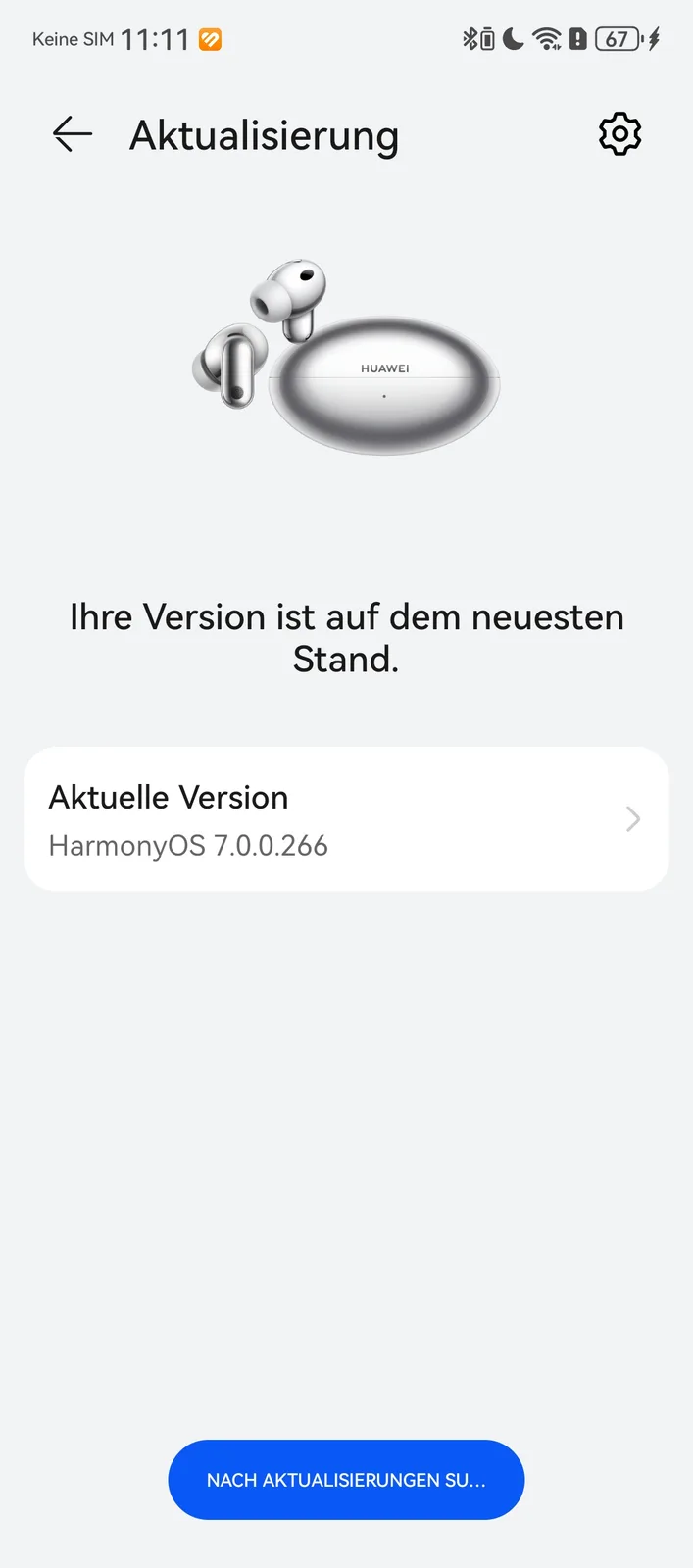
| Firmware Version | HarmonyOS 7.0.0.266 |
| Package Contents | Earbuds, charging case, 4 pairs of silicone tips (XS, S, M, L) |
| Price (MSRP) | 129 euros |
With the FreeBuds Neo, Huawei is expanding its headphone lineup with compact true wireless in-ear earbuds that are said to pack a lot of features despite weighing just 4.8 grams per earbud. These features include adaptive ANC, Hi-Res Audio with LDAC and L2HC, Spatial Audio, and multipoint connectivity. Our review will determine whether the Neo delivers more than just impressive specs on paper.
Body and ergonomics - FreeBuds Neo are IP55 certified
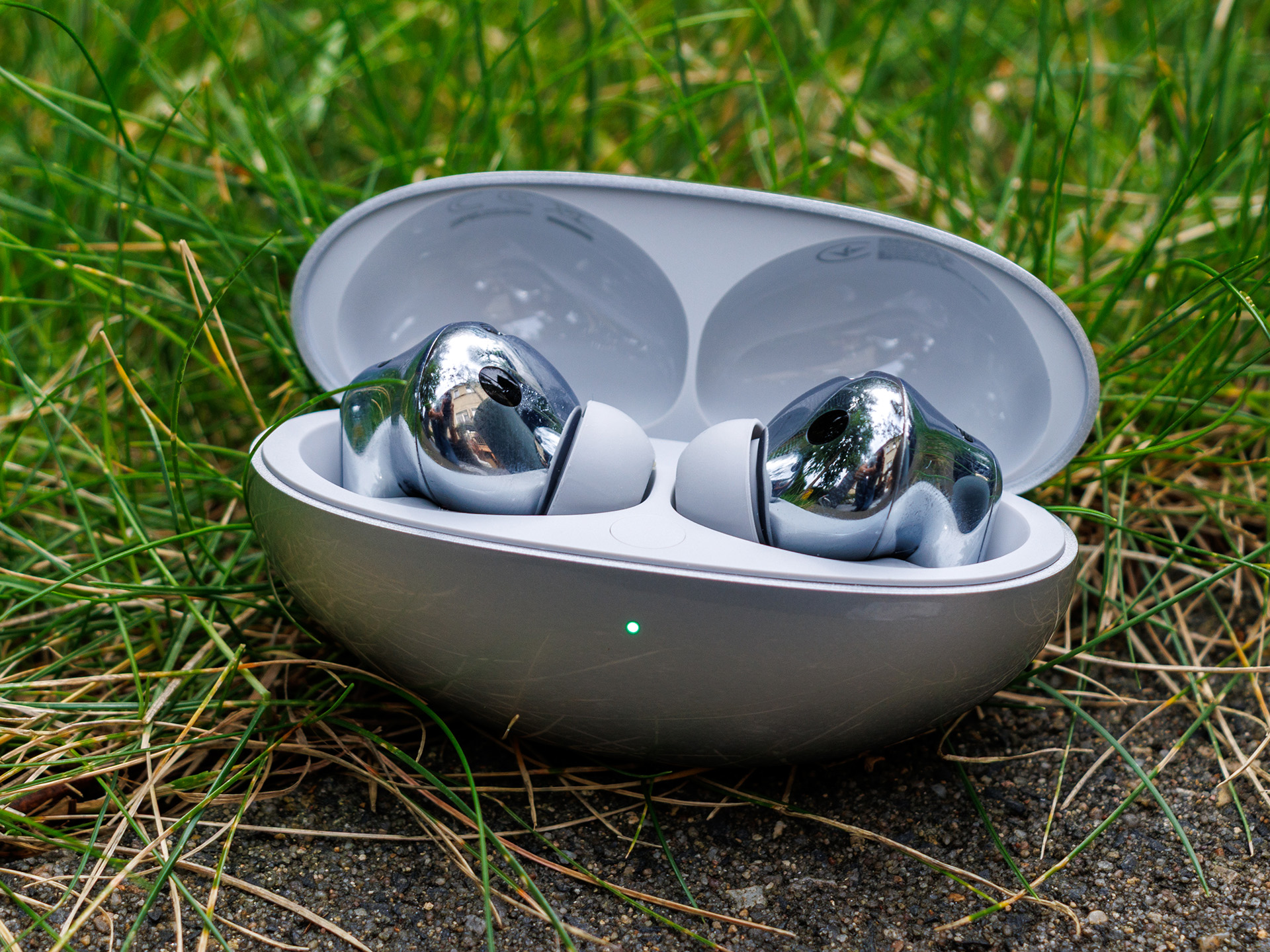
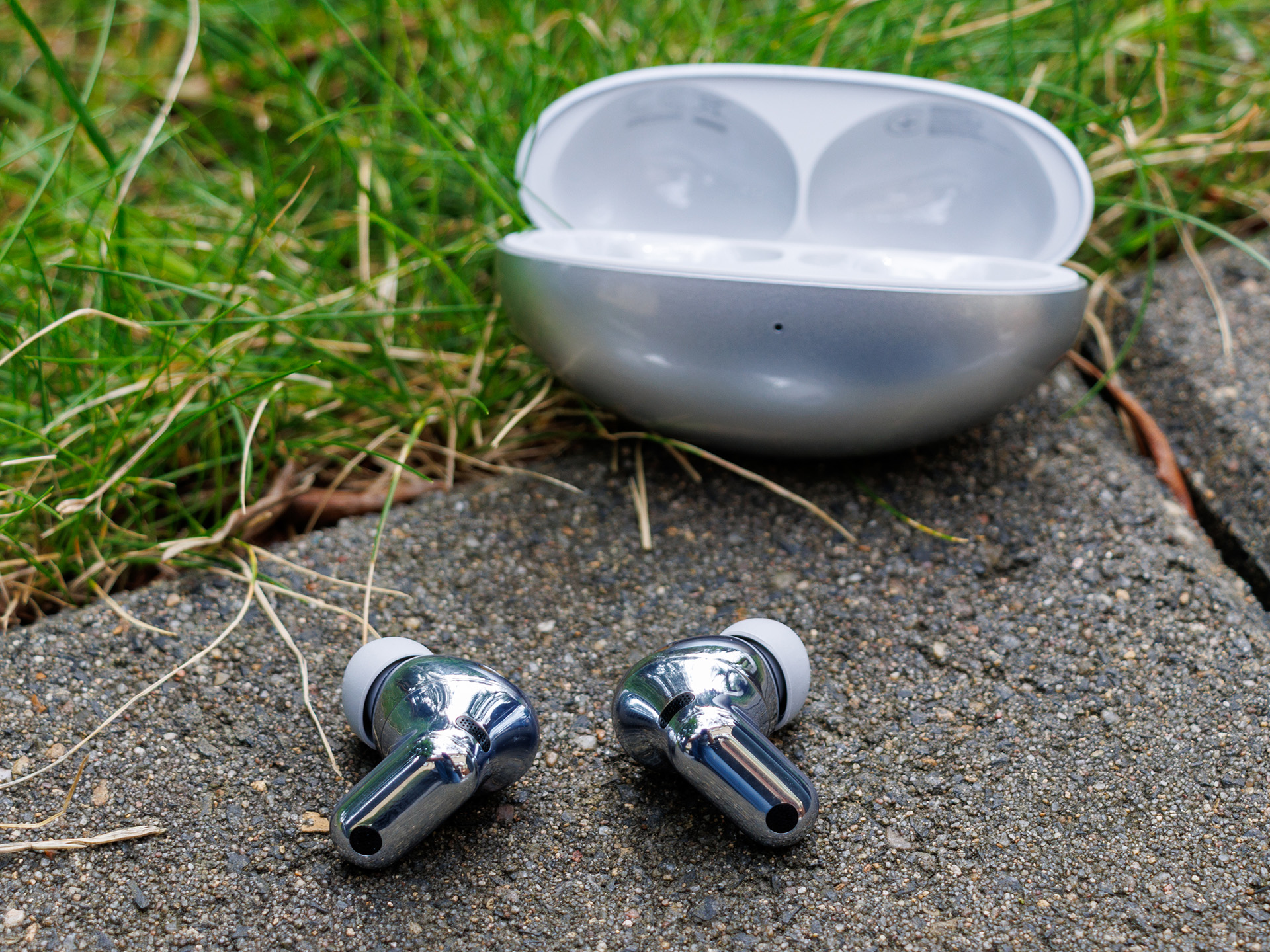
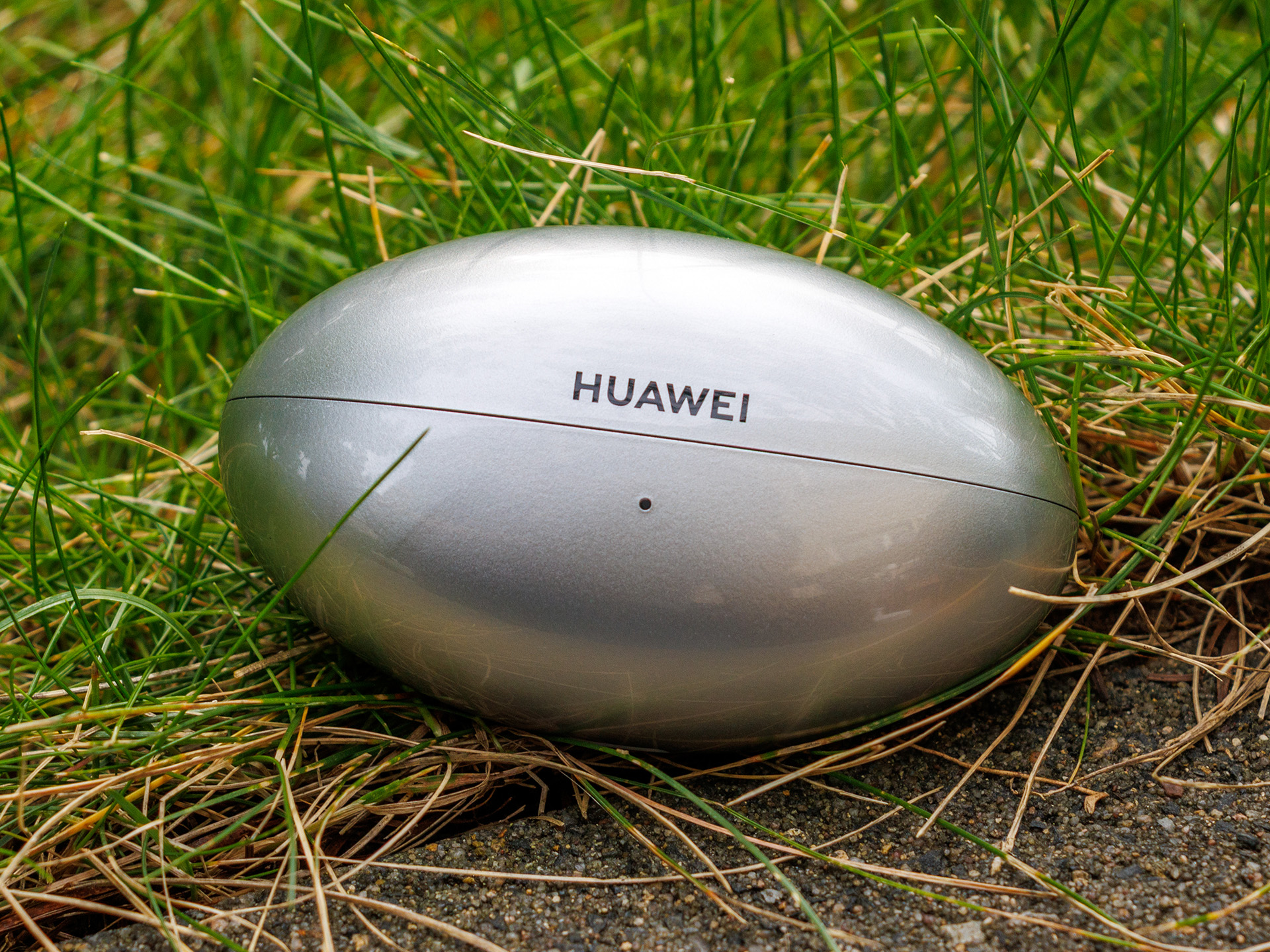
Huawei offers the FreeBuds Neo in four color options: Ice White, Nebula Pink, Stellar Silver, and Starry Black. The charging case stands out for its unusual shape. Instead of the common flat, nearly rectangular design, it’s designed to stand on its side, with heavily rounded sides and a narrower bottom. This makes it look a bit like a flattened egg, but with a total weight of about 41 grams, it remains compact and can be easily stowed in a pants pocket.
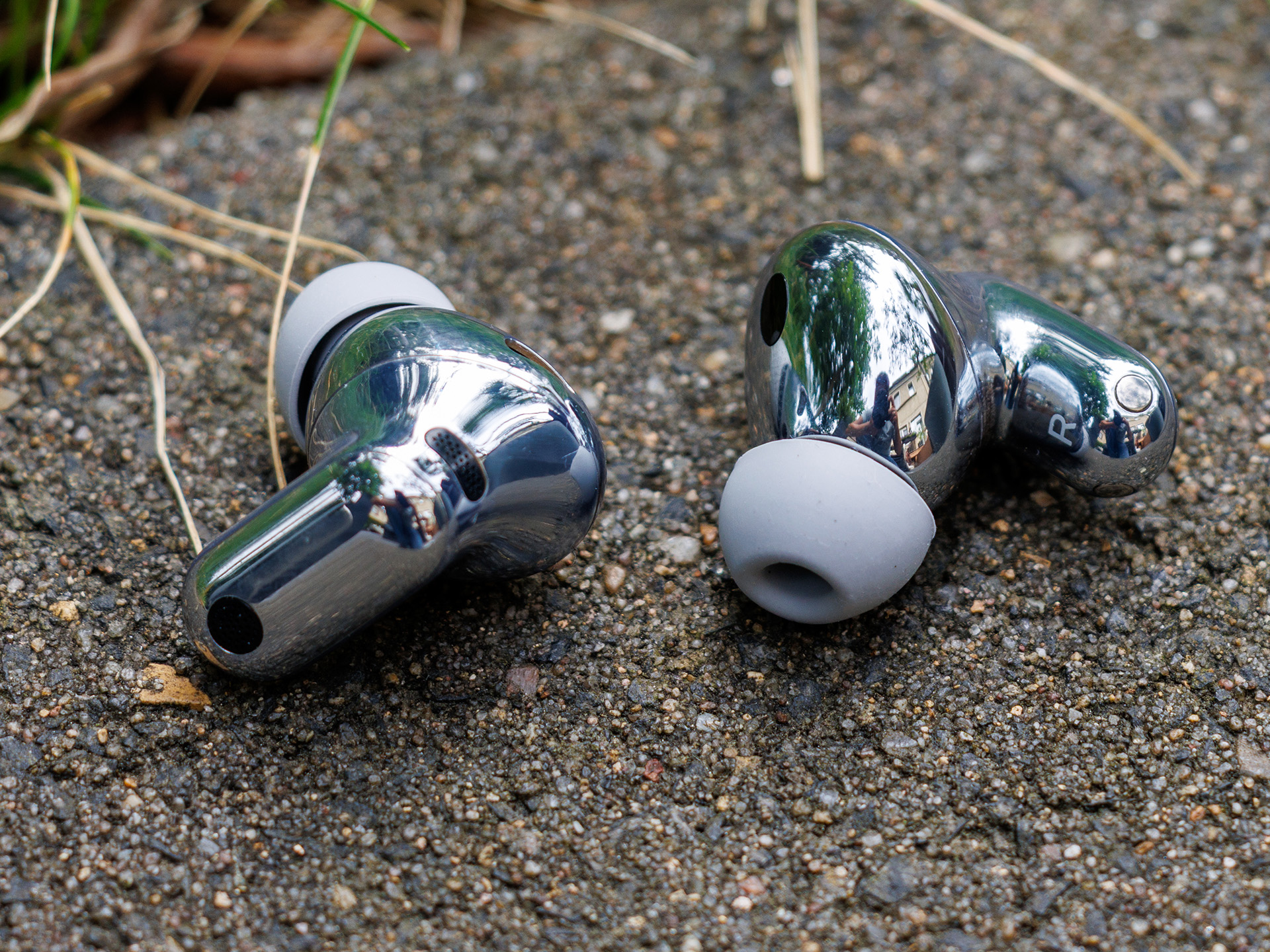
Our test unit in silver, however, leaves a somewhat mixed impression in terms of feel. The silver surface of the charging case feels almost like it’s covered in a film, making it seem less premium than the unusual design might initially suggest. We like the earbuds themselves much better. Their short stems give them a compact look, and at only about 4.8 grams each, they’re exceptionally light.
The FreeBuds Neo also impress in terms of comfort. They sit comfortably in our ears and are hardly noticeable even during extended use. However, there are some limitations when it comes to stability: They stay in place well enough for everyday use, but we found they lacked a secure enough fit during athletic activities. This naturally depends on the individual’s ear anatomy. With their IP55 certification, the earbuds are generally equipped for sweaty activities. The charging case, on the other hand, does not offer corresponding protection against water and dust.
Sustainability
Huawei provides very few specific sustainability details regarding the FreeBuds Neo. Information on the percentage of recycled materials or the model’s carbon footprint is missing. On a positive note, Huawei generally offers a repair service for the FreeBuds Neo; for other FreeBuds models, individual earbuds or charging cases can also be replaced, though the current price list does not yet list corresponding prices for the Neo.
Huawei also highlights the increasing use of recycled or renewable materials and packaging with less plastic across its product lines, though it does not provide specific figures for the FreeBuds Neo.
Features and usability - FreeBuds Neo with a wide range of features
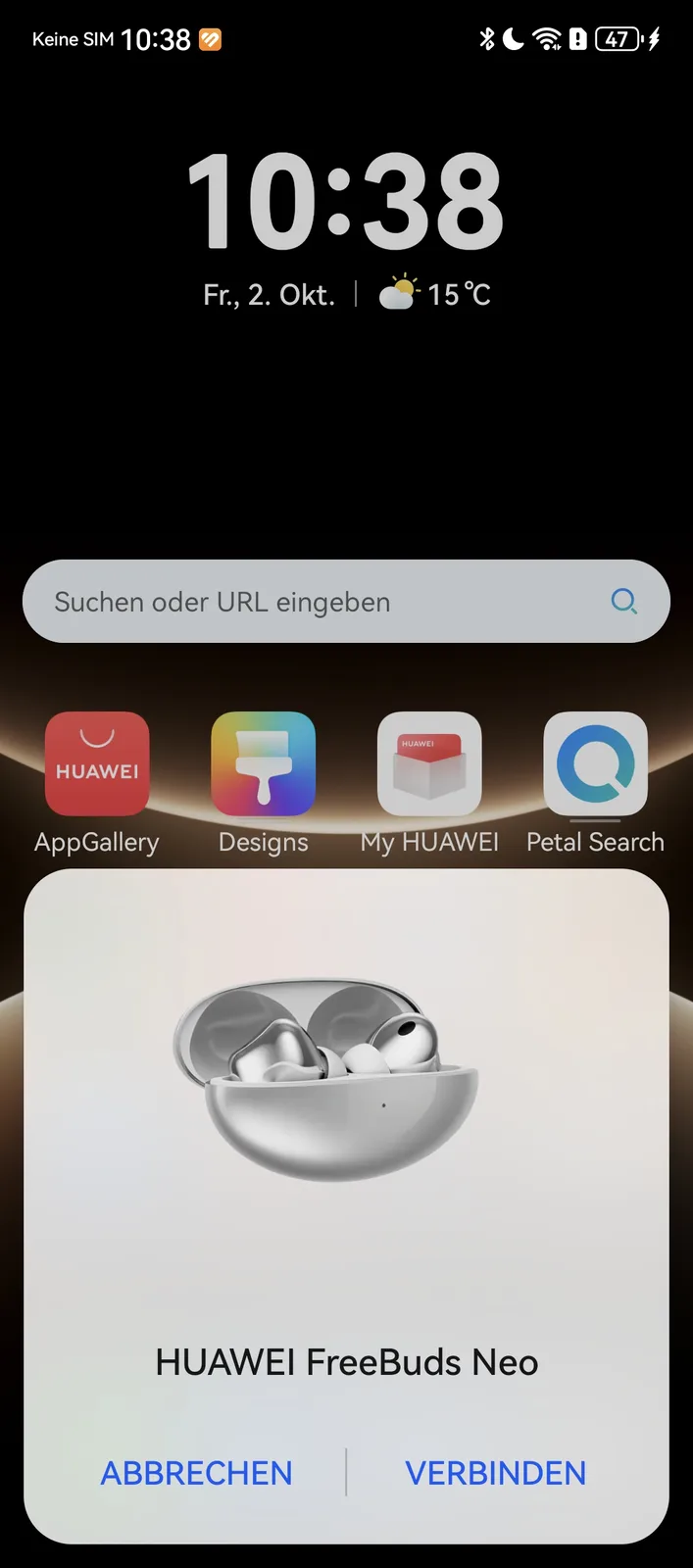
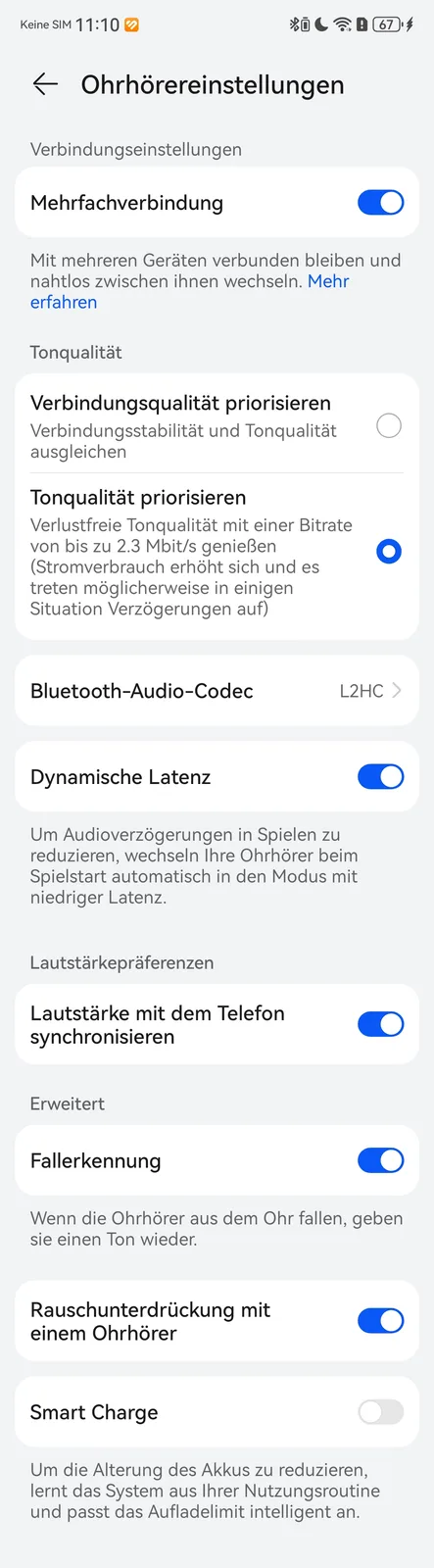
The FreeBuds Neo come packed with features. Supported Bluetooth codecs include SBC, AAC, LDAC, and L2HC 4.0 on compatible Huawei devices. They also feature adaptive ANC, a transparency mode, and spatial audio with head tracking. Multipoint allows simultaneous connection to two devices, even across different operating systems, such as an Android smartphone and a Windows laptop. Huawei uses Bluetooth 6.0, but Auracast is not supported.
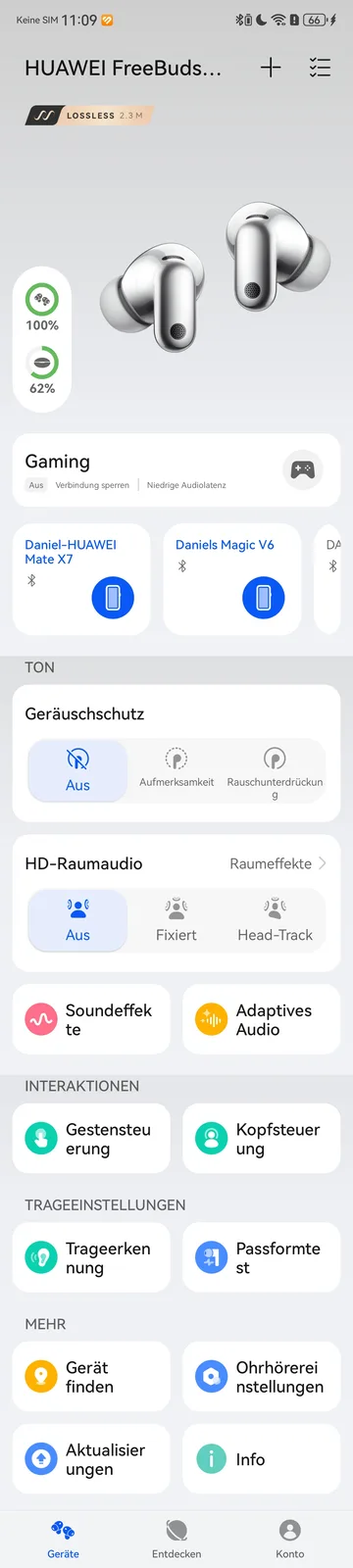
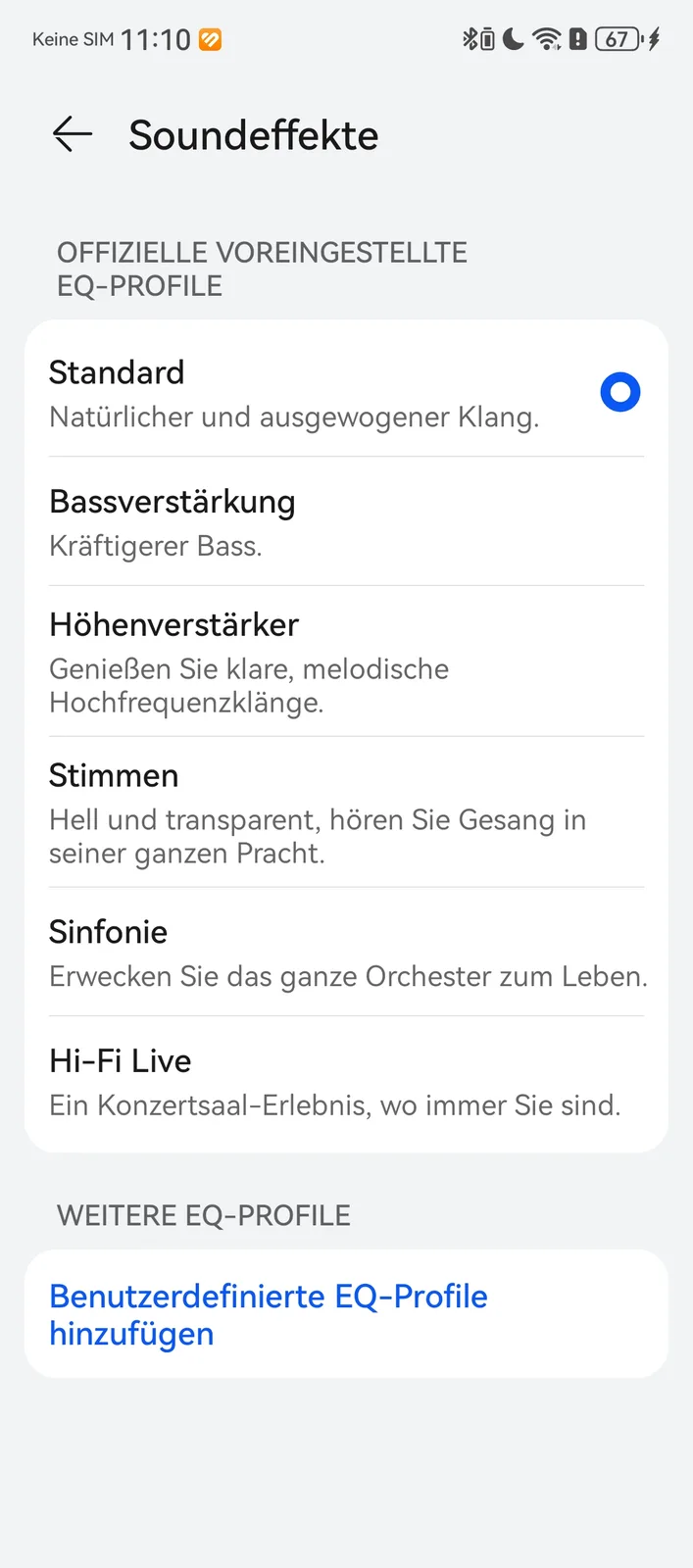
The central hub is the Huawei Audio Connect app, available for Android and iOS. Through it, you can configure ANC and sound effects, as well as locate the earbuds. Six EQ presets and a customizable equalizer are available for sound customization. Spatial Audio is also activated via the app. Control is handled via the touch-sensitive panels on the short stems. The FreeBuds Neo recognize taps, swipes, and long presses, allowing you to control playback, volume, and noise cancellation directly from your ear. A wear detection feature pauses or resumes playback when you remove or insert the earbuds. In addition, Huawei supports head gestures: for example, nodding or shaking your head can be used to respond to incoming calls.
Additional features include automatic conversation detection, which can switch to ambient mode during conversations, as well as a search function for misplaced earbuds. The FreeBuds Neo can also pair with compatible Huawei smartwatches. Battery level, ANC, and sound effects can then be controlled directly from the watch; Huawei lists the Watch 6 series, Watch GT 7 series, and Watch D3, among others, as compatible models.
Sound - In-ear headphones with good sound quality
In terms of sound quality, the Huawei FreeBuds Neo are a pleasant surprise. The low frequencies, in particular, come across as powerful and present, giving the music a rich foundation. The bass has plenty of punch without completely overshadowing the rest of the frequency range. Vocals and instruments also come through clearly.
The upper end of the frequency spectrum is less impressive. Very high frequencies lack a bit of clarity and airiness. As a result, fine details sound less brilliant and open, which is particularly noticeable in recordings with a lot of high frequencies.
Our pink-noise measurement also shows a distinct presence in the range between approximately 1 and 3 kHz. Distortion levels remain unremarkable at around 0.6 percent THD+N at 1 kHz. Overall, the FreeBuds Neo deliver a surprisingly good, powerful sound that impresses above all with its low-frequency response.
The FreeBuds Neo’s active noise cancellation makes a good impression. Ambient noise is effectively reduced, so the ANC offers significant added value, especially in environments with consistent background noise. Huawei specifies an average noise cancellation of 30 dB across multiple frequencies, though this value was determined under laboratory conditions.
The transparency mode is less impressive. While it does allow ambient noise to be clearly heard, a fairly noticeable background hiss is also present. This is particularly noticeable in quiet environments.
The FreeBuds Neo also make a good impression during phone calls. Both parties are clear and easy to understand. The suppression of ambient noise is particularly impressive: even louder background noise is effectively filtered out without noticeably impairing speech intelligibility.
| Loudspeakers | |
| THD | |
| Huawei FreeBuds Neo (RMS: -2.8 dBFS) | |
| Samsung Galaxy Buds4 Pro (RMS: -1.7 dBFS) | |
| Nothing Ear (3a) (RMS: -3.0 dBFS) | |
| THD+N | |
| Huawei FreeBuds Neo (RMS: -2.8 dBFS) | |
| Samsung Galaxy Buds4 Pro (RMS: -1.7 dBFS) | |
| Nothing Ear (3a) (RMS: -3.0 dBFS) | |
* ... smaller is better
THD (Total Harmonic Distortion): Harmonic distortion quantifies the magnitude of the components that arise from non-linear distortion (harmonic content) in relation to the original signal. THD refers only to the fundamental harmonic content. The distortion factor is often mentioned in the same breath, but refers to the overall signal.
THD+N (Total Harmonic Distortion + Noise): This value is comparable to THD, but in addition to the interference from harmonics, the interference from noise is also recorded as an effective value.
For the measurement, a low-harmonic sine wave signal (1 kHz, > 0 dB) is played through the headphones to be tested and recorded by a linear measuring microphone (measuring distance: approx. 1 cm) in an artificial head.
Both values are given as a percentage. The lower the value, the better the signal fidelity.
Huawei FreeBuds Neo audio analysis
(+) | speakers can play relatively loud (94.3 dB)
Bass 100 - 315 Hz
(+) | good bass - only 3.5% away from median
(+) | bass is linear (3.2% delta to prev. frequency)
Mids 400 - 2000 Hz
(+) | balanced mids - only 4.5% away from median
(+) | mids are linear (3% delta to prev. frequency)
Highs 2 - 16 kHz
(±) | higher highs - on average 6.3% higher than median
(+) | highs are linear (6.5% delta to prev. frequency)
Overall 100 - 16.000 Hz
(+) | overall sound is linear (10.3% difference to median)
Compared to same class
» 5% of all tested devices in this class were better, 1% similar, 93% worse
» The best had a delta of 4%, average was 23%, worst was 136%
Compared to all devices tested
» 5% of all tested devices were better, 1% similar, 93% worse
» The best had a delta of 4%, average was 23%, worst was 136%
Nothing Ear (3a) audio analysis
(+) | speakers can play relatively loud (88.9 dB)
Bass 100 - 315 Hz
(-) | nearly no bass - on average 17.4% lower than median
(+) | bass is linear (3.2% delta to prev. frequency)
Mids 400 - 2000 Hz
(±) | higher mids - on average 9.7% higher than median
(±) | linearity of mids is average (8.2% delta to prev. frequency)
Highs 2 - 16 kHz
(-) | very high highs - on average 15.7% higher than median
(±) | linearity of highs is average (8.8% delta to prev. frequency)
Overall 100 - 16.000 Hz
(±) | linearity of overall sound is average (26.9% difference to median)
Compared to same class
» 82% of all tested devices in this class were better, 4% similar, 14% worse
» The best had a delta of 4%, average was 23%, worst was 136%
Compared to all devices tested
» 82% of all tested devices were better, 4% similar, 14% worse
» The best had a delta of 4%, average was 23%, worst was 136%
Battery life - Significantly shorter in everyday life
Huawei claims the FreeBuds Neo offer up to 10 hours of battery life without ANC and 6.5 hours with active noise cancellation. Combined with the charging case, this is said to provide a maximum of 40 and 24 hours, respectively. However, Huawei determines these figures under laboratory conditions using the AAC codec and at 50 percent volume.
In our more real-world test with ANC and LDAC enabled, however, the earbuds lasted about 4.5 hours. As expected, the higher-resolution Bluetooth codec takes its toll. If you use ANC and LDAC at the same time, you’ll need to put the FreeBuds Neo back in the charging case more often.
Transparency
The selection of devices to be reviewed is made by our editorial team. The test sample was given to the author by the manufacturer free of charge for the purposes of review. There was no third-party influence on this review, nor did the manufacturer receive a copy of this review before publication. There was no obligation to publish this review. As an independent media company, Notebookcheck is not subjected to the authority of manufacturers, retailers or publishers.
This is how Notebookcheck is testing
Every year, Notebookcheck independently reviews hundreds of laptops and smartphones using standardized procedures to ensure that all results are comparable. We have continuously developed our test methods for around 20 years and set industry standards in the process. In our test labs, high-quality measuring equipment is utilized by experienced technicians and editors. These tests involve a multi-stage validation process. Our complex rating system is based on hundreds of well-founded measurements and benchmarks, which maintains objectivity. Further information on our test methods can be found here.
No comments for this article
 Add as a preferred source on Google


