




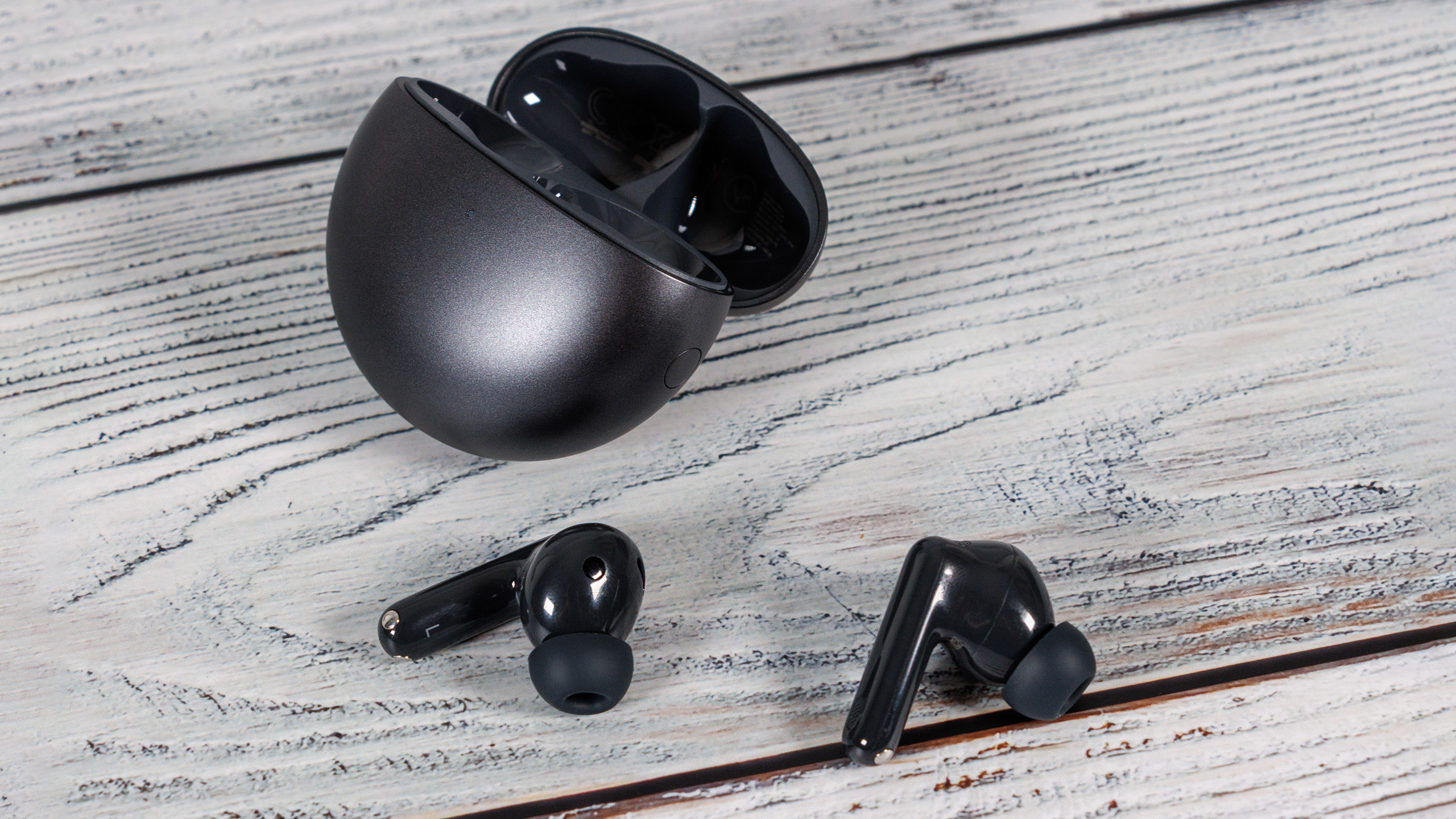
Verdict on the Huawei FreeBuds 7i
The Huawei FreeBuds 7i offer a very good overall package in terms of sound and features in the mid-price range. These include effective active noise cancellation (ANC 4.0) and spatial 3D audio.
The sound is balanced, although the bass sometimes seems a little weak, while the mids remain clear. The IP54 certification protects against dust and splashes, and the design has been modernised but remains quite classic.
The touch controls are reliable, the battery life is up to 8 hours without ANC and 5 hours with ANC, and up to 35 hours in total with the charging case. Telephony in particular benefits from an improved microphone setup with an AI bone conduction microphone.
Pros
Cons
Specifications: Huawei FreeBuds 7i
| Wearing style | In-ear |
| Connectivity | Bluetooth 5.4 (multipoint) |
| Range | 10 m |
| Speakers | 11 mm quad magnet dynamic driver, 20–40,000 Hz |
| Audio codecs | SBC, AAC, LDAC, L2HC |
| Battery capacity | 55 mAh (earphones), 510 mAh (case) |
| Charging port | USB-C |
| Wireless charging | Not supported |
| Weight | 5.4 g (earphones), 36.5 g (case) |
| Firmware version | HarmonyOS 5.1.0.172 |
| Scope of delivery | Headphones, case, ear tips (sizes XS, S, M, L) |
The Huawei FreeBuds 7i follow on from the FreeBuds 6i and offer a number of changes in detail, including a revamped design. Among other things, Huawei has added a new ANC system, 3D audio support and an improved microphone setup.
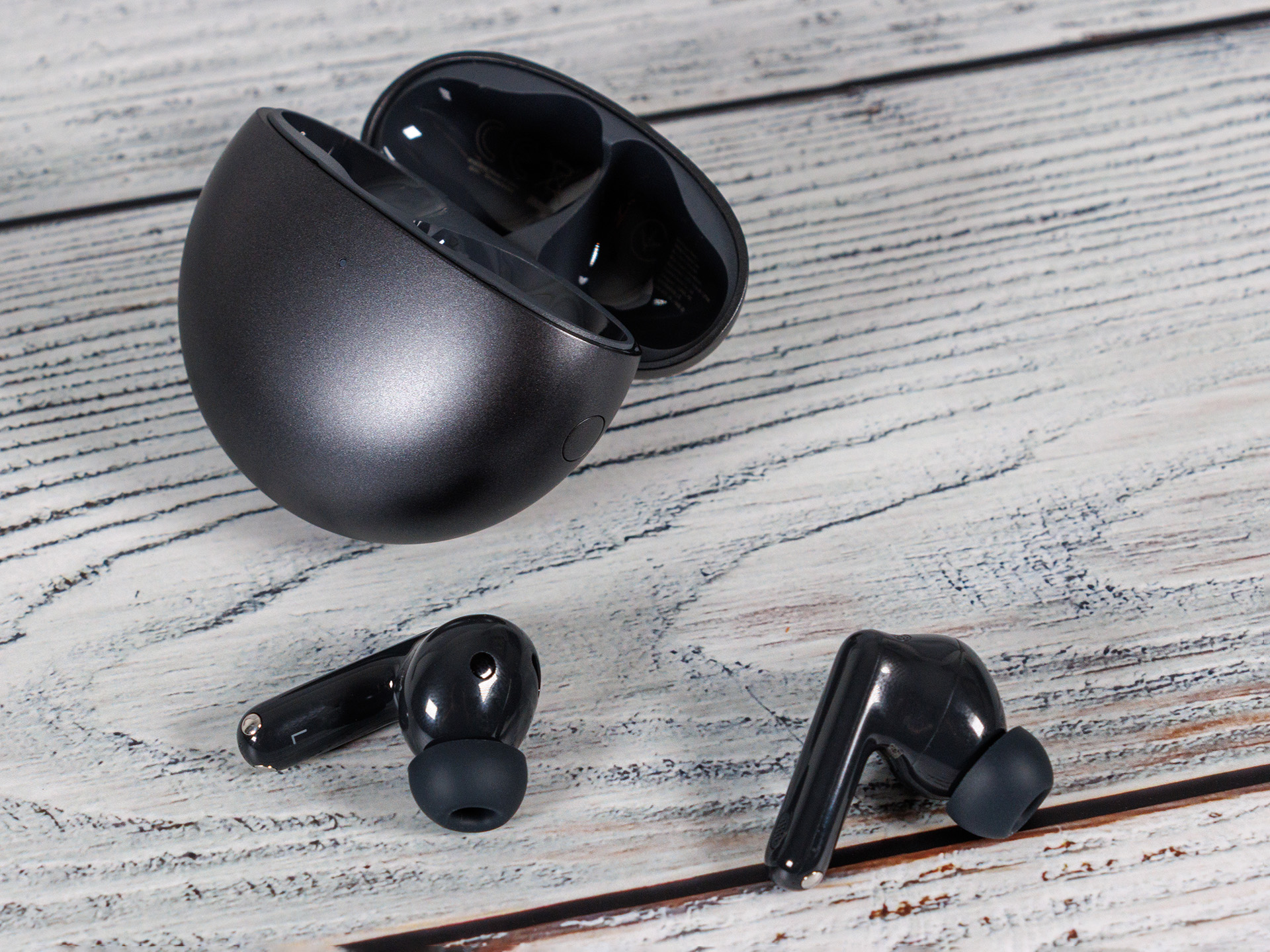
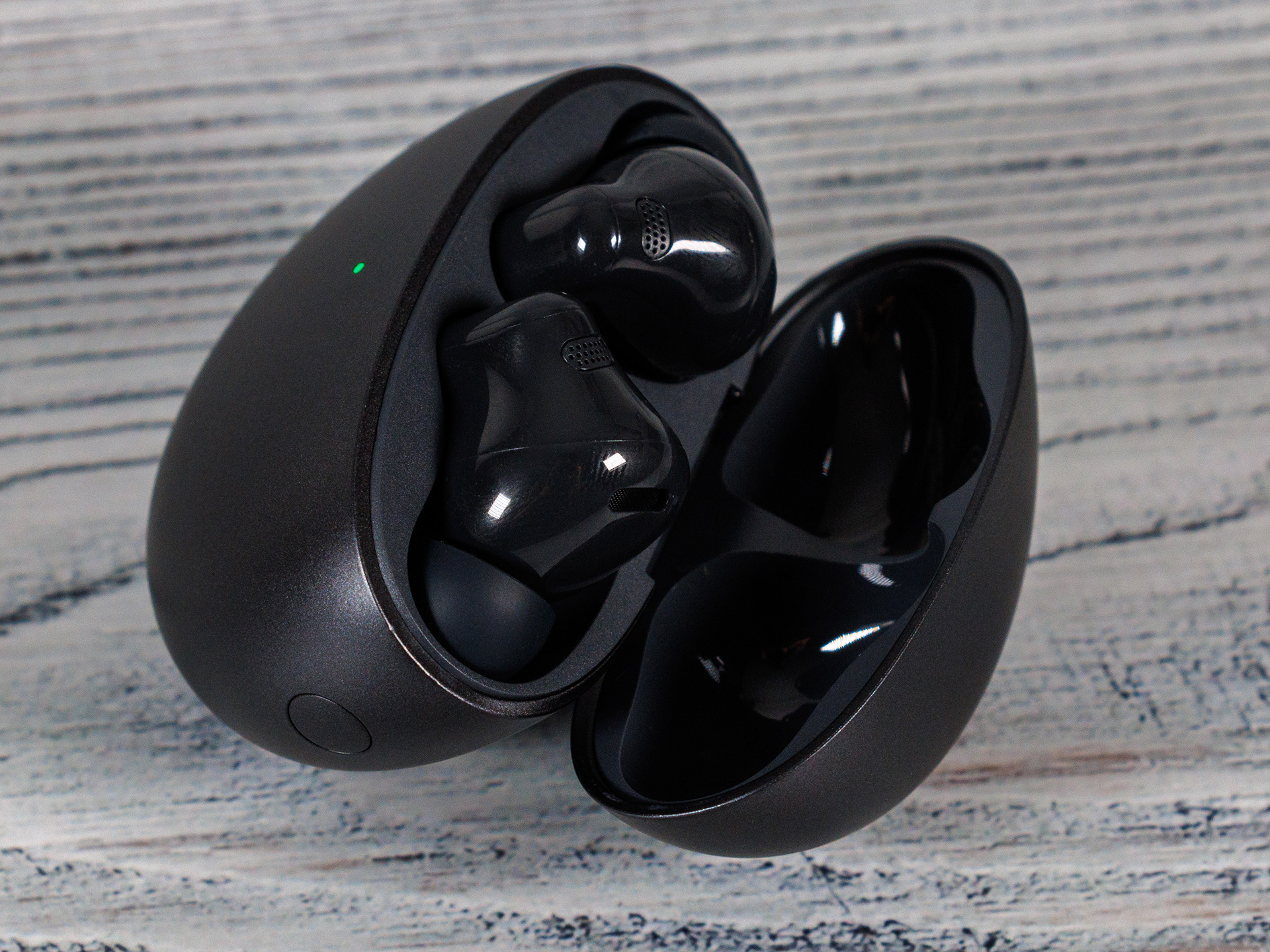
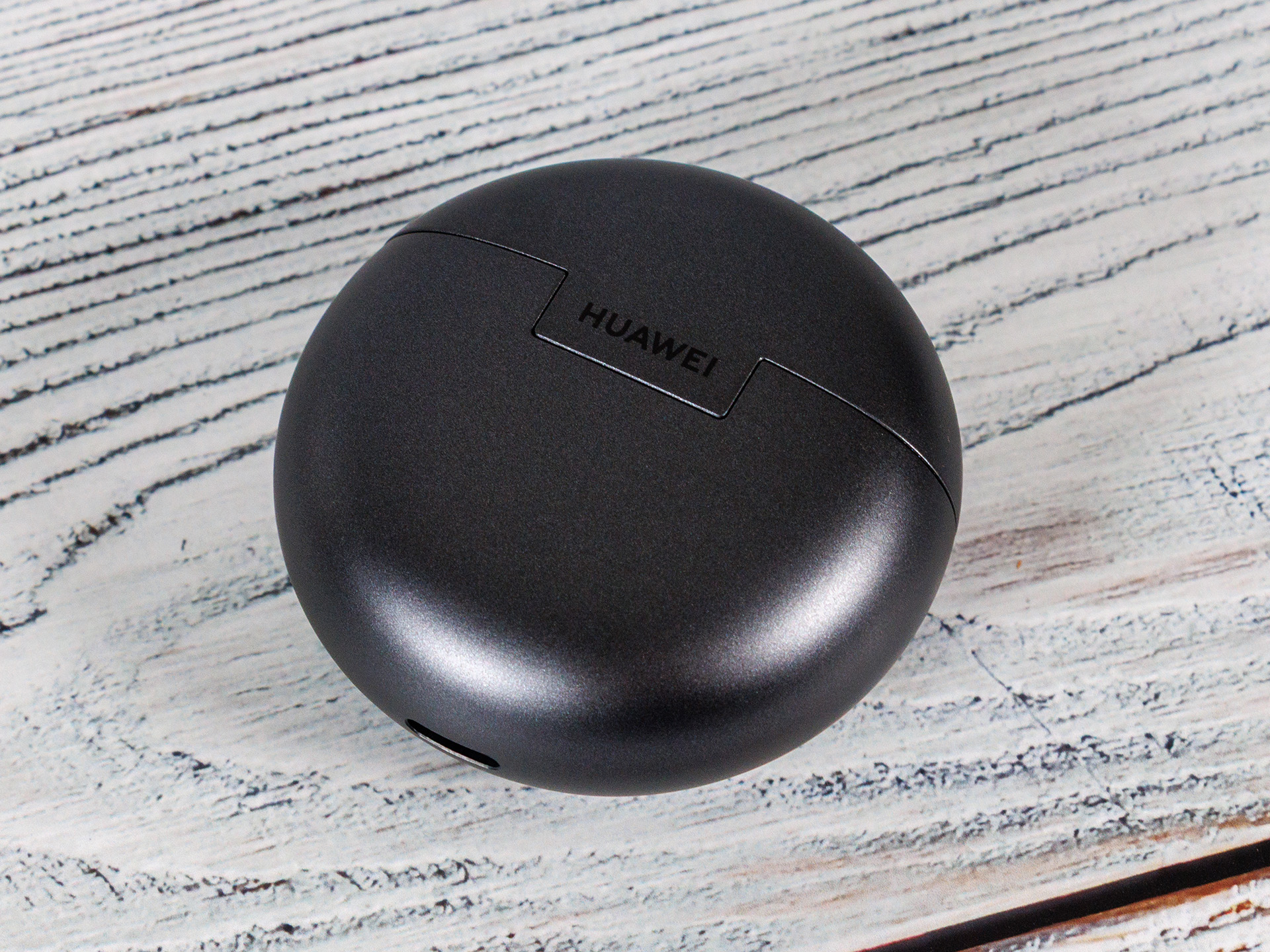
Case and ergonomics – Huawei headset is IP54 certified
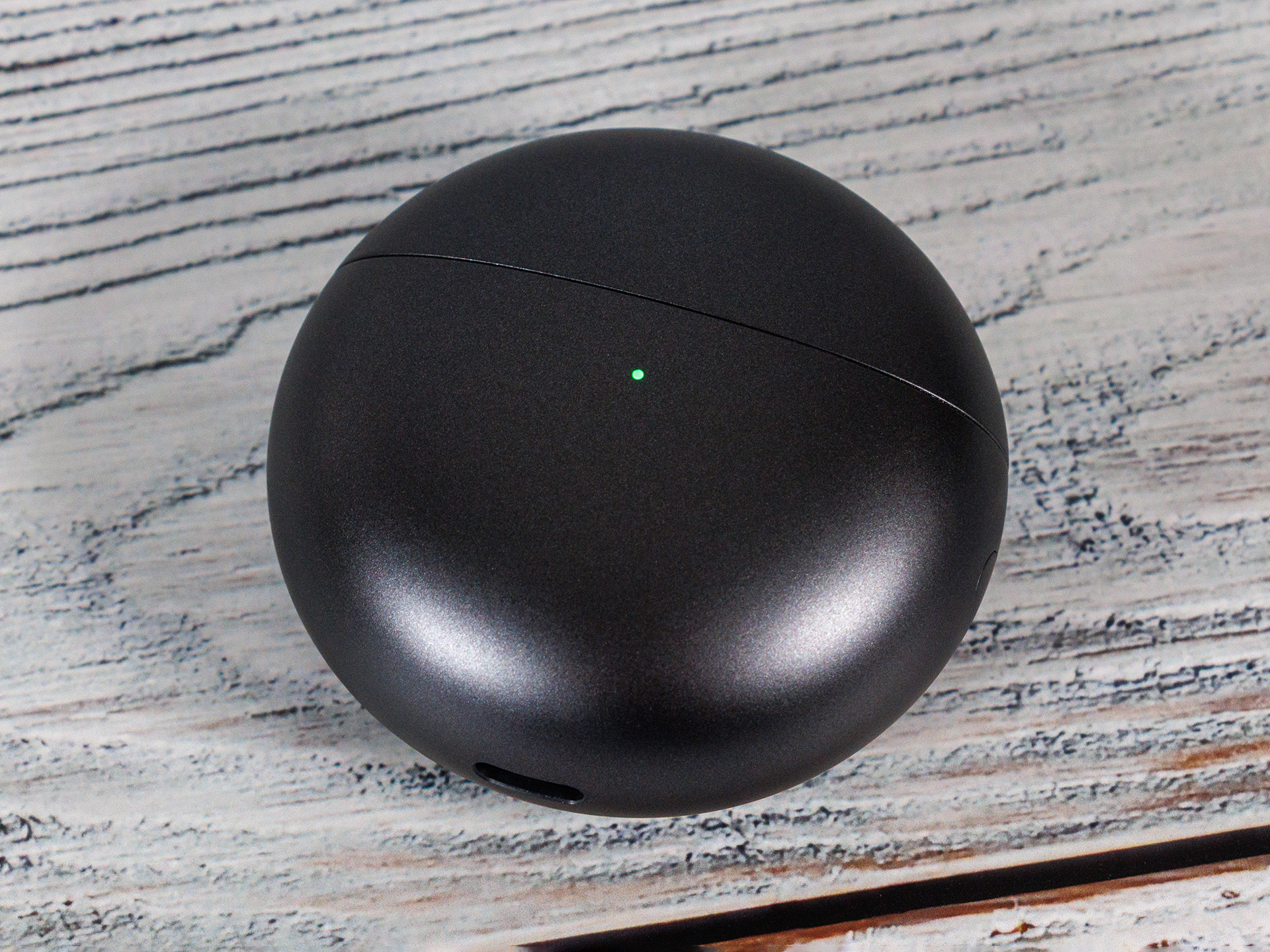
Both the charging case and the earbuds are made of plastic and are available in black, white and pink. The earbuds are IP54-rated, meaning they are protected against coarse dust and splashing water. So a downpour won't harm them, but they have no place in the shower. The charging case is not certified.
The FreeBuds 7i are classic in-ear earphones that look a little bulky, but with the right attachments, they fit securely in the ear. The fit test can be used to check this again if necessary to achieve the best possible noise isolation. The 7i are slightly heavier than their predecessors, but the workmanship is impressive. However, the high-gloss plastic makes them look less valuable.
The earphones are held in place magnetically in the case. As with its predecessor, this case also has a pairing button and a status LED.
Sustainability
Huawei does not provide any information on the use of recycled materials or even a sustainability report for its headphones. Repair by the user is also not provided for.
The outer packaging is largely free of plastics, but it is completely sealed in foil.
Features and operation – FreeBuds 7i with head control
As expected, the Huawei FreeBuds 7i do not support Google Fast Pair, but they do support Swift Pair, and new FreeBuds are immediately recognised by Huawei smartphones. However, conventional pairing is also possible without any problems, which is possible with all Bluetooth-enabled devices, whether Android, iOS, macOS, Linux or Windows. Thanks to multipoint Bluetooth, two devices can also be connected at the same time.
The Huawei Audio Connect app now replaces AI Life, but looks very similar. On Huawei smartphones, it is integrated directly into the system. The app not only allows you to install updates, but also to configure the spatial audio experience, select the audio codec or set up gesture control.
Huawei's in-ear headphones are controlled via a touch-sensitive surface. This can distinguish between double and triple taps, press and hold, and swipes. This works really well in everyday use and can be customised to your own needs in the options. In addition, simplified head control is available.


Sound - Huawei TWS with improved ANC and 3D audio
Huawei has also equipped the FreeBuds 7i with four 11 mm drivers that can handle a frequency range of 20 to 40,000 Hz. The sound seems quite powerful in everyday use and is ideal for all types of multimedia content. However, we often noticed that the low frequencies, even with the bass booster activated, are somewhat lacking and remain both pale and somewhat muddy. Nevertheless, overall audio performance is good for in-ear headphones.
The new acoustic bone sensor has a positive effect when making phone calls, as even in light wind outdoors, we remain quite easy to understand, but this is not sufficient for cycling. The suppression of ambient noise also works well.
The active noise cancellation clearly eliminates low frequency ranges and is also effective on aeroplanes, but does not offer peak performance. The attention mode is relatively low-noise.
| Loudspeakers | |
| THD | |
| Huawei FreeBuds 7i (RMS: -2.7 dBFS) | |
| Nothing Ear 3 (RMS: -2.0 dBFS) | |
| Teufel Real Blue TWS 3 (RMS: -0.9 dBFS) | |
| THD+N | |
| Teufel Real Blue TWS 3 (RMS: -0.9 dBFS) | |
| Huawei FreeBuds 7i (RMS: -2.7 dBFS) | |
| Nothing Ear 3 (RMS: -2.0 dBFS) | |
* ... smaller is better
THD (Total Harmonic Distortion): Harmonic distortion quantifies the magnitude of the components that arise from non-linear distortion (harmonic content) in relation to the original signal. THD refers only to the fundamental harmonic content. The distortion factor is often mentioned in the same breath, but refers to the overall signal.
THD+N (Total Harmonic Distortion + Noise): This value is comparable to THD, but in addition to the interference from harmonics, the interference from noise is also recorded as an effective value.
For the measurement, a low-harmonic sine wave signal (1 kHz, > 0 dB) is played through the headphones to be tested and recorded by a linear measuring microphone (measuring distance: approx. 1 cm) in an artificial head.
Both values are given as a percentage. The lower the value, the better the signal fidelity.
Huawei FreeBuds 7i audio analysis
(+) | speakers can play relatively loud (95.7 dB)
Bass 100 - 315 Hz
(±) | reduced bass - on average 12.9% lower than median
(+) | bass is linear (2.6% delta to prev. frequency)
Mids 400 - 2000 Hz
(+) | balanced mids - only 4.9% away from median
(+) | mids are linear (4.2% delta to prev. frequency)
Highs 2 - 16 kHz
(±) | higher highs - on average 11.3% higher than median
(±) | linearity of highs is average (8.9% delta to prev. frequency)
Overall 100 - 16.000 Hz
(±) | linearity of overall sound is average (17.4% difference to median)
Compared to same class
» 34% of all tested devices in this class were better, 8% similar, 58% worse
» The best had a delta of 4%, average was 23%, worst was 136%
Compared to all devices tested
» 34% of all tested devices were better, 8% similar, 58% worse
» The best had a delta of 4%, average was 23%, worst was 136%
Nothing Ear 3 audio analysis
(+) | speakers can play relatively loud (93.6 dB)
Bass 100 - 315 Hz
(-) | nearly no bass - on average 16.1% lower than median
(+) | bass is linear (3.6% delta to prev. frequency)
Mids 400 - 2000 Hz
(±) | reduced mids - on average 8.8% lower than median
(±) | linearity of mids is average (7% delta to prev. frequency)
Highs 2 - 16 kHz
(±) | higher highs - on average 12.2% higher than median
(+) | highs are linear (6% delta to prev. frequency)
Overall 100 - 16.000 Hz
(±) | linearity of overall sound is average (22.1% difference to median)
Compared to same class
» 64% of all tested devices in this class were better, 6% similar, 30% worse
» The best had a delta of 4%, average was 23%, worst was 136%
Compared to all devices tested
» 64% of all tested devices were better, 6% similar, 30% worse
» The best had a delta of 4%, average was 23%, worst was 136%
Battery life – FreeBuds 7i last up to 8 hours
At 55 mAh, the batteries in the Huawei FreeBuds 7i are relatively large and offer a battery life of up to 8 hours of music playback with Active Noise Cancelling (ANC) disabled and around 5 hours with ANC enabled. The charging case extends the total runtime to up to 35 hours, with a charging time of approximately 4 hours for quick playback after 10 minutes of charging.
Transparency
The selection of devices to be reviewed is made by our editorial team. The test sample was given to the author by the manufacturer free of charge for the purposes of review. There was no third-party influence on this review, nor did the manufacturer receive a copy of this review before publication. There was no obligation to publish this review. As an independent media company, Notebookcheck is not subjected to the authority of manufacturers, retailers or publishers.
This is how Notebookcheck is testing
Every year, Notebookcheck independently reviews hundreds of laptops and smartphones using standardized procedures to ensure that all results are comparable. We have continuously developed our test methods for around 20 years and set industry standards in the process. In our test labs, high-quality measuring equipment is utilized by experienced technicians and editors. These tests involve a multi-stage validation process. Our complex rating system is based on hundreds of well-founded measurements and benchmarks, which maintains objectivity. Further information on our test methods can be found here.
 Add as a preferred source on Google


