




HiSilicon Kirin 980 vs Apple A13 Bionic vs Apple A12 Bionic
HiSilicon Kirin 980
► remove from comparison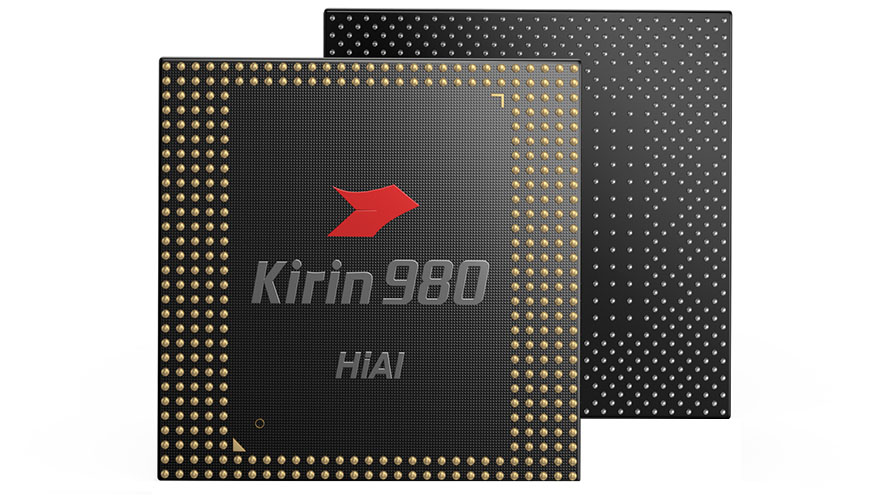
The HiSilicon Kirin 980 is an ARM based high-end octa-core SoC for smartphones and tablets, which was introduced with the Huawei Mate 20 Pro in late 2018. It integrates eight CPU cores in three clusters. The performance cluster contains two Cortex-A76 cores with up to 2.6 GHz, the balanced cluster contains also two Cortex-A76 cores but with only up to 1.92 GHz and finally the power saving cluster contains four small ARM Cortex-A53 cores with up to 1.8 GHz. Furthermore, the SoC integrates a modern LTE radio with Cat 21/18 (max. 1400 Mbps download, 200 Mbps upload), 2x faster dual ISP (versus 970), a LPDDR4X 2133 MHz memory controller (34.1 GB/s versus 29.9 GB/s of the Kirin 970) and a 2160p30 H.265 video encoder (2160p60 decoding). The Kirin 980 is produced in the modern 7nm process at TSMC as the first Android SoC (after the Apple A12).
Apple A13 Bionic
► remove from comparison
The Apple A13 Bionic is a System on a Chip (SoC) from Apple that is found in the iPhone 11 series. It was announced late 2019 and offers 6 cores divided in 2 performance cores and four power efficiency cores. Compared to the previous A12 Bionic, the A13 should offer a 20% improved CPU performance at 40% lower power (according to Apple).
With 8.5 billion transistors, the A13 Bionic is a big chip especially compared to the Snapdragon 835 (3 Billion) or a Skylake desktop quad-core Soc (1.75 Billion).
Apple A12 Bionic
► remove from comparison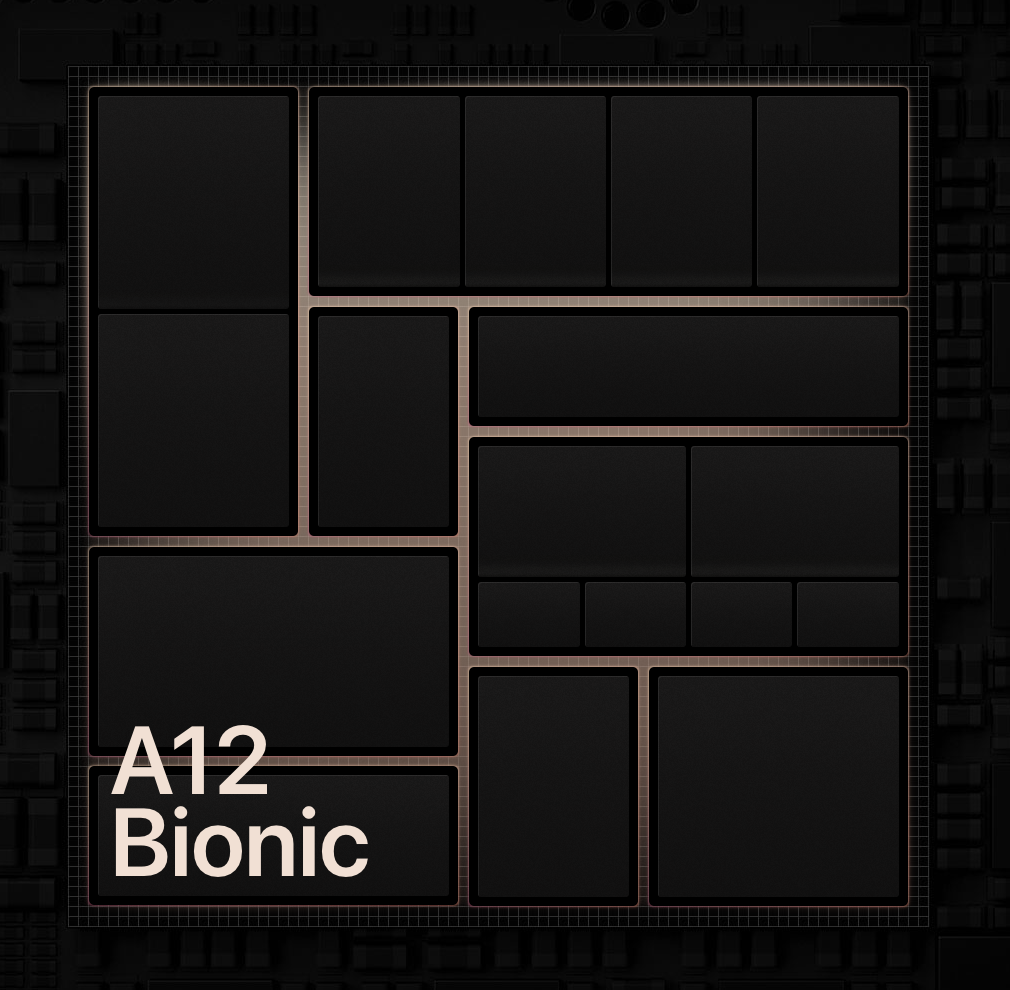
The Apple A12 Bionic is a System on a Chip (SoC) from Apple that is found in the iPhone Xs and Xr. It was announced late 2018 and offers 6 cores divided in 2 performance cores and four power efficiency cores. Compared to the previous A11 Bionic, the A12 should offer a 15% improved CPU performance for the performance cores and a 50% lower power consumption for the efficiency cores (both according to Apple).
The chip also includes a new GPU that is advertised as 50% faster, the M12 Motion co-processor and a Neural Engine with 8 cores for up to 5 trillion operations per second.
With 6.9 billion transistors, the A12 Bionic is a big chip especially compared to the Snapdragon 835 (3 Billion) or a Skylake desktop quad-core Soc (1.75 Billion). Compared to the A11, the A12 integrates 60% more transistors.
| Model | HiSilicon Kirin 980 | Apple A13 Bionic | Apple A12 Bionic | ||||||||||||||||||||||||||||||||
| Codename | Cortex-A76/-A55 | Lightning and Thunder | |||||||||||||||||||||||||||||||||
| Clock | <=2600 MHz | <=2660 MHz | <=2490 MHz | ||||||||||||||||||||||||||||||||
| Cores / Threads | 8 / 8 | 6 / 6 | 6 / 6 | ||||||||||||||||||||||||||||||||
| Transistors | 6900 Million | 6900 Million | 6900 Million | ||||||||||||||||||||||||||||||||
| Technology | 7 nm | 7 nm | 7 nm | ||||||||||||||||||||||||||||||||
| Features | ARM Mali-G76 GPU, 2x Cortex-A76 (2.6 GHz) + 2x Cortex-A76 (1.92) + 4x Cortex-A53 (1.8 GHz, big.LITTLE), 2x LTE Dual-SIM (1.4 Gbps down Cat21) | ARMv8 Instruction Set | ARMv8 Instruction Set | ||||||||||||||||||||||||||||||||
| iGPU | ARM Mali-G76 MP10 ( - 720 MHz) | Apple A13 Bionic GPU | Apple A12 Bionic GPU | ||||||||||||||||||||||||||||||||
| Architecture | ARM | ARM | ARM | ||||||||||||||||||||||||||||||||
| Announced | |||||||||||||||||||||||||||||||||||
| Series | Apple Apple A-Series | Apple Apple A-Series | |||||||||||||||||||||||||||||||||
| L1 Cache | 832 KB | 256 KB | |||||||||||||||||||||||||||||||||
| L2 Cache | 12 MB | 8 MB | |||||||||||||||||||||||||||||||||
| NPU / AI | 6 TOPS INT8 | 5 TOPS INT8 | |||||||||||||||||||||||||||||||||
| Series: Apple A-Series |
|
Benchmarks
Average Benchmarks HiSilicon Kirin 980 → 100% n=21
Average Benchmarks Apple A13 Bionic → 160% n=21
Average Benchmarks Apple A12 Bionic → 132% n=21
 - Average benchmark values for this graphics card
* Smaller numbers mean a higher performance
1 This benchmark is not used for the average calculation


 Add as a preferred