




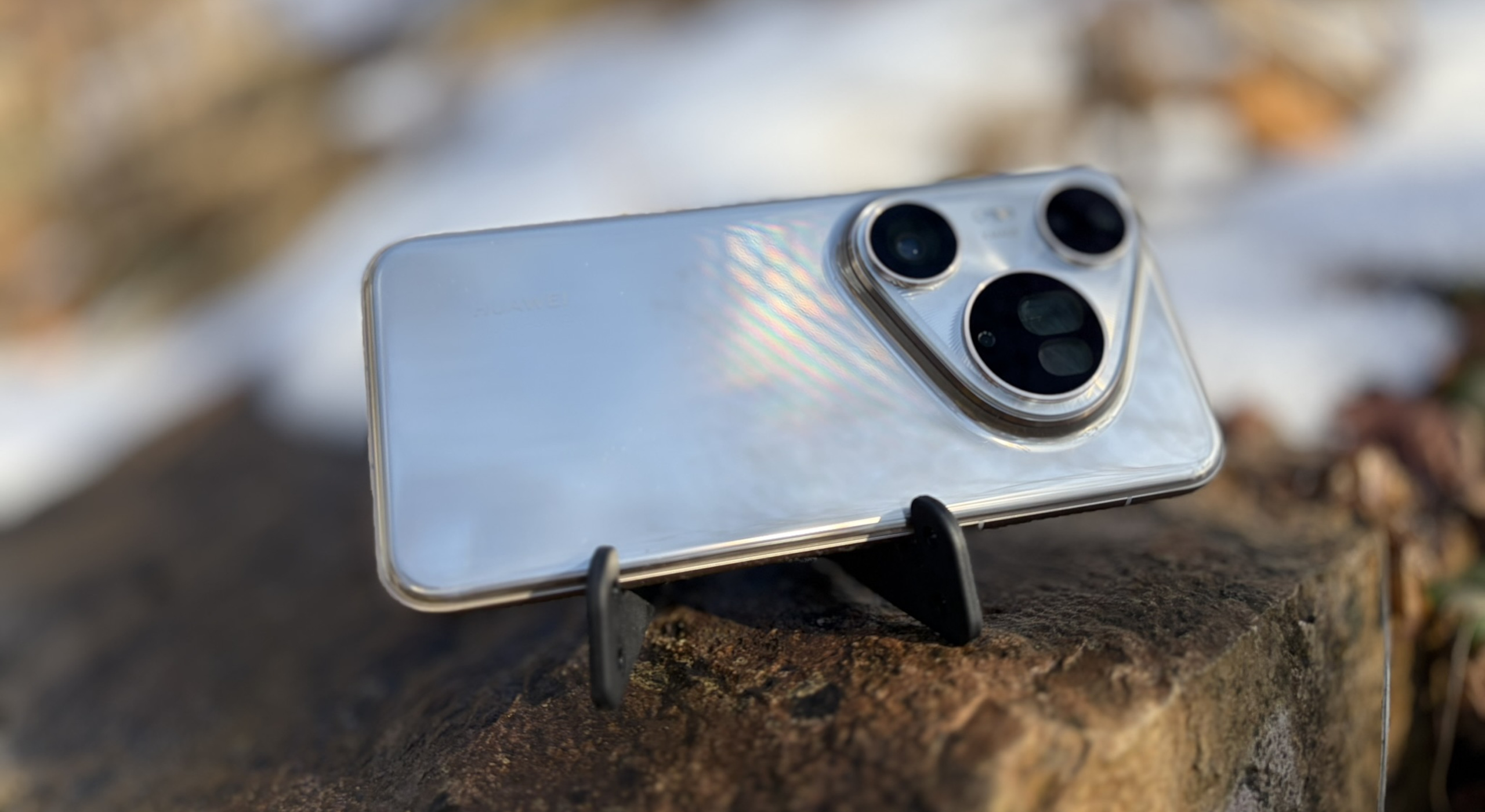
Verdict on the Huawei Pura 80 Ultra
The cameras are the flagship feature of the Huawei Pura 80 Ultra, and this is exactly where this top-class smartphone wins the most laurels in our review. Its cameras are simply among the best you can currently find in a smartphone.
Therefore, this makes the Huawei phone a real alternative to competitors such as the Apple iPhone 17 Pro Max or the Samsung Galaxy S25 Ultra.
However, the singular focus on the cameras means that other areas are neglected. Our main points of criticism are that the performance of the HiSilicon Kirin 9020 is not flagship-worthy, Google services only run on the Android-12-based EMUI 15 in a roundabout way, and 5G connectivity is not even available.
Pros
Cons
Price and availability
In Germany, the Pura 80 Ultra costs €1,399 if you buy it directly from Huawei. You won't find it much cheaper elsewhere. Moreover, the offers for Huawei's camera behemoth are few and far between.

- $1,066.73Samsung Galaxy S26 Ultra, Unlocked Android Smartphone, 256GB, Black | Privacy Display, Galaxy AI, AI Camera, Super Fast Charging 3.0, Durable Battery, 2026, US 1 Year Warranty
- $977.64Samsung Galaxy S26 Ultra, Unlocked Android Smartphone, 256GB, Cobalt Violet | Privacy Display, Galaxy AI, AI Camera, Super Fast Charging 3.0, Durable Battery, 2026, US 1 Year Warranty
- $2,099.99Samsung Galaxy Z Fold8 Ultra Unlocked Android Smartphone, 512GB Violet | Customized Processor, 5000 mAh Battery, Side-By-Side Multitasking, 12 GB Memory, 200MP Camera, Now Nudge, Photo Assist
Table of Contents
- Verdict on the Huawei Pura 80 Ultra
- Specifications
- Case: Heavyweight with a high-gloss finish
- Features: Plenty of memory and USB-C 3.2
- Software: EMUI 15 OS based on Android 12
- Communication and GNSS: Flagship smartphone without 5G
- Phone functions and call quality
- Cameras: Very strong performance
- Accessories and warranty: Lots in the package
- Input devices and operation: Fingerprint sensor in the power button
- Display: Up to 3,000 nits brightness as promised
- Performance: Pura 80 Ultra with HiSilicon SoC
- Emissions: Heavy throttling despite moderate performance
- Battery life: Fast charging with 100 W
- Notebookcheck's overall impressions of the Huawei Pura 80 Ultra
- Potential alternatives in comparison
The Pura 80 Ultra takes excellent photos, says Huawei. The features of the camera smartphone flagship, which costs €1,399, are impressive. In addition to a 1-inch sensor in the main camera, there is also a dual telephoto camera with a movable 1/1.28-inch sensor, so photographers can hunt for subjects with four rear cameras.
In this review, we take a look at how well the Pura 80 Ultra really shoots photos and whether the image quality can match that of an Apple iPhone 17 Pro Max or Samsung Galaxy S25 Ultra.
Specifications
Case: Heavyweight with a high-gloss finish
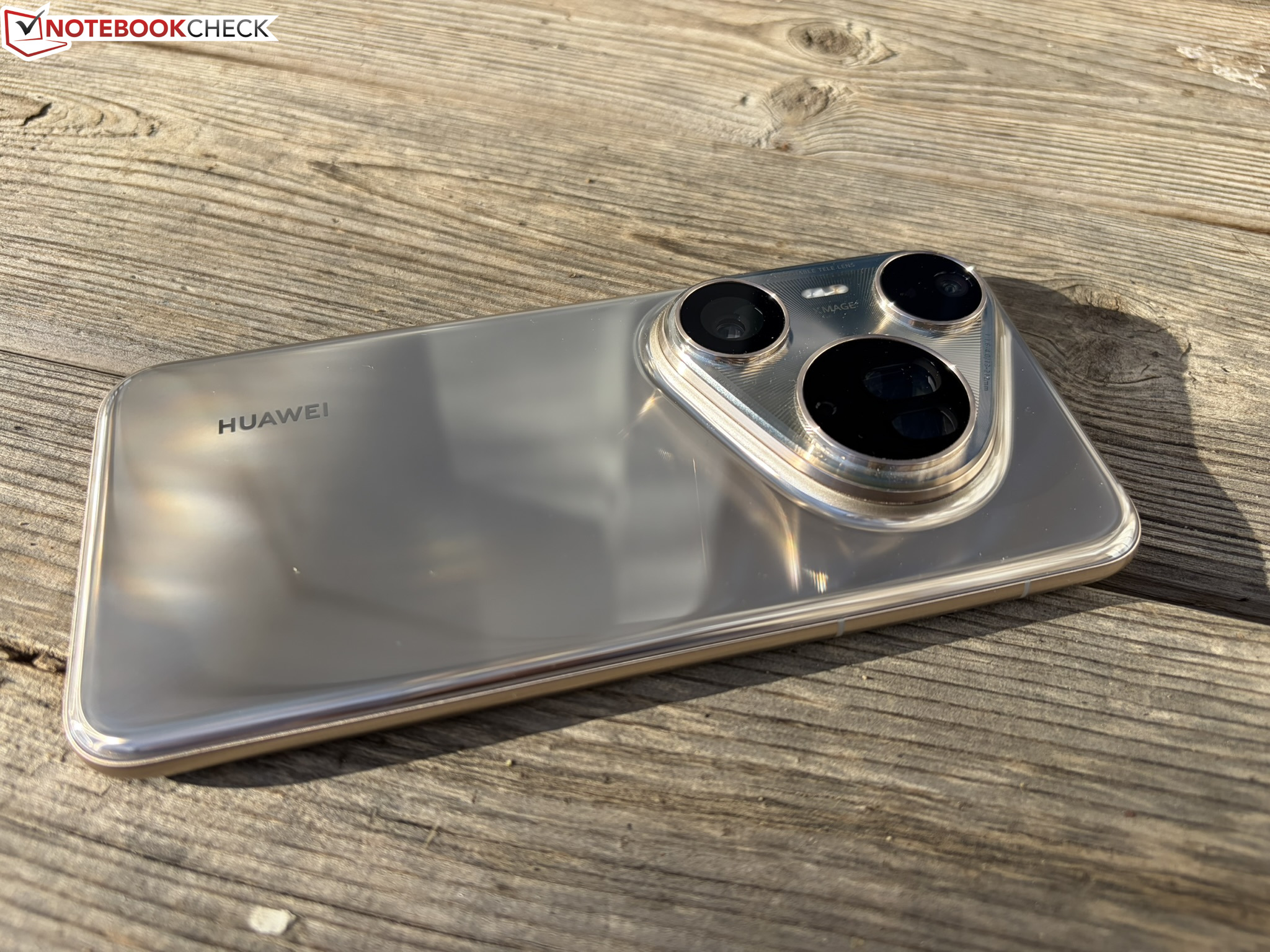
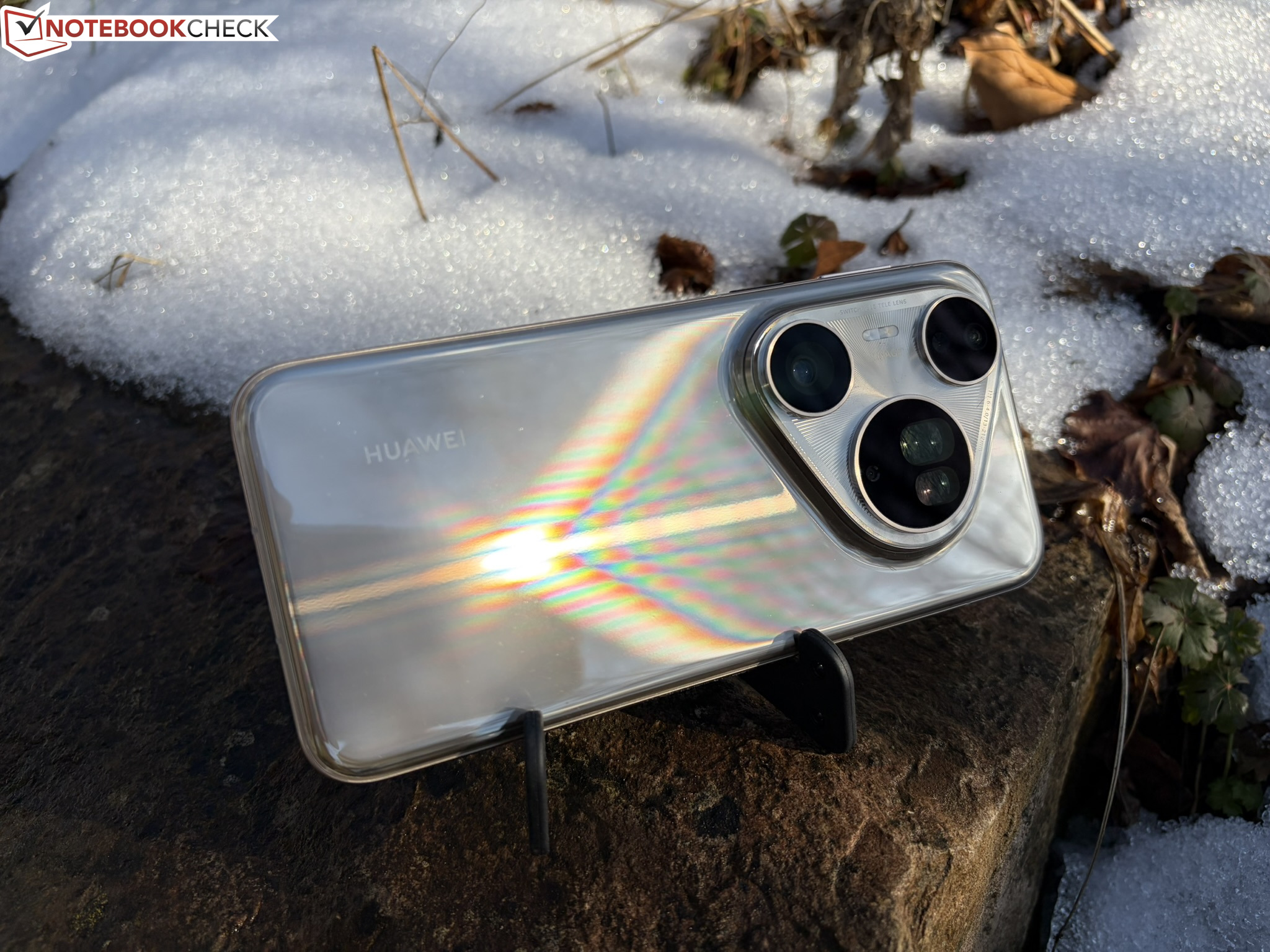
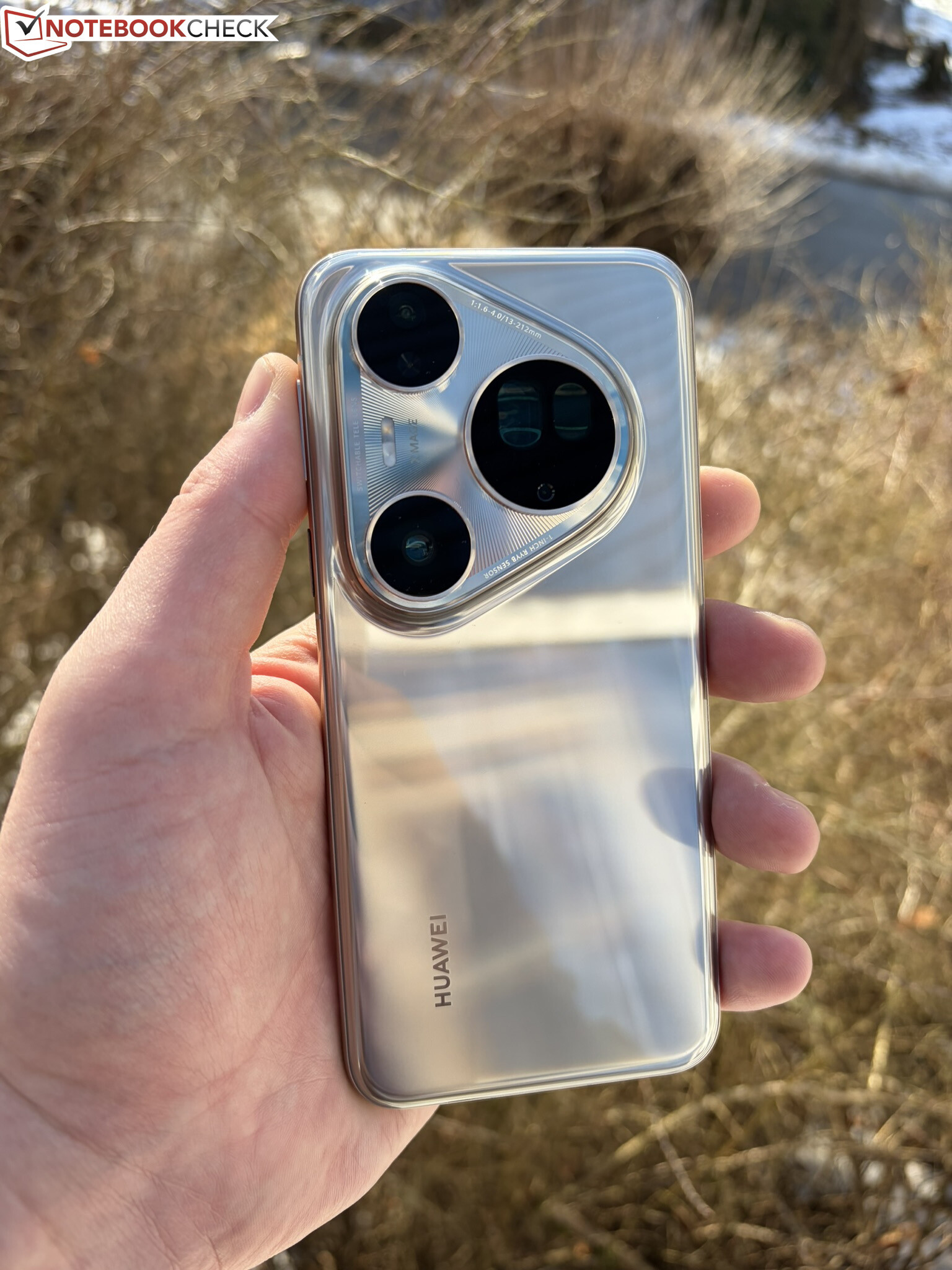
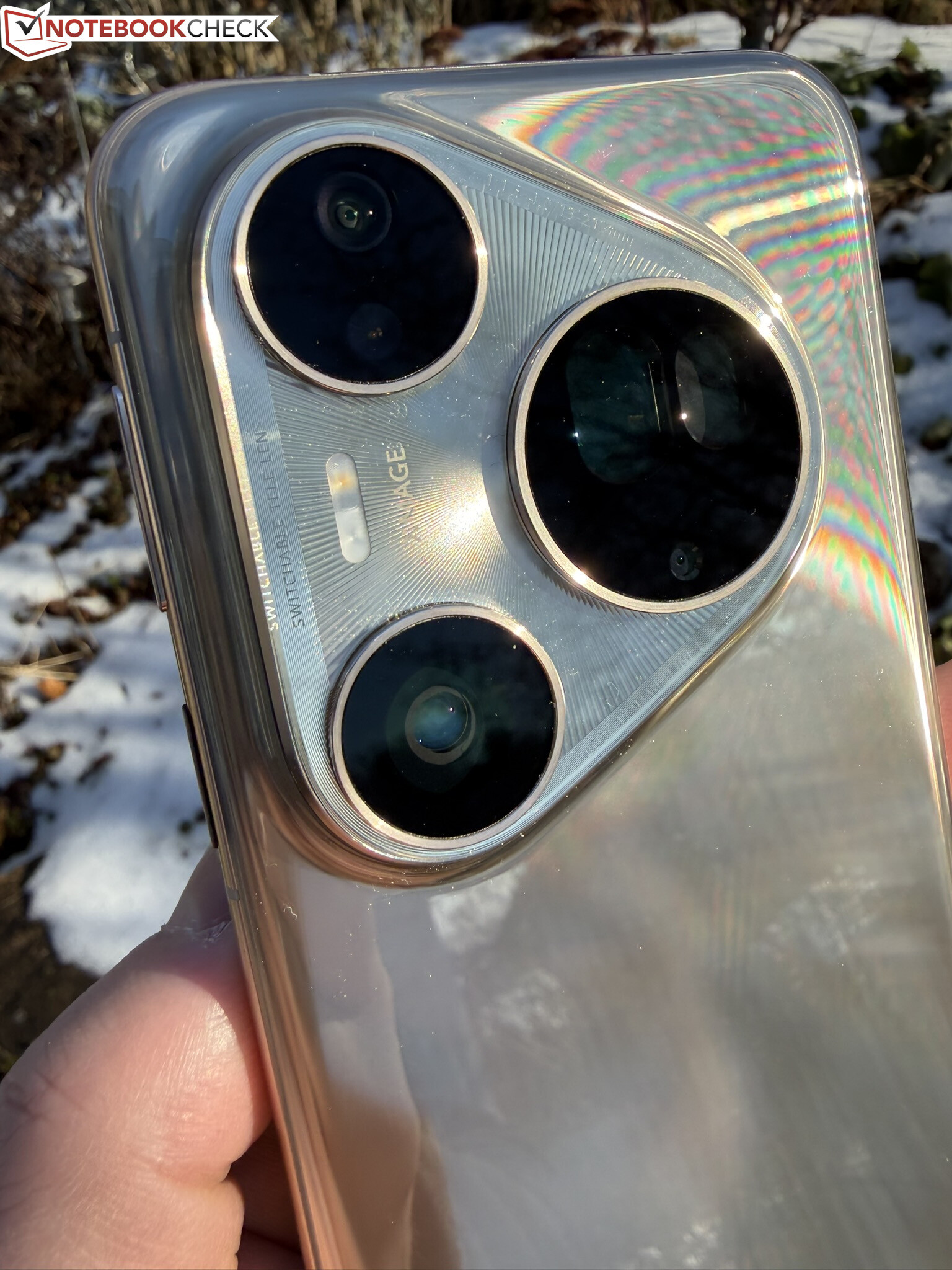
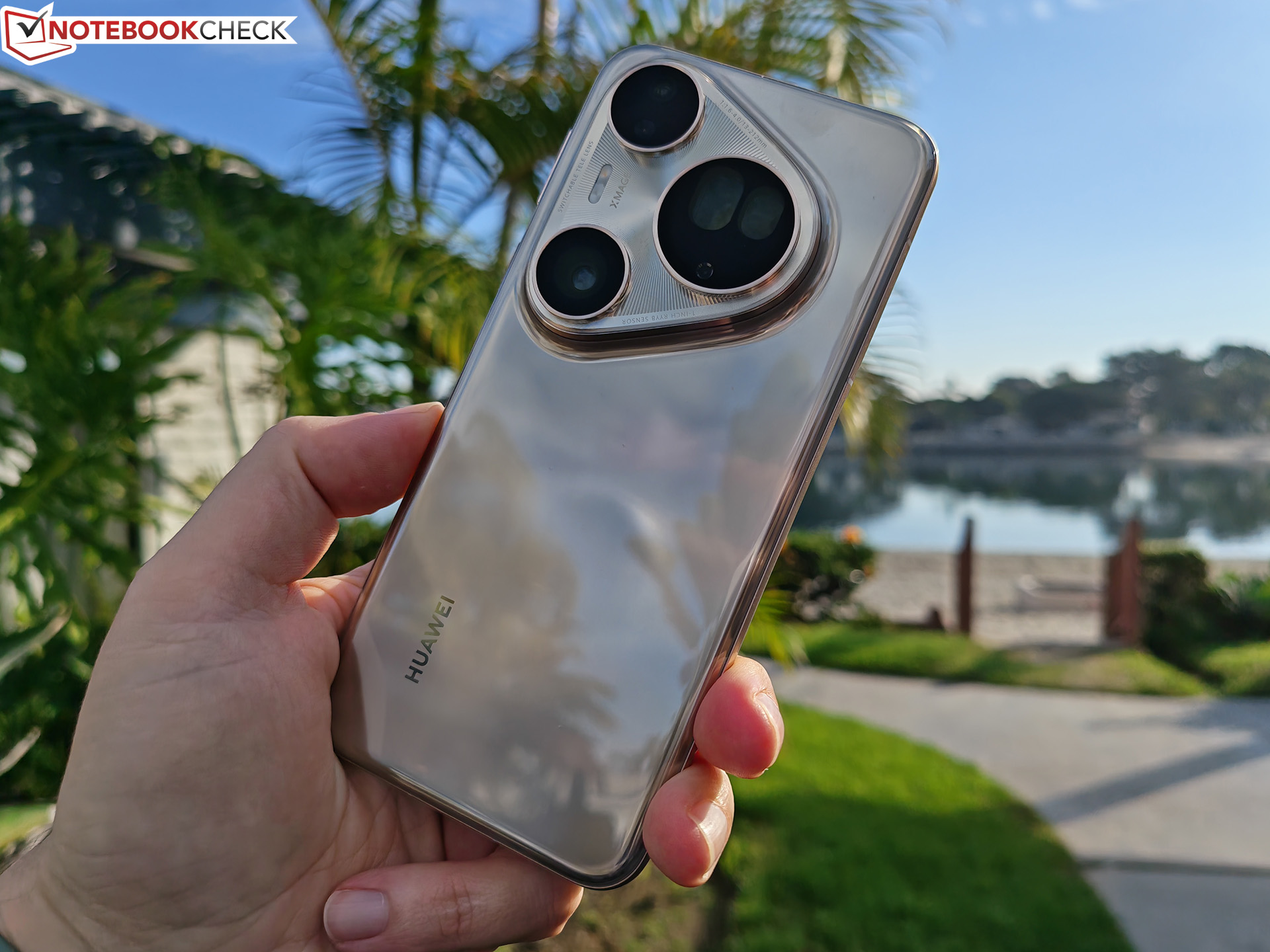
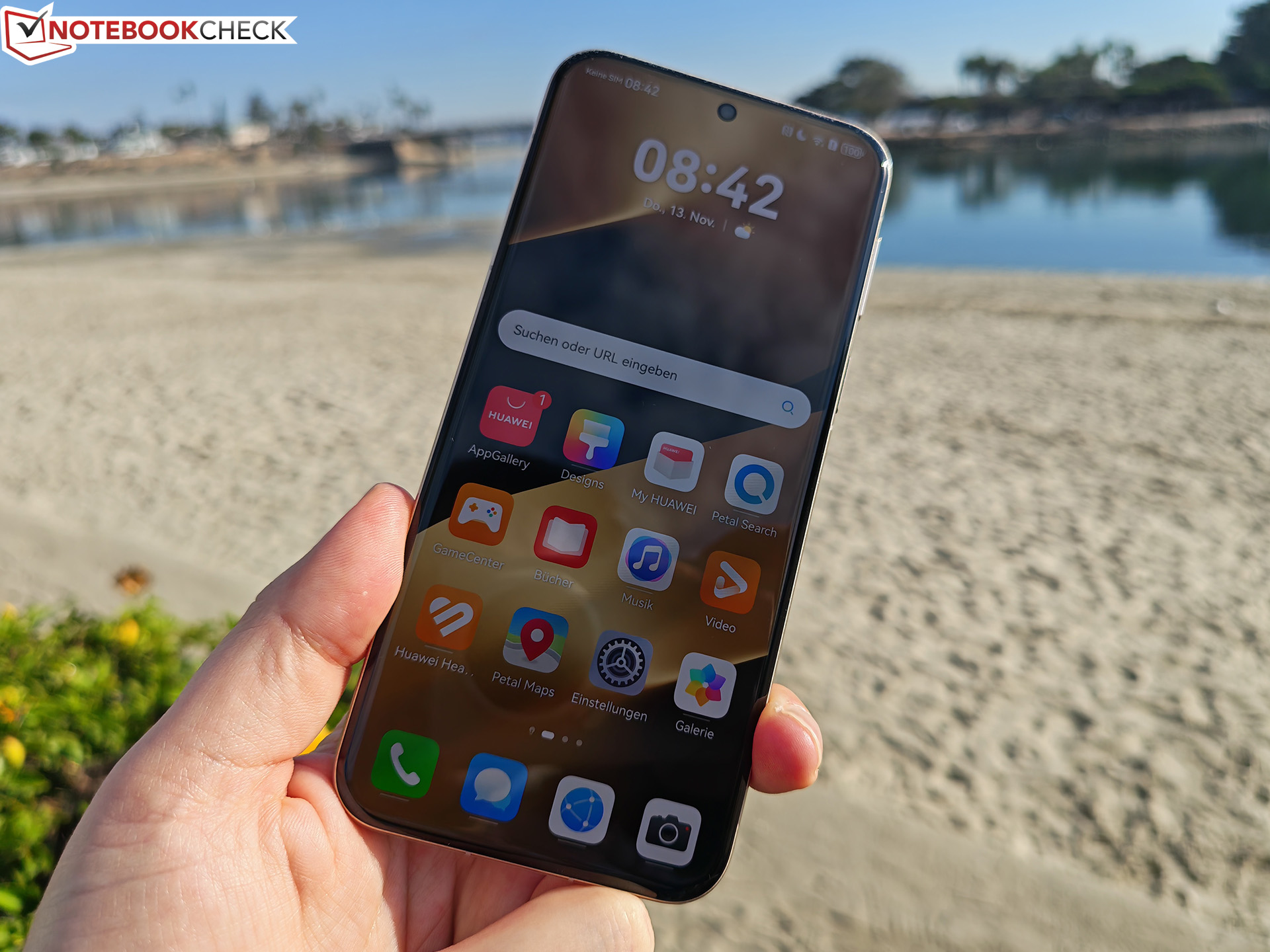
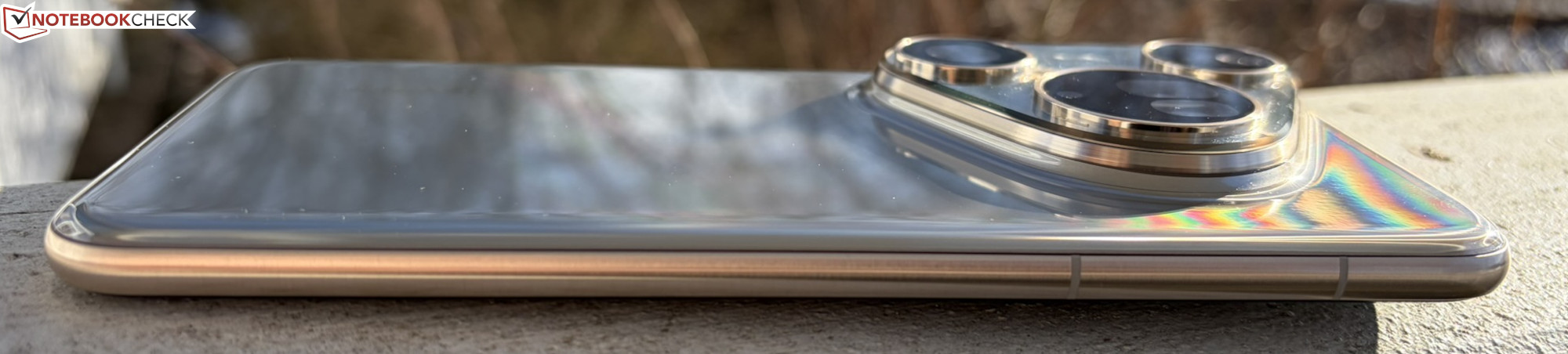
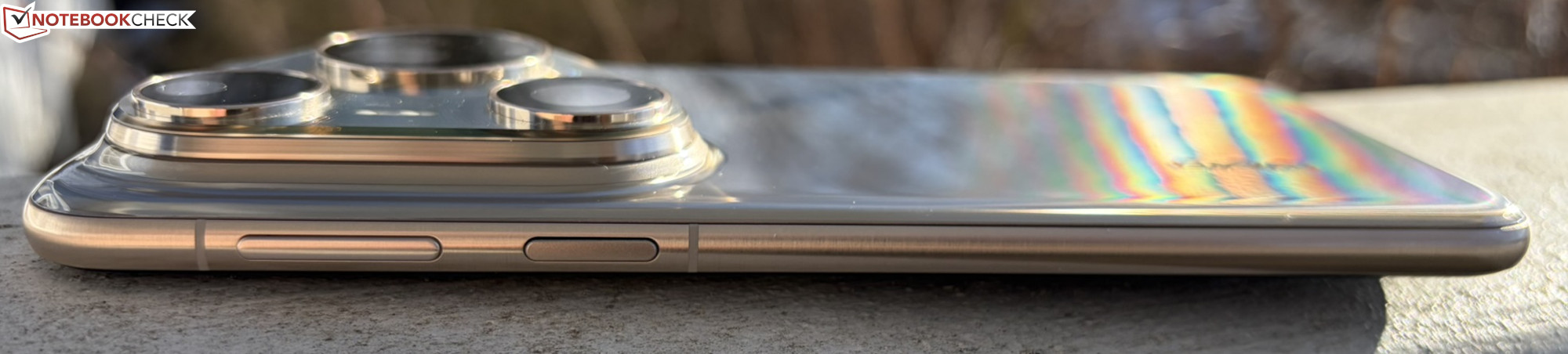
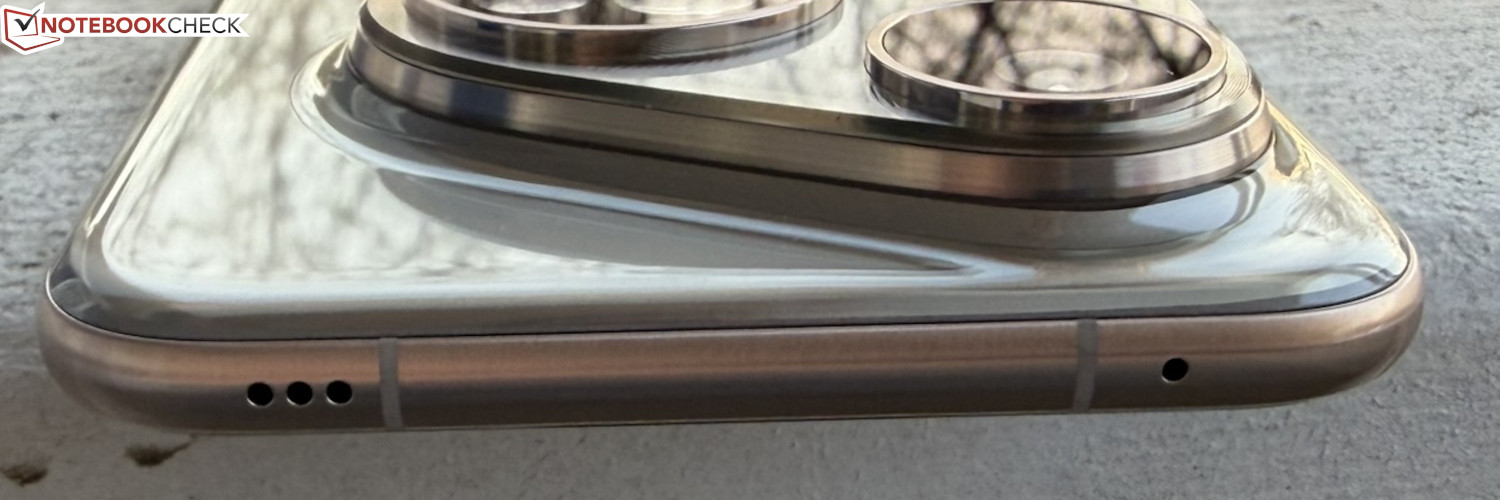
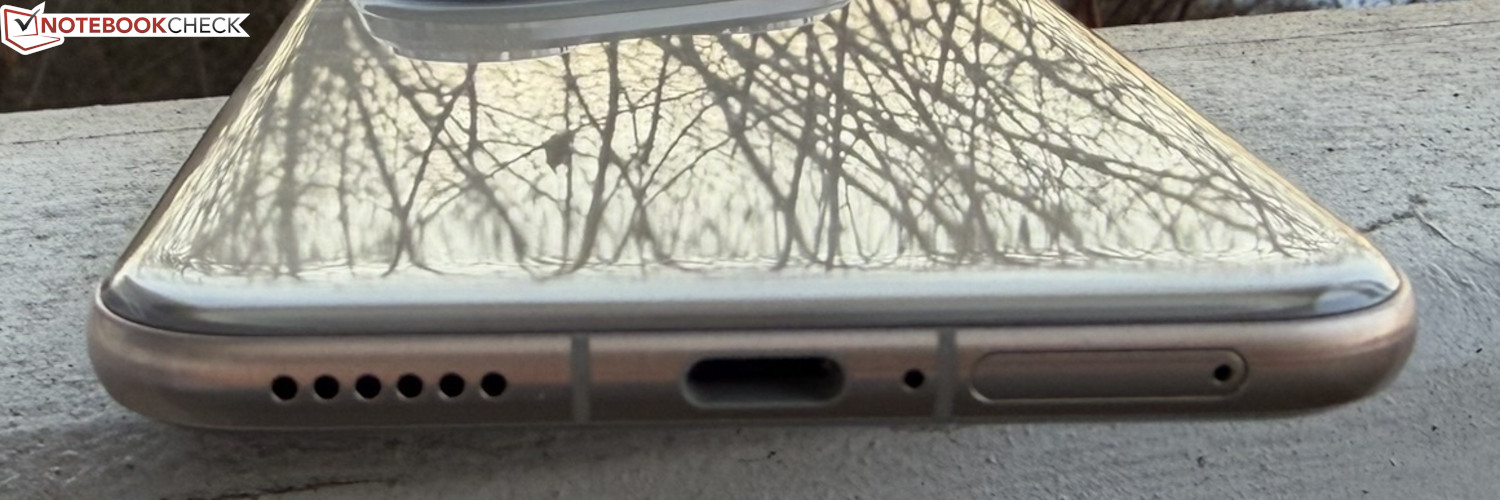
Externally, the 6.8-inch Huawei Pura 80 Ultra resembles its sister model, the Pura 80 Pro. The excellently crafted glass casing conveys a high level of value, and the second-generation Crystal Armour Kunlun glass used is certified as dust and waterproof in accordance with IP68/69 standards.
However, the high-gloss finish makes the Pura 80 Ultra, which is available in Black and Gold, a fingerprint magnet. The weight cannot be ignored either. At just under 234 g, the Pura 80 Ultra is quite heavy and chunky, measuring 15.7 mm at its thickest point.
Features: Plenty of memory and USB-C 3.2
The Huawei Pura 80 Ultra is only available in a 16 GB RAM and 512 GB storage configuration. Available onboard are an infrared sensor, Wi-Fi 7, and a USB-C 3.2 port that supports USB OTG and wired image output.
With the Samsung Portable SSD T7 external SSD, the USB-C port achieves a good data throughput of 245 MB/s in the copy test.
Software: EMUI 15 OS based on Android 12
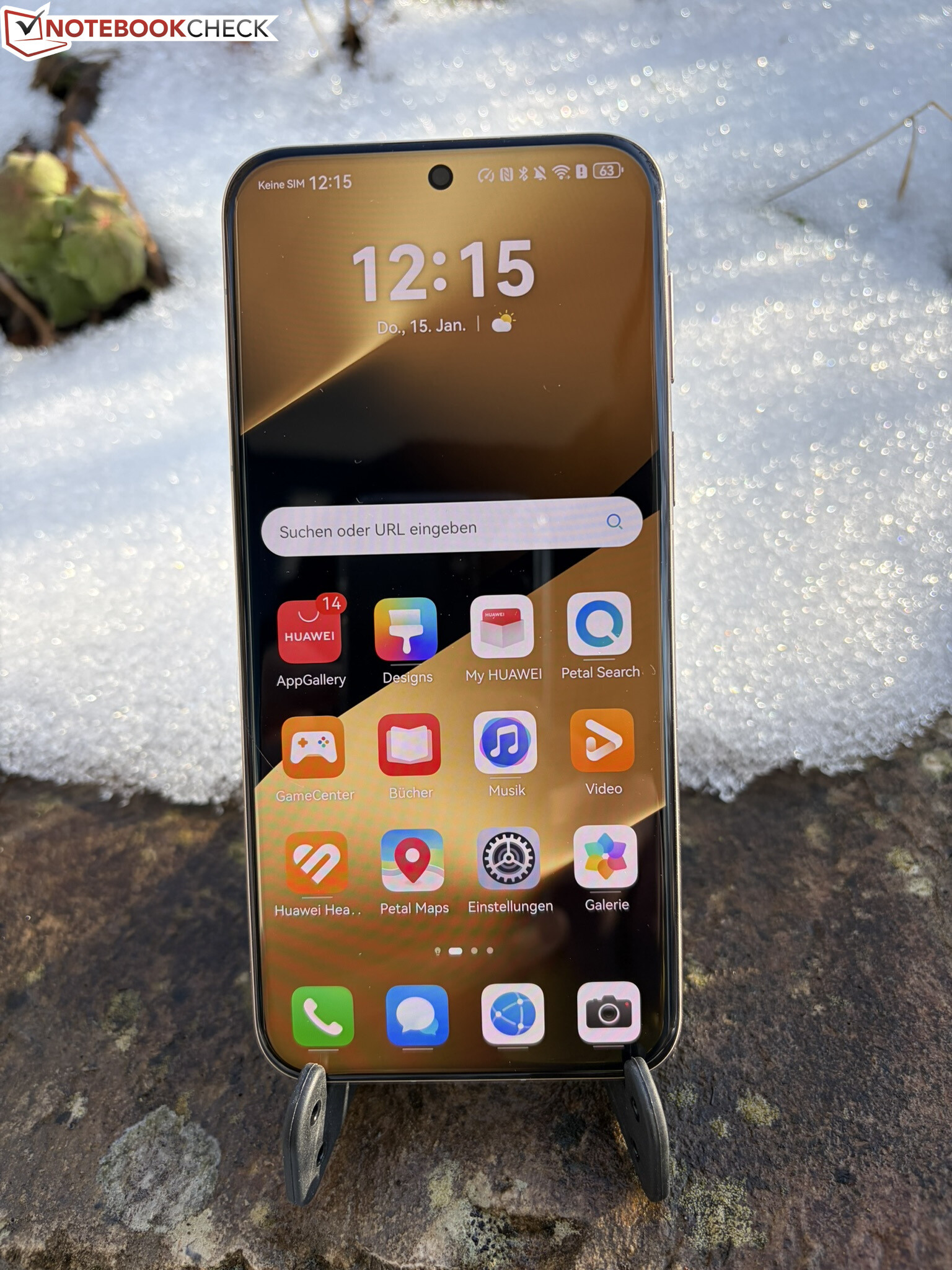
Huawei relies on its in-house operating system EMUI 15 for the Pura 80 Ultra, which is still based on Open Android 12. Apart from Google services, it also lacks the Google Play Store, which means that users have to rely on the pre-installed App Gallery for software updates.
Users still have access to the complete Play Store library via the Aurora Store. We show how this works in this article.
According to Huawei, the Pura 80 Ultra will receive updates over a period of five years, which also fulfills EU requirements. Security updates should be released monthly.


Sustainability
Huawei does not provide any figures on the subject of sustainability, but refers to its systematic sustainability management system, which is based on standards such as ISO 26000. Huawei also offers a recycling program for electronic waste.
For the packaging of the Pura 80 Ultra, Huawei uses FSC Mix-certified paper from responsibly managed forests.
Communication and GNSS: Flagship smartphone without 5G
The Pura 80 Ultra is weak in terms of communication features. Although it has Wi-Fi 7, it only achieves triple-digit Mbit/s transfer rates due to the lack of 6 GHz band support on our reference Asus ROG Rapture GT-AXE11000 router.
Additionally, there is only Bluetooth 5.2 and 5G is completely missing, which significantly limits its everyday use.
| Networking | |
| Huawei Pura 80 Ultra | |
| iperf3 transmit AXE11000 | |
| iperf3 receive AXE11000 | |
| Apple iPhone 17 Pro Max | |
| iperf3 transmit AXE11000 | |
| iperf3 receive AXE11000 | |
| iperf3 transmit AXE11000 6GHz | |
| iperf3 receive AXE11000 6GHz | |
| Honor Magic8 Pro | |
| iperf3 transmit AXE11000 | |
| iperf3 receive AXE11000 | |
| iperf3 transmit AXE11000 6GHz | |
| iperf3 receive AXE11000 6GHz | |
| Google Pixel 10 Pro | |
| iperf3 transmit AXE11000 | |
| iperf3 receive AXE11000 | |
| iperf3 transmit AXE11000 6GHz | |
| iperf3 receive AXE11000 6GHz | |
| Samsung Galaxy S25 Ultra | |
| iperf3 transmit AXE11000 | |
| iperf3 receive AXE11000 | |
| iperf3 transmit AXE11000 6GHz | |
| iperf3 receive AXE11000 6GHz | |
| Xiaomi Poco F8 Ultra | |
| iperf3 transmit AXE11000 | |
| iperf3 receive AXE11000 | |
| Average 802.11 a/b/g/n/ac/ax/be | |
| iperf3 transmit AXE11000 | |
| iperf3 receive AXE11000 | |
| iperf3 transmit AXE11000 6GHz | |
| iperf3 receive AXE11000 6GHz | |
| Average of class Smartphone | |
| iperf3 transmit AXE11000 | |
| iperf3 receive AXE11000 | |
| iperf3 transmit AXE11000 6GHz | |
| iperf3 receive AXE11000 6GHz | |


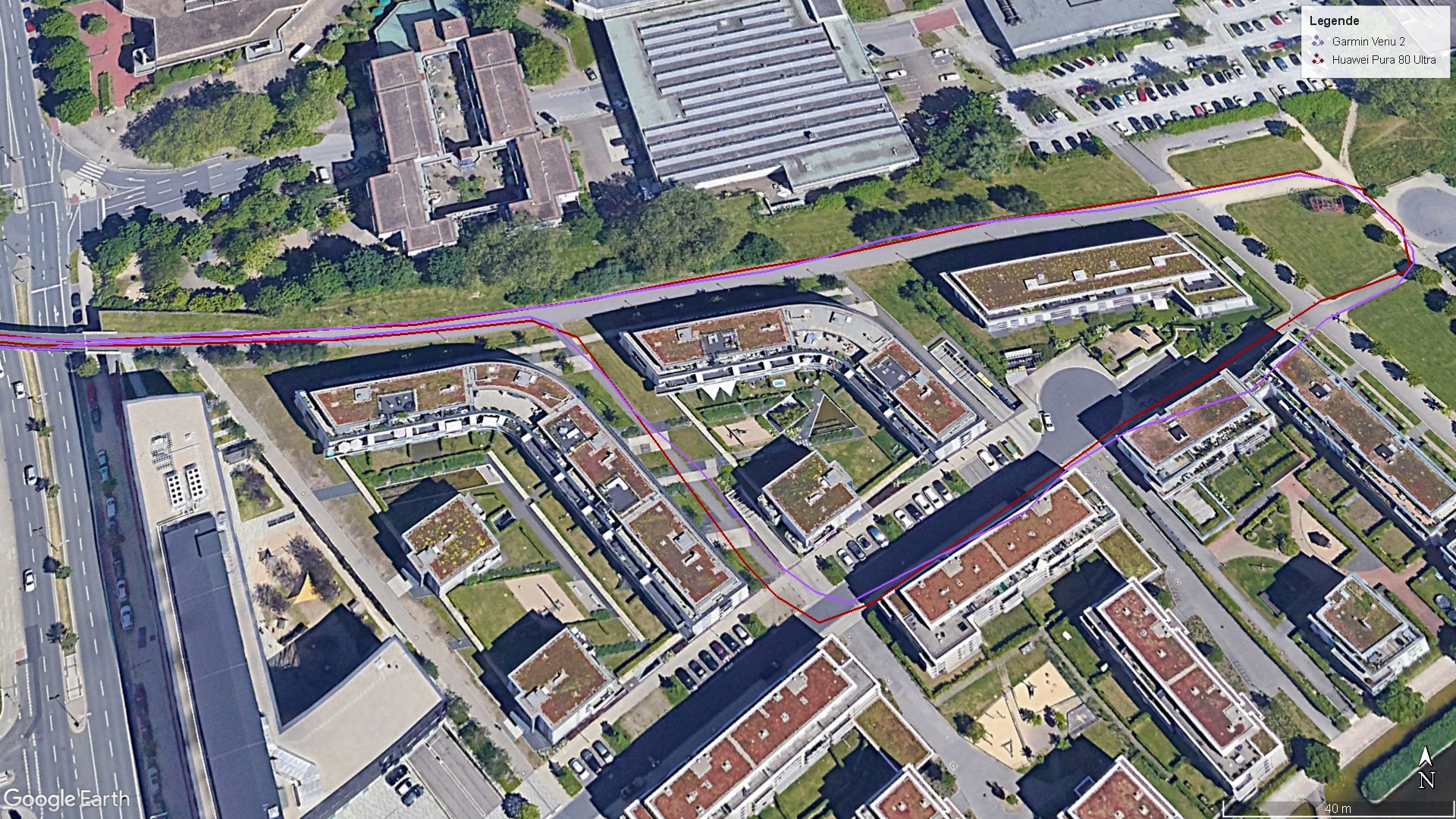
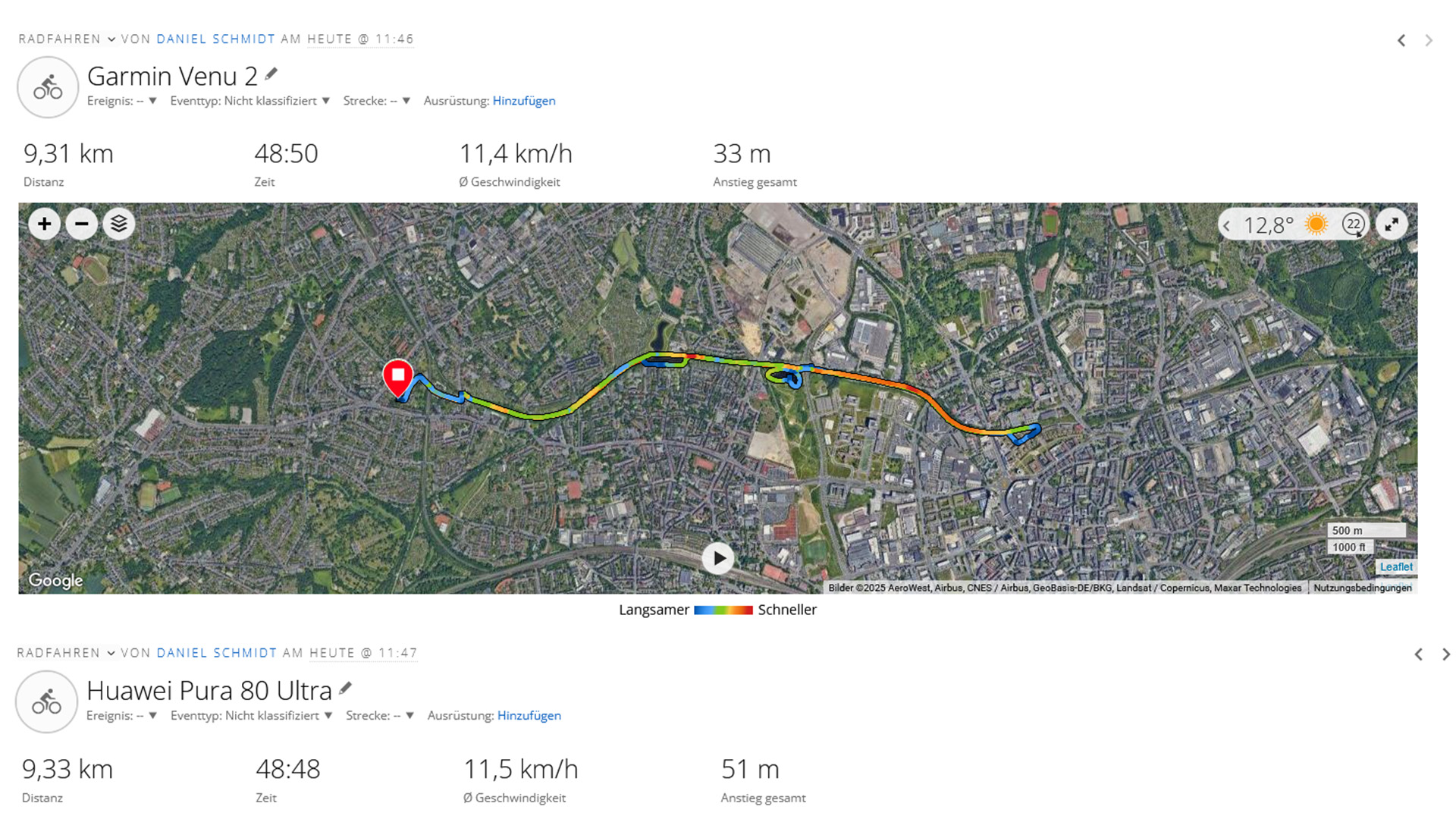
The Pura 80 Ultra uses dual-band GPS to find its location. In the test, it did this almost as well as the Garmin Venu2 smartwatch, which is known for its high GPS accuracy.
In the global version, the Pura 80 Ultra lacks the satellite SOS system available in China.

Phone functions and call quality
The Pura 80 Ultra offers space for two nano SIM cards, although an eSIM can be activated as an alternative. The smartphone is also available as a single SIM model.
When making calls to landline and mobile networks, the voices of the callers sound natural and are reproduced clearly.
Cameras: Very strong performance

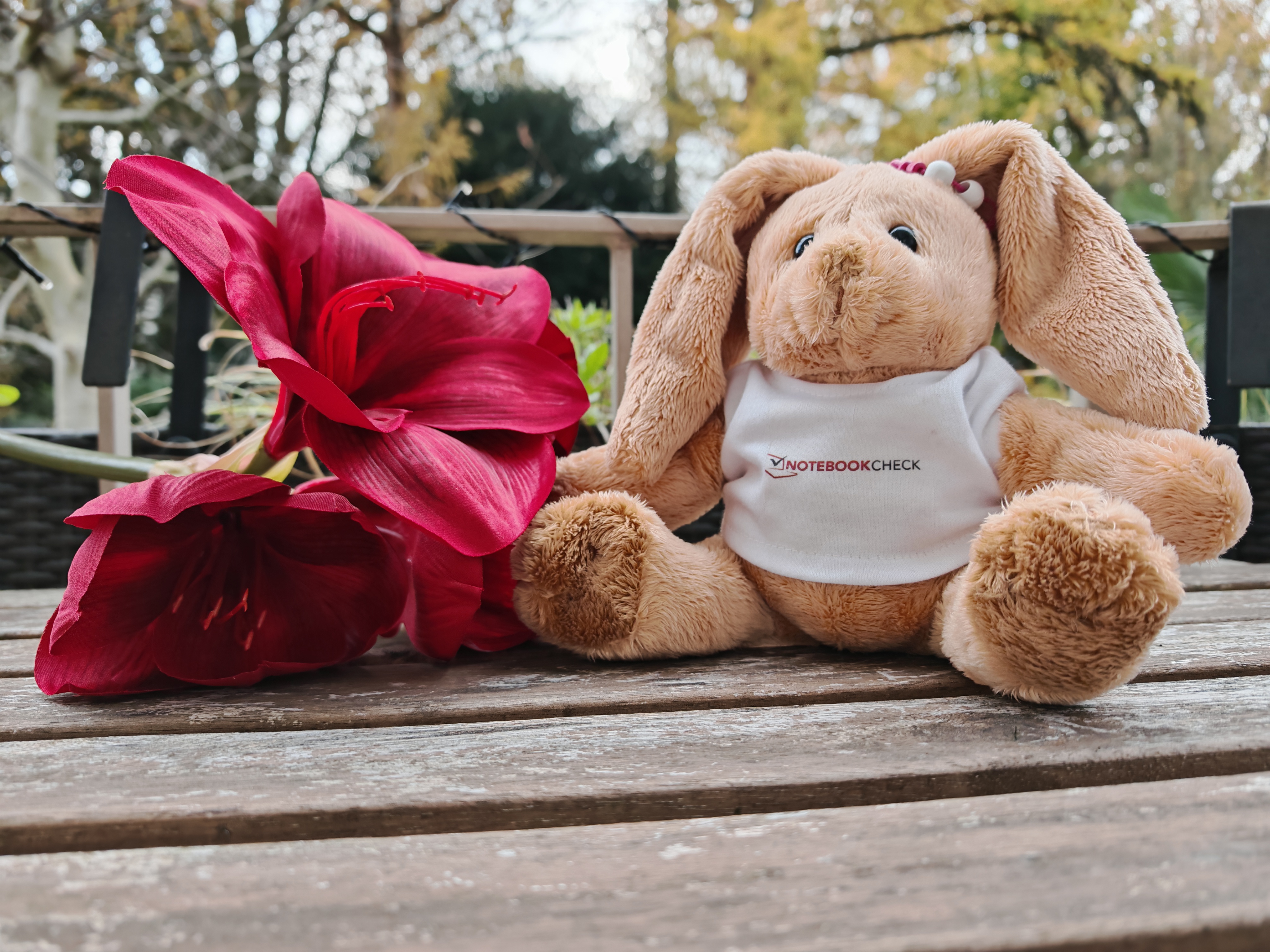
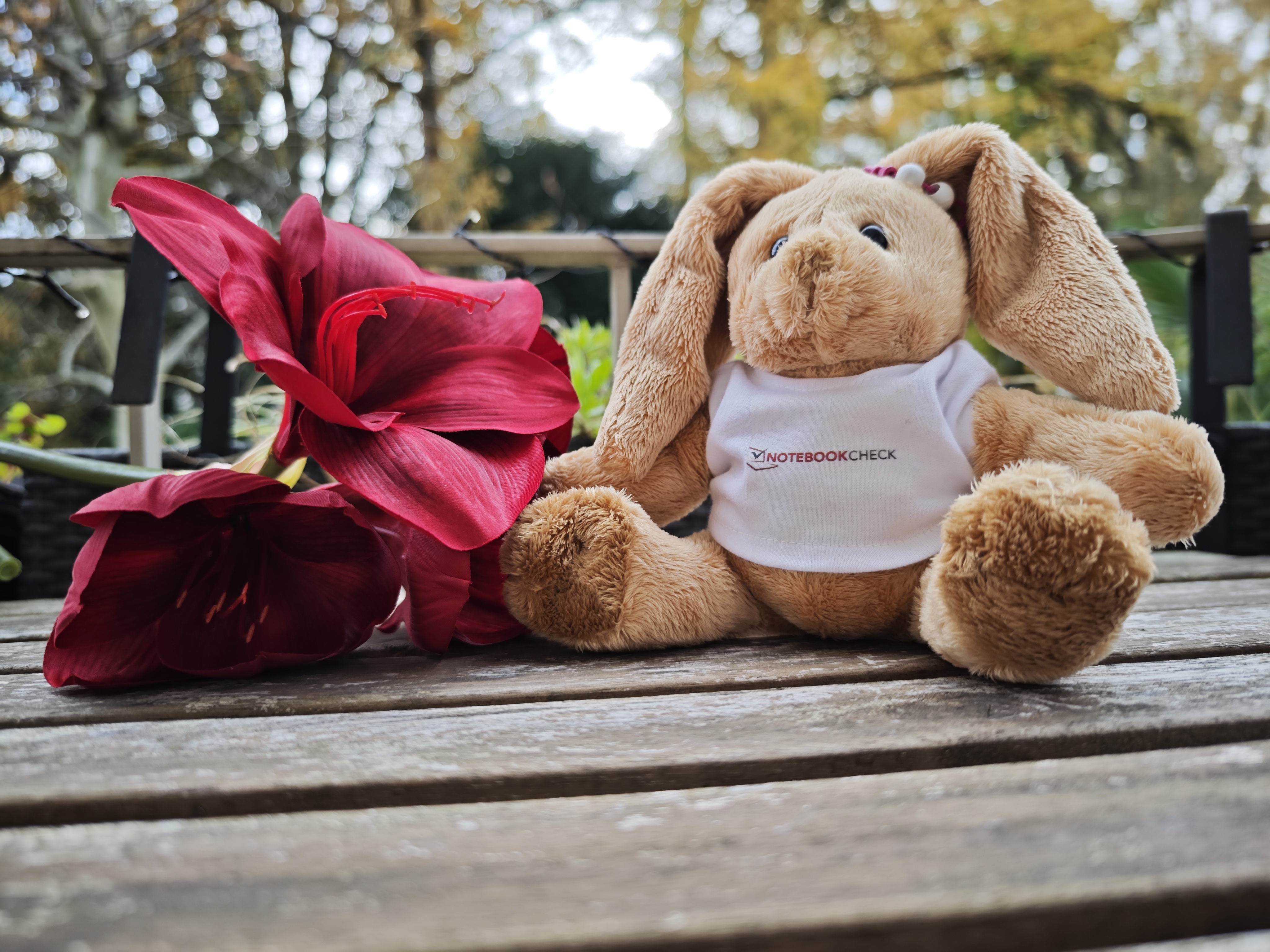
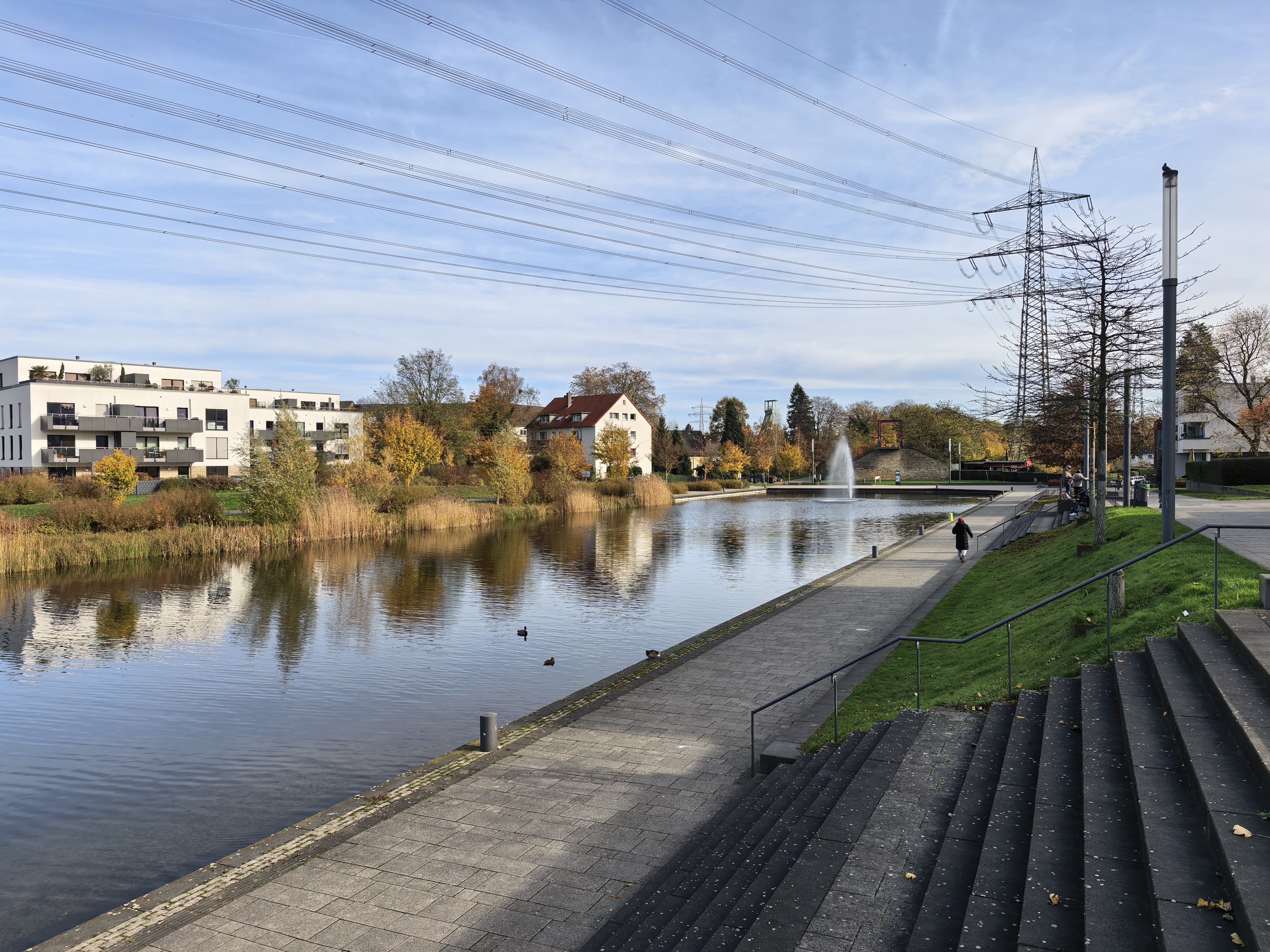
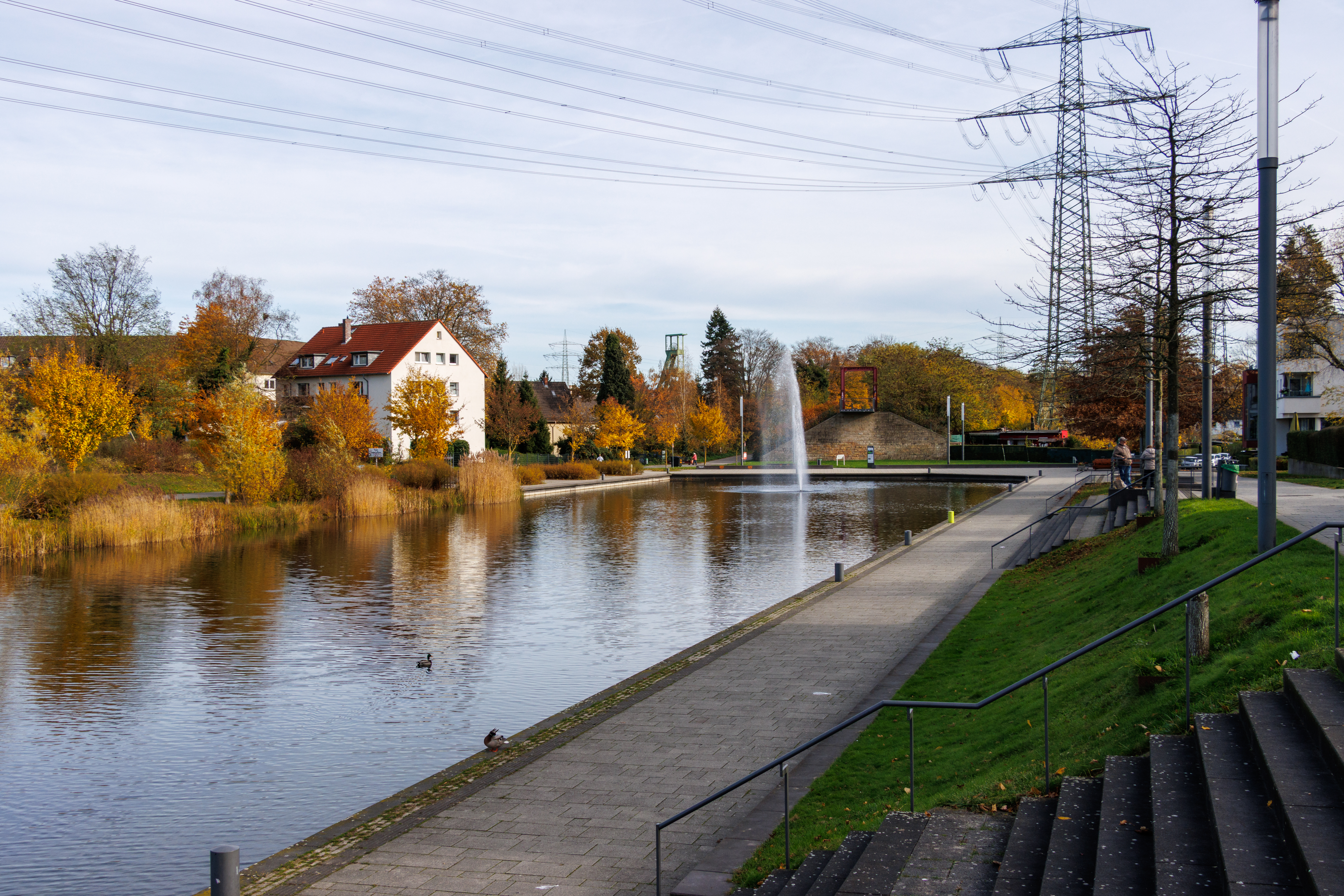
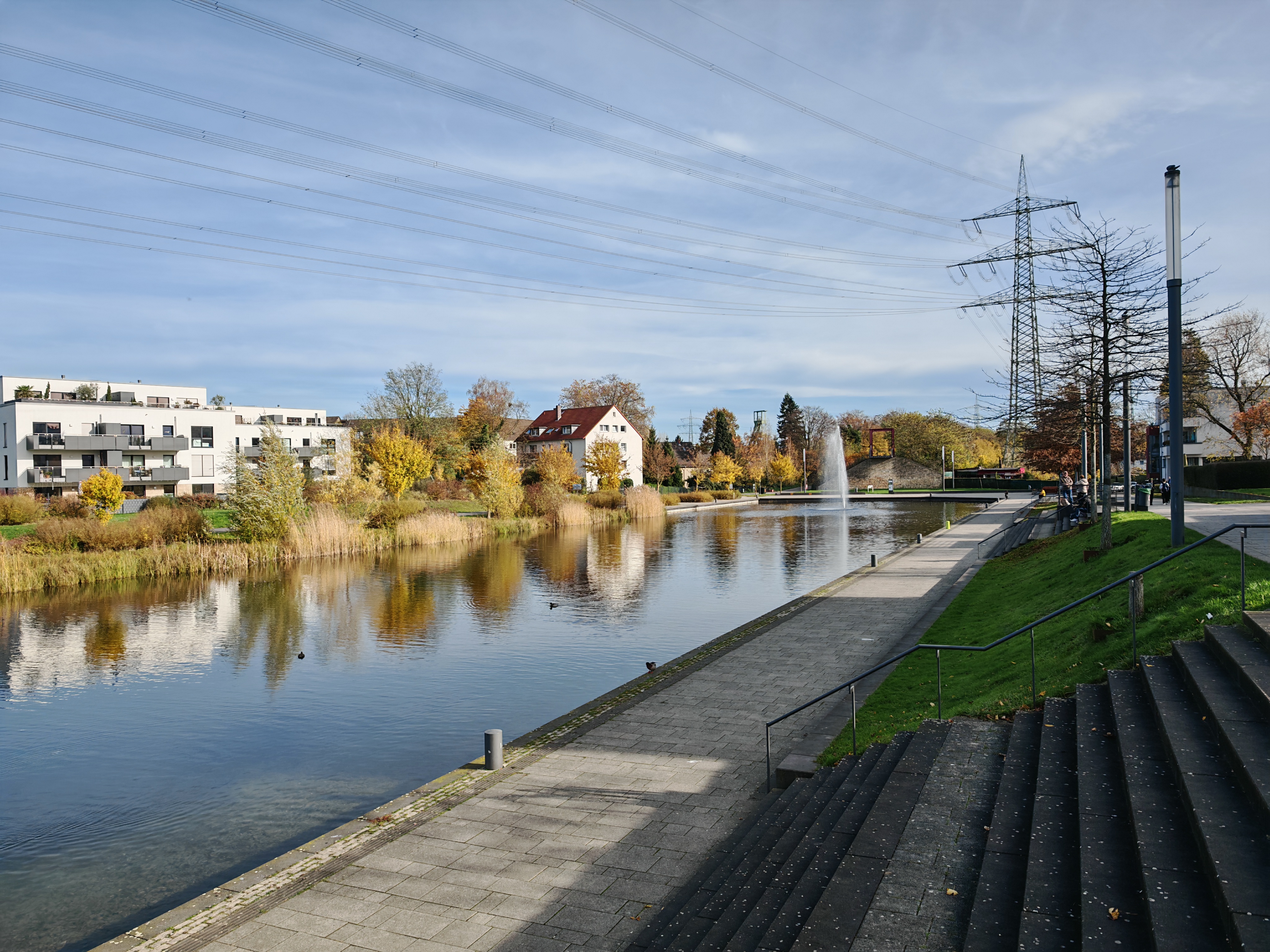
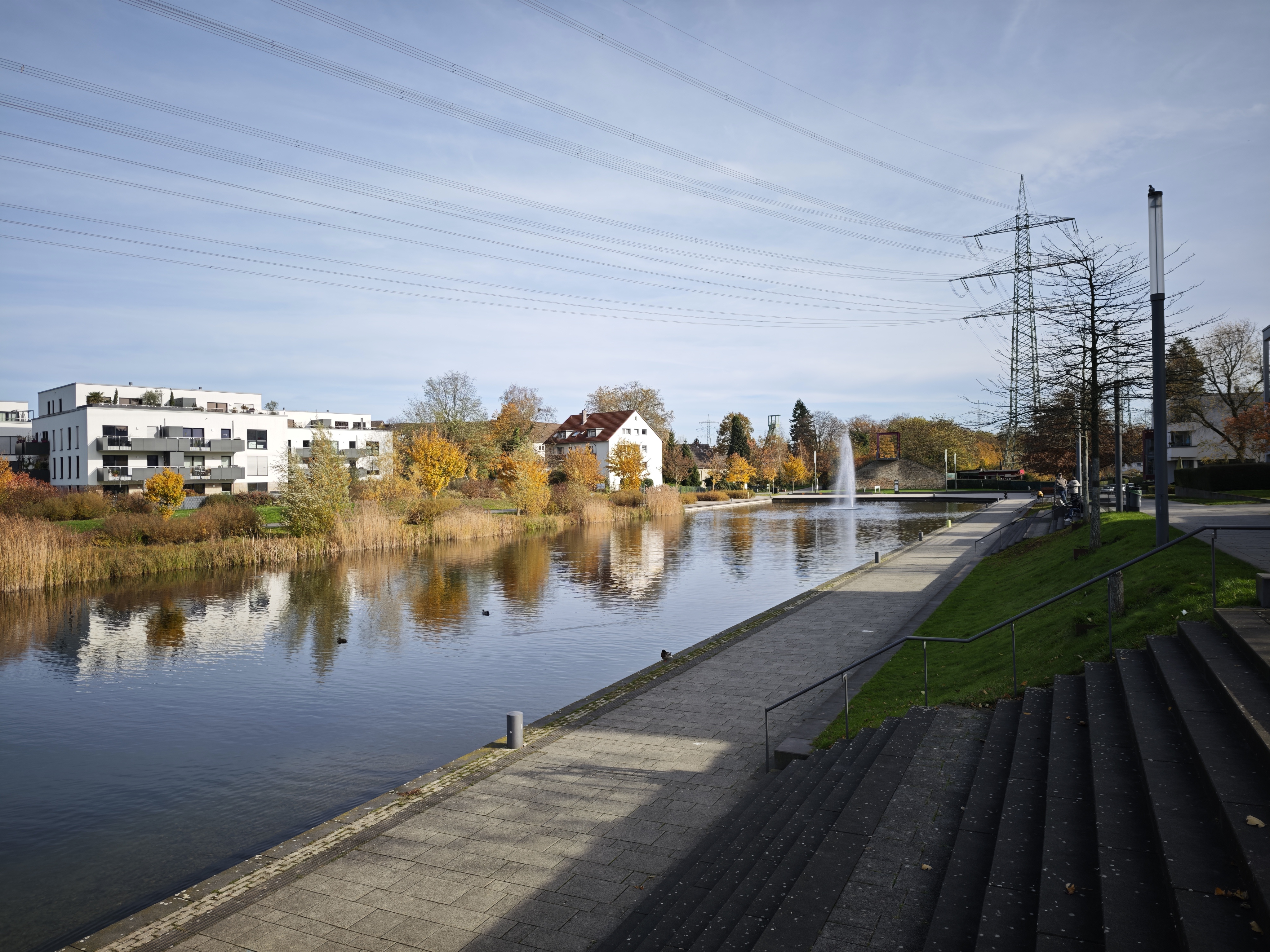
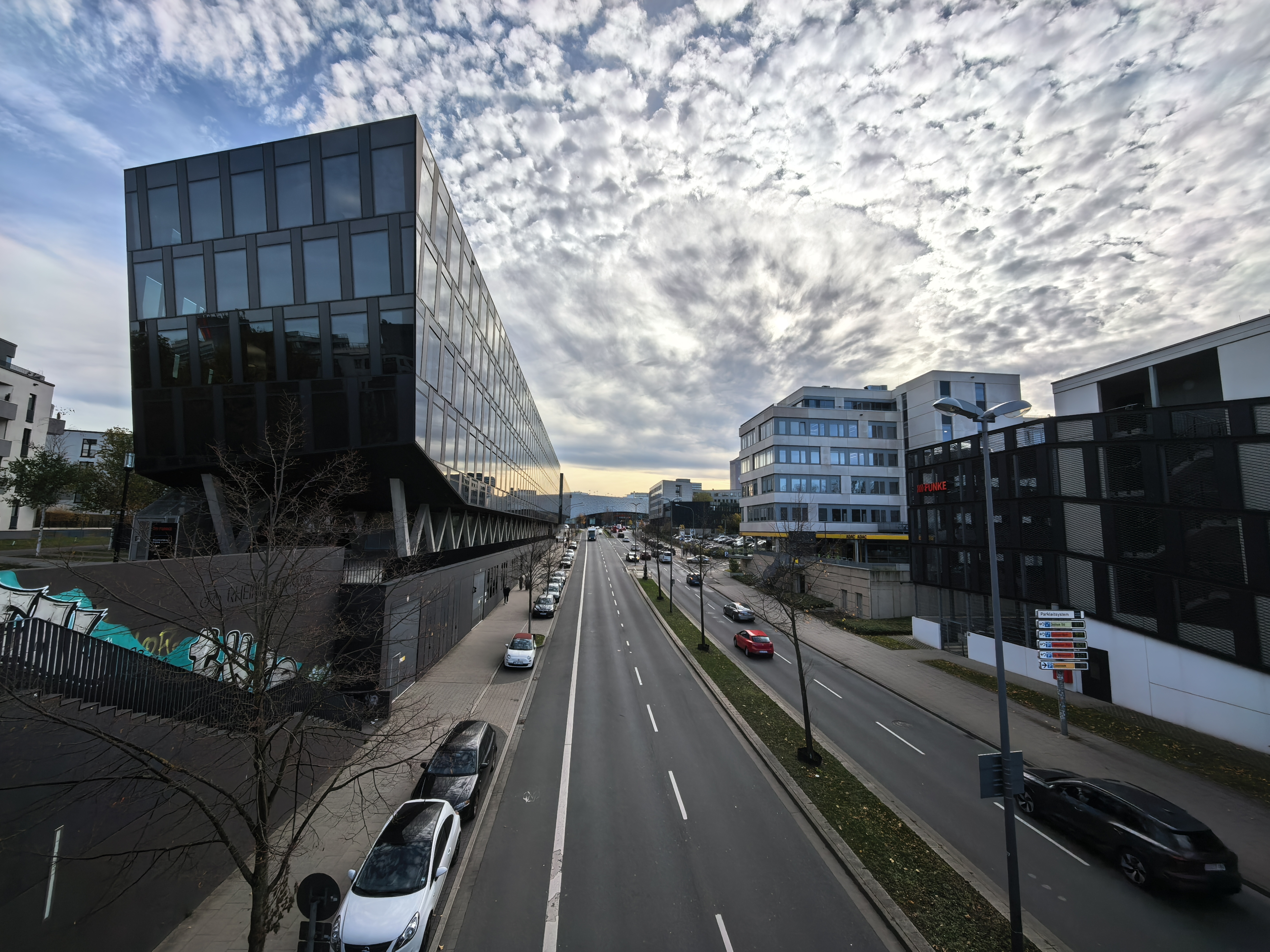
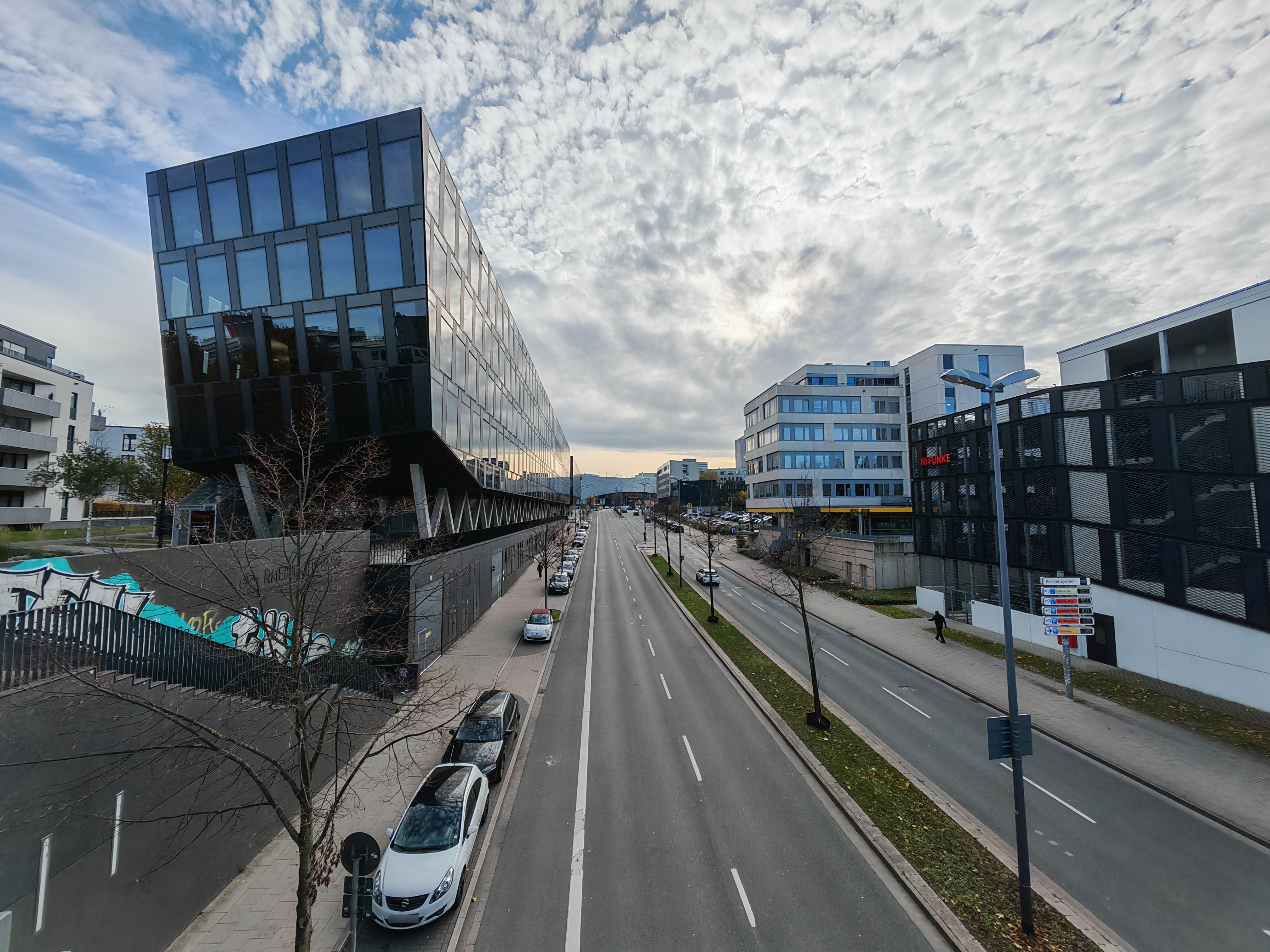
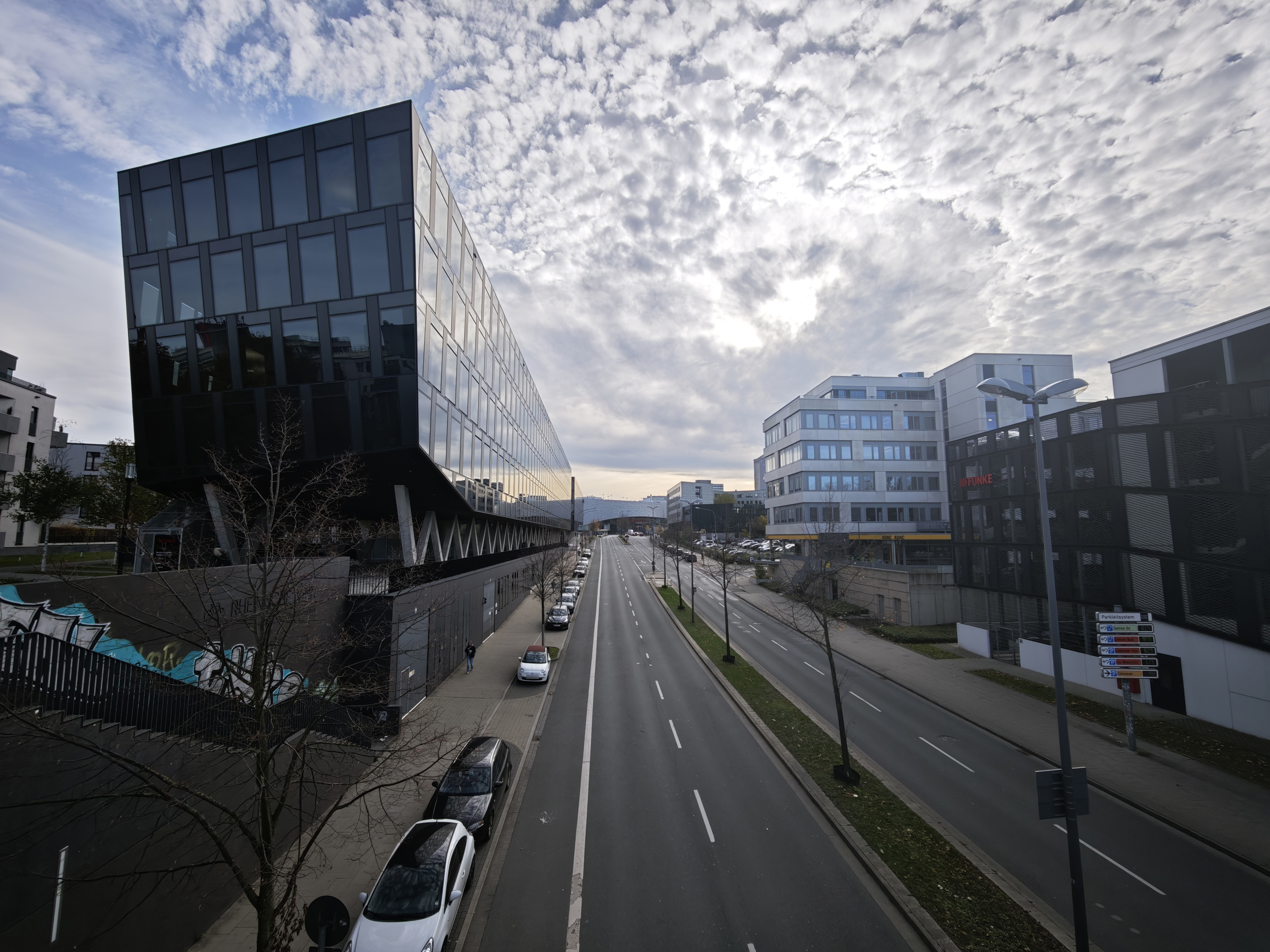
The Pura 80 Ultra uses a 50 MP main sensor in a 1-inch format, which puts it at the forefront of current smartphone cameras. There is also a 40 MP ultra-wide-angle camera along with two OIS-stabilized telephoto cameras. They have a resolution of 50 MP and 12.5 MP, respectively, and share a movable 1/1.28-inch sensor that enables an optical zoom of up to 9.4x (83 mm to 212 mm).
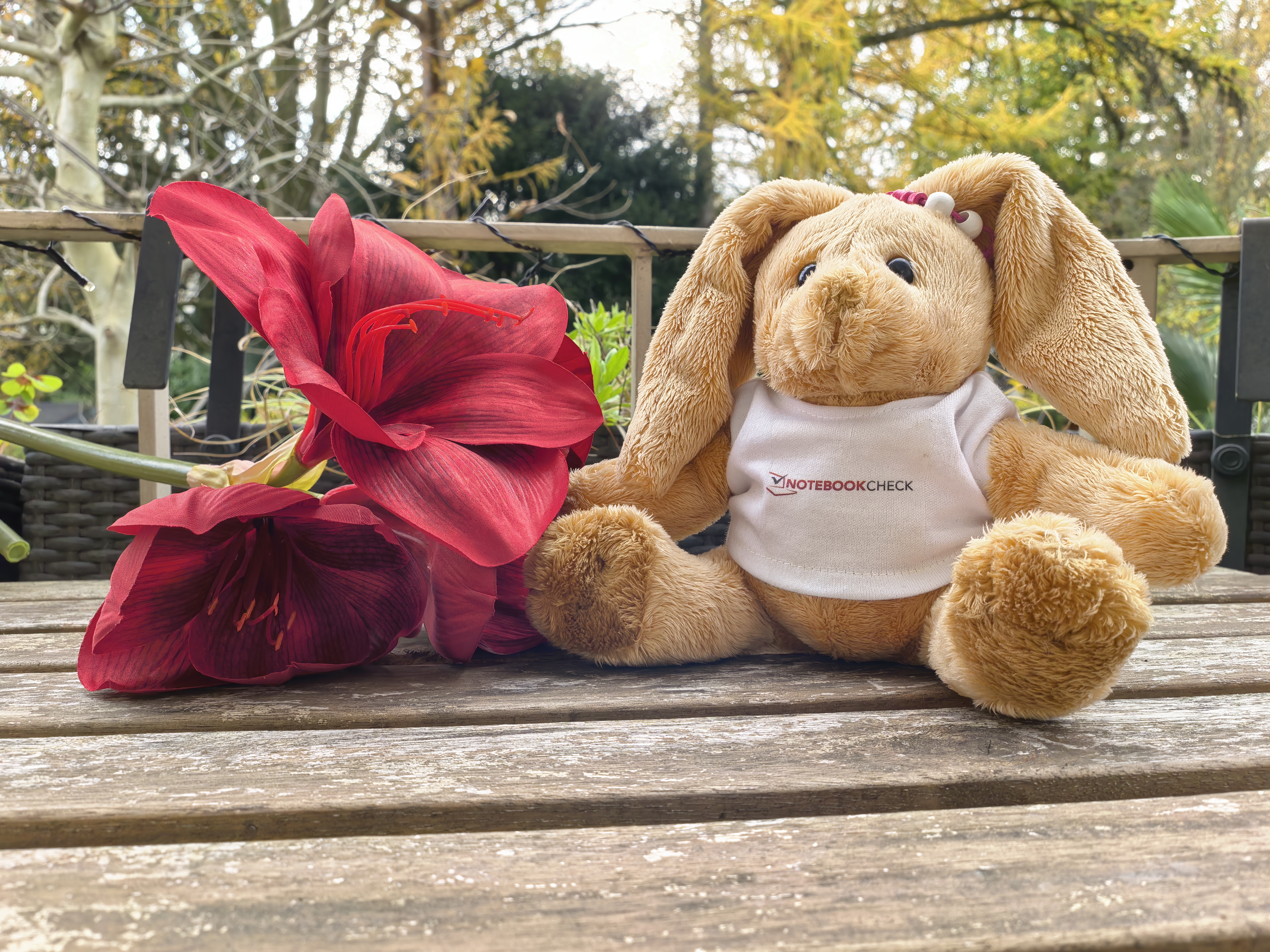
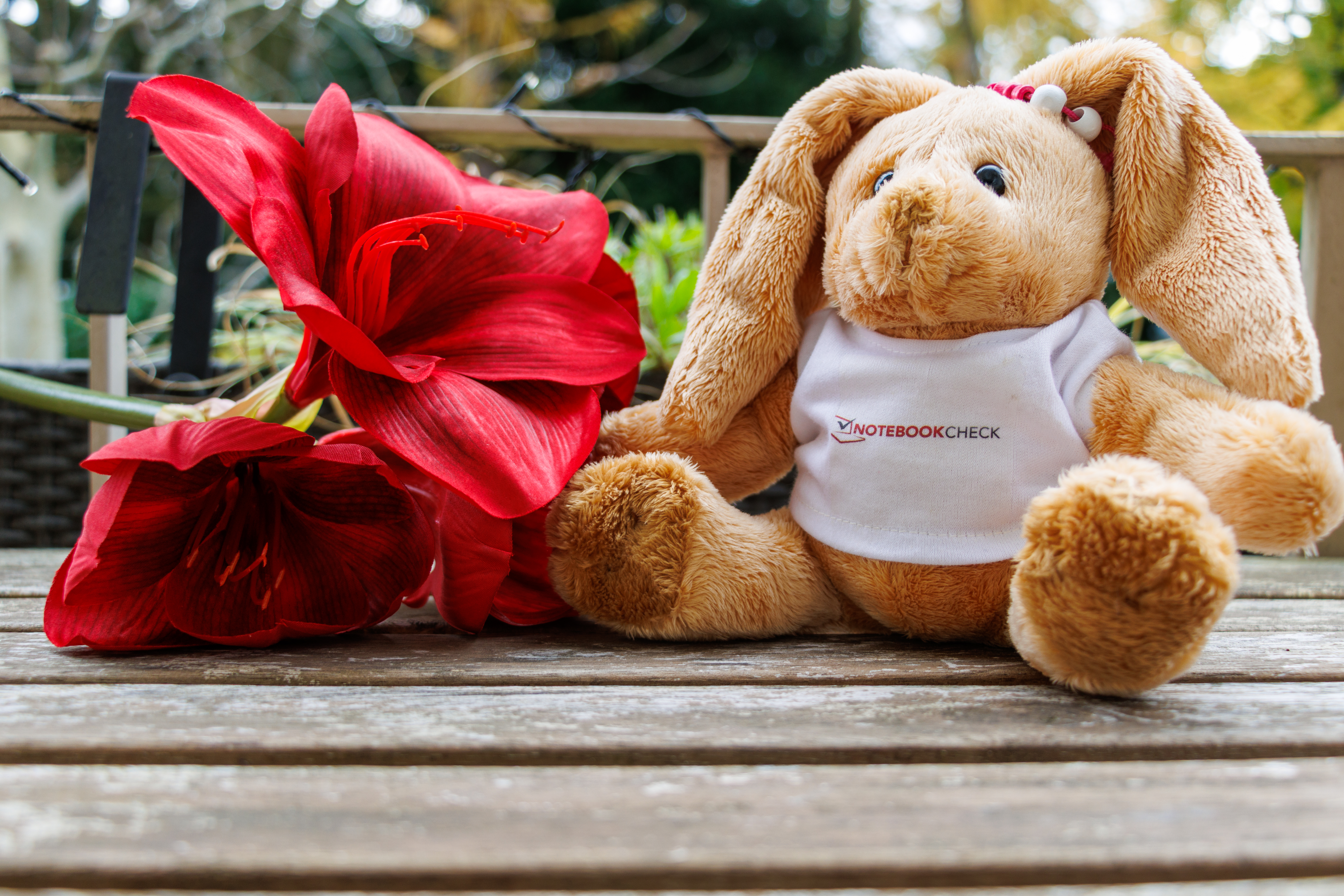
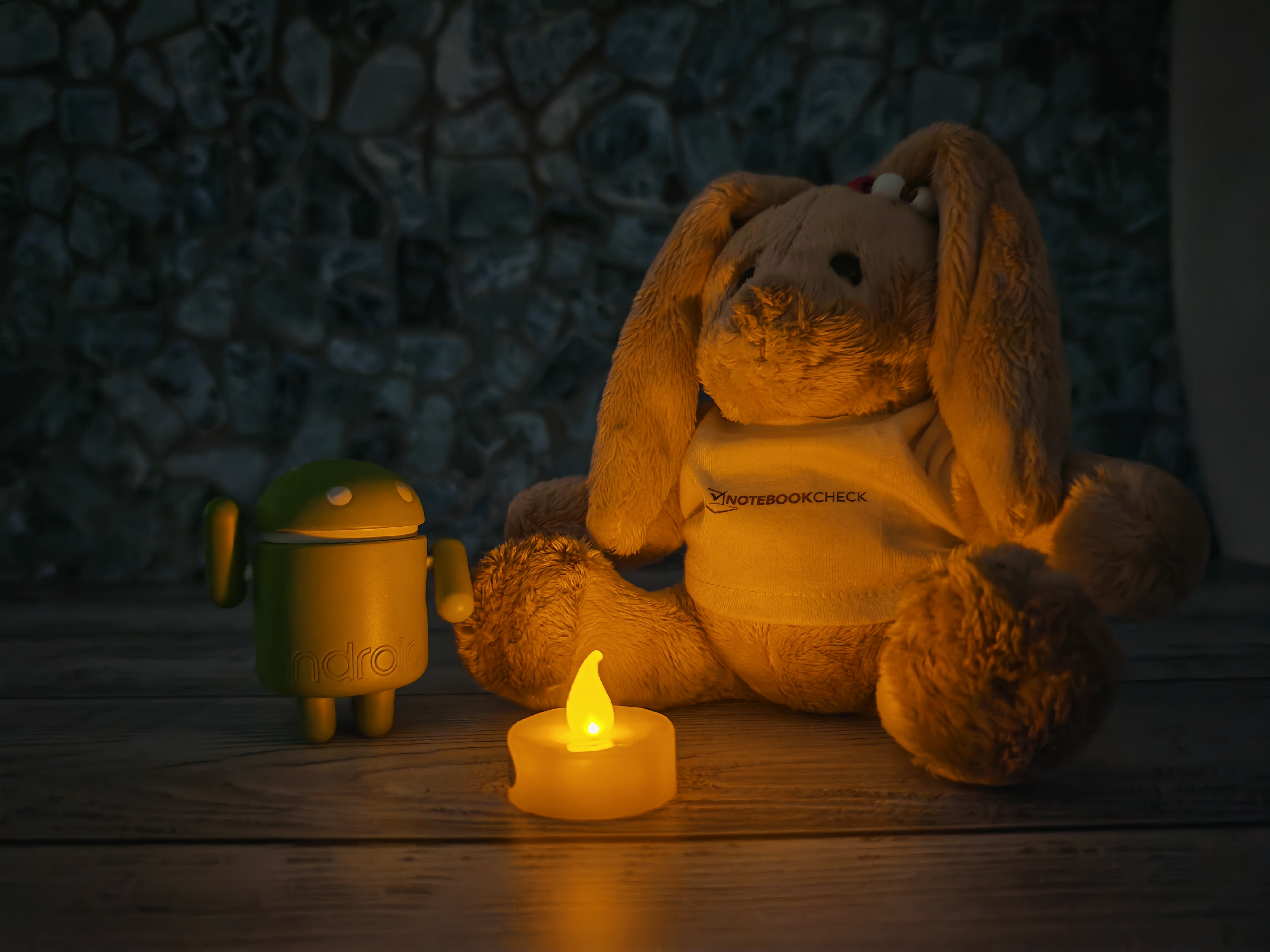

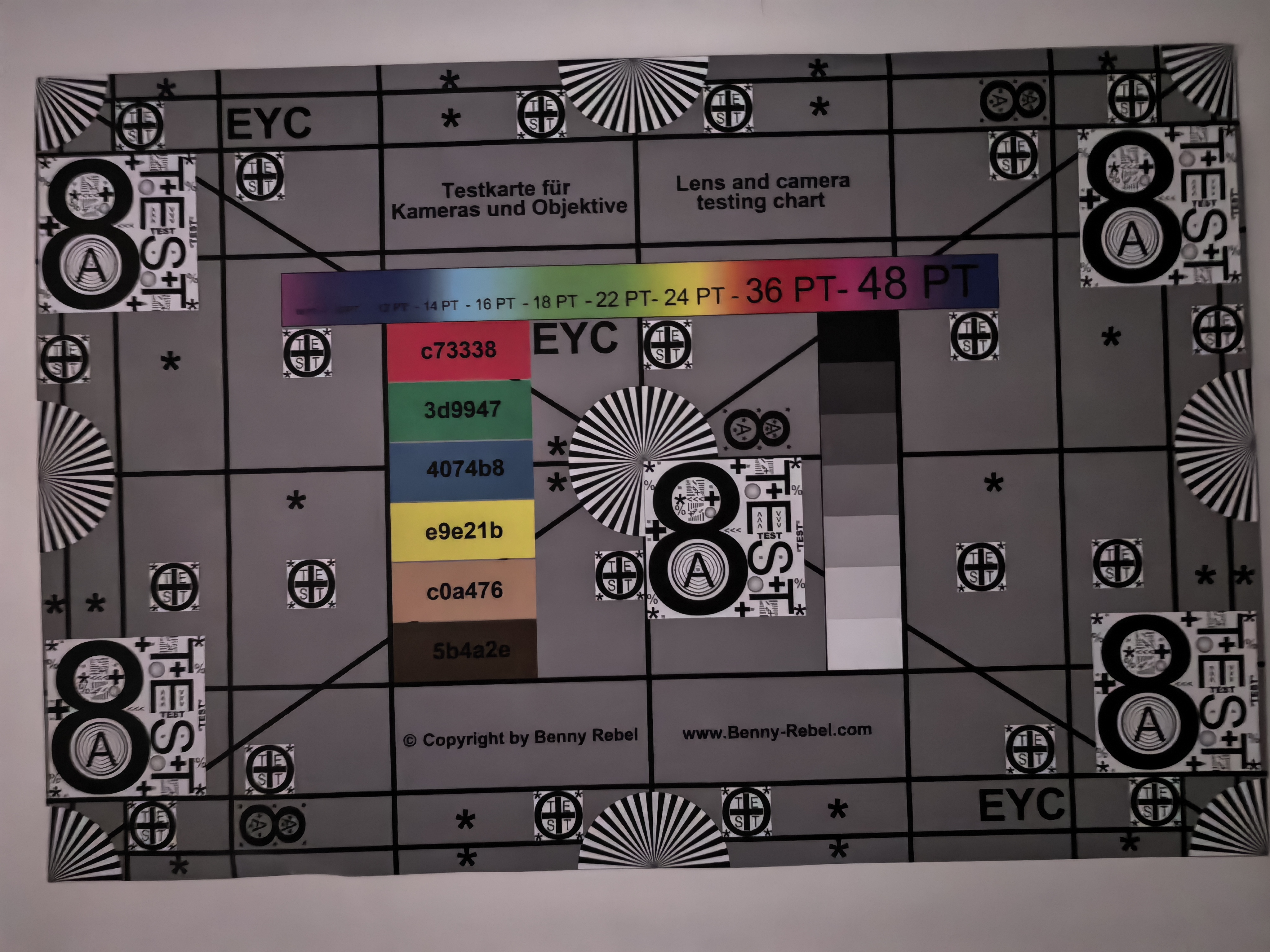
The cameras are among the best on the market and can be used quite flexibly thanks to the large focal length range. Enormous image sharpness and high dynamic range are guaranteed, and the photos do not deteriorate at night thanks to the large image sensors.
The 13 MP selfie camera is not out of line compared to the camera quarter on the back, as it also takes very respectable pictures. However, like the main camera, it is limited to 4K videos with a maximum of 60 frames per second.
Image comparison
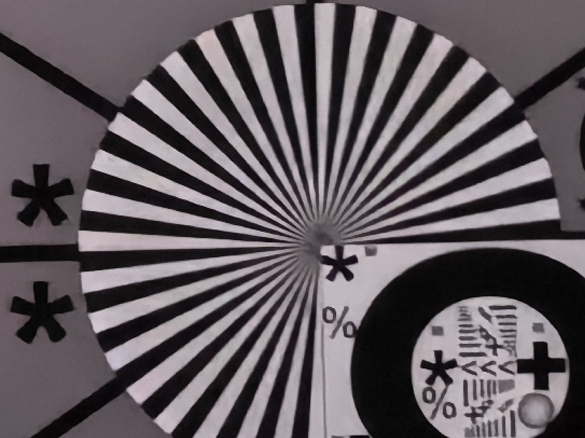
Choose a scene and navigate within the first image. One click changes the position on touchscreens. One click on the zoomed-in image opens the original in a new window. The first image shows the scaled photograph of the test device.
DaylightDaylightUltra-wide angle5x ZoomLow light











Accessories and warranty: Lots in the package
Huawei includes a 100 W power adapter, a USB-C cable, a protective cover, a quick start guide, a SIM tool, and a warranty card with the smartphone.
The Pura 80 Ultra comes with a 24-month warranty in Europe.
Input devices and operation: Fingerprint sensor in the power button
The HiSilicon Kirin 9020 is not a very powerful SoC by flagship standards, but it helps the Pura 80 Ultra operate smoothly. The touchscreen recognizes inputs fast thanks to its 300 Hz sampling rate, and the linear vibration motor provides crisp feedback.
Unusually for a premium smartphone, the fingerprint sensor is not located under the display but is integrated into the power button.
However, there is nothing to complain about its performance as it unlocks the phone fast and smooth.


Display: Up to 3,000 nits brightness as promised
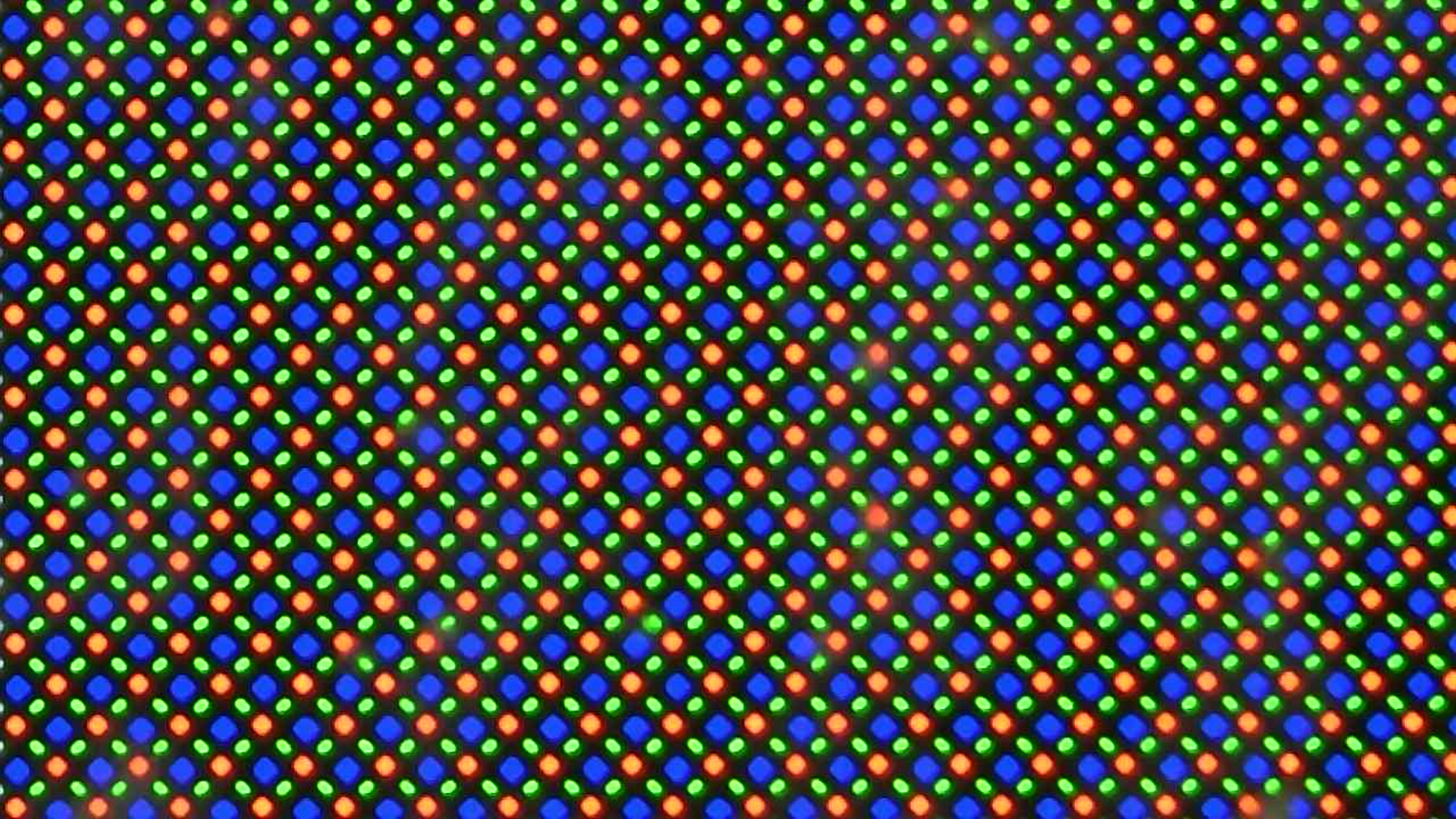
The 6.8-inch LTPO display works with a variable refresh rate of up to 120 Hz. As promised by Huawei, it achieves a peak brightness of 3,000 cd/m². We measured up to 3,319 cd/m² for SDR content (APL18) and a maximum of 3,671 cd/m² for HDR.
The OLED panel flickers at 360 Hz in all of the brightness levels we measured. At the same time, a fairly high dimming frequency of 1,428 Hz (1,440 Hz according to Huawei) is used to mitigate the negative effects of PWM flickering for sensitive users.
| |||||||||||||||||||||||||
Brightness Distribution: 95 %
Center on Battery: 1639 cd/m²
Contrast: ∞:1 (Black: 0 cd/m²)
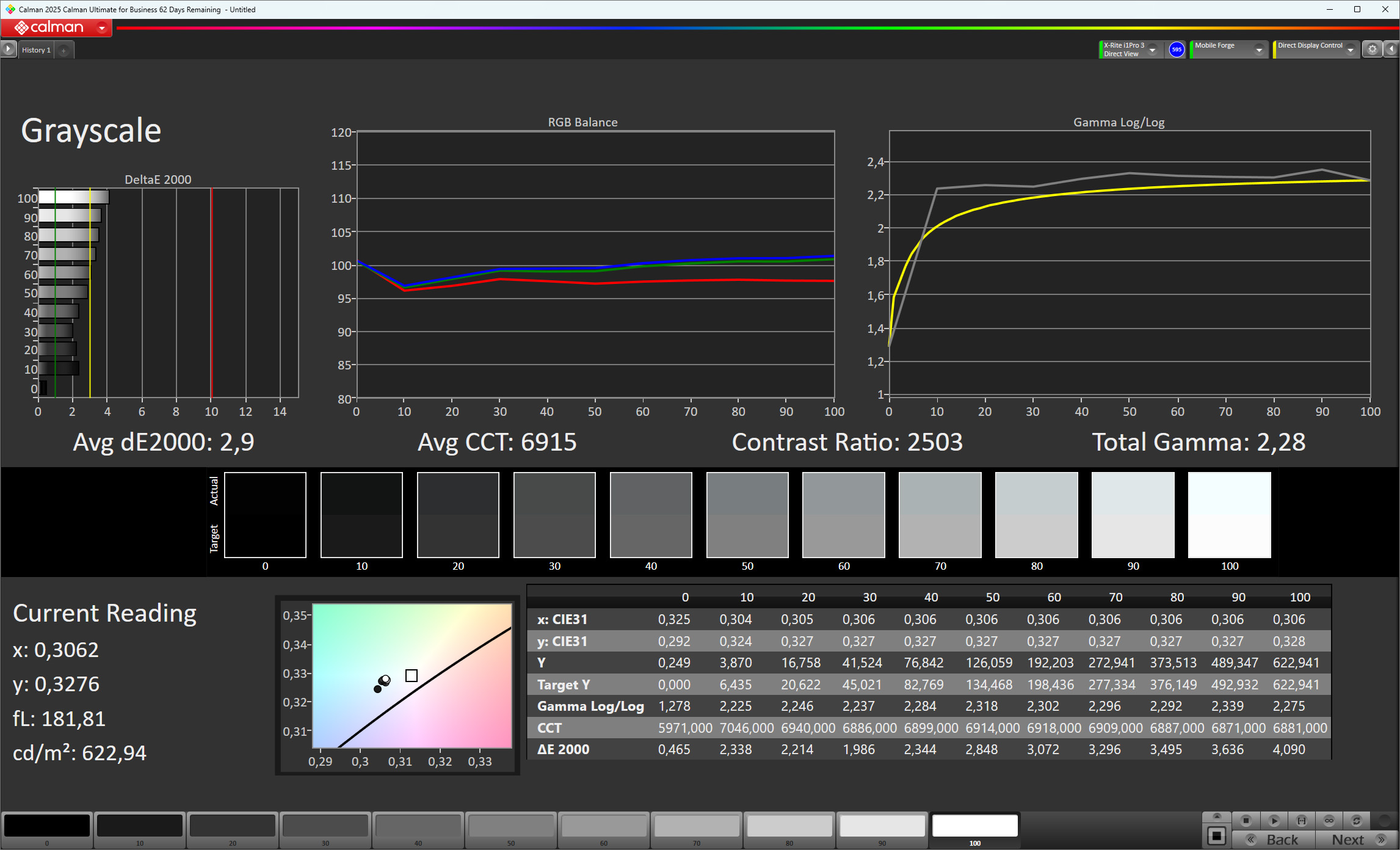
ΔE ColorChecker Calman: 1.8 | ∀{0.5-29.43 Ø4.69}
ΔE Greyscale Calman: 2.9 | ∀{0.09-98 Ø4.94}
99.9% sRGB (Calman 2D)
Gamma: 2.28
CCT: 6915 K
| Huawei Pura 80 Ultra OLED, 2848x1276, 6.8" | Apple iPhone 17 Pro Max OLED, 2868x1320, 6.9" | Honor Magic8 Pro OLED, 2808x1256, 6.7" | Google Pixel 10 Pro OLED, 2856x1280, 6.3" | Samsung Galaxy S25 Ultra Dynamic AMOLED 2X, 3120x1440, 6.9" | Xiaomi Poco F8 Ultra AMOLED, 2608x1200, 6.9" | |
|---|---|---|---|---|---|---|
| Screen | 2% | 21% | 43% | -16% | 18% | |
| Brightness middle (cd/m²) | 1639 | 1054 -36% | 1809 10% | 2161 32% | 1357 -17% | 1771 8% |
| Brightness (cd/m²) | 1612 | 1059 -34% | 1821 13% | 2198 36% | 1350 -16% | 1773 10% |
| Brightness Distribution (%) | 95 | 93 -2% | 95 0% | 94 -1% | 94 -1% | 99 4% |
| Black Level * (cd/m²) | ||||||
| Colorchecker dE 2000 * | 1.8 | 1.57 13% | 1.2 33% | 0.7 61% | 3.1 -72% | 1.3 28% |
| Colorchecker dE 2000 max. * | 4.1 | 2.8 32% | 2.9 29% | 1.8 56% | 4.7 -15% | 2.8 32% |
| Greyscale dE 2000 * | 2.9 | 1.7 41% | 1.8 38% | 0.8 72% | 2.2 24% | 2.1 28% |
| Gamma | 2.28 96% | 2.32 95% | 2.22 99% | 2.19 100% | 2 110% | 2.25 98% |
| CCT | 6915 94% | 6993 93% | 6446 101% | 6646 98% | 6391 102% | 6452 101% |
* ... smaller is better
| Display / APL18 Peak Brightness | |
| Xiaomi Poco F8 Ultra | |
| Huawei Pura 80 Ultra | |
| Honor Magic8 Pro | |
| Google Pixel 10 Pro | |
| Samsung Galaxy S25 Ultra | |
| Display / HDR Peak Brightness | |
| Honor Magic8 Pro | |
| Huawei Pura 80 Ultra | |
| Xiaomi Poco F8 Ultra | |
| Google Pixel 10 Pro | |
| Samsung Galaxy S25 Ultra | |
Screen Flickering / PWM (Pulse-Width Modulation)
| Screen flickering / PWM detected | 360 Hz Amplitude: 16.58 % Secondary Frequency: 1428 Hz | 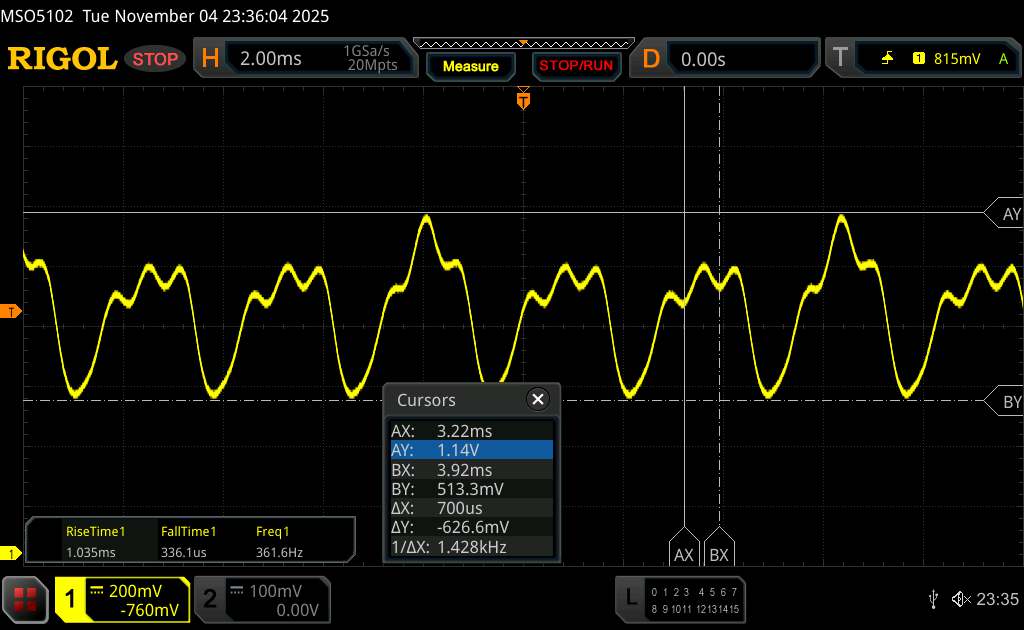 | |
The display backlight flickers at 360 Hz (worst case, e.g., utilizing PWM) . The frequency of 360 Hz is relatively high, so most users sensitive to PWM should not notice any flickering. However, there are reports that some users are still sensitive to PWM at 500 Hz and above, so be aware. In comparison: 52 % of all tested devices do not use PWM to dim the display. If PWM was detected, an average of 7588 (minimum: 5 - maximum: 343500) Hz was measured. | |||
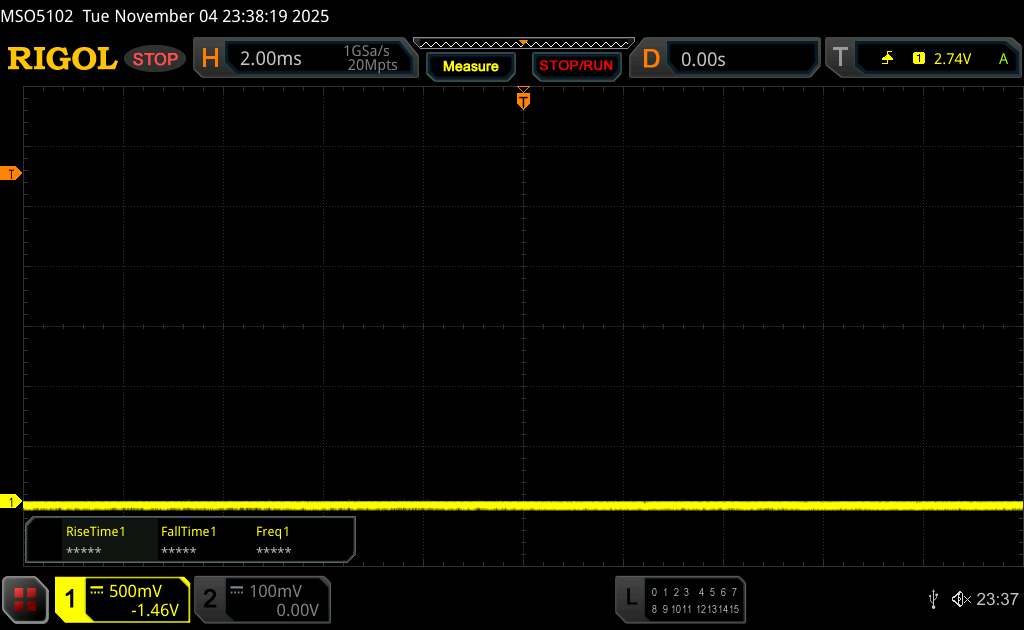
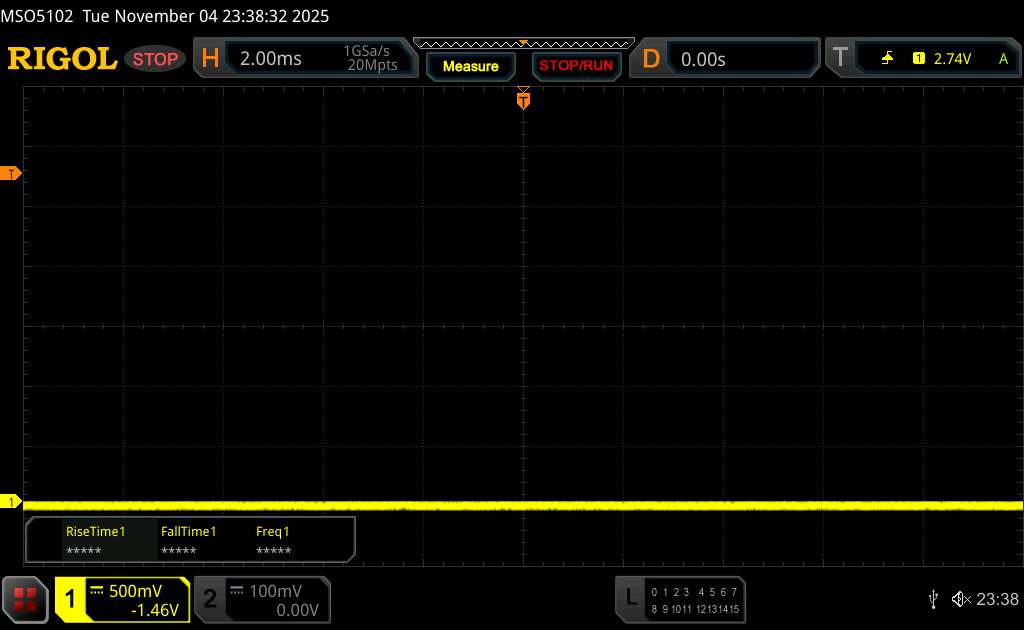
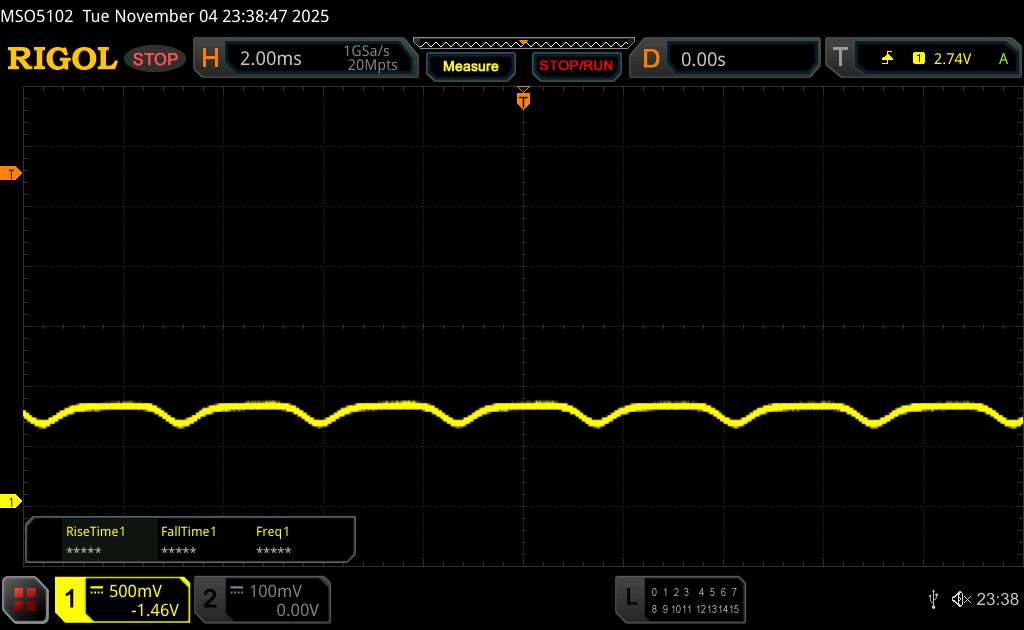
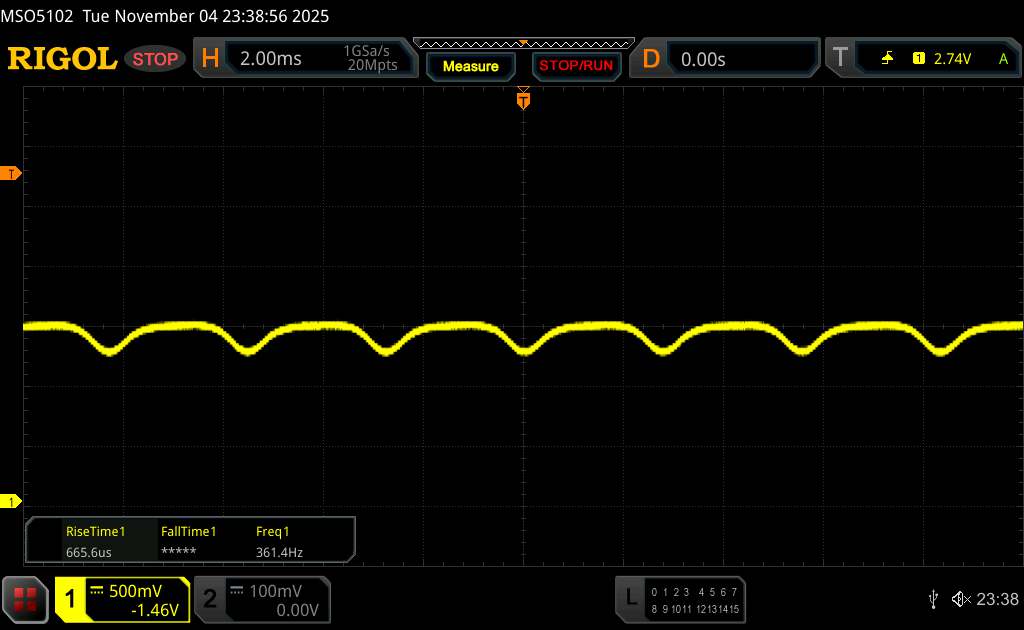
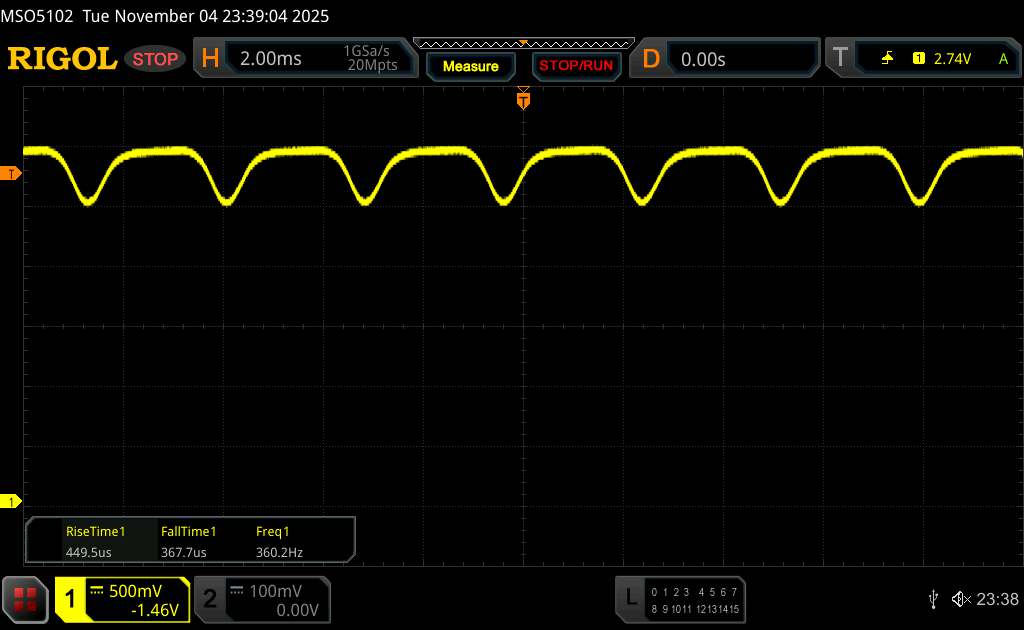
Measurement series with fixed zoom level and different brightness settings (The amplitude curve at minimum brightness looks flat, but this is due to the scaling. The info box shows the enlarged version of the amplitude at minimum brightness)
Users can adjust the color reproduction of the display using the Normal and Vivid color modes. The color temperature can also be set using the color wheel or the Standard, Warm, and Cool presets.
If you leave everything in the standard settings (Normal color mode, Standard color temperature), the Huawei phone rewards you with a very accurate color reproduction.


Display Response Times
| ↔ Response Time Black to White | ||
|---|---|---|
| 0.77 ms ... rise ↗ and fall ↘ combined | ↗ 0.434 ms rise | 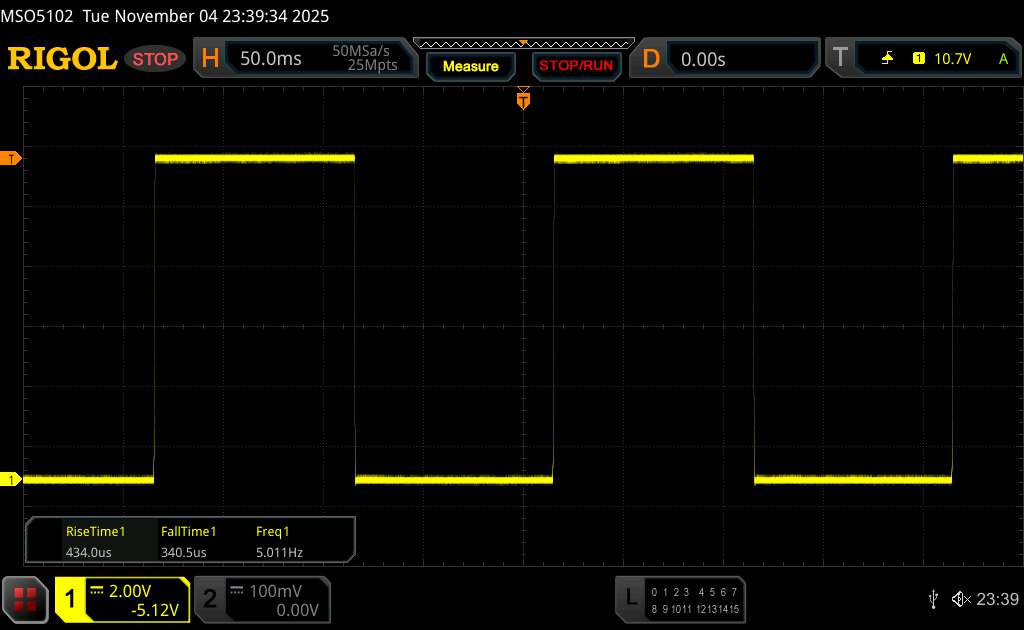 |
| ↘ 0.3405 ms fall | ||
| The screen shows very fast response rates in our tests and should be very well suited for fast-paced gaming. In comparison, all tested devices range from 0.1 (minimum) to 240 (maximum) ms. » 2 % of all devices are better. This means that the measured response time is better than the average of all tested devices (19.6 ms). | ||
| ↔ Response Time 50% Grey to 80% Grey | ||
| 0.79 ms ... rise ↗ and fall ↘ combined | ↗ 0.382 ms rise | 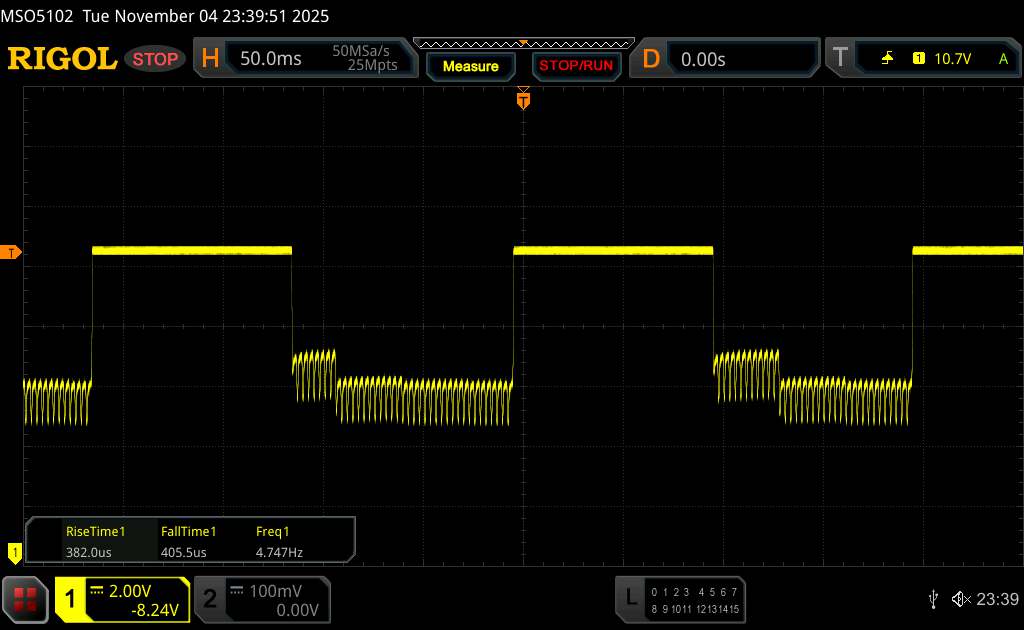 |
| ↘ 0.4055 ms fall | ||
| The screen shows very fast response rates in our tests and should be very well suited for fast-paced gaming. In comparison, all tested devices range from 0.13 (minimum) to 636 (maximum) ms. » 3 % of all devices are better. This means that the measured response time is better than the average of all tested devices (30.7 ms). | ||
The Huawei Pura 80 Ultra makes a very good impression outdoors. Although its viewing angle-stable OLED panel does not use anti-reflective glass, it is very easy to read at all times thanks to its high brightness levels.


Performance: Pura 80 Ultra with HiSilicon SoC
The Huawei Pura 80 Ultra is powered by the HiSilicon Kirin 9020 chip. However, as the synthetic benchmarks show below, its performance is not sufficient to even begin embarrassing the flagship competition.
| CrossMark - Overall | |
| Honor Magic8 Pro | |
| Xiaomi Poco F8 Ultra | |
| Samsung Galaxy S25 Ultra | |
| Average of class Smartphone (376 - 2856, n=105, last 2 years) | |
| Average HiSilicon Kirin 9020 (n=1) | |
| UL Procyon AI Inference for Android - Overall Score NNAPI | |
| Samsung Galaxy S25 Ultra | |
| Xiaomi Poco F8 Ultra | |
| Average of class Smartphone (2895 - 66164, n=96, last 2 years) | |
| Google Pixel 10 Pro | |
| Average HiSilicon Kirin 9020 (10280 - 12951, n=2) | |
| Huawei Pura 80 Ultra | |
The mediocre SoC performance is also evident in the graphics benchmarks. With 17 fps in GFXBench's 4K Aztec Ruins test, the Pura 80 Ultra does not perform well and also has to take a back seat in most other GPU tests.
GFXBench (DX / GLBenchmark) 2.7: T-Rex Onscreen | 1920x1080 T-Rex Offscreen
GFXBench 3.0: on screen Manhattan Onscreen OGL | 1920x1080 1080p Manhattan Offscreen
GFXBench 3.1: on screen Manhattan ES 3.1 Onscreen | 1920x1080 Manhattan ES 3.1 Offscreen
GFXBench: on screen Car Chase Onscreen | 1920x1080 Car Chase Offscreen | on screen Aztec Ruins High Tier Onscreen | 2560x1440 Aztec Ruins High Tier Offscreen | on screen Aztec Ruins Normal Tier Onscreen | 1920x1080 Aztec Ruins Normal Tier Offscreen | 3840x2160 4K Aztec Ruins High Tier Offscreen
| 3DMark / Wild Life Extreme Unlimited | |
| Honor Magic8 Pro | |
| Xiaomi Poco F8 Ultra | |
| Samsung Galaxy S25 Ultra | |
| Apple iPhone 17 Pro Max | |
| Google Pixel 10 Pro | |
| Huawei Pura 80 Ultra | |
| 3DMark / Wild Life Extreme | |
| Honor Magic8 Pro | |
| Xiaomi Poco F8 Ultra | |
| Samsung Galaxy S25 Ultra | |
| Apple iPhone 17 Pro Max | |
| Google Pixel 10 Pro | |
| Huawei Pura 80 Ultra | |
| 3DMark / Wild Life Unlimited Score | |
| Xiaomi Poco F8 Ultra | |
| Honor Magic8 Pro | |
| Samsung Galaxy S25 Ultra | |
| Apple iPhone 17 Pro Max | |
| Google Pixel 10 Pro | |
| Huawei Pura 80 Ultra | |
| 3DMark / Solar Bay Score | |
| Honor Magic8 Pro | |
| Xiaomi Poco F8 Ultra | |
| Samsung Galaxy S25 Ultra | |
| Apple iPhone 17 Pro Max | |
| 3DMark / Solar Bay Unlimited Score | |
| Honor Magic8 Pro | |
| Samsung Galaxy S25 Ultra | |
| Apple iPhone 17 Pro Max | |
| Xiaomi Poco F8 Ultra | |
| 3DMark / Steel Nomad Light Unlimited Score | |
| Honor Magic8 Pro | |
| Xiaomi Poco F8 Ultra | |
| Apple iPhone 17 Pro Max | |
| Samsung Galaxy S25 Ultra | |
| Google Pixel 10 Pro | |
| Huawei Pura 80 Ultra | |
| 3DMark / Steel Nomad Light Score | |
| Honor Magic8 Pro | |
| Xiaomi Poco F8 Ultra | |
| Apple iPhone 17 Pro Max | |
| Samsung Galaxy S25 Ultra | |
| Google Pixel 10 Pro | |
| Huawei Pura 80 Ultra | |
| GFXBench (DX / GLBenchmark) 2.7 / T-Rex Onscreen | |
| Google Pixel 10 Pro | |
| Samsung Galaxy S25 Ultra | |
| Honor Magic8 Pro | |
| Xiaomi Poco F8 Ultra | |
| Apple iPhone 17 Pro Max | |
| Huawei Pura 80 Ultra | |
| GFXBench (DX / GLBenchmark) 2.7 / T-Rex Offscreen | |
| Honor Magic8 Pro | |
| Apple iPhone 17 Pro Max | |
| Samsung Galaxy S25 Ultra | |
| Xiaomi Poco F8 Ultra | |
| Google Pixel 10 Pro | |
| Huawei Pura 80 Ultra | |
| GFXBench 3.0 / Manhattan Onscreen OGL | |
| Google Pixel 10 Pro | |
| Samsung Galaxy S25 Ultra | |
| Honor Magic8 Pro | |
| Xiaomi Poco F8 Ultra | |
| Apple iPhone 17 Pro Max | |
| Huawei Pura 80 Ultra | |
| GFXBench 3.0 / 1080p Manhattan Offscreen | |
| Honor Magic8 Pro | |
| Samsung Galaxy S25 Ultra | |
| Apple iPhone 17 Pro Max | |
| Xiaomi Poco F8 Ultra | |
| Google Pixel 10 Pro | |
| Huawei Pura 80 Ultra | |
| GFXBench 3.1 / Manhattan ES 3.1 Onscreen | |
| Samsung Galaxy S25 Ultra | |
| Honor Magic8 Pro | |
| Xiaomi Poco F8 Ultra | |
| Google Pixel 10 Pro | |
| Apple iPhone 17 Pro Max | |
| Huawei Pura 80 Ultra | |
| GFXBench 3.1 / Manhattan ES 3.1 Offscreen | |
| Honor Magic8 Pro | |
| Xiaomi Poco F8 Ultra | |
| Samsung Galaxy S25 Ultra | |
| Apple iPhone 17 Pro Max | |
| Google Pixel 10 Pro | |
| Huawei Pura 80 Ultra | |
| GFXBench / Car Chase Onscreen | |
| Honor Magic8 Pro | |
| Xiaomi Poco F8 Ultra | |
| Samsung Galaxy S25 Ultra | |
| Apple iPhone 17 Pro Max | |
| Google Pixel 10 Pro | |
| Huawei Pura 80 Ultra | |
| GFXBench / Car Chase Offscreen | |
| Honor Magic8 Pro | |
| Apple iPhone 17 Pro Max | |
| Xiaomi Poco F8 Ultra | |
| Samsung Galaxy S25 Ultra | |
| Google Pixel 10 Pro | |
| Huawei Pura 80 Ultra | |
| GFXBench / Aztec Ruins High Tier Onscreen | |
| Honor Magic8 Pro | |
| Xiaomi Poco F8 Ultra | |
| Samsung Galaxy S25 Ultra | |
| Google Pixel 10 Pro | |
| Apple iPhone 17 Pro Max | |
| Huawei Pura 80 Ultra | |
| GFXBench / Aztec Ruins High Tier Offscreen | |
| Honor Magic8 Pro | |
| Xiaomi Poco F8 Ultra | |
| Samsung Galaxy S25 Ultra | |
| Apple iPhone 17 Pro Max | |
| Google Pixel 10 Pro | |
| Huawei Pura 80 Ultra | |
| GFXBench / Aztec Ruins Normal Tier Onscreen | |
| Samsung Galaxy S25 Ultra | |
| Honor Magic8 Pro | |
| Xiaomi Poco F8 Ultra | |
| Google Pixel 10 Pro | |
| Apple iPhone 17 Pro Max | |
| Huawei Pura 80 Ultra | |
| GFXBench / Aztec Ruins Normal Tier Offscreen | |
| Honor Magic8 Pro | |
| Xiaomi Poco F8 Ultra | |
| Apple iPhone 17 Pro Max | |
| Samsung Galaxy S25 Ultra | |
| Google Pixel 10 Pro | |
| Huawei Pura 80 Ultra | |
| GFXBench / 4K Aztec Ruins High Tier Offscreen | |
| Honor Magic8 Pro | |
| Samsung Galaxy S25 Ultra | |
| Xiaomi Poco F8 Ultra | |
| Apple iPhone 17 Pro Max | |
| Google Pixel 10 Pro | |
| Huawei Pura 80 Ultra | |
| Jetstream 2 - 2.0 Total | |
| Apple iPhone 17 Pro Max (Safari Mobile 26.0) | |
| Samsung Galaxy S25 Ultra (Chrome 132) | |
| Google Pixel 10 Pro (Chrome 140) | |
| Average HiSilicon Kirin 9020 (168.6 - 177.1, n=2) | |
| Huawei Pura 80 Ultra (Chrome 143.0.7499.109) | |
| Xiaomi Poco F8 Ultra (Chrome 143) | |
| Average of class Smartphone (63.9 - 423, n=113, last 2 years) | |
| Speedometer 2.0 - Result 2.0 | |
| Apple iPhone 17 Pro Max (Safari Mobile 26.0) | |
| Samsung Galaxy S25 Ultra (Chrome 132) | |
| Google Pixel 10 Pro (Chrome 140) | |
| Huawei Pura 80 Ultra (Chrome 143.0.7499.109) | |
| Average HiSilicon Kirin 9020 (250 - 255, n=2) | |
| Average of class Smartphone (49.3 - 733, n=70, last 2 years) | |
| Speedometer 3 - Score 3.0 | |
| Apple iPhone 17 Pro Max (Safari Mobile 26.0) | |
| Samsung Galaxy S25 Ultra (Chrome 132) | |
| Xiaomi Poco F8 Ultra (Chrome 143) | |
| Google Pixel 10 Pro (Chrome 140) | |
| Huawei Pura 80 Ultra (Chrome 143.0.7499.109) | |
| Average HiSilicon Kirin 9020 (15.6 - 15.8, n=2) | |
| Average of class Smartphone (3.06 - 56.5, n=79, last 2 years) | |
| WebXPRT 4 - Overall | |
| Apple iPhone 17 Pro Max (Safari Mobile 26.0) | |
| Samsung Galaxy S25 Ultra (Chrome 132) | |
| Honor Magic8 Pro (Chrome 143) | |
| Google Pixel 10 Pro (Chrome 140) | |
| Average HiSilicon Kirin 9020 (145 - 186, n=2) | |
| Huawei Pura 80 Ultra (Chrome 143.0.7499.109) | |
| Average of class Smartphone (56 - 278, n=87, last 2 years) | |
| Xiaomi Poco F8 Ultra (Chrome 143) | |
| Octane V2 - Total Score | |
| Honor Magic8 Pro (Chrome 143) | |
| Apple iPhone 17 Pro Max (Safari Mobile 26.0) | |
| Samsung Galaxy S25 Ultra (Chrome 132) | |
| Google Pixel 10 Pro (Chrome 140) | |
| Xiaomi Poco F8 Ultra (Chrome 143) | |
| Average of class Smartphone (6015 - 160221, n=131, last 2 years) | |
| Average HiSilicon Kirin 9020 (42026 - 55113, n=4) | |
| Huawei Pura 80 Ultra (Chrome 143.0.7499.109) | |
| Mozilla Kraken 1.1 - Total | |
| Average of class Smartphone (216 - 2718, n=118, last 2 years) | |
| Huawei Pura 80 Ultra (Chrome 143.0.7499.109) | |
| Average HiSilicon Kirin 9020 (707 - 848, n=3) | |
| Xiaomi Poco F8 Ultra (Chrome 143) | |
| Google Pixel 10 Pro (Chrome 140) | |
| Samsung Galaxy S25 Ultra (Chrome 132) | |
| Honor Magic8 Pro (Chrome 143) | |
| Apple iPhone 17 Pro Max (Safari Mobile 26.0) | |
* ... smaller is better
| Huawei Pura 80 Ultra | Honor Magic8 Pro | Google Pixel 10 Pro | Samsung Galaxy S25 Ultra | Xiaomi Poco F8 Ultra | Average 512 GB UFS 4.0 Flash | Average of class Smartphone | |
|---|---|---|---|---|---|---|---|
| AndroBench 3-5 | -14% | -61% | -34% | -8% | -28% | -50% | |
| Sequential Read 256KB (MB/s) | 4347.09 | 3942.69 -9% | 1492.74 -66% | 3823.28 -12% | 4064.33 -7% | 3708 ? -15% | 2264 ? -48% |
| Sequential Write 256KB (MB/s) | 4007.01 | 3732.81 -7% | 1353.55 -66% | 3361.24 -16% | 3987.65 0% | 3129 ? -22% | 1966 ? -51% |
| Random Read 4KB (MB/s) | 493.34 | 488.67 -1% | 264.44 -46% | 287.85 -42% | 575.86 17% | 382 ? -23% | 316 ? -36% |
| Random Write 4KB (MB/s) | 969.67 | 587.11 -39% | 347.84 -64% | 331.61 -66% | 551.82 -43% | 476 ? -51% | 362 ? -63% |
Emissions: Heavy throttling despite moderate performance
Temperature
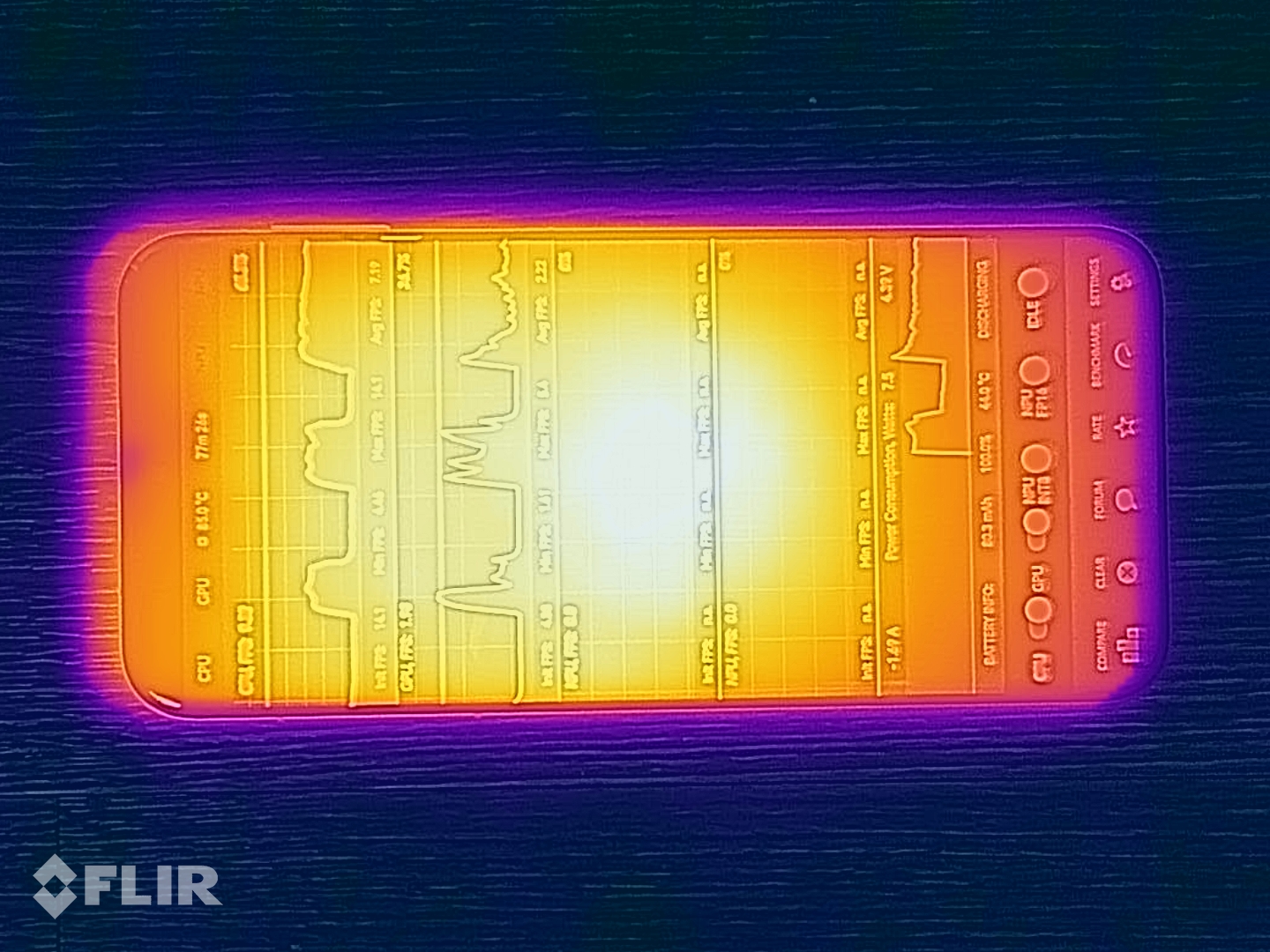
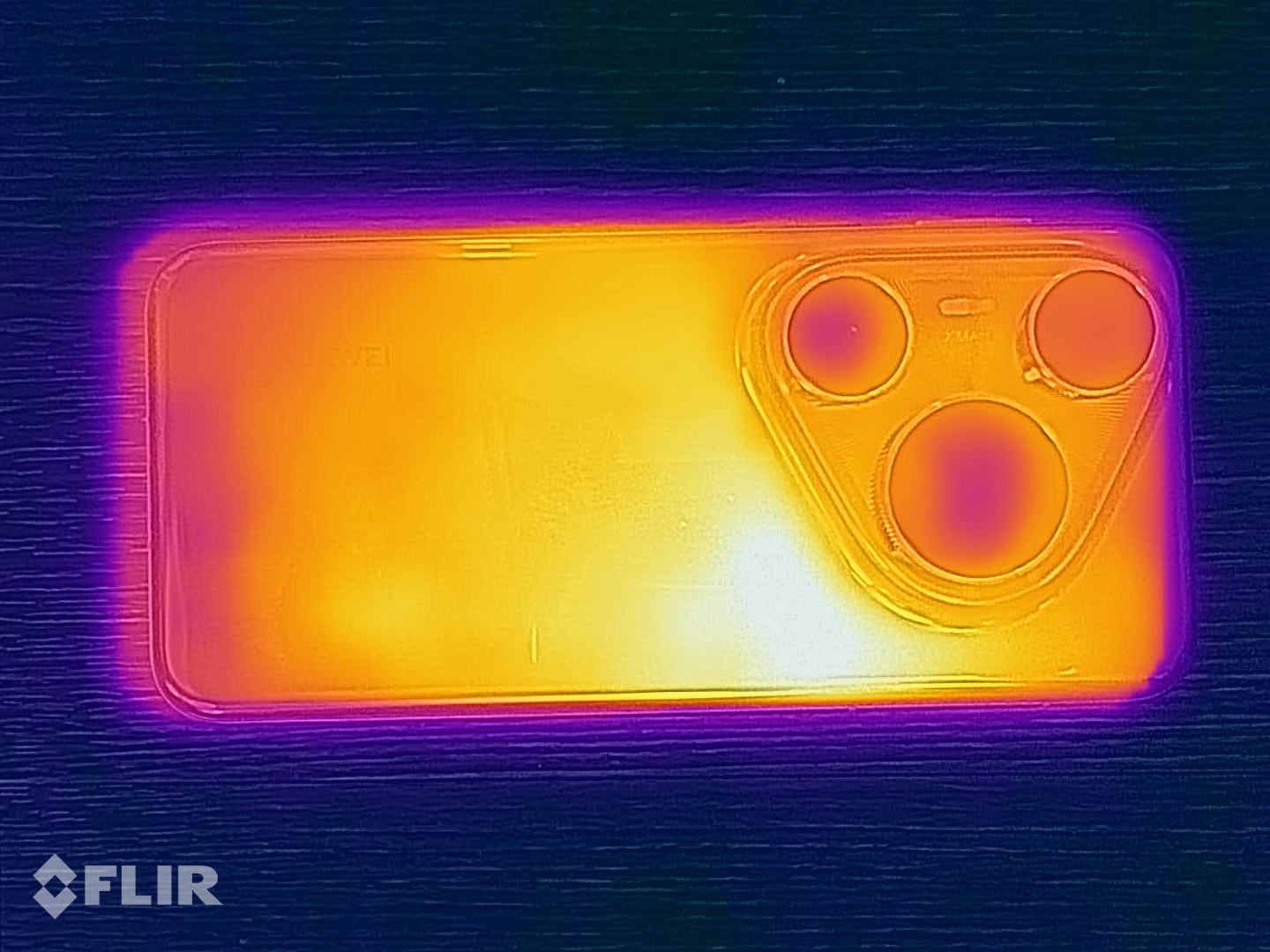
The surface temperatures of the Pura 80 Ultra can rise up to 44 °C under load but are thermally harmless.
The SoC performance can drop significantly under load. This is particularly evident in the 3DMark stress tests when we activate the Performance mode.
(±) The maximum temperature on the upper side is 43.6 °C / 110 F, compared to the average of 35.4 °C / 96 F, ranging from 21.9 to 247 °C for the class Smartphone.
(±) The bottom heats up to a maximum of 42.9 °C / 109 F, compared to the average of 34.1 °C / 93 F
(+) In idle usage, the average temperature for the upper side is 26.4 °C / 80 F, compared to the device average of 33 °C / 91 F.
3DMark Stress Tests
| 3DMark | |
| Wild Life Stress Test Stability | |
| Apple iPhone 17 Pro Max | |
| Google Pixel 10 Pro | |
| Samsung Galaxy S25 Ultra | |
| Honor Magic8 Pro | |
| Huawei Pura 80 Ultra | |
| Wild Life Extreme Stress Test | |
| Google Pixel 10 Pro | |
| Apple iPhone 17 Pro Max | |
| Samsung Galaxy S25 Ultra | |
| Honor Magic8 Pro | |
| Huawei Pura 80 Ultra | |
| Steel Nomad Light Stress Test Stability | |
| Huawei Pura 80 Ultra | |
| Google Pixel 10 Pro | |
| Apple iPhone 17 Pro Max | |
| Samsung Galaxy S25 Ultra | |
| Honor Magic8 Pro | |
Speakers
The stereo speakers of the Pura 80 Ultra deliver solid sound. The mids and highs are very balanced, while low frequencies are barely present in the sound mix.
External audio devices can be connected via USB-C and Bluetooth 5.2. However, only a handful of Bluetooth codecs such as SBC, AAC, LDAC and L2HC are supported.
Huawei Pura 80 Ultra audio analysis
(+) | speakers can play relatively loud (89.6 dB)
Bass 100 - 315 Hz
(-) | nearly no bass - on average 19.6% lower than median
(±) | linearity of bass is average (7.1% delta to prev. frequency)
Mids 400 - 2000 Hz
(±) | reduced mids - on average 5.3% lower than median
(+) | mids are linear (5.2% delta to prev. frequency)
Highs 2 - 16 kHz
(+) | balanced highs - only 4.6% away from median
(+) | highs are linear (2.2% delta to prev. frequency)
Overall 100 - 16.000 Hz
(±) | linearity of overall sound is average (15.8% difference to median)
Compared to same class
» 5% of all tested devices in this class were better, 5% similar, 91% worse
» The best had a delta of 11%, average was 34%, worst was 136%
Compared to all devices tested
» 25% of all tested devices were better, 5% similar, 70% worse
» The best had a delta of 4%, average was 23%, worst was 136%
Samsung Galaxy S25 Ultra audio analysis
(+) | speakers can play relatively loud (93 dB)
Bass 100 - 315 Hz
(-) | nearly no bass - on average 21.5% lower than median
(+) | bass is linear (4.8% delta to prev. frequency)
Mids 400 - 2000 Hz
(+) | balanced mids - only 4.3% away from median
(+) | mids are linear (4.4% delta to prev. frequency)
Highs 2 - 16 kHz
(+) | balanced highs - only 3.3% away from median
(+) | highs are linear (1.4% delta to prev. frequency)
Overall 100 - 16.000 Hz
(+) | overall sound is linear (14.6% difference to median)
Compared to same class
» 2% of all tested devices in this class were better, 2% similar, 96% worse
» The best had a delta of 11%, average was 34%, worst was 136%
Compared to all devices tested
» 19% of all tested devices were better, 4% similar, 76% worse
» The best had a delta of 4%, average was 23%, worst was 136%
Battery life: Fast charging with 100 W
Energy consumption
The HiSilicon SoC of the Pura 80 Ultra scores with its low power consumption. Both in idle mode and under load, the comparison devices sometimes consume significantly more power.
The Huawei phone can be charged at a rapid 100 W, and up to 80 W wirelessly. A full charging cycle takes just 44 minutes with the Huawei power adapter.
| Off / Standby |   0.19 / 0.15 Watt 0.19 / 0.15 Watt |
| Idle |  0.51 / 0.71 / 0.77 Watt 0.51 / 0.71 / 0.77 Watt |
| Load |
4.03 / 11.03 Watt |
    
| |
Key:
min: ,
med: ,
max: Metrahit Energy | |
| Huawei Pura 80 Ultra 5170 mAh | Apple iPhone 17 Pro Max 4823 mAh | Google Pixel 10 Pro 4870 mAh | Samsung Galaxy S25 Ultra 5000 mAh | Average HiSilicon Kirin 9020 | Average of class Smartphone | |
|---|---|---|---|---|---|---|
| Power Consumption | -43% | -111% | -66% | -3% | -73% | |
| Idle Minimum * (Watt) | 0.51 | 0.6 -18% | 1.01 -98% | 0.55 -8% | 0.49 ? 4% | 0.906 ? -78% |
| Idle Average * (Watt) | 0.71 | 1.3 -83% | 1.65 -132% | 0.77 -8% | 0.757 ? -7% | 1.483 ? -109% |
| Idle Maximum * (Watt) | 0.77 | 1.6 -108% | 2.05 -166% | 0.91 -18% | 0.873 ? -13% | 1.683 ? -119% |
| Load Average * (Watt) | 4.03 | 4.1 -2% | 7.25 -80% | 13.81 -243% | 4.03 ? -0% | 6.64 ? -65% |
| Load Maximum * (Watt) | 11.03 | 11.5 -4% | 19.78 -79% | 16.69 -51% | 11 ? -0% | 10.6 ? 4% |
* ... smaller is better
Power consumption: Geekbench (150 cd/m²)
Power consumption: GFXbench (150 cd/m²)
Battery life
In terms of battery life, the Pura 80 Ultra does not perform quite as well as one might have expected despite its low power consumption. Just over 19 hours in our WLAN test at 150 nits is undoubtedly a good result, but competitors such as the Samsung Galaxy S25 Ultra or the Xiaomi Poco F8 Ultra cannot be impressed with this, and certainly not the Apple iPhone 17 Pro Max.
Notebookcheck's overall impressions of the Huawei Pura 80 Ultra
The Huawei Pura 80 Ultra proves to be an uncompromising camera phone in the test. Everything else is subordinate to the truly excellent camera. The result is still a good smartphone, but one that cannot compete with current flagships in many areas.
Huawei Pura 80 Ultra
- 01/21/2026 v8
Manuel Masiero
 Total Sustainability Score:
 Potential alternatives in comparison
Image | Model / Review | Price | Weight | Drive | Display |
|---|---|---|---|---|---|
1. 83.3%  | Huawei Pura 80 Ultra HiSilicon Kirin 9020 ⎘ HiSilicon Maleoon 920 ⎘ 16 GB Memory, 512 GB UFS 4.x | Amazon: 1. $1,066.73 Samsung Galaxy S26 Ultra, Un... 2. $977.64 Samsung Galaxy S26 Ultra, Un... 3. $2,099.99 Samsung Galaxy Z Fold8 Ultra... List Price: 1399 Euro | 233.5 g | 512 GB UFS 4.0 Flash | 6.80" 2848x1276 460 PPI OLED |
2. 89.2%  | Apple iPhone 17 Pro Max Apple A19 Pro ⎘ Apple A19 Pro 6-Core GPU ⎘ 12 GB Memory, 256 GB NVMe | List Price: 1449 Euro | 233 g | 256 GB NVMe | 6.90" 2868x1320 460 PPI OLED |
3. 89.3%  | Honor Magic8 Pro Qualcomm Snapdragon 8 Elite Gen 5 ⎘ Qualcomm Adreno 840 ⎘ 12 GB Memory, 512 GB UFS 4.x | Amazon: 1. $1,120.00 HONOR Magic8 Pro 5G BKQ-N49 ... 2. $1,150.00 HONOR Magic8 Pro Dual-SIM 51... 3. $1,120.00 HONOR Magic8 Pro 5G BKQ-N49 ... List Price: 1300€ | 219 g | 512 GB UFS 4.1 Flash | 6.71" 2808x1256 458 PPI OLED |
4. 88.9%  | Google Pixel 10 Pro Google Tensor G5 ⎘ IMG DXT-48-1536 ⎘ 16 GB Memory, 256 GB UFS 4.x | List Price: 1199€ | 207 g | 256 GB UFS 4.0 Flash | 6.30" 2856x1280 497 PPI OLED |
5. 89.4%  | Samsung Galaxy S25 Ultra Qualcomm Snapdragon 8 Elite for Galaxy ⎘ Qualcomm Adreno 830 ⎘ 12 GB Memory, 256 GB UFS 4.x | List Price: 1449€ | 218 g | 256 GB UFS 4.0 Flash | 6.90" 3120x1440 498 PPI Dynamic AMOLED 2X |
6. 88.2%  | Xiaomi Poco F8 Ultra Qualcomm Snapdragon 8 Elite Gen 5 ⎘ Qualcomm Adreno 840 ⎘ 16 GB Memory, 512 GB UFS 4.x | List Price: 900€ | 220 g | 512 GB UFS 4.1 Flash | 6.90" 2608x1200 416 PPI AMOLED |
Transparency
The selection of devices to be reviewed is made by our editorial team. The test sample was provided to the author as a loan by the manufacturer or retailer for the purpose of this review. The lender had no influence on this review, nor did the manufacturer receive a copy of this review before publication. There was no obligation to publish this review. As an independent media company, Notebookcheck is not subjected to the authority of manufacturers, retailers or publishers.
This is how Notebookcheck is testing
Every year, Notebookcheck independently reviews hundreds of laptops and smartphones using standardized procedures to ensure that all results are comparable. We have continuously developed our test methods for around 20 years and set industry standards in the process. In our test labs, high-quality measuring equipment is utilized by experienced technicians and editors. These tests involve a multi-stage validation process. Our complex rating system is based on hundreds of well-founded measurements and benchmarks, which maintains objectivity. Further information on our test methods can be found here.
 Add as a preferred source on Google


