


Hideo Kojima: AI Is making game development 'boring' and fears it could take over creative work within 5–10 years
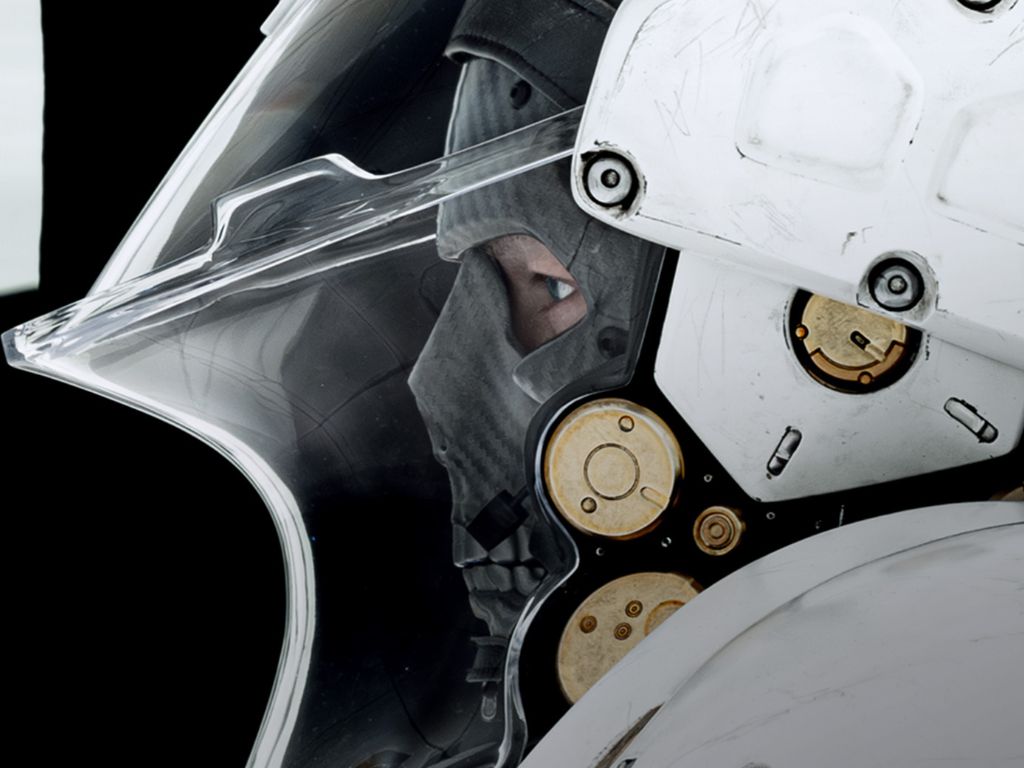
Hideo Kojima, the creator of the Metal Gear series and Death Stranding, has drawn a clearer line between AI as a production tool and AI as a creative partner. In an interview with Japanese outlet Game*Spark, Kojima said he welcomes the efficiency AI brings, but that a workflow built on telling a computer what to make and then asking it to fix the result leaves out the part of the creative process he actually enjoys.
The interview took place on October 30 at a media preview of Beyond the Strand, the exhibition marking Kojima Productions' 10th anniversary, which runs from October 31 to December 20 at Azabudai Hills Gallery in Tokyo. Kojima was describing his personal view of creative work rather than a studio policy. He did not say whether Kojima Productions uses AI tools in developing its next two games, the horror title OD and the action-espionage game PHYSINT, both of which are now published by Xbox.
From 16 colors to AI
Kojima's comments on AI came in response to a question about whether today's technology is sufficient for the stories he wants to tell. He framed his answer around a career that began 40 years ago, when games were 2D, and characters could not speak. Since then, he said, technology has steadily expanded what developers can do, from 16-color graphics to 3D, to working with actors and breaking musicians' recordings down rather than simply playing them back. More options do not mean everything is possible, he cautioned, since capacity and schedules still impose limits.
He placed AI on the same continuum as Photoshop and word processors, digital tools he described as hugely convenient and a major boost to efficiency. AI continues that trend, he said, by speeding up production and shortening schedules, and he is fine with that.
"The middle is the fun part"
His reservation lies in what that efficiency skips. Using drawing as an example, Kojima said the enjoyment does not come from completing a picture. "Finishing it isn't what makes it fun. The middle is the fun part," he said. Sometimes the process of making something is the real craft, he added, so ordering a computer to make one thing and then another, and asking it to redo the result because it is wrong, is acceptable, but not very interesting as a way of making things, as he sees it.
He expanded on the point with plastic model kits, jigsaw puzzles, and LEGO bricks. A model kit ends up the same shape no matter who builds it, Kojima noted, but the assembly is what makes it enjoyable.
When Game*Spark followed up by asking what is still required of human creators as AI widens their options, Kojima drew a distinction between creative work and commercial products. Work that he once directed and that other creators carried out through their teams is shifting to computers, he said, which raises efficiency. If the goal is to make a product, he considers that fine, but in his view creators are people who enjoy the act of creating while it is underway. "'Creative' and 'product' are separate things, I think," he said.
He illustrated this with music. Commissioning a song and signing off on whatever comes back is not where the excitement lies, Kojima said. It is the trial and error in between that gets the adrenaline flowing, and he does not want a future in which that is lost. At the same time, he acknowledged that AI makes things easy to produce, greatly improves efficiency and, depending on how it is used, could help build a good future.
Five to ten years, then the next generation
Kojima, 63, said he is concerned about where the enjoyment of making things is headed. He believes the next five to ten years will be fine, but that if AI continues without any controls, a future in which it thrives on the creative side as well may eventually arrive. "By then, I won't be in this world anymore," he said with a laugh, adding that young people will decide what to do and that he wants to pass the baton to them.
The remark echoes comments Kojima made to The Washington Post in June at a Prada art event at New York's Hotel Chelsea, weeks after he appeared in an AI-generated Prada promotional film that drew criticism from fans. AI might create art in 50 or 100 years, he said then, but he did not expect to see it in his lifetime and was not interested in it. He also suggested that finding a good way to use the technology would fall to younger generations.
One part of Kojima's position has held steady: AI should handle efficiency while humans lead the creative work. In an October 2025 interview with Wired Japan, he called AI a "friend" and said he wanted it to handle tedious tasks to lower costs and shorten development. What has shifted is the emphasis. A year on, he is talking less about what automation could save developers and more about what it could cost them, a marked departure from his earlier stance in some ways.
What's next for Kojima Productions?
In other parts of the interview, Kojima described OD, now subtitled Knock, as a horror game whose systems are unlike anything that has existed before, and PHYSINT as a new espionage action game that aims to erase the boundary between film and games. PHYSINT was announced as a PlayStation project in January 2024, but Xbox stepped in as publisher in September after Sony withdrew; Kojima said PlayStation had notified the studio of the cancellation in mid-June. Kojima also pointed to augmented reality work with Niantic Spatial as part of what he calls the studio's "Third Phase," in which he expects entertainment to move off screens and closer to everyday life.
Source(s)
 Add as a preferred source on Google


