




Every Windows version from XP to 11 benchmarked, revealing the sad reality of modern software
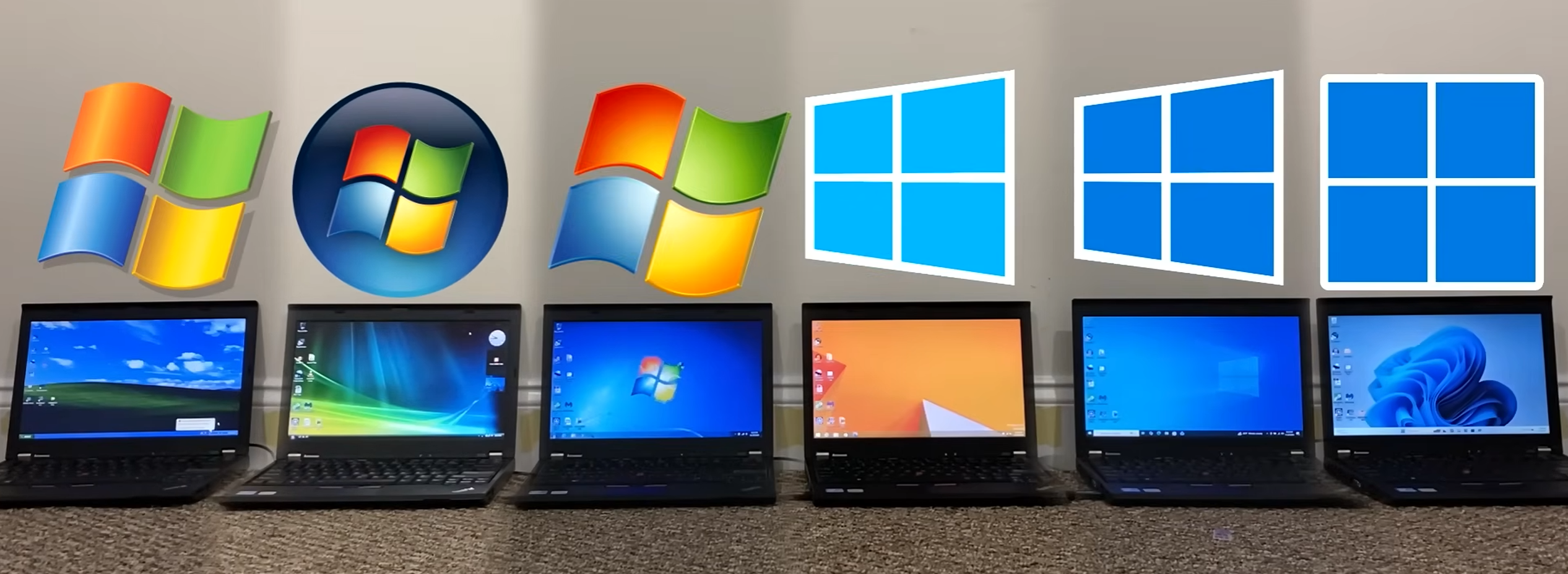
Given the increase in computing power over the last 20 years, you might expect Windows XP to be the leanest and fastest operating system when running on modern 64-bit hardware. However, YouTuber TrigrZolt has benchmarked every version of Windows against itself, yielding some surprising results.
All versions of Windows were fully updated and tested on the same hardware. A Lenovo ThinkPad X220, with an i5-2520M CPU, 8GB RAM, Intel HD 3000 Graphics, and a 256GB hard disk. Not the fastest, or most modern setup, but necessary to ensure compatibility with the ancient Windows XP.
Windows 8.1 won the startup test by a significant margin, likely due to Microsoft introducing the "Fast Boot" feature, where the contents of RAM are dumped to the hard disk and used to start the machine up faster upon a subsequent boot.
The margin here is significant, likely due to Windows 8.1, which (among all the fast-boot-capable operating systems) has fewer resources to load. However, despite Windows Vista and Windows 7 taking significantly longer due to the lack of Fast Boot, Windows 11 still came in dead last, failing to load the taskbar despite reaching the desktop relatively quickly.
In terms of storage space, Windows 7 utilised the most disk space, with Windows XP (unsurprisingly) taking up the least. However, Windows 8.1 was a strong performer, taking up less space than even its older Vista sibling.
In the RAM usage test, Windows 8.1 was bested only by XP in terms of RAM usage after startup, and Windows 11 occupied the most.
Opening tabs in Supermium (used for its compatibility with older versions of Windows) also yielded interesting results with regard to RAM.
Windows XP was only able to open 50 tabs, likely due to an issue with managing virtual memory, but Windows 11 failed spectacularly with a maximum of 49. For context, every other version of Windows was able to open well over 100 tabs, with Windows 8.1 taking the win with 252.
Windows 11 finished last in the battery test, 2nd to last in the audio export test, last in the video editing test (of the operating systems that were able to run it), last in the file manager opening test, and last (embarrassingly so) with its ability to open MS paint. Windows 11 also came last when opening videos and loading websites (including Microsoft's own login page).
Multi-core benchmarks were predictably all over the place with no clear winners, but again, with single-threaded performance, Windows 11 came in last on the CPU-Z test.
By the creator's own admission, this is far from a perfect test. However, some conclusions can be drawn.
Windows 11 is a RAM hog, and despite the system requirements stating a minimum of 4GB RAM, even 8GB isn't practical. In a world with RAM shortages, and manufacturers potentially restricting mid-range models to only 8GB, this amount really isn't enough to keep Windows 11 in check. If you're shopping for a new PC, (like this RTX 5060 equipped Asus ROG Strix G16), make sure it comes with at least 16GB of RAM.
The results also highlight how unoptimised later versions of Windows have become. With ever-increasing resources, developers are no longer required to optimise. Software can be built that runs well, simply because of raw performance. As this test shows, even modest hardware that falls within the system requirements of Windows 11, will leave you with a sub-par experience.
Lastly, of all Microsoft's operating systems, Windows 8 was one of the best optimised. We just didn't realise it at the time because we were all too busy piling hate on the updated Start menu.
 Add as a preferred source on Google


