




Chinese researchers unveil world's smallest ferroelectric transistor with 1-nanometer gate
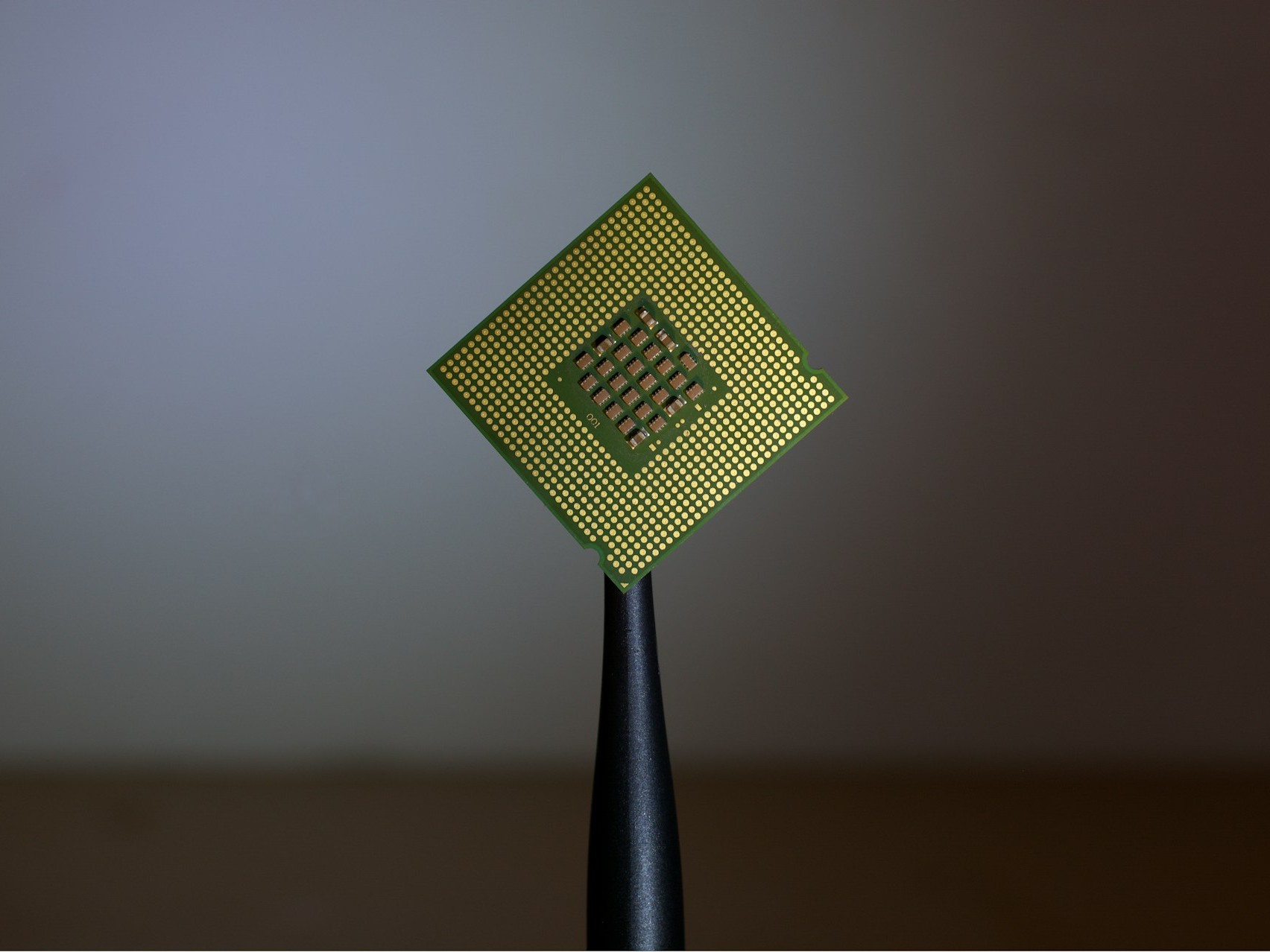
A team of researchers from Peking University and the Chinese Academy of Sciences has developed the world's smallest ferroelectric transistor, successfully shrinking the gate length to just 1 nanometer. This nanogate device — detailed in the journal Science Advances — operates at a mere 0.6 volts, overcoming a critical power consumption bottleneck in the semiconductor industry.
Modern logic chips function efficiently at approximately 0.7 volts. However, mainstream non-volatile memory, such as NAND flash, typically requires 5 volts or higher to perform write operations. Even previous ferroelectric field-effect transistors (FeFETs) required over 1.5 volts. This voltage mismatch bring about complex step-up circuits, wasting valuable space and energy. In typical AI chips, 60–90% of total power consumption is utilized merely for data transfer rather than actual computation.
To resolve this, the research team, led by Qiu Chenguang and Peng Lianmao, used metallic single-walled carbon nanotubes as gate electrodes. This design functions as a nanotip, concentrating the electric field to enhance the coupling between the ferroelectric layer and the channel.
This field enhancement allows the device to flip its polarization state at just 0.6 volts — lower than the standard logic voltage — while maintaining immunity to short-channel effects.
The resulting molybdenum disulfide (MoS2) FeFETs exhibit superior memory performance, boasting a current on/off ratio of 2 million and a rapid programming speed of 1.6 nanoseconds. By achieving voltage compatibility between memory and logic units, the technology eliminates the need for extra charge pump circuits, removing barriers to high-speed data interaction.
According to the researchers, the underlying principle is applicable to mainstream ferroelectric materials and compatible with standard industrial manufacturing processes. This breakthrough holds significant implications for the future of large model inference, edge intelligence, and wearable devices, where energy efficiency is paramount.
Source(s)
 Add as a preferred source on Google


