




Casio’s new ultra-premium G-Shock MR-G is inspired by a centuries-old Japanese pagoda
Casio kicked off 2026 by refreshing its entry-level lineup, dropping a dreamy, nightlife-themed GA-2100K series and reintroducing half a dozen classic, fan-favorite G-Shocks with upgraded LED backlights. Now, the Japanese watchmaker is shifting its attention to its ultra-premium range. Following several leaks over the past few weeks, Casio has officially unveiled the MRG-B2100D-2AJR, a luxury timepiece that showcases the best of Japanese watchmaking craftsmanship.
Inspired by a centuries-old pagoda
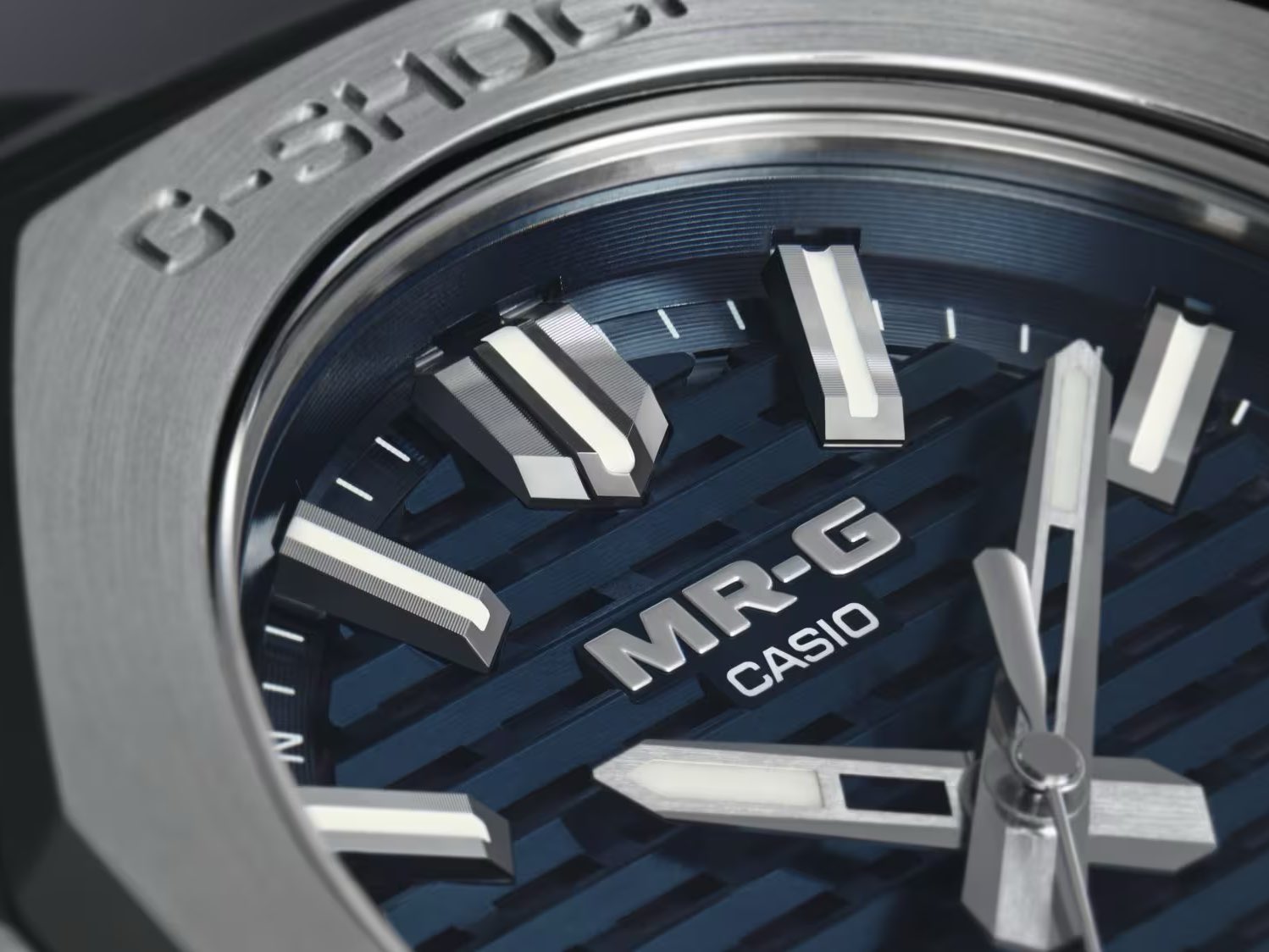
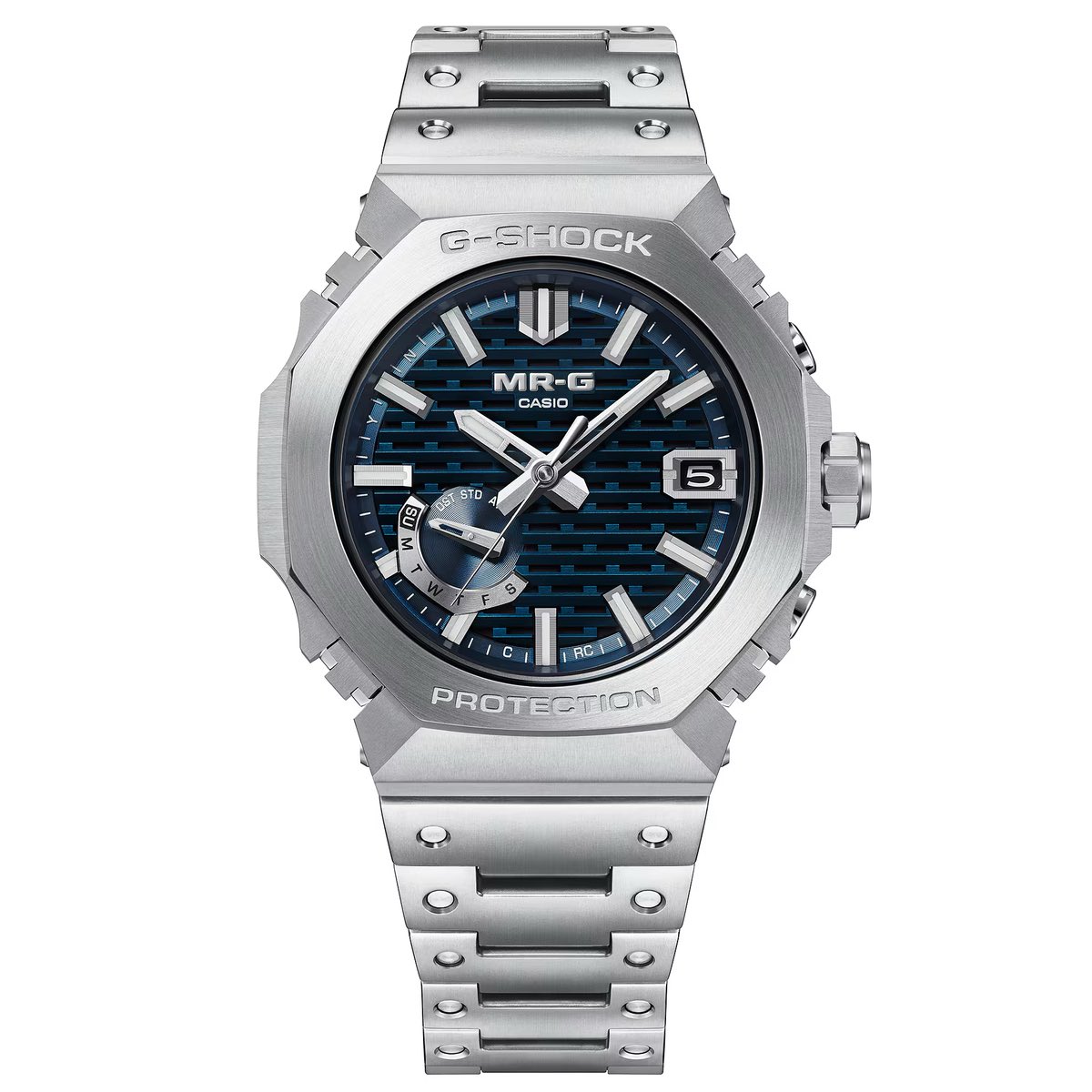
The inspiration for the latest model comes from the Hagurosan Gojunoto five-story pagoda, the oldest in the Japan's Tohoku region and a designated national treasure. That influence shows up most clearly on the dial, which is finished in hanadai-iro, a traditional "indigo" blue color historically associated with samurai armor. Casio says the color is meant to echo the pagoda at dawn, shrouded in morning mist. The blue hue, which is applied using a vapor deposition process, subtly changes depending on the light and viewing angle, “reflecting the mystical transition of time" of the five-story pagoda.
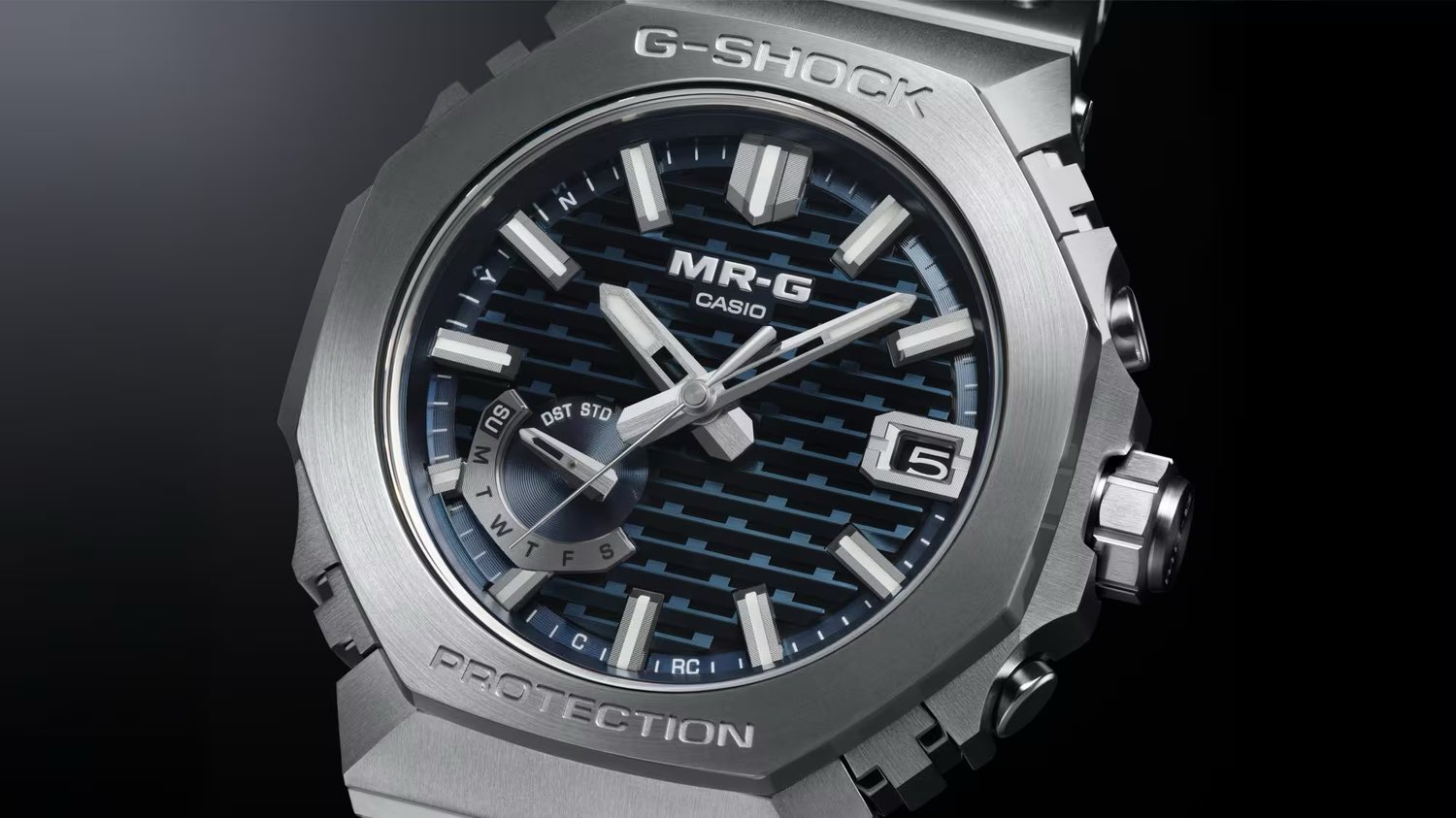
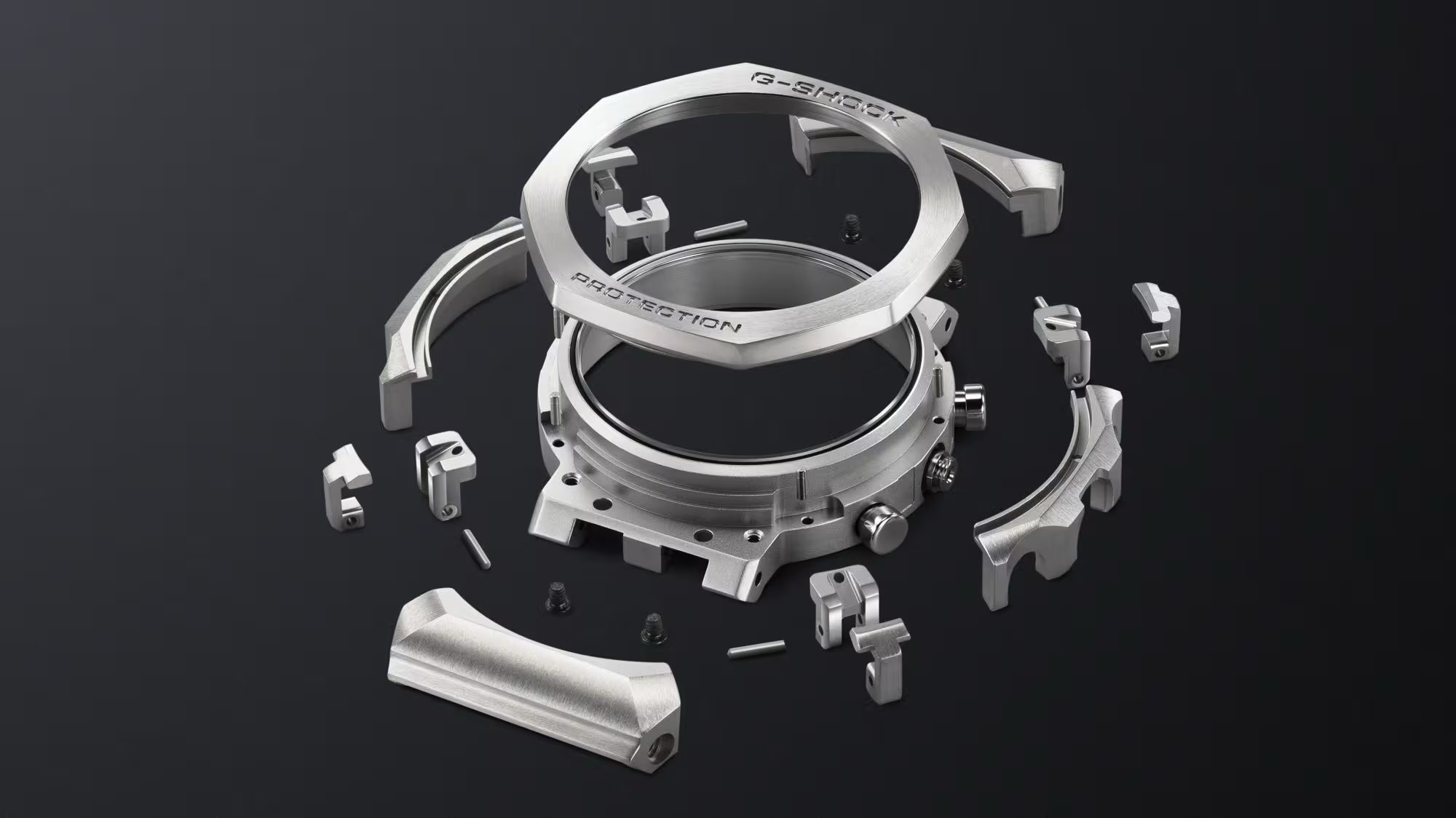
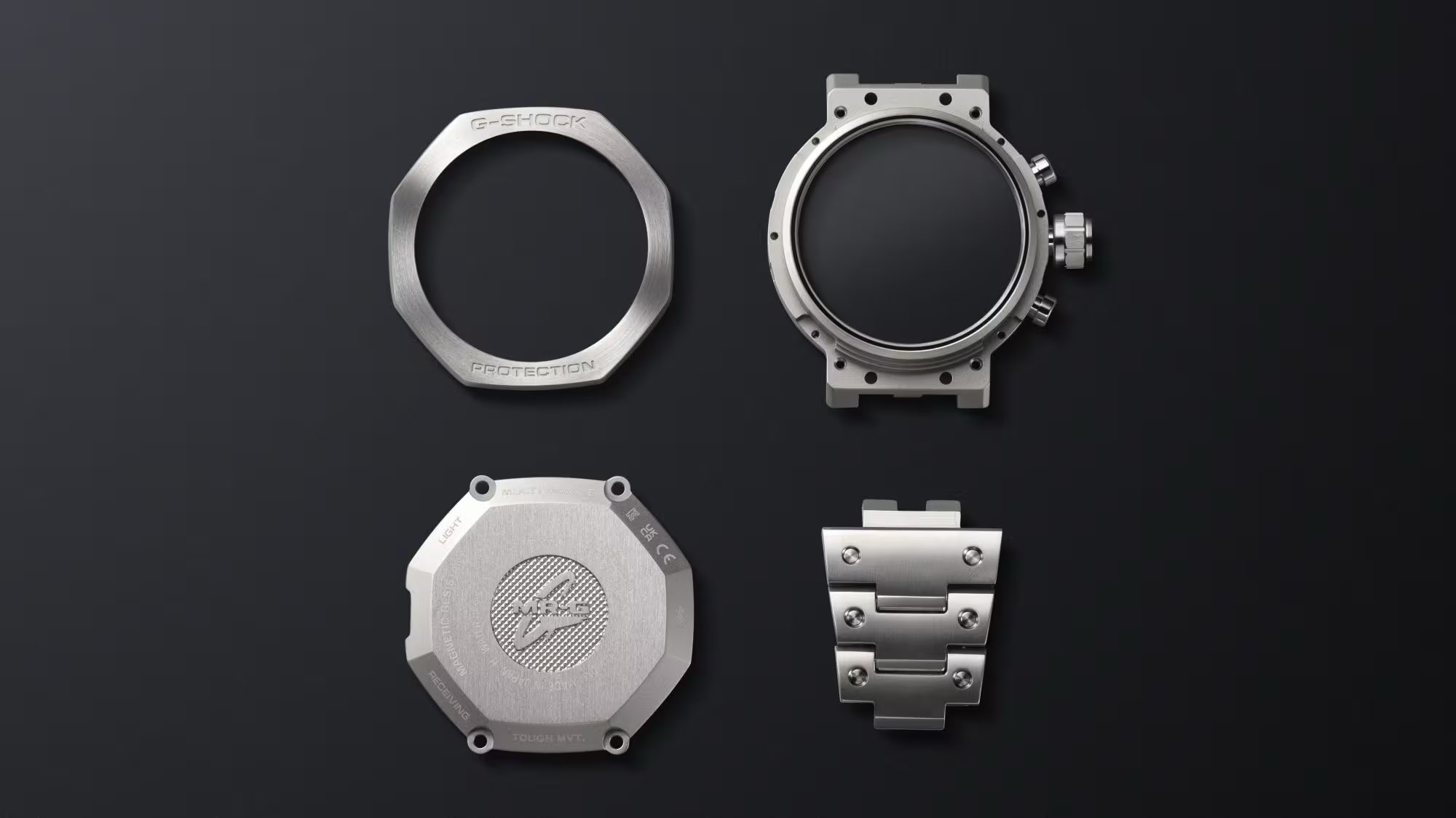
The meticulous craftsmanship and construction show why the MR-G sits at the top of the G-Shock lineup. The bezel, which is usually molded as a single piece, is divided into 27 separate components, and the dimples on the bracelet are also made of separate parts, with each component polished by hand by skilled artisans for a distortion-free mirror finish.
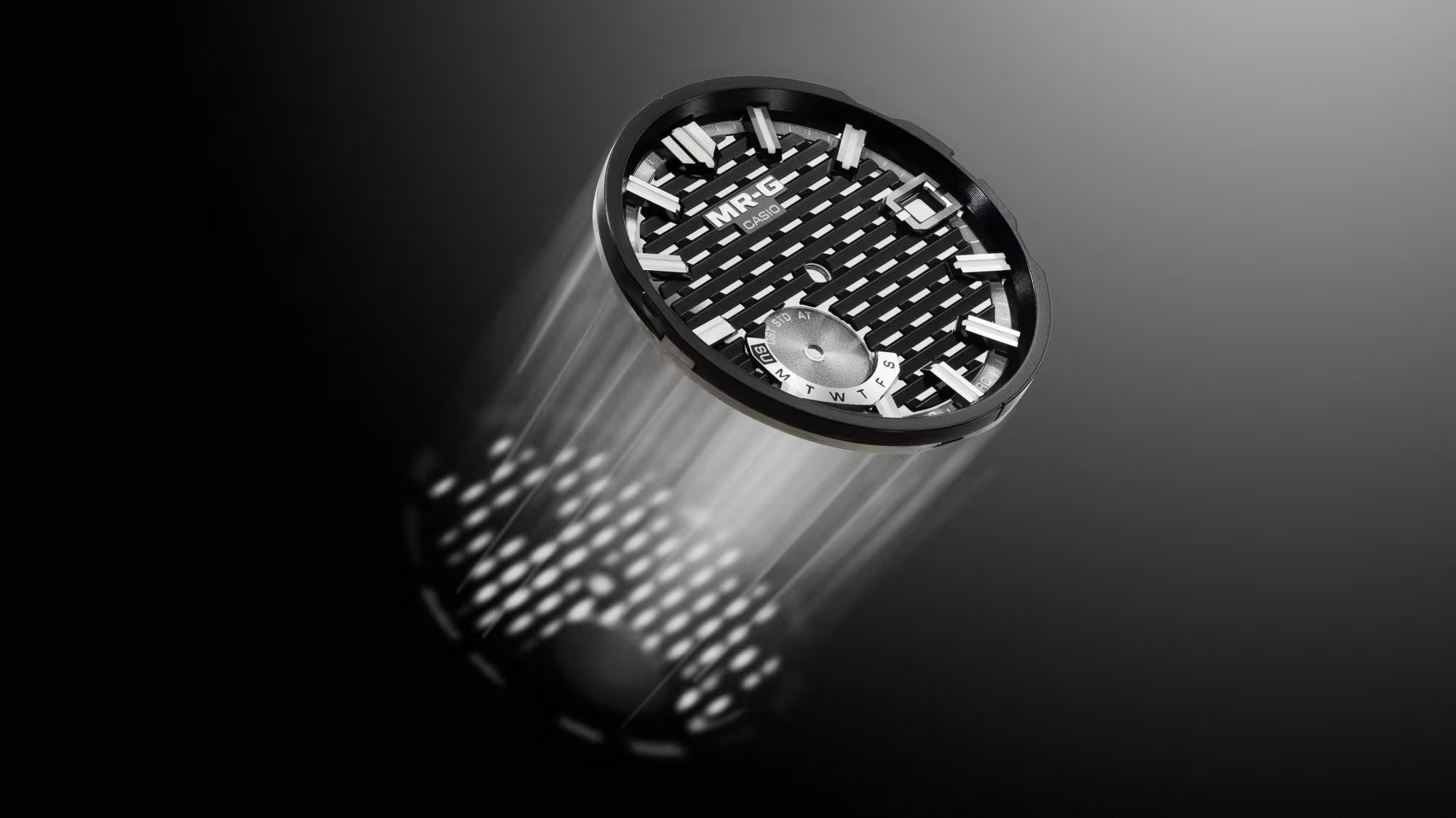
Beneath the indigo face lies a dial structure inspired by "Kigumi," a traditional Japanese woodworking technique that creates wavy irregularities and minute holes, allowing light to pass through to the solar cells for power generation. Casio says this intricate craftsmanship was achieved through Yamagata Casio’s micro-machining tech.
The MRG-B2100D's top bezel is made from Cobarion, a high-hardness alloy with a platinum-like sheen (said to be four times harder than pure titanium), while the bracelet uses DAT55G titanium alloy for added durability. Casio’s Multi-Guard Structure and internal buffers help ensure all that refinement still meets G-Shock’s famously strict shock-resistance standards.
You get all the modern MR-G features and G-Shock's durability promises, including Bluetooth connectivity and Multiband 6 support for automatic time adjustments, sapphire glass protection with an anti-reflective coating, a shock-resistant body and crown to protect the module, Tough Solar charging, up to 200-meter water resistance, a white LED backlight, and standard time-keeping features.
Pricing & Availability
The G-Shock MRG-B2100D-2AJR commands a hefty ¥572,000 (~$3,632) and will go on sale in Japan later this month. There's no word on global availability just yet, but it's safe to assume the watch will see a wider international release. If and when that happens, we'll be sure to let you know.
View G-Shock GWG-B1000-1AJF Master of G Series on Amazon
Key specifications
- Case size (L × W × T): 49.5 × 44.4 × 13.6 mm
- Weight: 122 g
- Case / bezel: Titanium and Cobalion
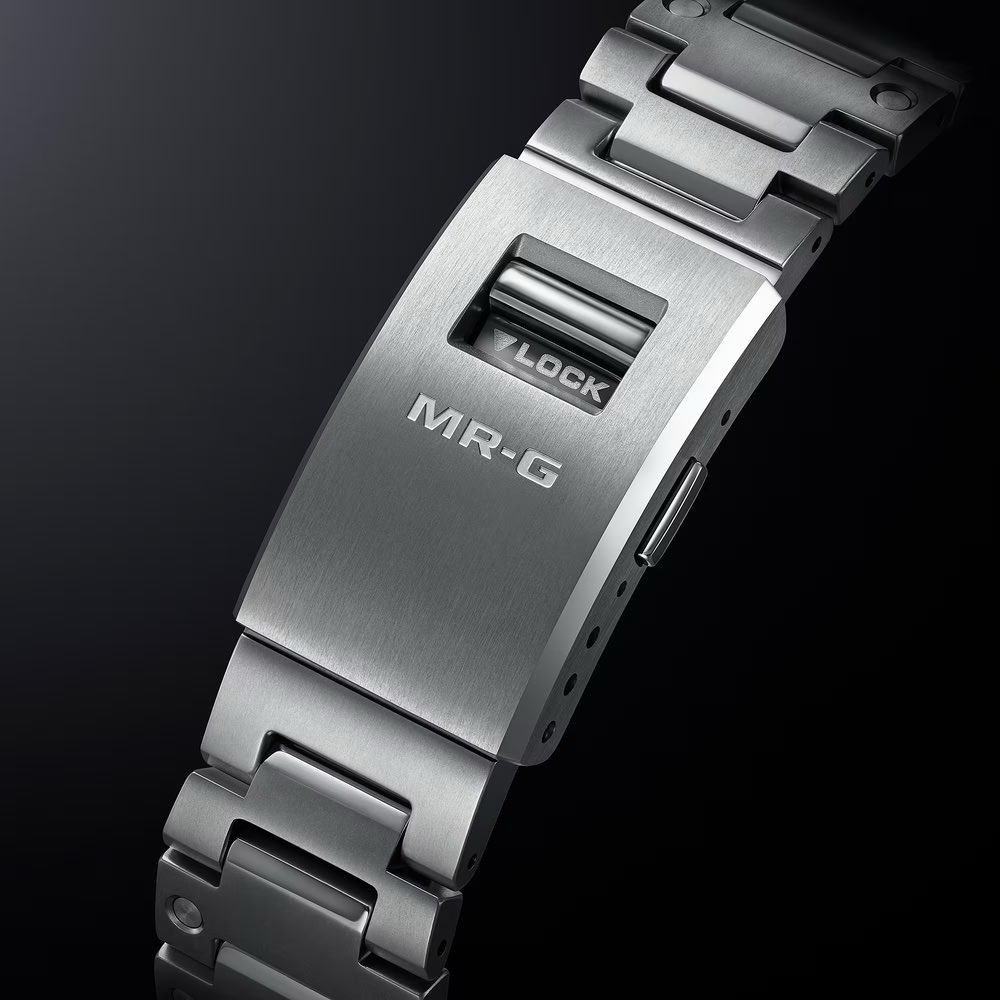
- Band: Titanium metal band with a tight-lock clasp
- Structure: Shock-resistant (impact resistant), antimagnetic (JIS Class 1)
- Glass: Sapphire with anti-reflective coating
- Water resistance: 20 ATM (up to 200 meters)
- Bluetooth smartphone sync;
- Multiband 6 radio-controlled timekeeping (Japan, North America, Europe, China)
- Accuracy: ±15 seconds per month when not receiving radio signals or connected to a smartphone
- Power: Tough Solar (solar charging system)
- Operating time: Approx. 5 months from full charge without solar input; approx. 18 months with power-saving enabled
- App compatibility: CASIO WATCHES
- Mobile Link features: Automatic time correction, easy clock setting, Time & Place, clock status display, self-check, Find My Phone
- Light: LED Super Illuminator with afterglow
- Light color: White
- Fully automatic calendar
- Hand correction: Automatic hand position correction
- Power saving: Hands stop after extended darkness to conserve power
- Radio signals: JJY (Japan, 40/60 kHz), WWVB (North America, 60 kHz), MSF/DCF77 (Europe, 60/77.5 kHz), BPC (China, 68.5 kHz)
Source(s)
 Add as a preferred source on Google


