




Xiaomi reveals first batch of devices eligible for HyperOS 4 beta update
Xiaomi has officially announced HyperOS 4, and the company has even shared that the beta program for this firmware update is about to start soon. Specifically, the first eligible devices will receive the test Android 17 version on August 14, 2026, in China.
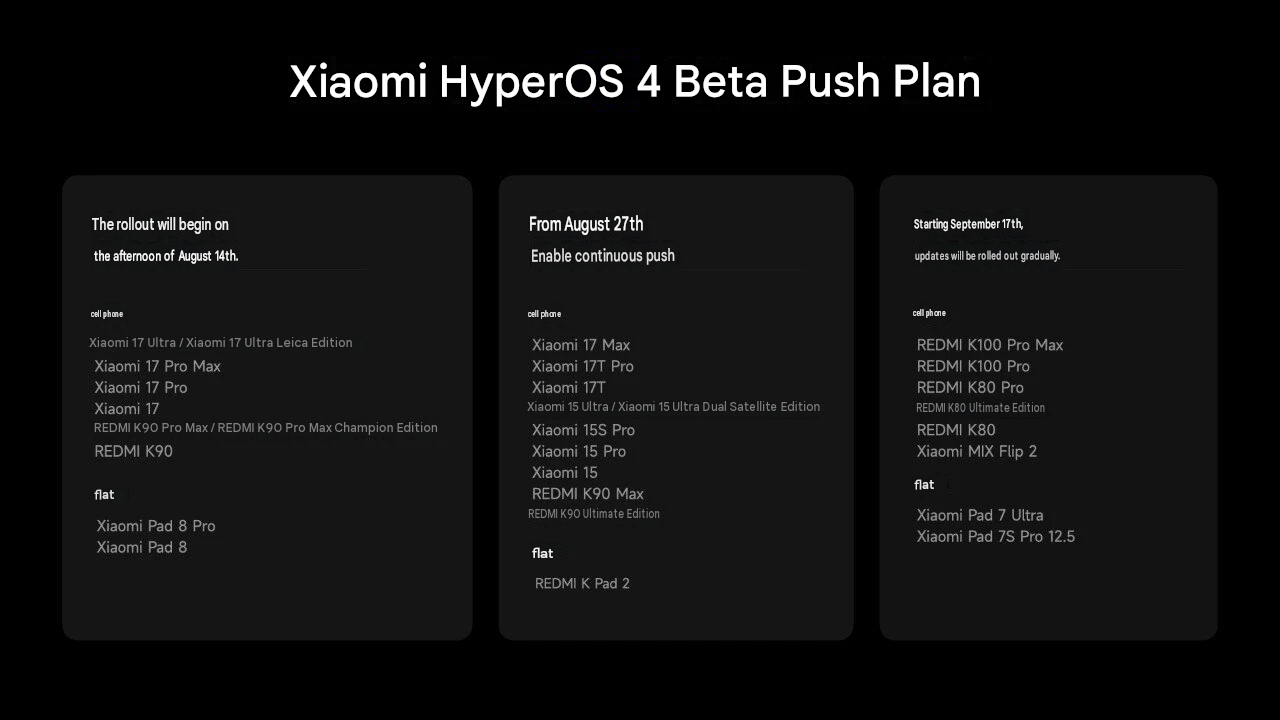
This first beta testing stage is divided into three phases, and on August 14, these are the devices that will be receiving Xiaomi HyperOS 4 test update:
- Xiaomi 17
- Xiaomi 17 Pro
- Xiaomi 17 Pro Max
- Xiaomi 17 Ultra
- Redmi K90 Pro Max
- Redmi K90
- Xiaomi Pad 8
- Xiaomi Pad 8 Pro
The second phase of the beta program starts on August 27, 2026, and the lineup is as follows:
- Xiaomi 17T
- Xiaomi 17T Pro
- Xiaomi 17 Max (12/256GB curr. $759.21 on TradingShenzhen)
- Xiaomi 15
- Xiaomi 15 Pro
- Xiaomi 15S Pro
- Xiaomi 15 Ultra
- Redmi K90 Max
- Redmi K90 Ultra
- Redmi K Pad 2
As for the last rollout of the first beta batch, it will happen on September 17, 2026, and these are the devices that are eligible:
- Xiaomi Mix Flip 2
- Redmi K80
- Redmi K80 Pro
- Redmi K80 Ultra
- Redmi K100 Pro Max
- Redmi K100 Pro
- Xiaomi Pad 7S Pro 12.5
- Xiaomi Pad 7 Ultra
Xiaomi hasn't revealed the global timeline for the HyperOS 4 beta program, but it's expected to begin shortly after the Chinese program starts. The same set of devices may be the first ones to receive the test update in the international market.
Xiaomi promises multiple key improvements on HyperOS 4
The HyperOS 4 update is said to bring a handful of core improvements. Fast response time is one of them, with Xiaomi promising up to 17.5% improvement. Applications are said to run more stably, with a claimed 28.9% improvement in stability, and the company notes that memory performance will improve.
There are AI-focused changes as well, including a new AI interaction feature and integration of Xiaomi MiMo large model. As for the interface, there are designs that are similar to iOS 26, and per the initial videos, the animations seem smoother and more fluid than on HyperOS 3.
Source(s)
Xiaomi HyperOS, Lu Weibing, and Mia Xinxin on Weibo
 Add as a preferred source on Google


