Titan 2 Elite: New BlackBerry alternative is curved and less beefy
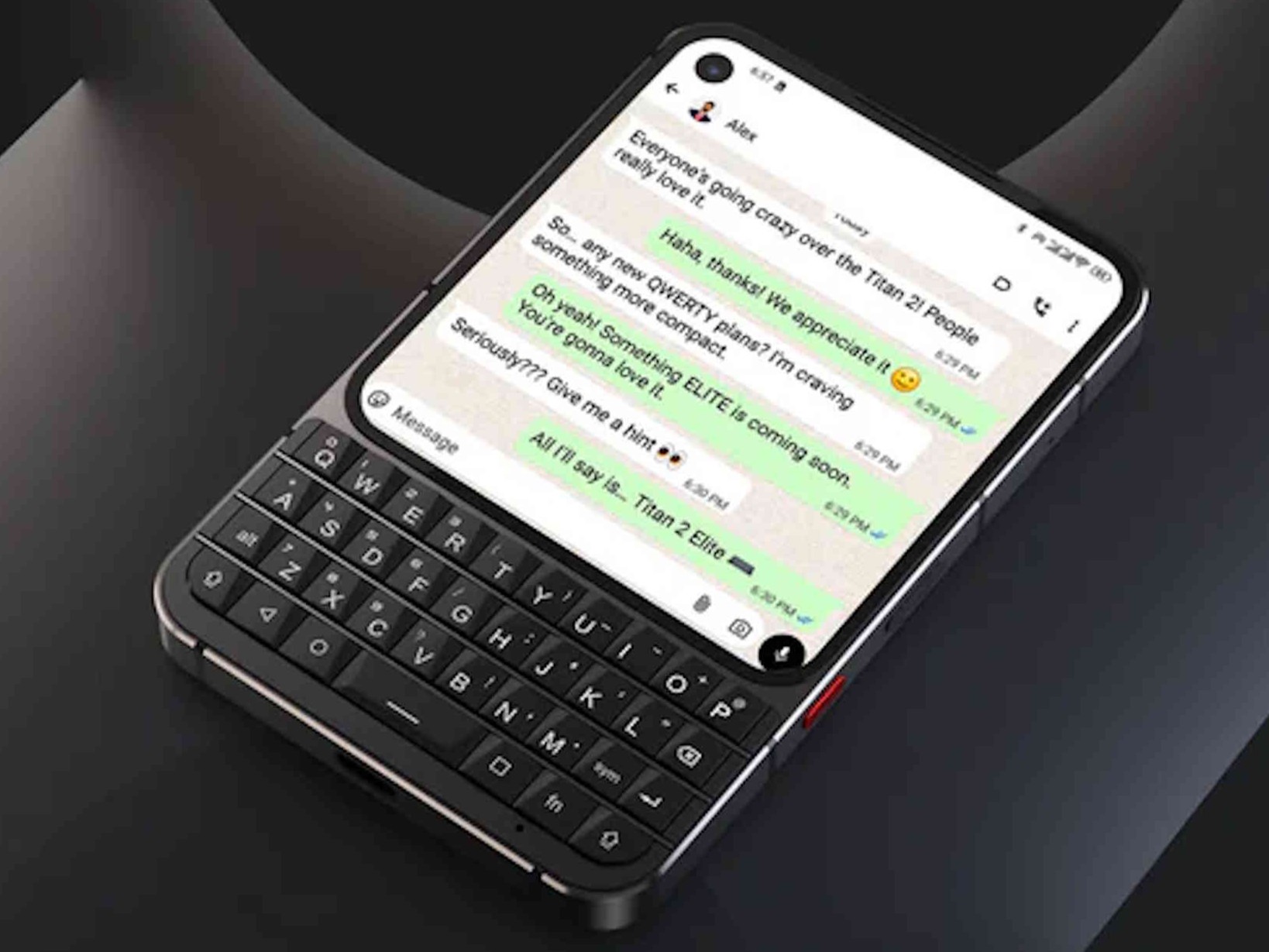
Unihertz has announced a new smartphone, the Titan 2 Elite, in the form of a teaser. The shared image is quite revealing, but the design of the keyboard-equipped smartphone isn't particularly surprising. It appears to be a relatively small smartphone, with the screen size reduced in favor of the keyboard. The keyboard has four rows, bu there is no dedicated row for entering numbers or replacing the Android navigation keys, which are located to the left and right of the spacebar. A function key for entering numbers and special characters is included. The smartphone pictured uses the standard QWERTY layout.
Unihertz is yet to release further technical details, but those interested can sign up for an email list. Compared to the Unihertz Titan 2, there are already some differences. The Titan 2 Elite appears significantly less bulky due to its rounded corners on both the casing and the display edges, although its exact dimensions are not yet known. The Titan 2 Elite does without the thicker bezel at the top above the display, so the front camera is housed in a punch-hole cutout.
Source(s)
 Add as a preferred source on Google