




Verdicht on the Ugreen NASync DXP2800 GT
The Ugreen NASync DXP2800 GT impresses with powerful hardware, excellent build quality, and a generous feature set for a 2-bay NAS. The AMD Ryzen Embedded R2514 provides sufficient performance headroom for more demanding tasks, while 10GbE networking and two additional M.2 slots enable fast data transfers. Low noise emissions are another positive aspect. However, idle power consumption could be lower.
Ugreen has also made improvements to UGOS Pro. The software is well organized, easy to use, and now includes additional features such as IP camera surveillance. Nevertheless, it still has some catching up to do compared to established NAS operating systems, particularly when it comes to the continued lack of volume encryption.
The DXP2800 GT is particularly well suited to enthusiasts, small offices, and users who want to run containers, virtual machines, or a media server alongside traditional file storage. Those who only need occasional file backups can find more affordable and energy-efficient alternatives.
Pros
Cons
Price and availability
The Ugreen NASync DXP2800 GT can be purchased directly from Ugreen's online store and is also available on Amazon.

Table of Contents
- Verdicht on the Ugreen NASync DXP2800 GT
- Specifications: Ugreen NASync DXP2800 GT
- Specifications and accessories - DXP2800 GT features 10GbE and LPDDR4
- Setup and software - Improvements, but still room for growth
- Performance - DXP2800 GT powered by an AMD Ryzen processor
- Power consumption and noise emissions - Ugreen NAS remains quiet
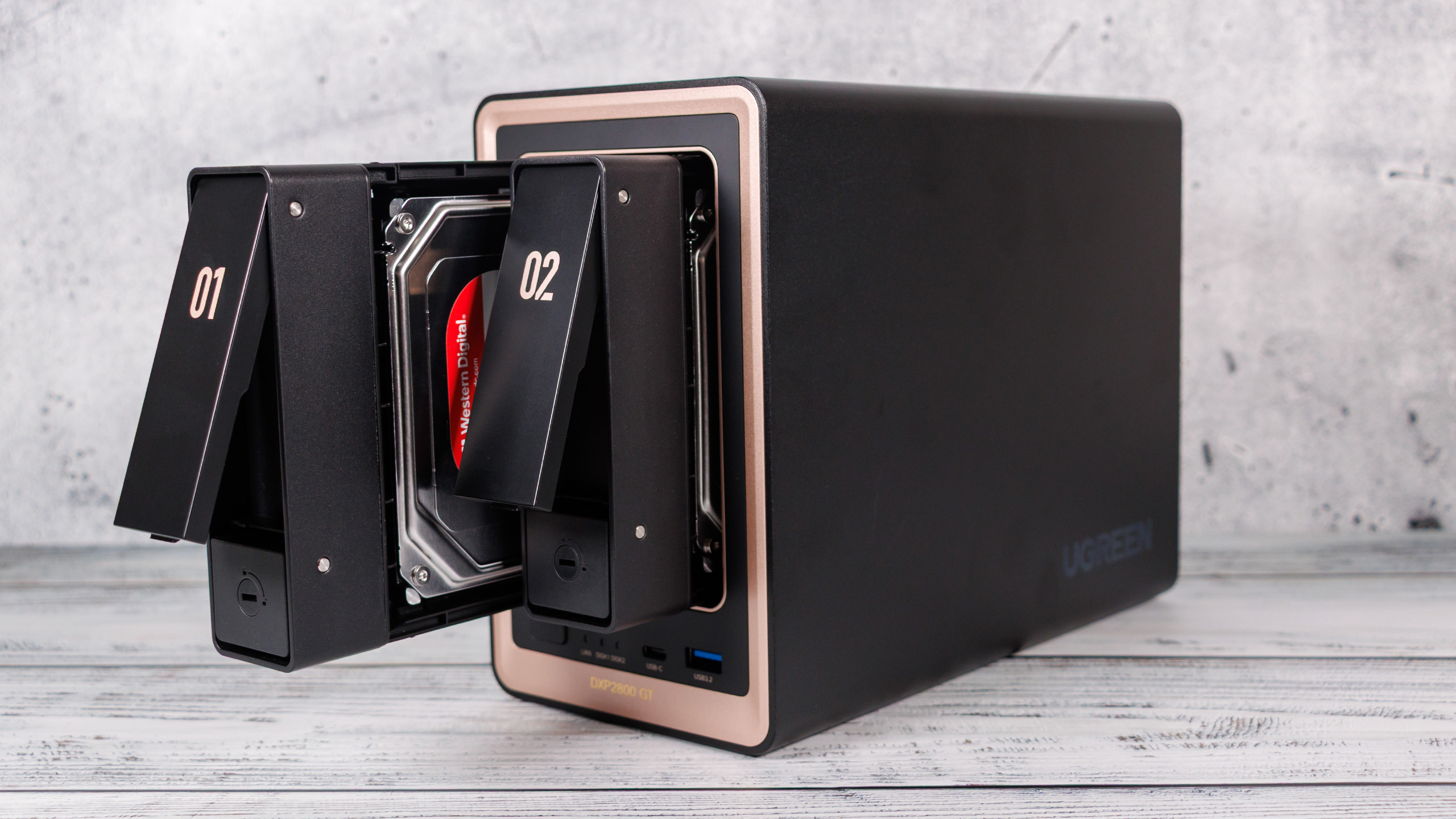
With the NASync DXP2800 GT, Ugreen offers a compact 2-bay NAS that packs an AMD Ryzen Embedded R2514 processor, 10GbE networking, and two additional M.2 slots into a relatively small chassis. This makes the network-attached storage device an appealing option for demanding home users and small offices.
In our previous review of the Ugreen NASync DXP6800 Pro, we were impressed by its powerful hardware, while the UGOS Pro operating system still showed several weaknesses. Since then, Ugreen has made improvements to its software and introduced additional features. In this review, we examine whether the DXP2800 GT can deliver a convincing everyday experience and which shortcomings still remain.
Specifications: Ugreen NASync DXP2800 GT
| Name | Ugreen NASync DXP 2800 GT |
| Processor | AMD Ryzen Embedded R2514, 4 cores, 8 threads, up to 3.7 GHz |
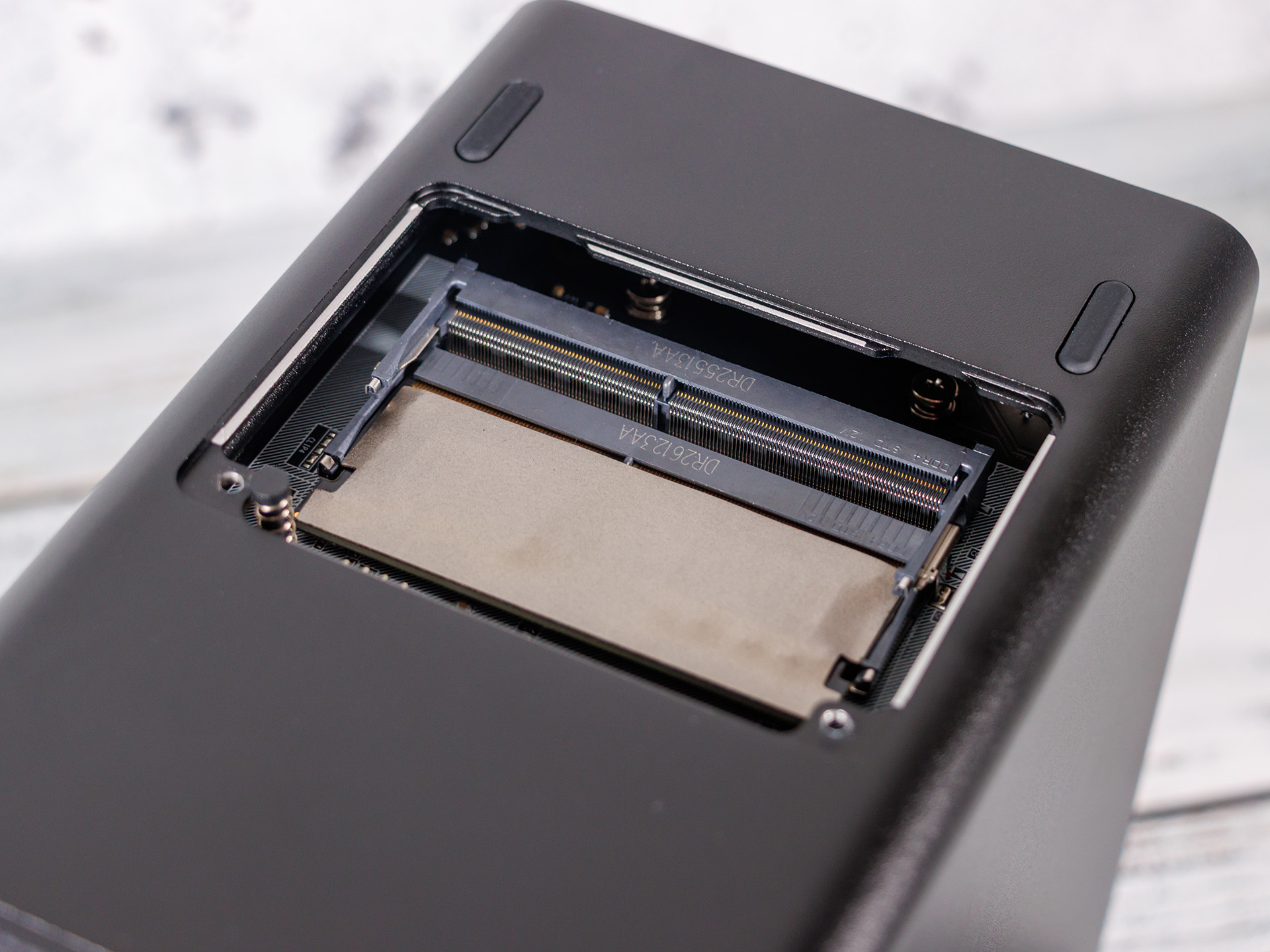
| Memory | 8 GB LPDDR4-3200 by Kimtigo (expandable up to 64 GB), 64 GB eMMC (system drive) |
| Storage capacity | Up to 80 TB (2 x SATA bays and 2 x M.2 SSD slots) |
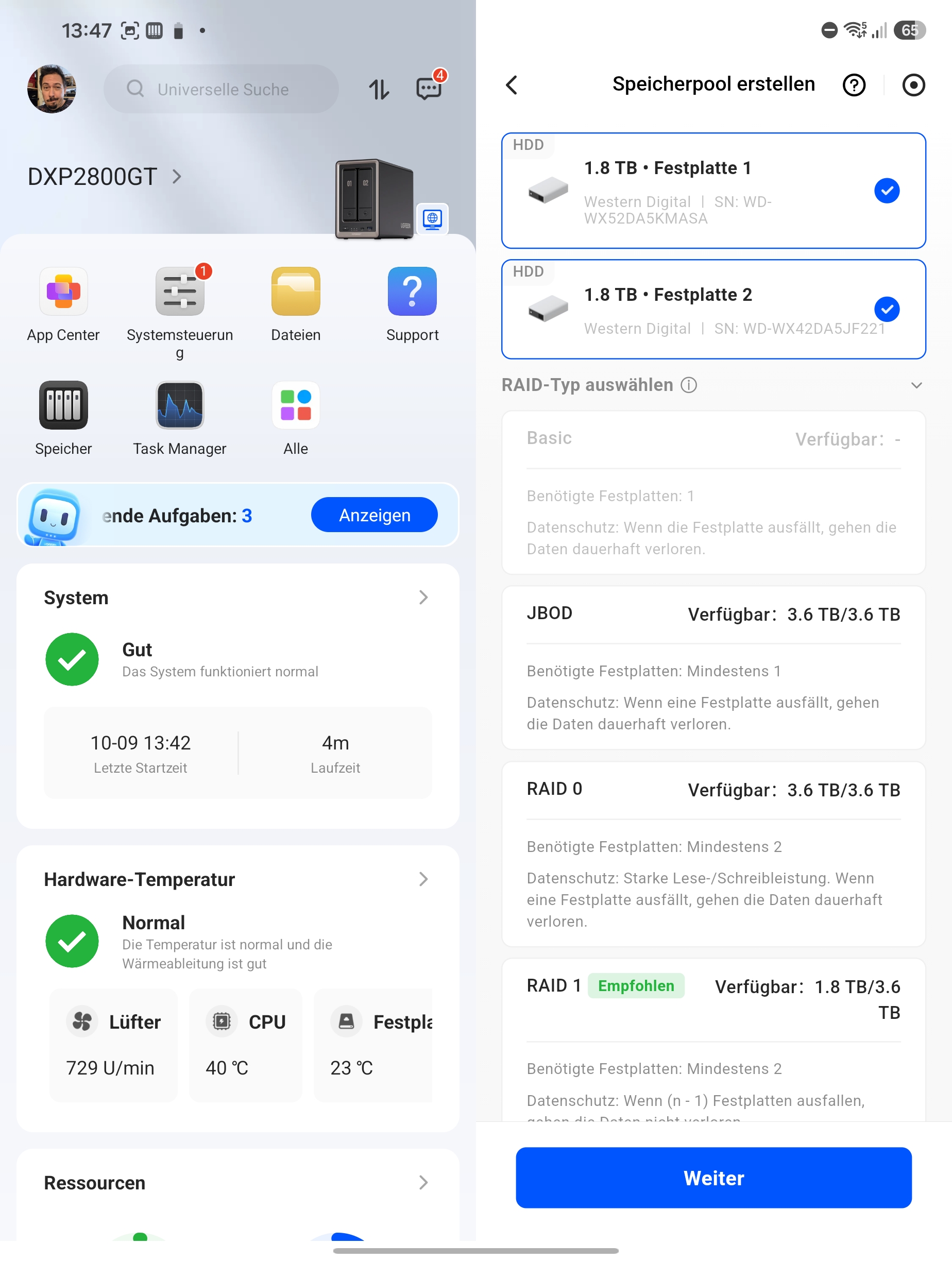
| RAID levels | JBOD / Basic / 0 / 1 |
| Network connectivity | 1 x 10 Gbps Ethernet (RJ45, rear) |
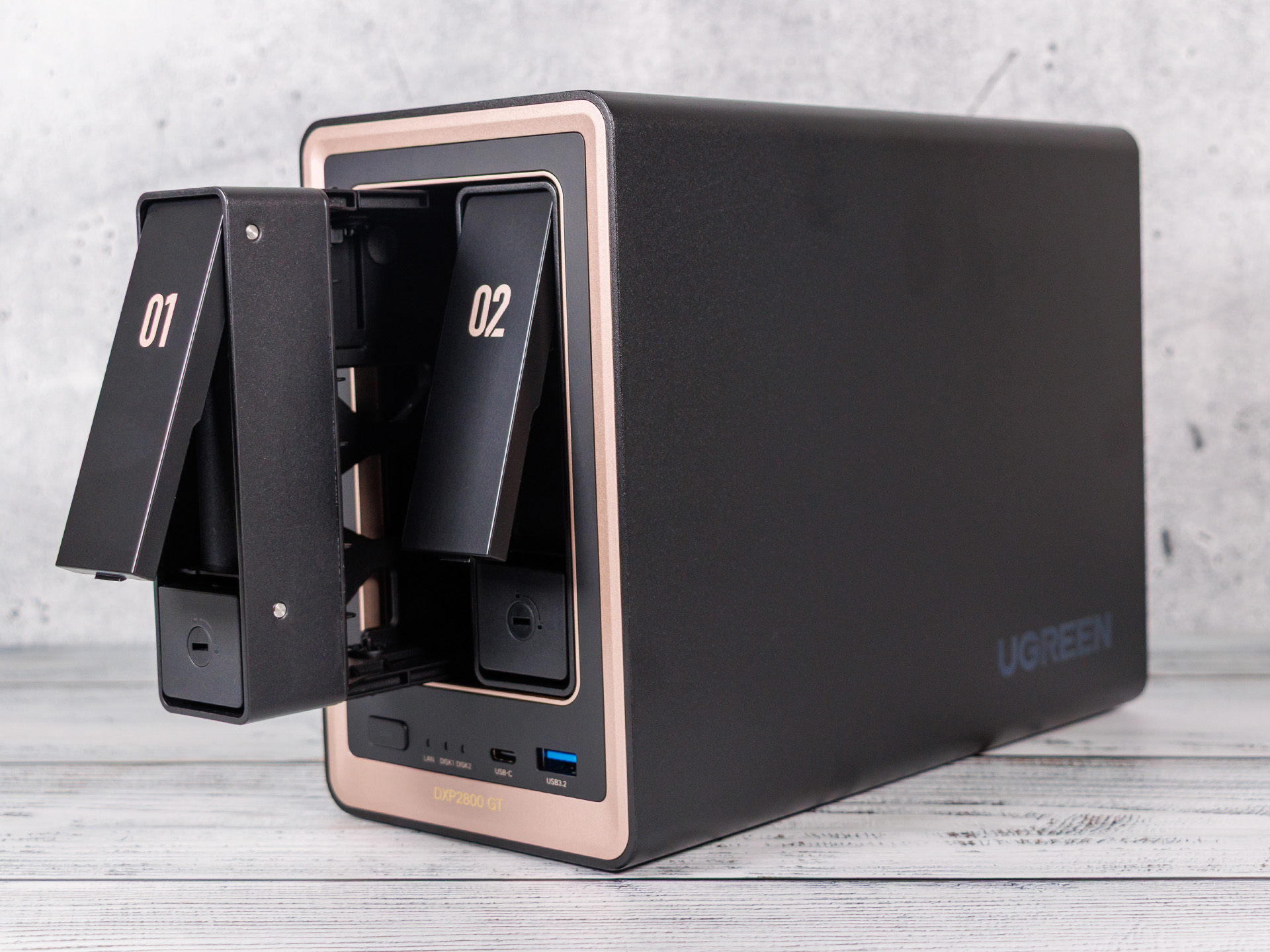
| Front ports | 1 x USB 3.2 (Gen. 2, Type-C), 1 x USB 3.2 (Gen. 2, Type-A) |
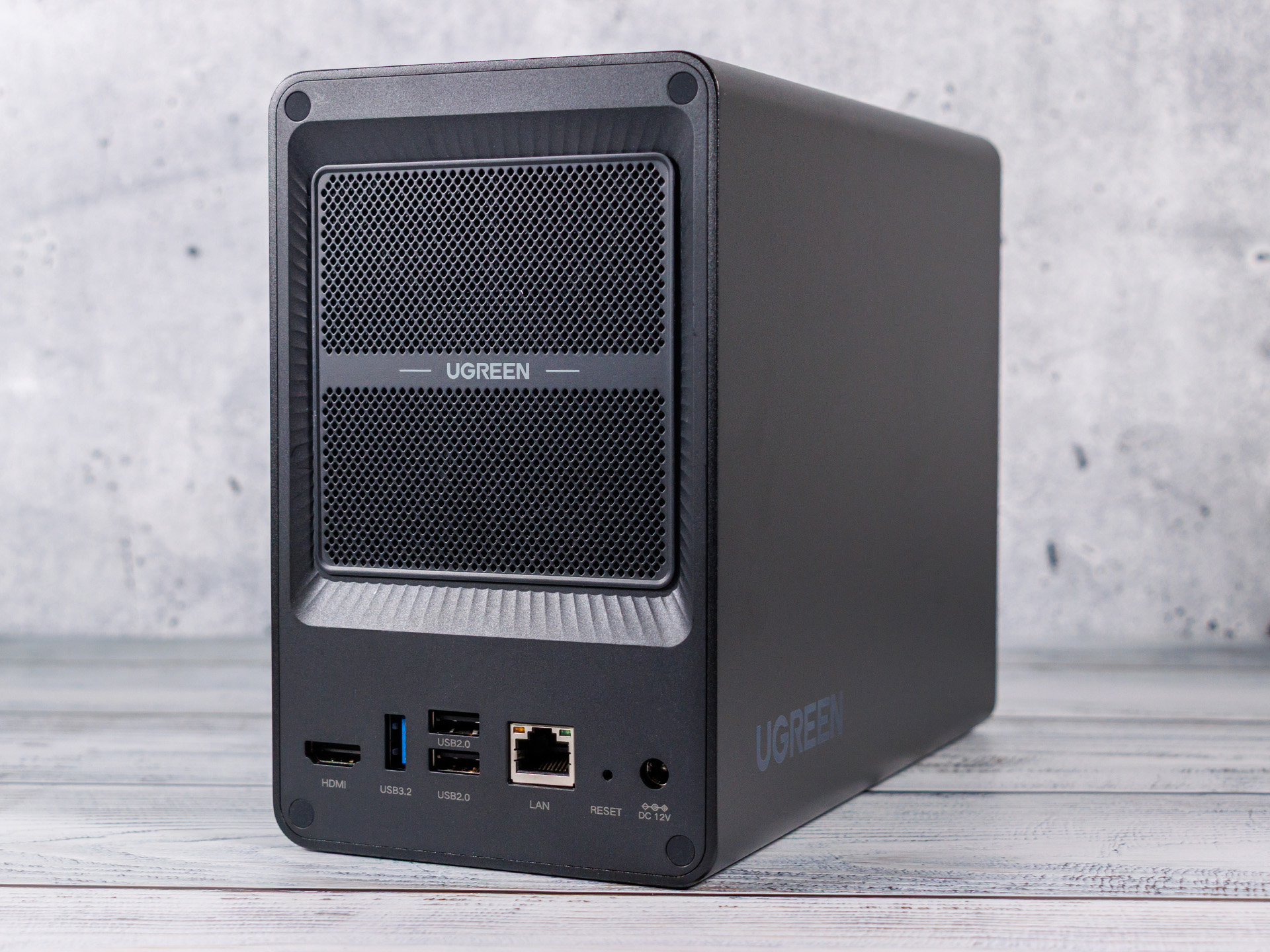
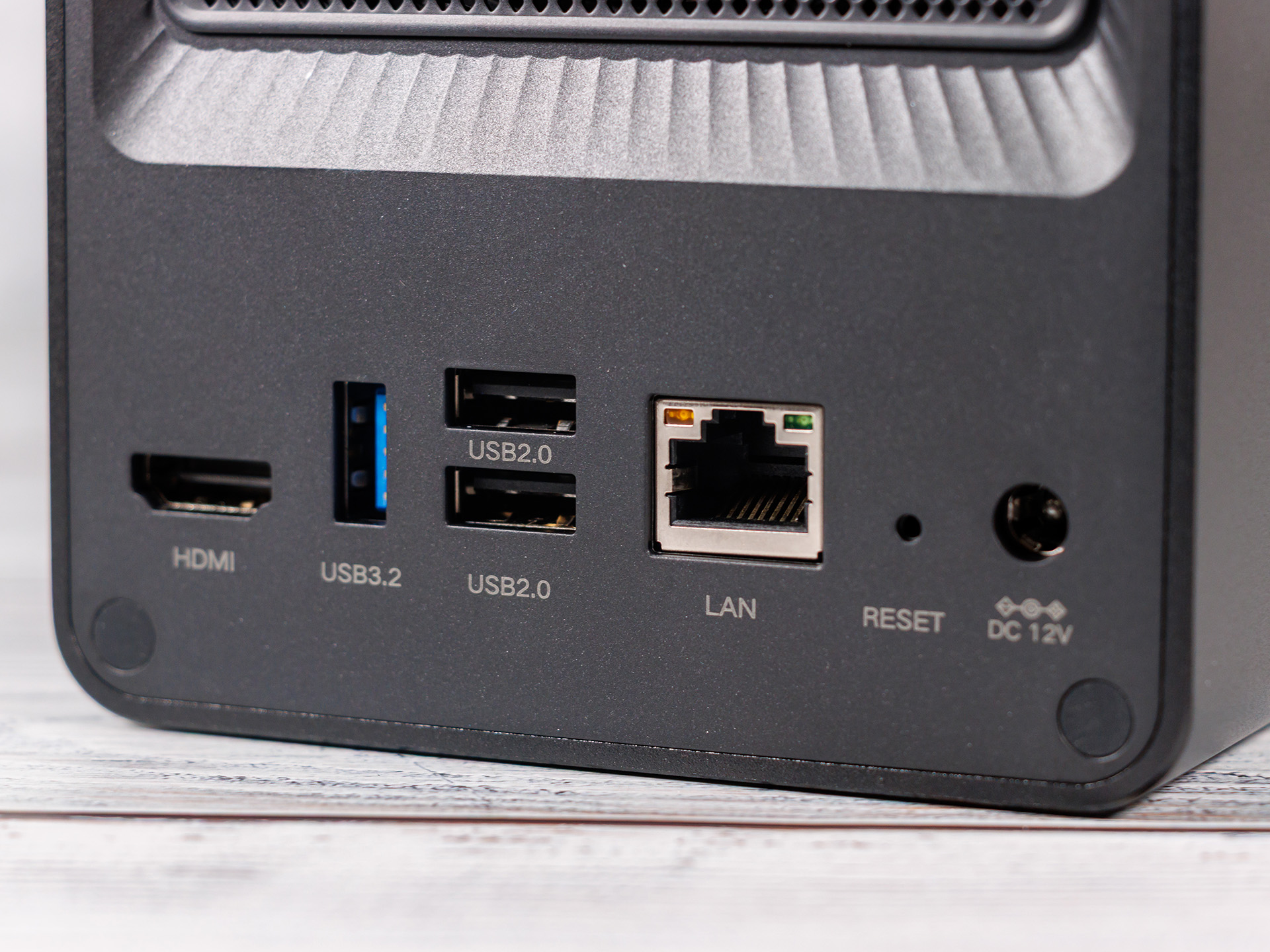
| Rear ports | HDMI (4K), USB 3.2 (Gen. 2, Type-A), 2 x USB-A 2.0 |
| Operating system | UGOS Pro 1.20.0.0142 |
| Dimensions | 231.8 x 109.4 x 178.4 mm (L x W x H) |
| Weight | 2.55 kg (empty) |
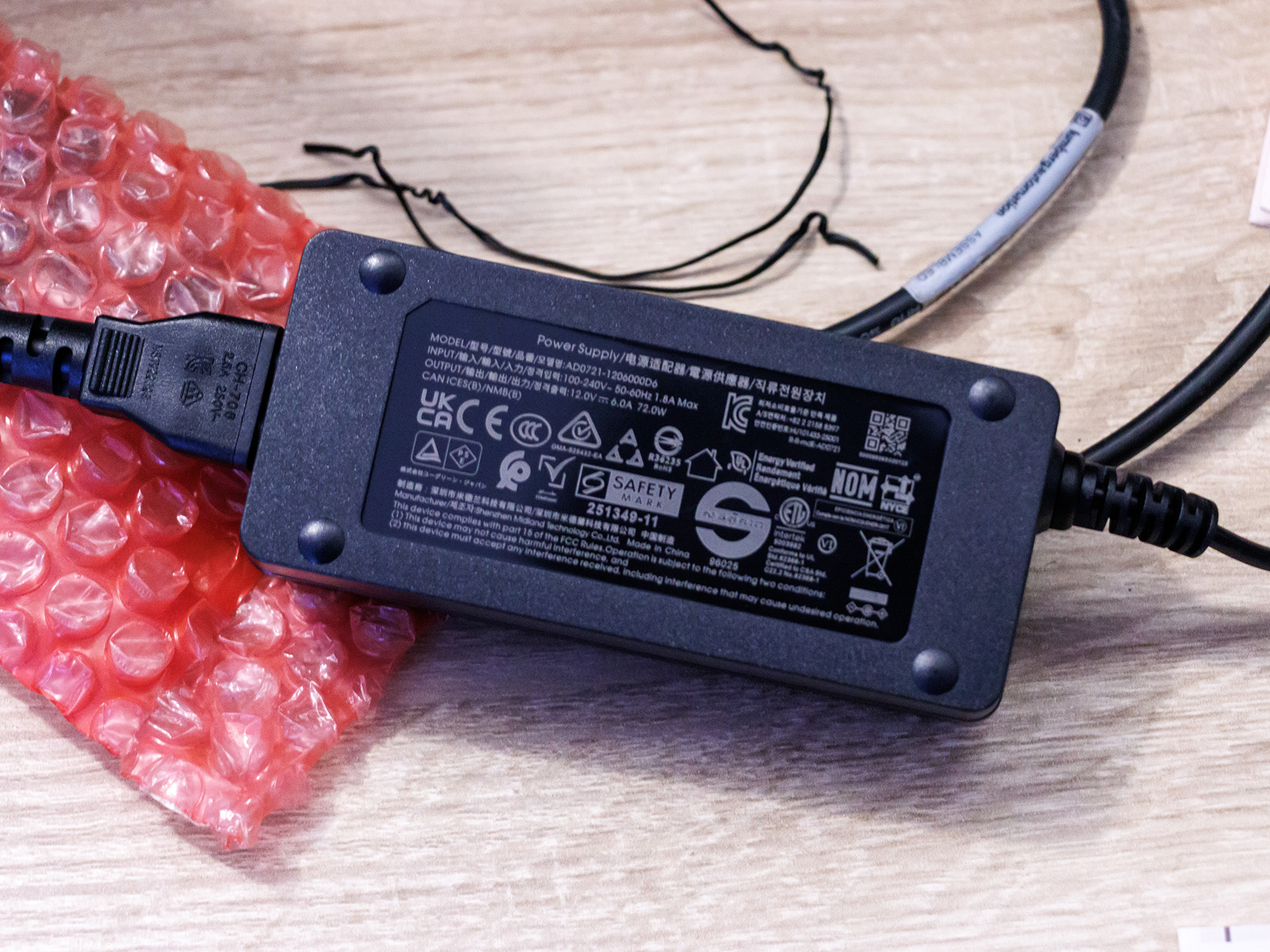
| Power supply | External, 72 watts |
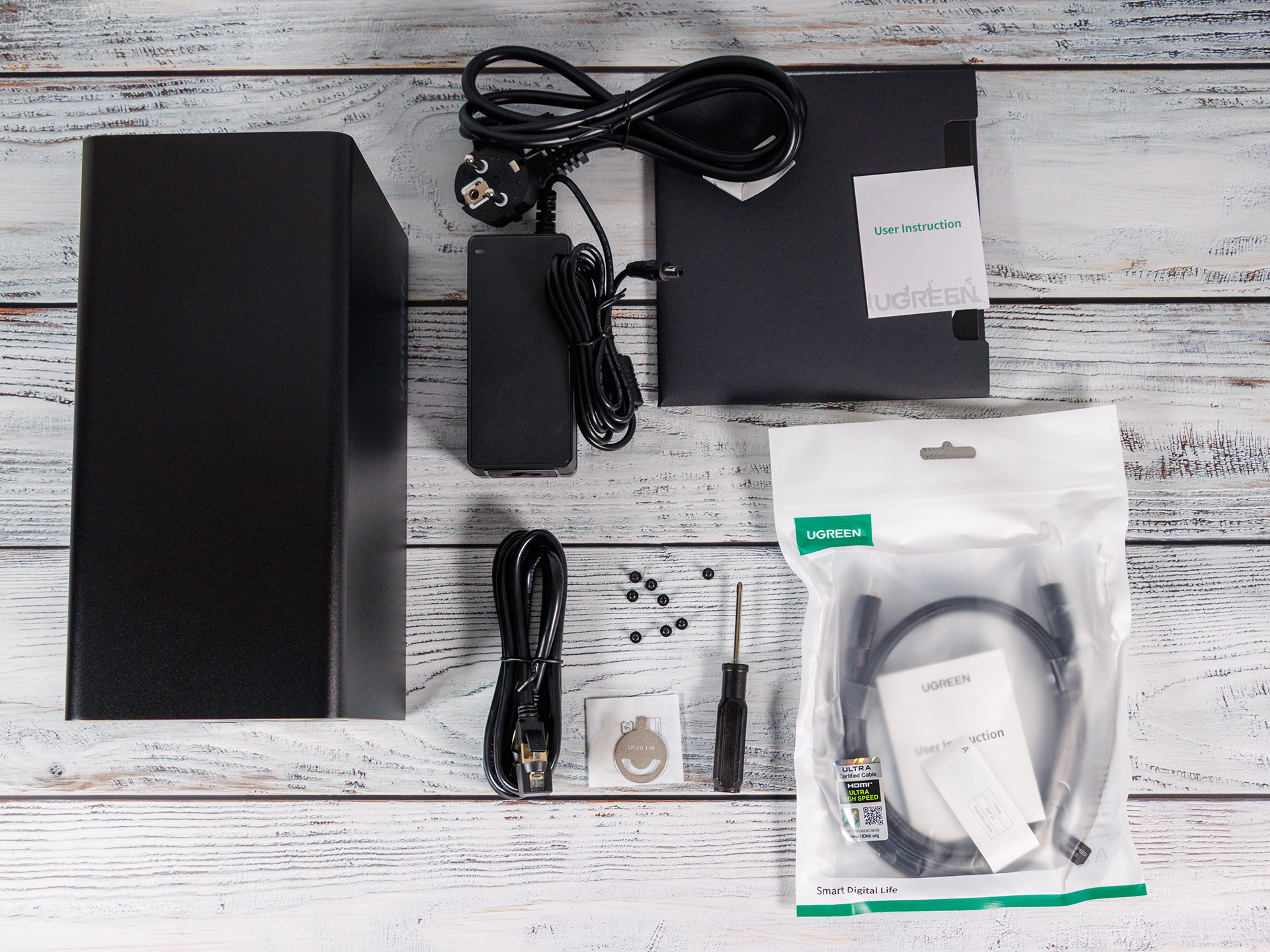
| Box contents | NAS, 2 x drive bay keys, 1 x power cord, 1 x power adapter, 2 x silicone SSD pads, 2 x U.2 SSD heatsinks, 1 x Ethernet cable (Cat. 7), 1 x HDMI cable, screws and screwdriver |
| Price (RRP) | $510 |
Specifications and accessories - DXP2800 GT features 10GbE and LPDDR4
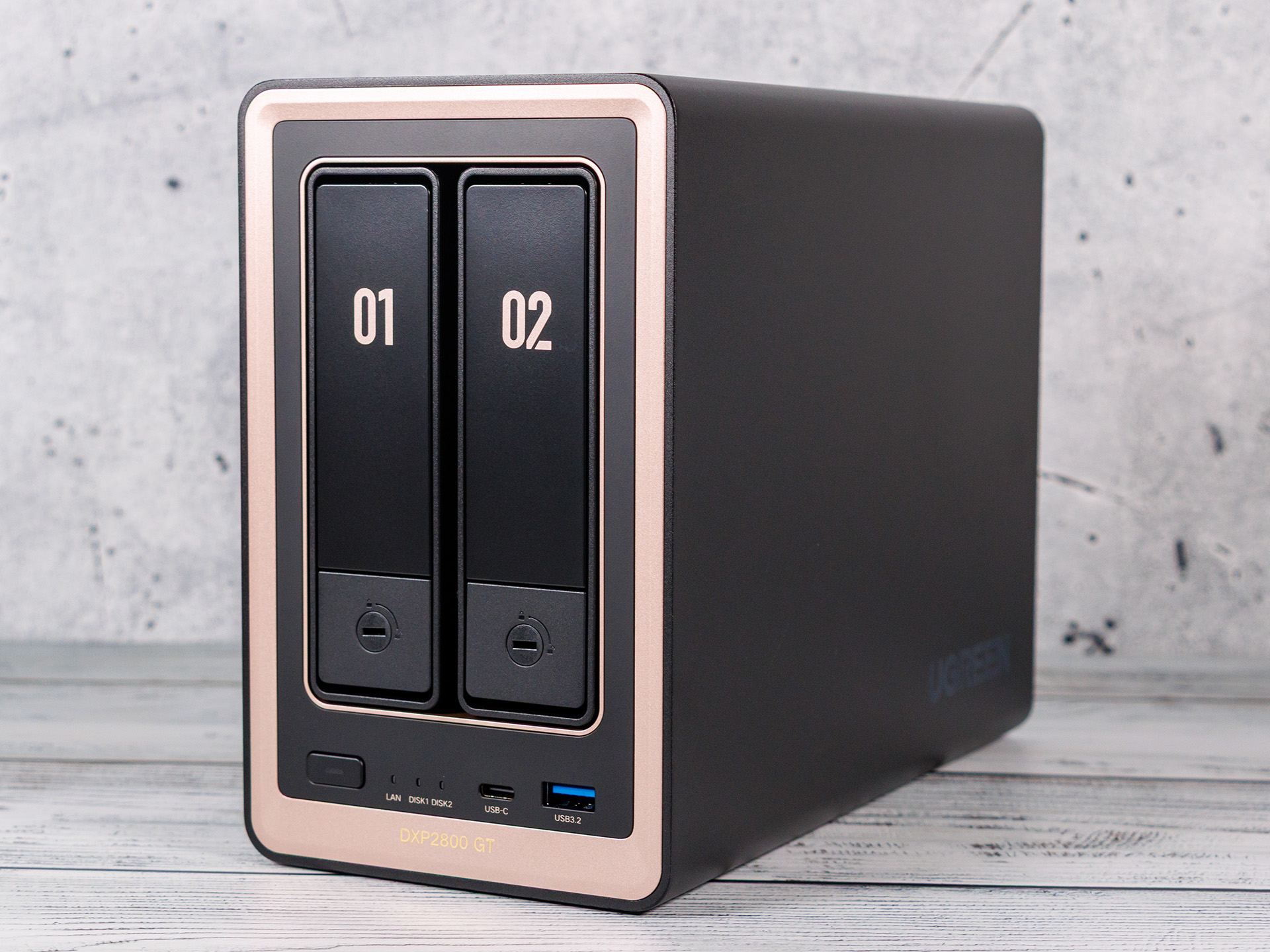
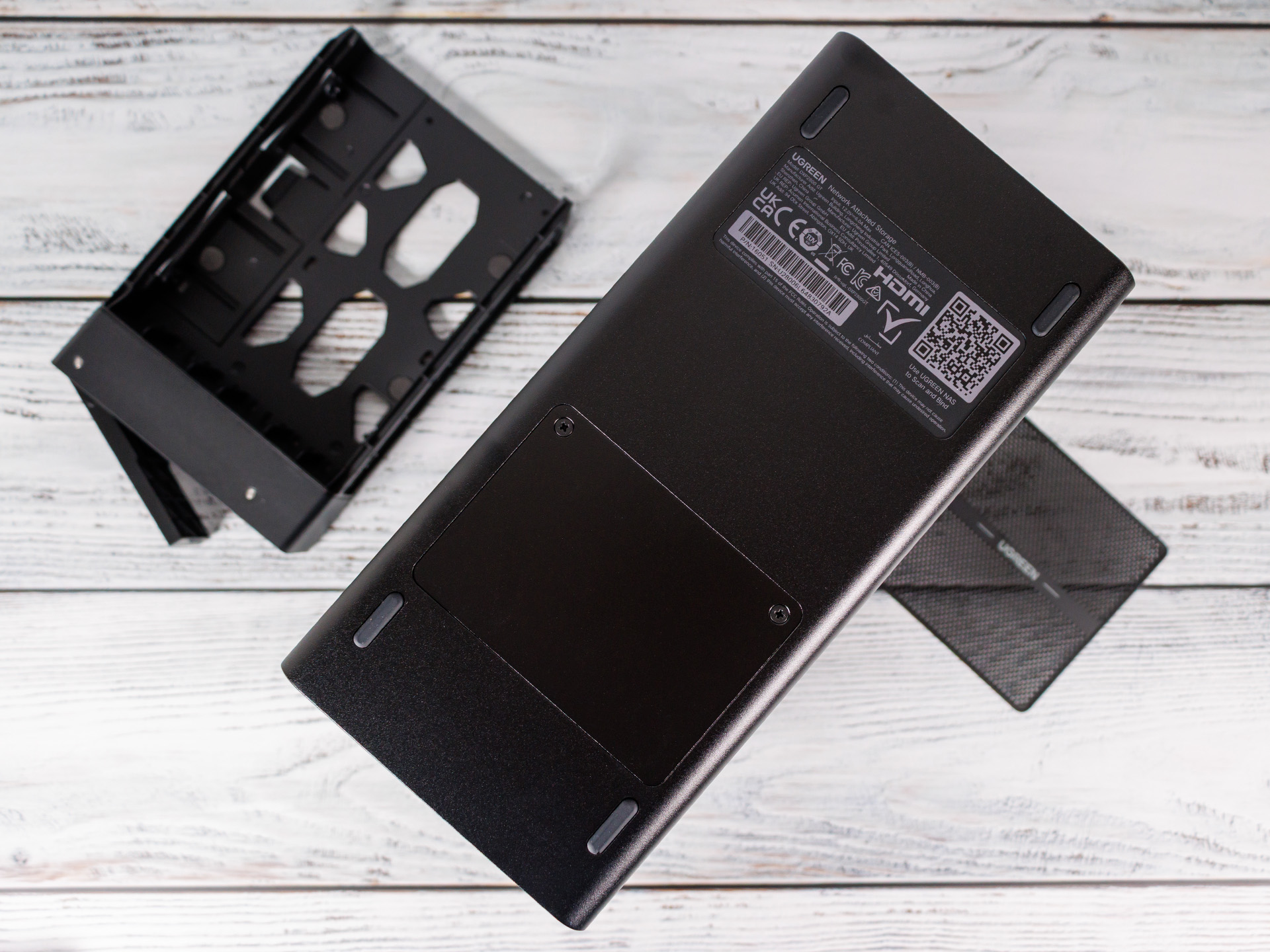
The Ugreen NASync DXP2800 GT features two drive bays that accommodate 3.5-inch or 2.5-inch drives. In addition, two M.2 slots are available for NVMe SSDs, which can be used either as a cache or to create separate storage pools. The NAS is powered by an AMD Ryzen Embedded R2514 processor with four cores and eight threads. RAM can be expanded to up to 64 GB.
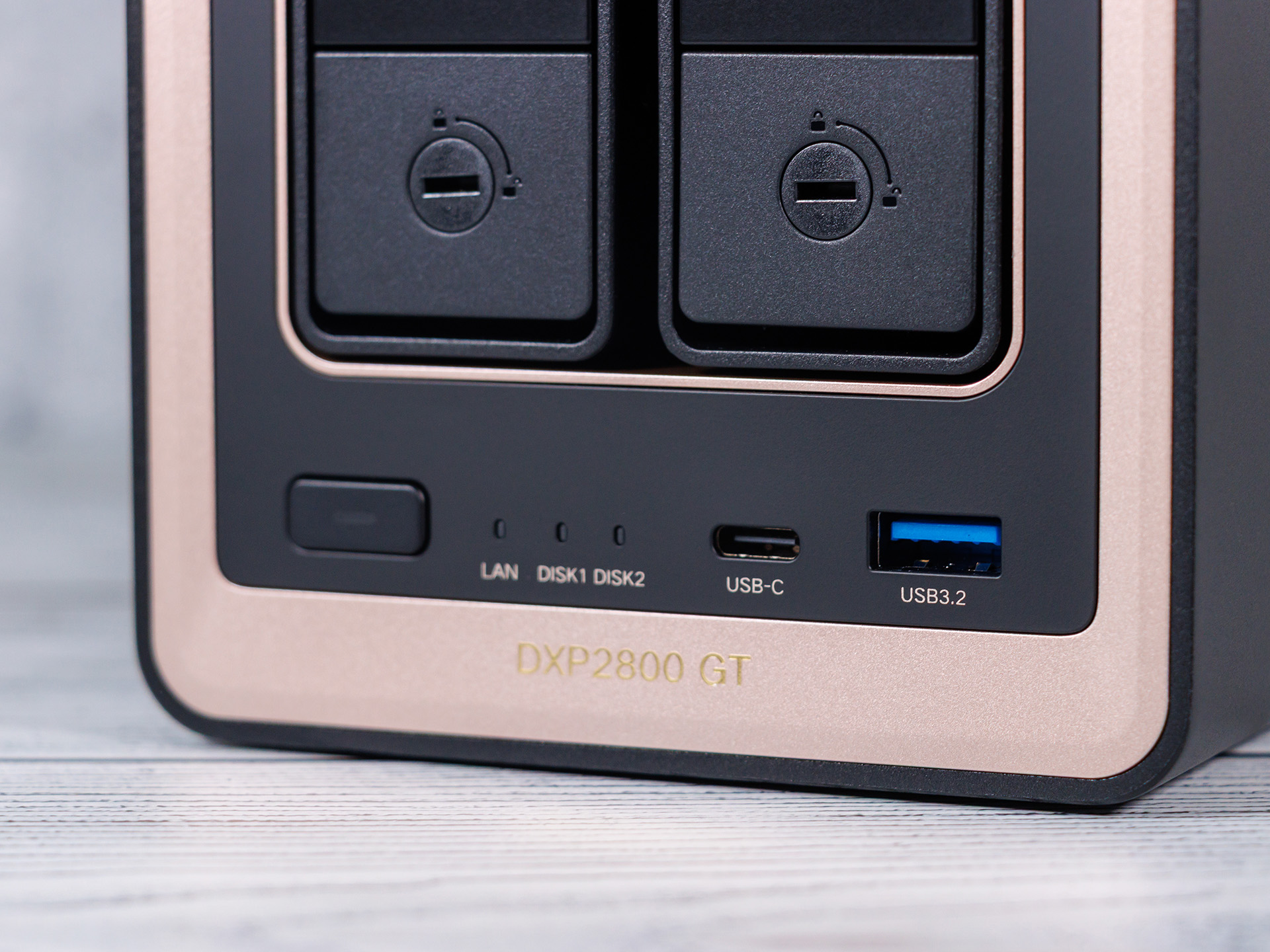
For network connectivity, the compact NAS offers a 10GbE port. It also features USB ports for external storage devices and accessories, as well as an HDMI output. Overall, the connectivity options are quite extensive for a device with only two drive bays.
In addition to the NAS itself, the package includes an external power adapter with a power cable, an Ethernet cable, an HDMI cable, mounting accessories for the drives, and a quick-start guide. Hard drives and SSDs must be purchased separately.
Setup and software - Improvements, but still room for growth
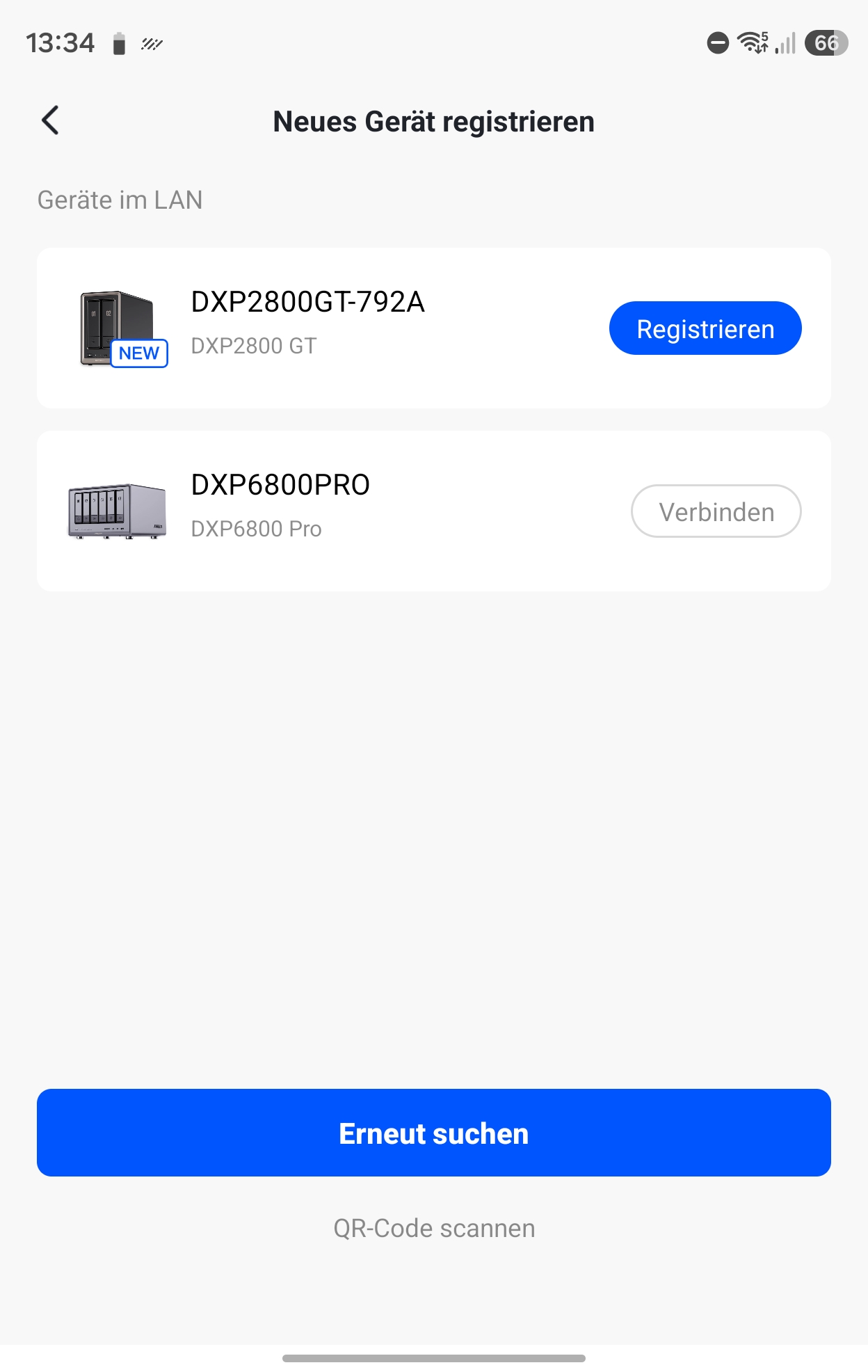
Setting up the Ugreen NASync DXP2800 GT is straightforward. After installing the hard drives and connecting the device to the network, the NAS can be discovered and configured through a web browser or the Ugreen NAS app. A setup wizard guides users through the basic configuration, creation of an administrator account, and storage initialization. Storage pools and shared folders can then be created. Even less experienced users should have little trouble getting started.
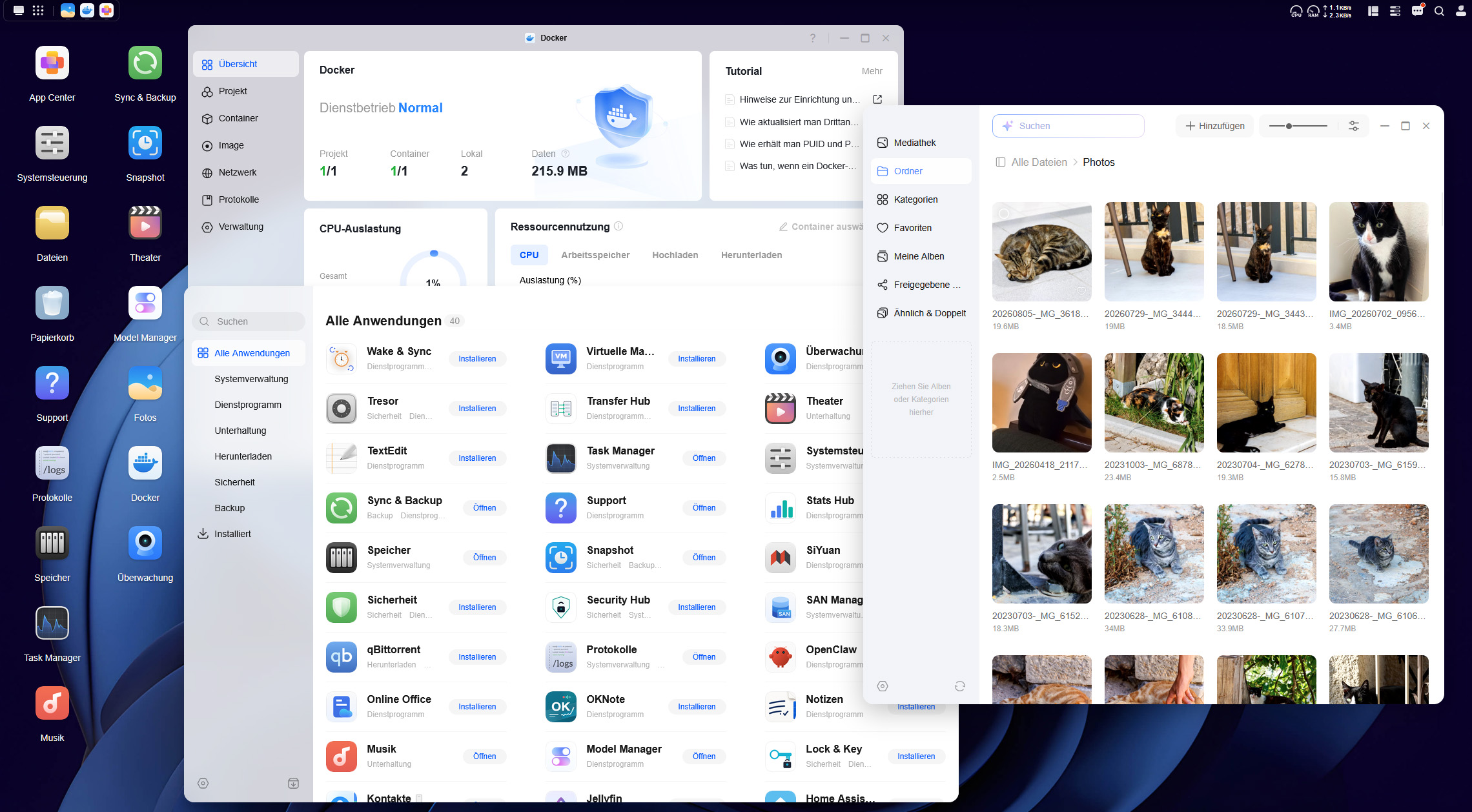
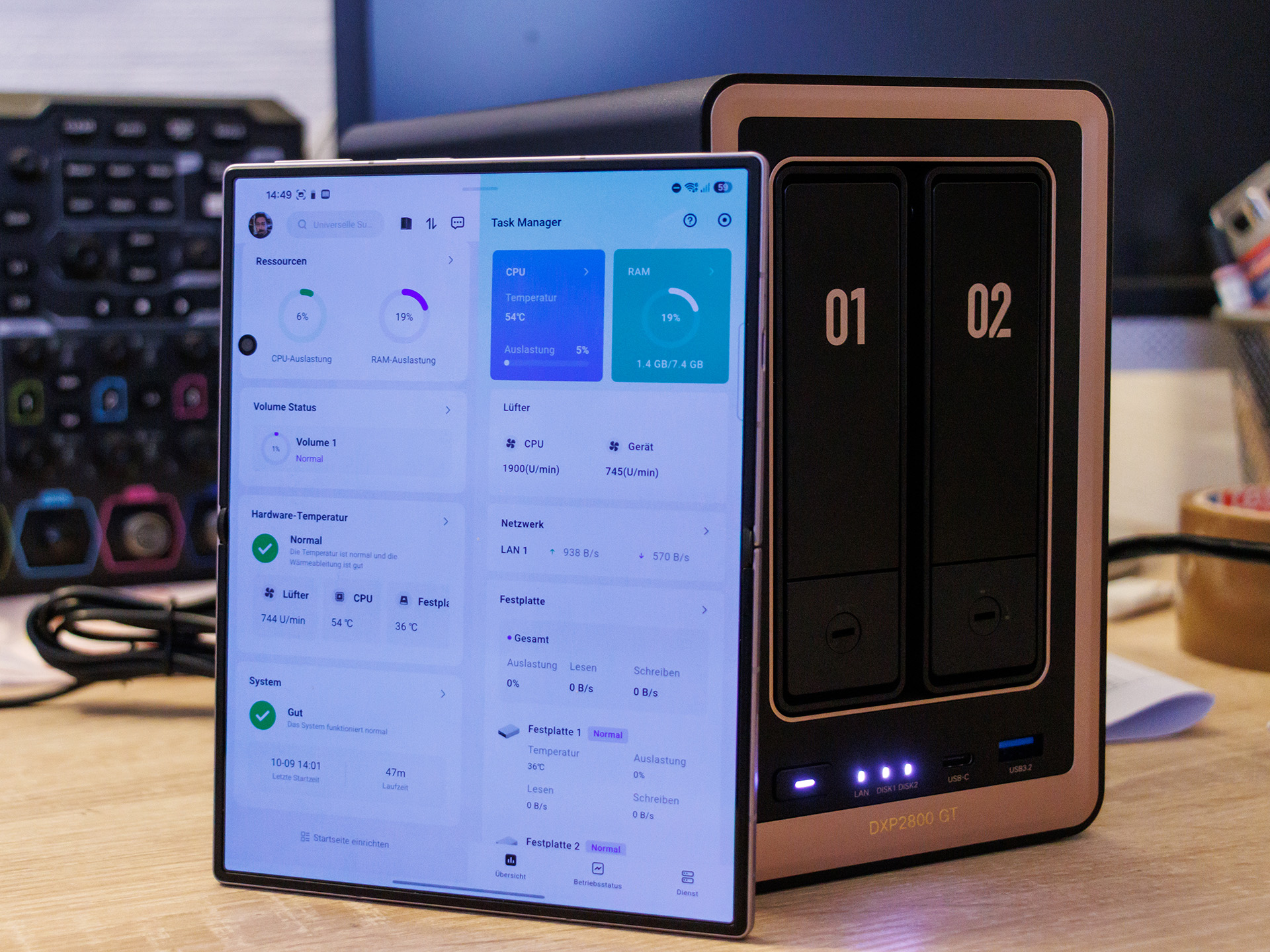
The NAS runs Ugreen's proprietary UGOS Pro operating system. Its clean, desktop-style interface is reminiscent of the operating systems offered by established NAS manufacturers. Applications can be installed through an app store, while essential features such as file management, user permissions, backups, and storage pool management are already integrated.
Since our review of the NASync DXP6800 Pro, Ugreen has continued to expand the operating system's capabilities. One of the new additions is the Surveillance app, which allows users to connect IP cameras and store their recordings directly on the NAS. This closes another gap between Ugreen and established competitors such as Synology and QNAP. Encryption options have also improved: Individual folders can now be encrypted, although full drive or volume encryption is still unavailable.
A dedicated photo management app is included, offering features such as automatic image recognition. Additional applications provide media playback, backup, and synchronization capabilities. Docker containers and virtual machines are also supported, significantly expanding the NAS's range of potential uses.
Despite these improvements, UGOS Pro still cannot fully match established NAS operating systems in terms of available applications and certain management features. On the positive side, its ease of use and ongoing development are encouraging.


Performance - DXP2800 GT powered by an AMD Ryzen processor
The Ugreen NASync DXP2800 GT is equipped with an AMD Ryzen Embedded R2514 processor featuring four cores and eight threads. This gives the compact NAS sufficient performance headroom for traditional tasks such as file sharing, backups, and media management. The processor is also generally well suited to running multiple applications, Docker containers, or lightweight virtual machines simultaneously.
One of the device's standout features is its 10GbE network port. It offers theoretical transfer speeds of up to 1.25 GB/s, providing significantly more bandwidth than the 2.5GbE connections commonly found in compact NAS systems. In practice, however, achievable speeds depend heavily on the installed drives and network infrastructure. Even in RAID 0, two conventional hard drives can hardly saturate the available network bandwidth. Fast NVMe SSDs are needed to make better use of the interface's potential.
The combination of a Ryzen processor, 10GbE networking, and additional M.2 slots makes the DXP2800 GT a versatile network storage solution. Its hardware is almost overkill for simple file storage. However, users who want to run multiple services simultaneously or transfer large amounts of data over the network will benefit from the additional performance headroom.
Power consumption and noise emissions - Ugreen NAS remains quiet
The Ugreen NASync DXP2800 GT proves to be a pleasantly quiet network storage device in everyday use. At idle, we measured just 29.11 dB(A) from a distance of 30 cm (11.8 inches). Noise levels also remain manageable under load. When both the processor and hard drives are stressed simultaneously, sound pressure levels occasionally drop to as low as 34 dB(A). Only the hard drives' access noises cause brief peaks of up to 41 dB(A). During startup, the fan briefly spins at full speed, reaching up to 47 dB(A). However, we were unable to reproduce this level during normal operation.
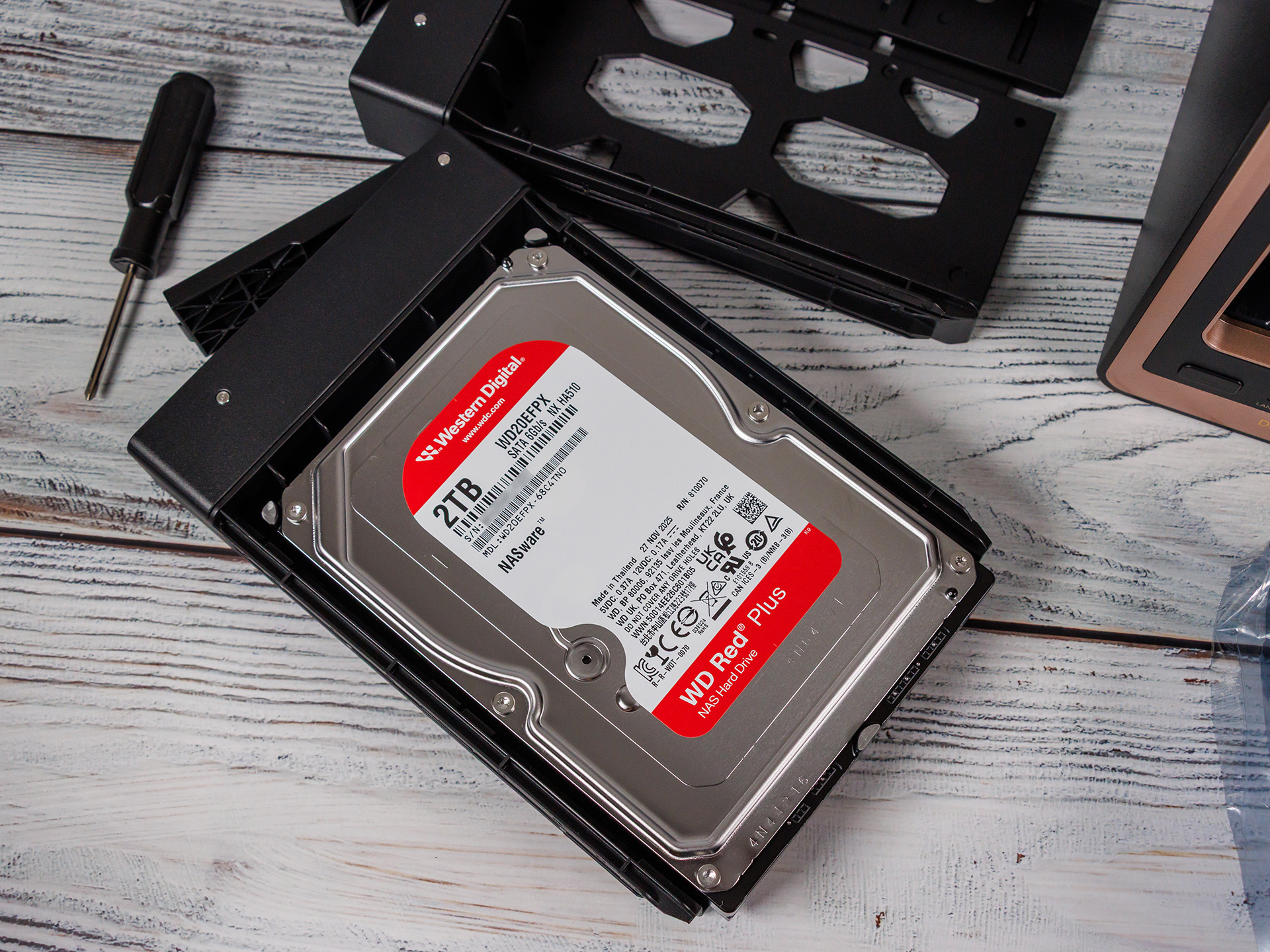
The compact NAS is less impressive when it comes to power consumption. With two WD Red hard drives installed, idle power consumption fluctuates between 14.84 and 20.14 watts. The drives remain spinning during these measurements, but no active read or write operations take place. Under full load on all four physical CPU cores, power consumption rises to 31.12 watts. When all eight threads are stressed, we measure an almost identical 31.15 watts. With both the CPU and hard drives under full load, the DXP2800 GT draws a maximum of 35.9 watts.
Overall, the Ugreen NAS impresses with its low noise emissions. However, idle power consumption is relatively high considering that the device only has two drive bays.
Transparency
The selection of devices to be reviewed is made by our editorial team. The test sample was given to the author by the manufacturer free of charge for the purposes of review. There was no third-party influence on this review, nor did the manufacturer receive a copy of this review before publication. There was no obligation to publish this review. As an independent media company, Notebookcheck is not subjected to the authority of manufacturers, retailers or publishers.
 Add as a preferred source on Google


No comments for this article
