


Signal blocks screenshots to keep AI out of chats, but Macs miss out
End-to-end encryption is little comfort if an AI assistant can read your messages straight off the screen. Signal is now restricting screenshots on iPhones and Android devices, warning that AI features built into their operating systems could access private conversations without the messaging app's knowledge.
The changes were announced on 20 November by Signal president Meredith Whittaker, who described the growing reach of operating-system AI agents as a threat to the privacy protections the company has built.
Why Signal is blocking screenshots
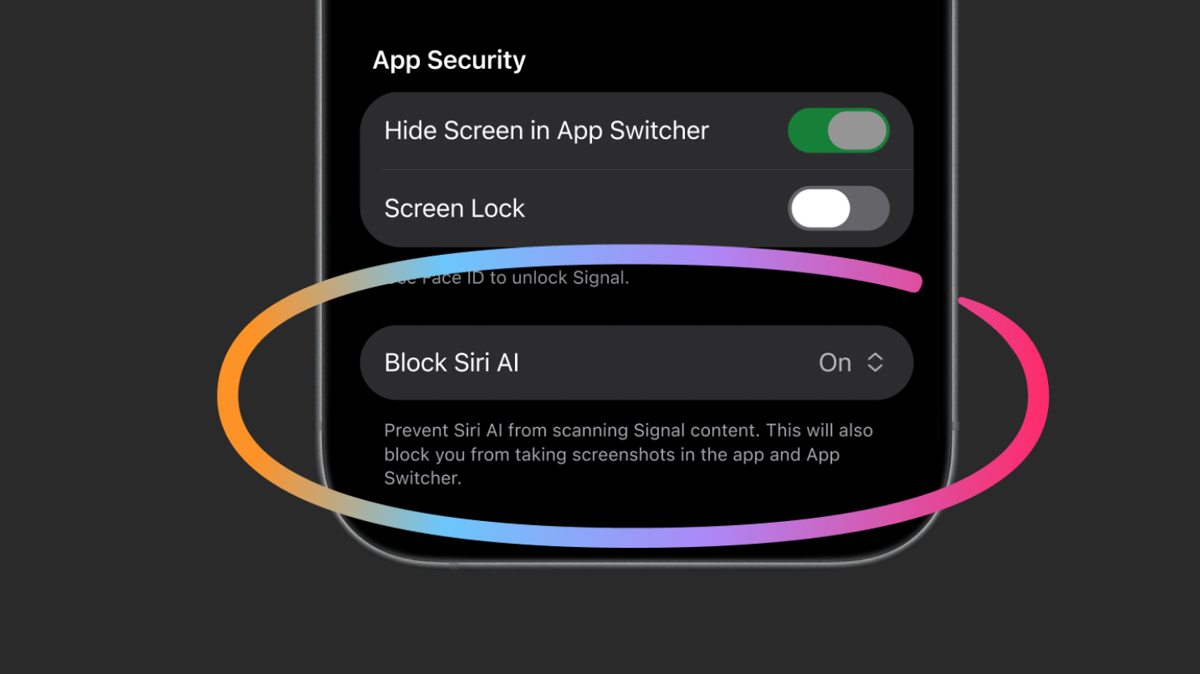
On iPhones running iOS 27 with Signal 8.37 or later, a new setting called Block Siri AI is enabled by default. It prevents screenshots and screen recordings inside the app, although users can switch it off temporarily for ten minutes or disable it altogether.
Android takes a slightly different approach. Signal 8.35.1 or later automatically enables Screen security when it detects an AI assistant attempting to read the screen. The company acknowledges that detection does not work reliably across every Android implementation.
There's a catch for anyone accustomed to saving conversations with screenshots. Disabling the protection restores that convenience, but Signal warns that it may also expose messages sent by other people to AI assistants.
The Mac problem Signal cannot solve
On 18 November, Reuters published tests showing that Meta's Muse AI agent could retrieve Signal message content through Android notifications and, on macOS, through accessibility permissions and screenshots.
Apple told Reuters that an operating-system update had closed the particular Mac access route tested. Signal nevertheless says it cannot implement equivalent automatic screenshot protection on macOS because the necessary developer tools are lacking.
For now, Signal recommends that macOS 27 users add the messenger to the Excluded Apps section under System Settings > Siri.
And the mobile fix isn't watertight either. Signal acknowledges that AI agents may still reach information through other routes, including files stored on a device.
The company wants Apple, Google and Microsoft to give developers a straightforward way to keep AI agents out of sensitive applications.
The encryption hasn't suddenly failed. The problem is what happens once a message reaches the screen.
 Add as a preferred source on Google


