




Researchers turn plastic waste into protein-rich cookies
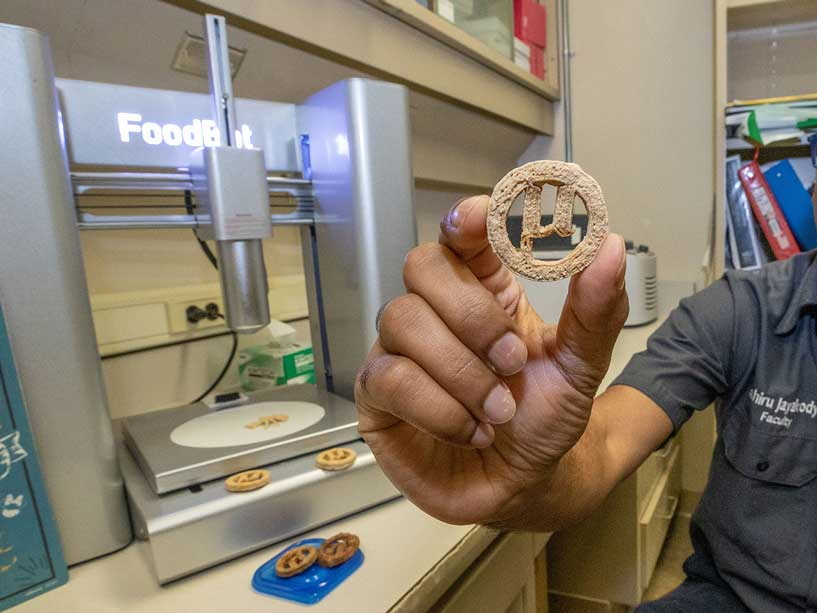
As part of a research project at Southern Illinois University Carbondale, scientists have used genetically modified yeast to turn plastic and plant waste into edible, protein-rich food. The project originally emerged from the NASA Deep Space Food Challenge, which focuses on producing food for deep-space exploration.
In very simplified terms, the process works as follows:
- PET plastic, such as that used in beverage bottles, along with corn stalks and other plant waste, is broken down into smaller chemical components using a process called Oxidative Hydrothermal Dissolution (OHD) at high temperatures and pressures.
- The resulting components serve as a carbon source for genetically modified yeast, using several different strains. The yeast produces proteins, fats, vitamins, and flavor compounds, among other things.
- These are then used to produce so-called “µBites” using a 3D printing process: protein-rich, 3D-printed cookies.
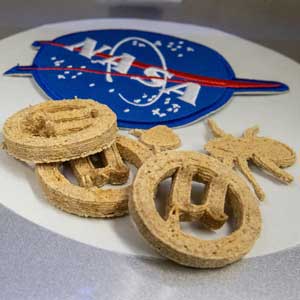
For now, this is only a proof of concept, meaning the project is intended to demonstrate that the process is possible in principle. A taste test involving humans, for example, had not yet been approved; officially, only an odor test had been conducted (the researchers probably had a little “taste” themselves?). In practice, of course, the process would face considerably more challenges and questions, such as:
- What about additives such as plasticizers? In the case of mixed plastics, could unwanted substances make their way into the water used in the process or into the cookie itself, and would the resulting food be safe for human consumption?
- How much energy does the process require, and can it be economically viable (separation, followed by grinding the PET particles, the OHD process, cultivation of the microorganisms, water, oxygen, pumps, etc.)?
- What residual waste remains, and how should it be disposed of (CO2, organic acids, PET fragments, chemical additives such as plasticizers, etc.)?
- What byproducts can be produced (alcohols, acids, other metabolic products)?
 Add as a preferred source on Google


No comments for this article
