




Electric car sales in Europe up 41 percent in the first half of 2026
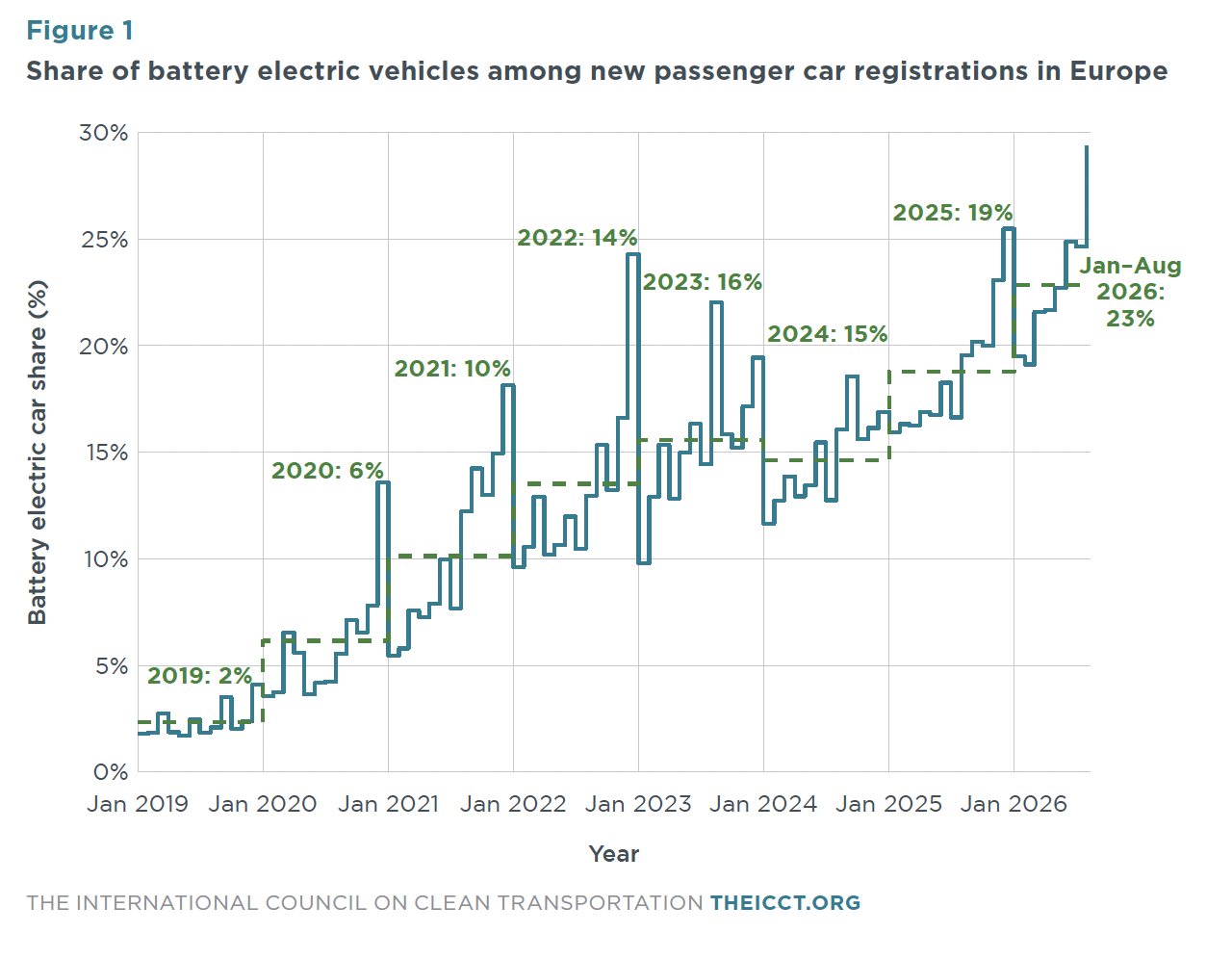
The oil crisis, rising fuel prices, emissions that are harmful to the climate and human health, and government incentives for purchasing new electric vehicles — there are currently several good reasons to opt for a battery-powered car (and certainly some good reasons not to). From January through August this year, 41 percent more fully electric cars were sold across Europe than during the same period in 2025. This means that three out of every 10 cars sold across Europe were fully electric.
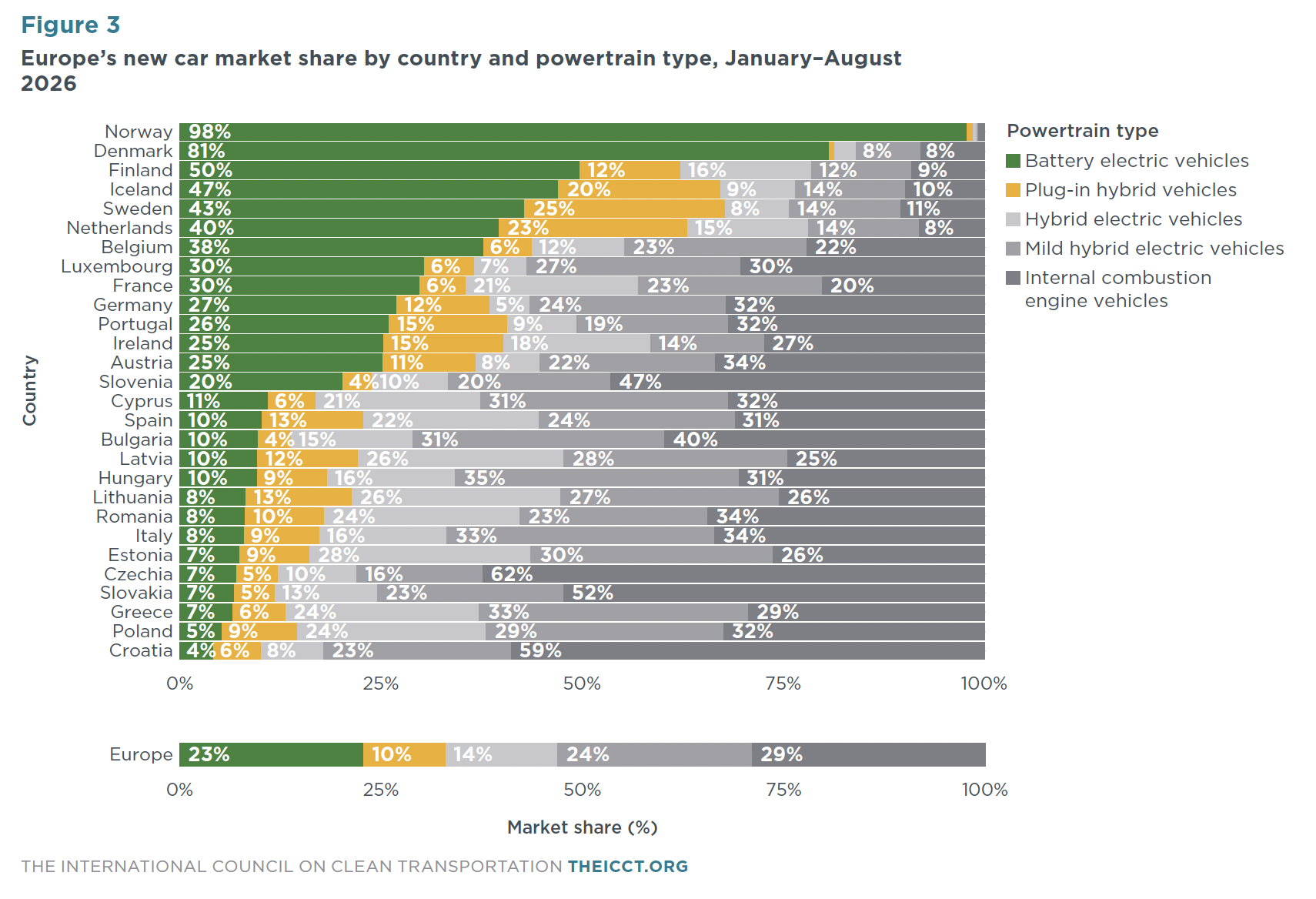
However, growth is not evenly distributed across all European countries. The two largest markets, Germany and France, stand out in particular as the main drivers. France recorded the largest share of the growth, reaching a record 38 percent, while Germany matched its previous record high at 33 percent.
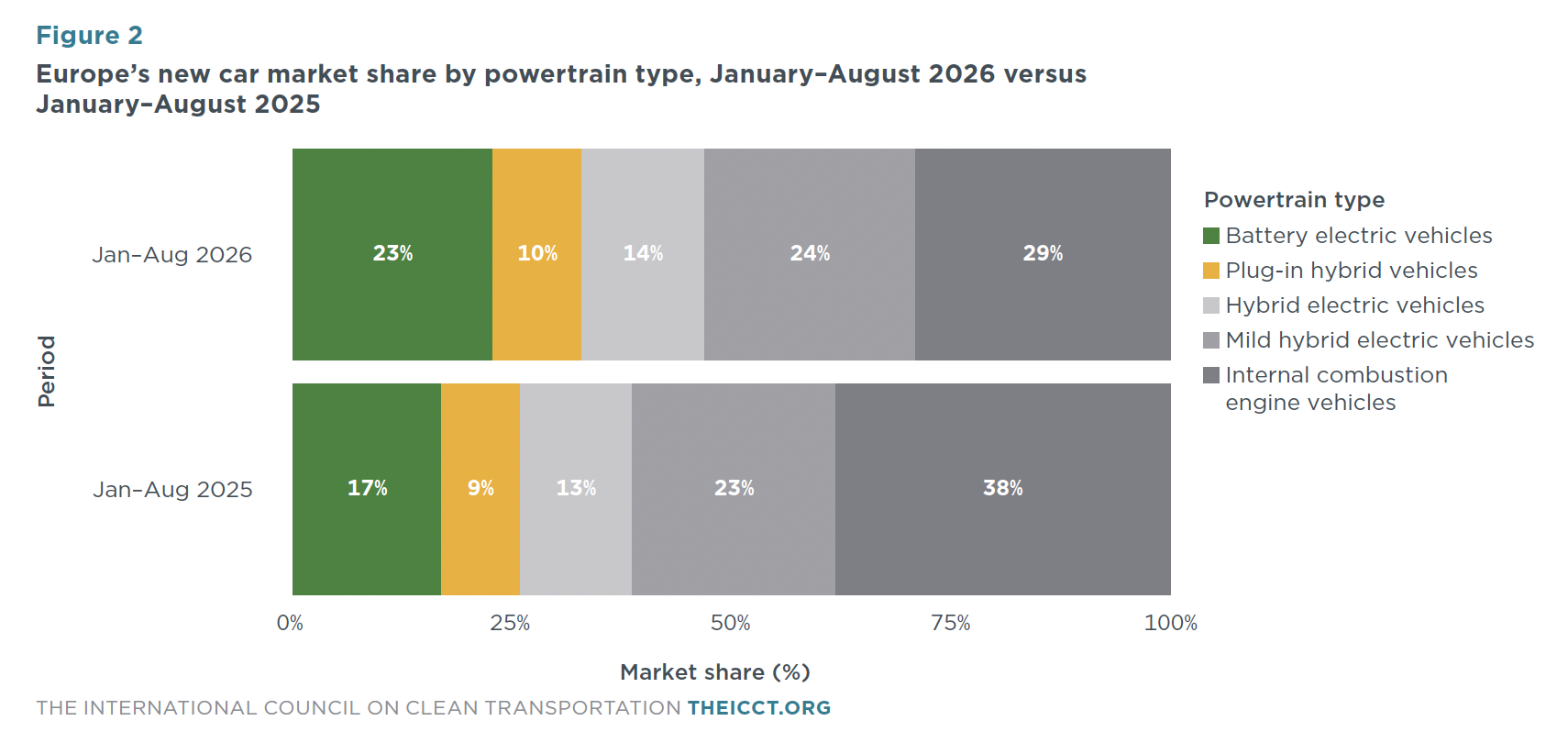
The market share of electric cars rose to 30 percent in France (up 12 percentage points) and to 27 percent in Germany (up 9 percentage points). Across Europe as a whole, electric cars now account for 23 percent of the market (up 6 percentage points).
Italy and Spain rank third and fourth in terms of market size. Both countries also saw increases in their EV shares, although the gains were more moderate at 8 and 10 percent, respectively (up 3 and 2 percentage points). Poland, by contrast, saw a slight decline. Europe's fifth-largest EV market fell by 1 percent, with electric cars accounting for around 5 percent of sales.
Among all European automakers, BMW is currently the strongest performer in terms of electrification, at least based on sales. The company sold 30 percent electric cars. Mercedes saw its electric car sales increase by 10 percent. The Hyundai and Renault groups each improved by 8 percent. Toyota doubled its share of electric vehicle sales from 5 to 11 percent.
The full study can be found here.
Source
 Add as a preferred source on Google


No comments for this article
