




Researchers create ultra-tiny OLED with UV-printed pixels, just like microchips
Researchers at ETH Zurich have developed a new class of light-emitting organic materials that can be processed using photolithography, the basic chipmaking technique used to create microscopic structures on semiconductor wafers. The breakthrough could eventually enable extremely small, high-resolution OLED displays for AR glasses, camera viewfinders, sensors and biomedical devices.
OLEDs are particularly well suited to very small displays because their organic light-emitting materials can remain bright even at tiny dimensions. The challenge has been manufacturing them with sufficient precision. Photolithography, the process used to make semiconductor chips, could help solve that problem, but standard methods use solvents and chemicals that degrade sensitive organic molecules in conventional OLED materials.
The ETH Zurich team solved this problem by developing luminescent polymers that can act as photoresists while withstanding aggressive chemicals during lithography. The material has a core-shell structure: a light-emitting molecule is protected inside, while reactive groups are positioned on the outside. Under ultraviolet light, these groups cross-link, making the illuminated areas insoluble and allowing the material to be patterned into fine structures, much like conventional photoresists used in semiconductor manufacturing.
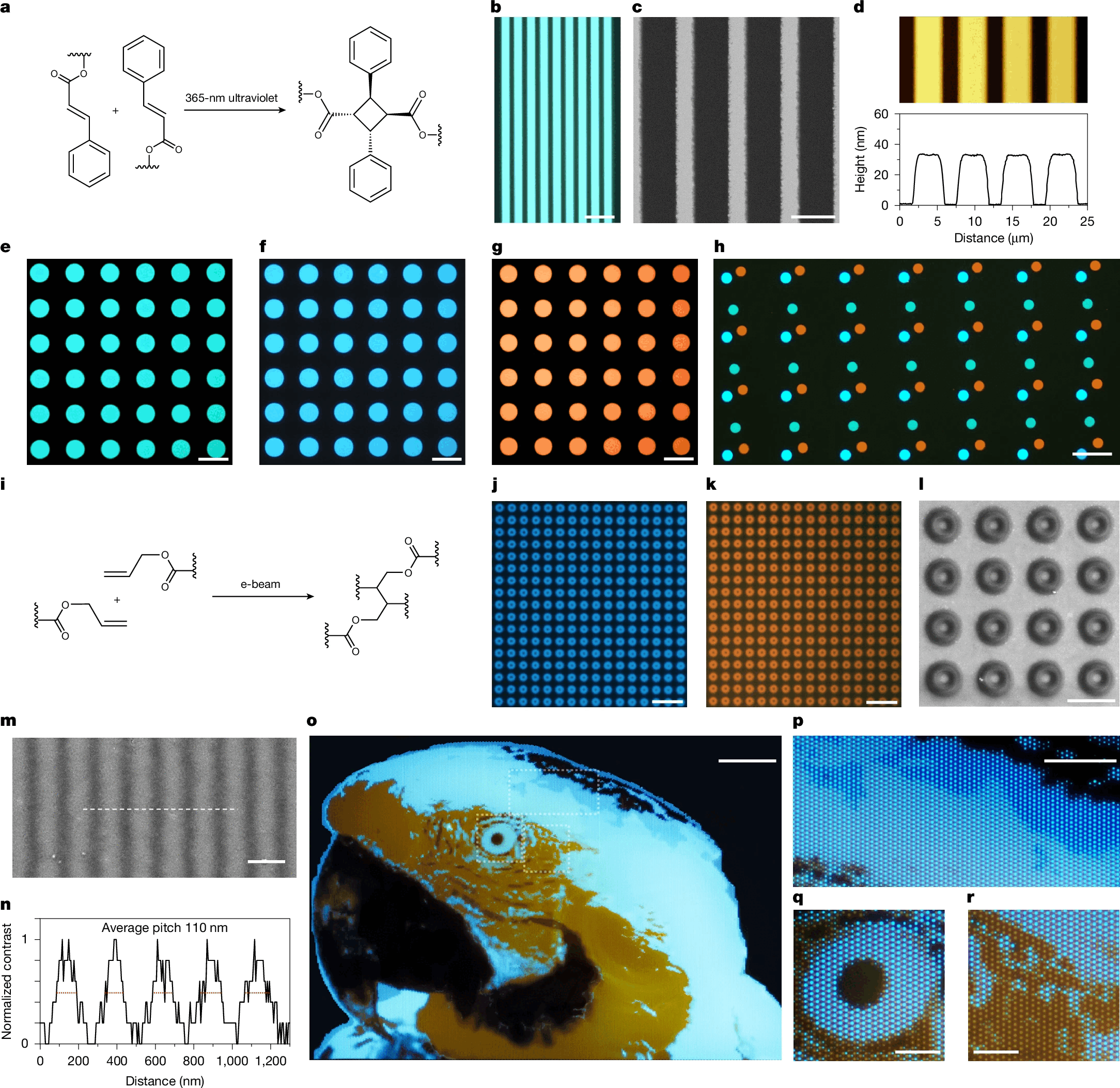
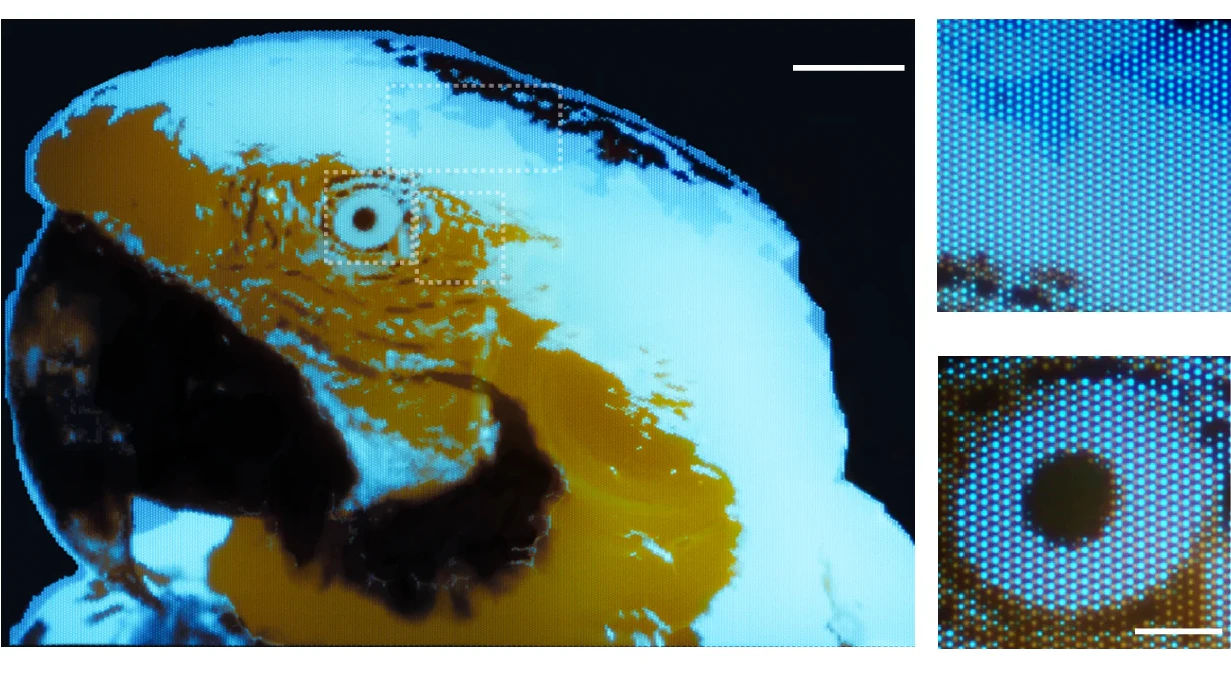
To demonstrate the technology, the researchers created a multicolor image of a macaw measuring just 300 × 430 micrometers and containing 250 × 350 pixels. The image is not a working display: its pixels fluoresce when illuminated externally rather than producing light electrically. The researchers say it is the highest-resolution multicolor fluorescent image produced using photolithography to date.
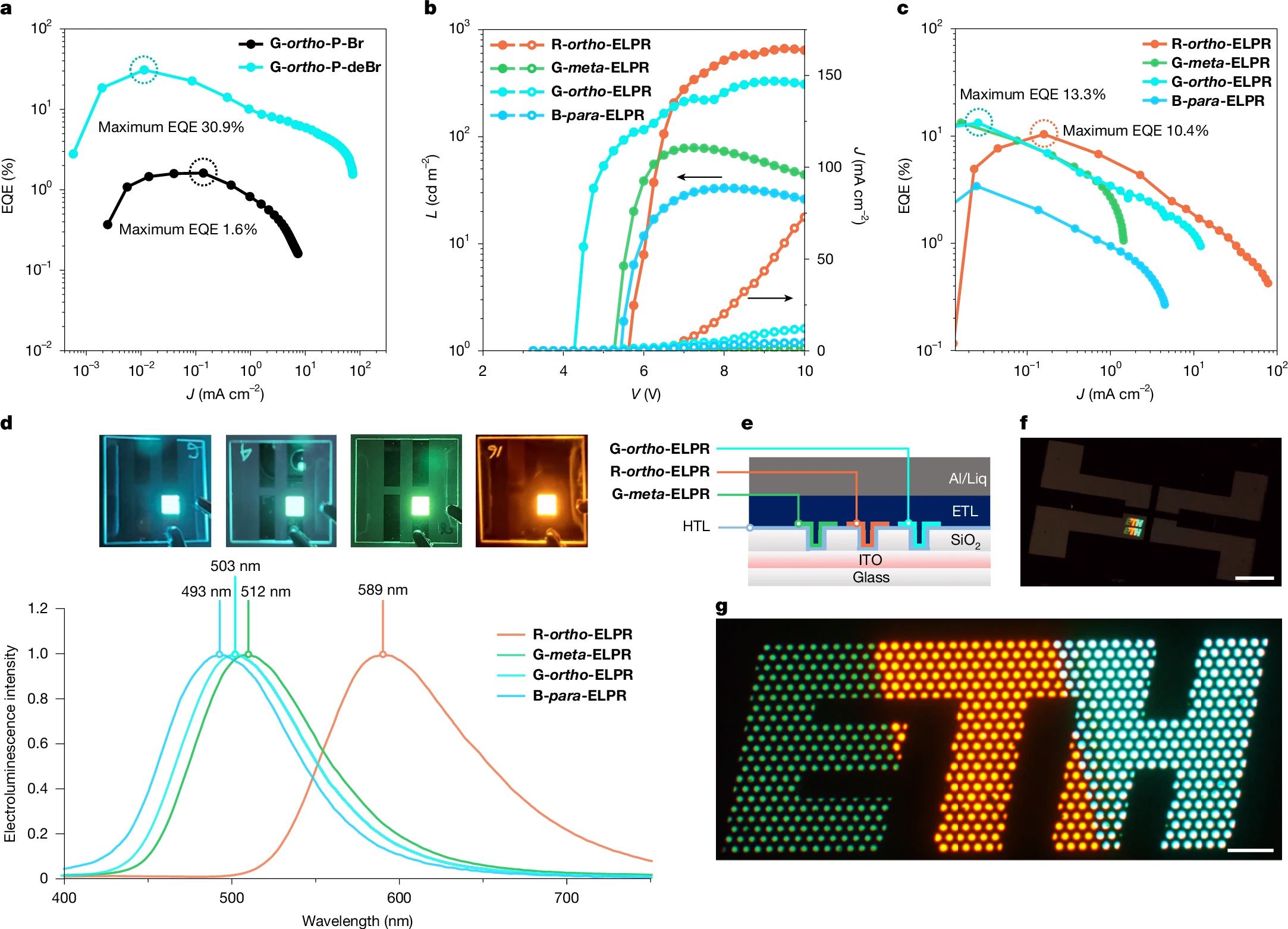
The team also demonstrated electrically powered light-emitting diodes in a separate experiment, creating a glowing ETH logo measuring 1 × 2.4 mm. The next step is to reduce the pixel size further. However, the researchers still need to develop electronics capable of controlling individual pixels independently before the technology can become a functional display.
The researchers see potential applications beyond miniature screens for AR glasses and electronic viewfinders. Tiny, precisely controlled light sources could eventually be integrated directly onto chips for medical and biological research, microscopy and sensors. For example, they could illuminate individual biological cells or stimulate nerve cells with light. The study, “Electroluminescent photoresists extending lithographic scaling to OLEDs,” was published in Nature on September 16, 2026.
Source(s)
Nature via EurekAlert
 Add as a preferred source on Google


