




OmniOS r151058 packs tool updates, new features, and better hardware support
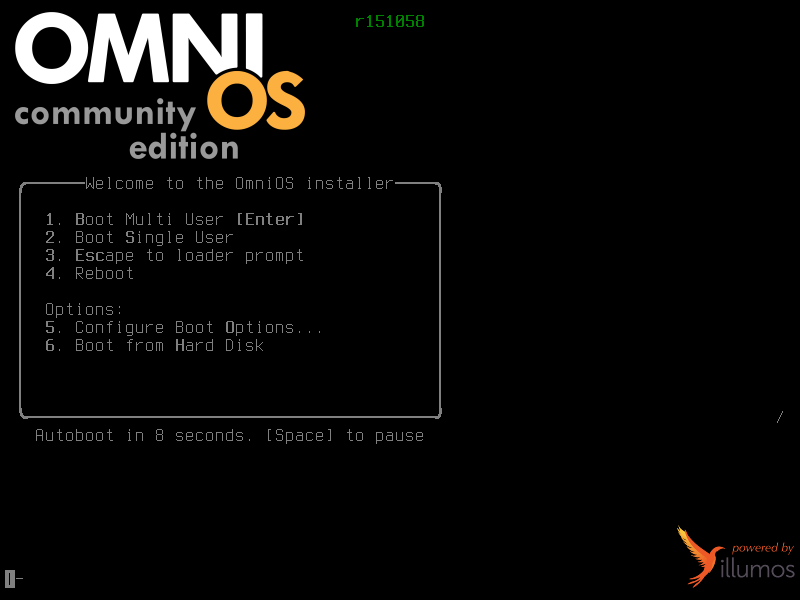
Designed primarily for server use, OmniOS is a secure operating system based on the illumos foundation. Developed since 2010, illumos is based on OpenSolaris, which has been discontinued by Oracle in the spring of 2010. Labeled as an open-source enterprise server OS, OmniOS 3.7.0 landed with multiple improvements, including tool updates, new features, and extended hardware support.
These are some of the highlights worth being mentioned when talking about OmniOS r151058:
- Fast path IPv6 networking implementation, similar to that already present for IPv4. This approach bypasses the DLS layer for select traffic and improves throughput.
- Kernel MAC framework softring polling code fixes.
- Intel IOMMU code is now more informative when it encounters unknown remapping structures.
- AES-GMAC sign and verify support has been added to PKCS#11. Additionally, the underlying kernel AES implementation now supports GMAC input through the standard MAC interfaces.
- SMB 3.1.1 supports GMAC signing, with associated capability negotiation.
- SMB Active Directory join has received improvements.
- SMB workloads on ZFS are now faster.
- Bhyve now supports transitional virtio devices, presenting both the legacy and modern (1.0+) virtio interfaces simultaneously.
- New drivers built on the I2C/SMBus and GPIO frameworks, including the following: Intel SMBus Controllers, PCA954x family I2C multiplexers, DDR4 and DDR5 I2C SPD EEPROMs, LM75 family I2C temperature sensors, and more.
- Configuration of the load-balancing policy for individual logical units via mpathadm for scsi_vhci.
- Several boot loader improvements and fixes, including IP fragment reassembly.
- OmniOS userland is now built with gcc 15 by default, although the previous gcc 14 compiler remains available.
In addition to the above, it is worth mentioning that the list of deprecated features includes the grub boot loader, OpenSSL 1.0.x and 1.1.1, Python 2, and OpenSSH support for GSSAPI key exchange.
The ISO and USB-DD files are both compact, accounting for 301 MB and 401 MB, respectively. With this release, version 151046 hits the end-of-life stage, so those using it should upgrade to r151054 or r151058 to keep receiving updates.
Source(s)
 Add as a preferred source on Google


