




New lithium battery achieves over 700 Wh/kg density and operates at −50 °C
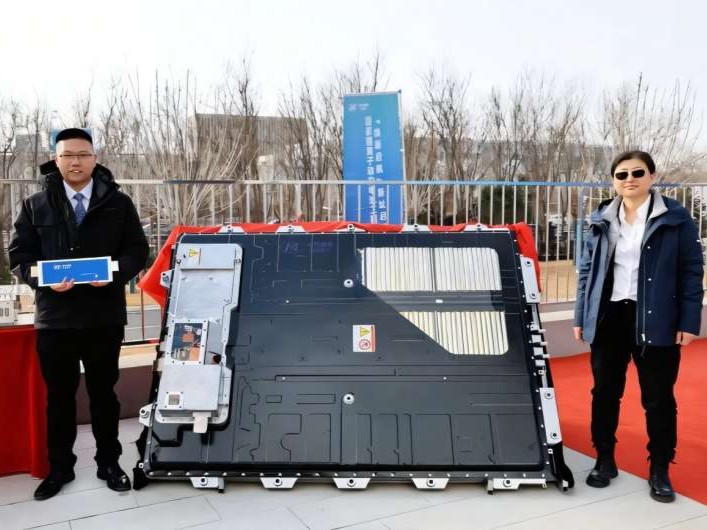
A research team in China has developed a novel hydrofluorocarbon electrolyte that shatters current battery performance ceilings. Published in the journal Nature, the study reveals a solvent capable of delivering energy densities exceeding 700 Wh/kg at room temperature and approximately 400 Wh/kg at −50 °C (122 °F). This significantly outperforms conventional electric vehicle batteries, which typically peak around 270 Wh/kg under normal conditions, unlocking new potential for aerospace, grid storage, and electric transportation in extreme climates.
Historically, battery electrolytes have relied on oxygen- and nitrogen-based ligands to carry charges between the cathode and anode. However, these traditional materials create strong binding that frustrates charge transfer at the electrode-electrolyte interface, severely limiting performance during low-temperature operation or fast charging. To overcome this, the researchers synthesized six monofluorinated hydrofluorocarbon solvents. By specifically designing the fluorine-based ligands with adjusted steric hindrance and Lewis basicity, the team improved lithium salt dissolution to exceed 2 mol/L.
The standout solvent, 1,3-difluoropropane, demonstrated exceptional properties, including a low viscosity of 0.95 centipoise and a high oxidation stability above 4.9 volts. By incorporating fluorine atoms into the first solvation shell, the resulting weak coordination facilitates highly efficient lithium plating and stripping. This mechanism achieves a Coulombic efficiency of 99.7% and an exchange current density that is a full magnitude higher than that of traditional oxygen-based systems at −50 °C (122 °F).
Testing proved successful in lithium-metal pouch cells operating with electrolyte amounts of less than 0.5 grams per ampere-hour. According to the researchers, this fluorine-coordination chemistry moves beyond traditional electrochemical design limits. Future modulation of carbon and fluorine ratios could yield even more stable, high-boiling-point variations above 100 °C (212 °F), establishing a promising pathway to further elevate the power and energy density of next-generation energy storage systems.
Source(s)
Nature via Tech Xplore
 Add as a preferred source on Google


