




MIT professor warns in new book: What we become when we talk to machines
An LLM can generate a sentence like: “That sounds really hard. I understand why that hurt you.” People experience this sentence as empathetic. But LLMs are not compassionate, they do not experience emotions, they do not feel (with us) — they simply simulate empathy.
And yet LLMs are already conversation partners for many people when it comes to human and emotional issues and situations. They are used as advisers for heartbreak, to keep children occupied, or even to fill the gap when therapeutic care is unavailable.
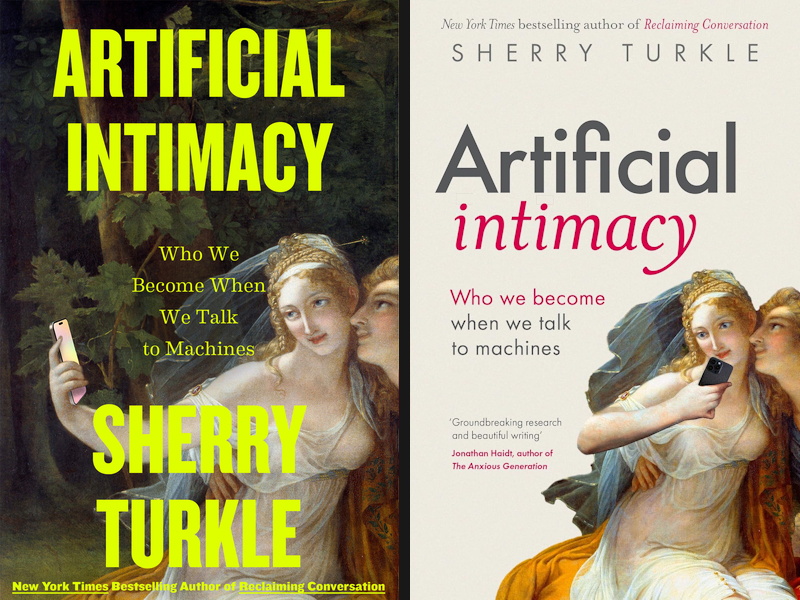
In her new book “Artificial Intimacy: Who we become when we talk to machines” (Amazon), MIT professor and sociologist/psychologist Sherry Turkle warns of the consequences for society. She bases her criticism on her observations and research findings:
LLMs appear to listen patiently and rarely disagree, while offering praise and compliments. Real people can be far more demanding, especially when it comes to resolving emotional conflicts; dealing with others often requires hard work, as does maintaining relationships and staying in touch. As people increasingly share their worries and conflicts with chatbots and avoid conversations with real people, they practice real-world social behavior less and less and may even lose the ability to see themselves as “relational” beings in a diverse society. Chatbots only simulate empathy; they feel nothing and have no genuine interest in the well-being of the person they are talking to. That can be very dangerous.
Children and teenagers are particularly vulnerable as a result. Children still have to learn to distinguish between things and people, learn how to interact socially, build trust, and be comfortable spending time alone in order to develop their own imagination. Yet children often experience chatbots as a real “person on the phone.”
Ultimately, Turkle’s argument is not just about AI, but about our relationship with convenience. The more technology frees us from uncomfortable situations, the less we may practice dealing with those situations. This applies to social situations just as much as it does to finding information or building our own knowledge. Society could increasingly lose both abilities through the intensive use of LLMs. Or, as the author puts it:
“We’re de-skilling ourselves as relational beings. We’re also de-skilling ourselves in work. We’re de-skilling ourselves in personal relationships. It’s across the board.”
And her recommendation: What should we do? First, accept that life involves friction. We learn from it, including — or especially — because it is difficult and requires effort. Friction is not a bad thing; quite the opposite. We need to develop the capacity to get through difficulties and grow from them. If we simply avoid difficulties, nothing is gained; technology weakens us as individuals. We should join forces with other people, create a counter-movement, and strengthen the social aspects of our own lives. Face the friction of life, because life is friction!
Source
 Add as a preferred source on Google


No comments for this article
