




Paper-thin biohybrid robot with muscle cells swims through water maze
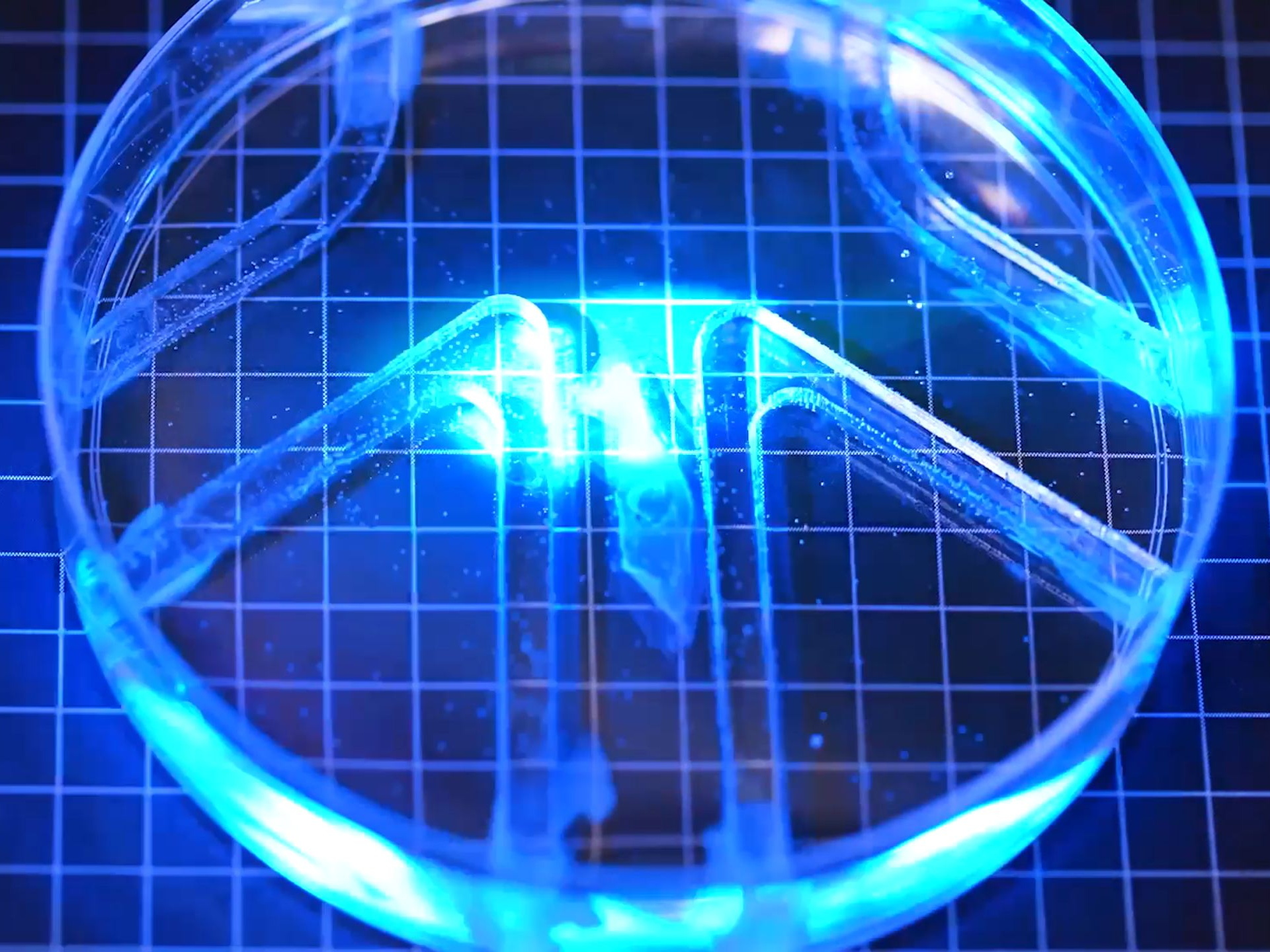
Previous biohybrid robots powered by muscle cells have generally been relatively large, three-dimensional structures requiring millions of cells. The new Aquabot takes a different approach: This ultra-thin, two-dimensional muscle-powered robot can move on its own while being much smaller than other models. In the future, this could enable smaller, more efficient, and potentially less expensive biohybrid robots.
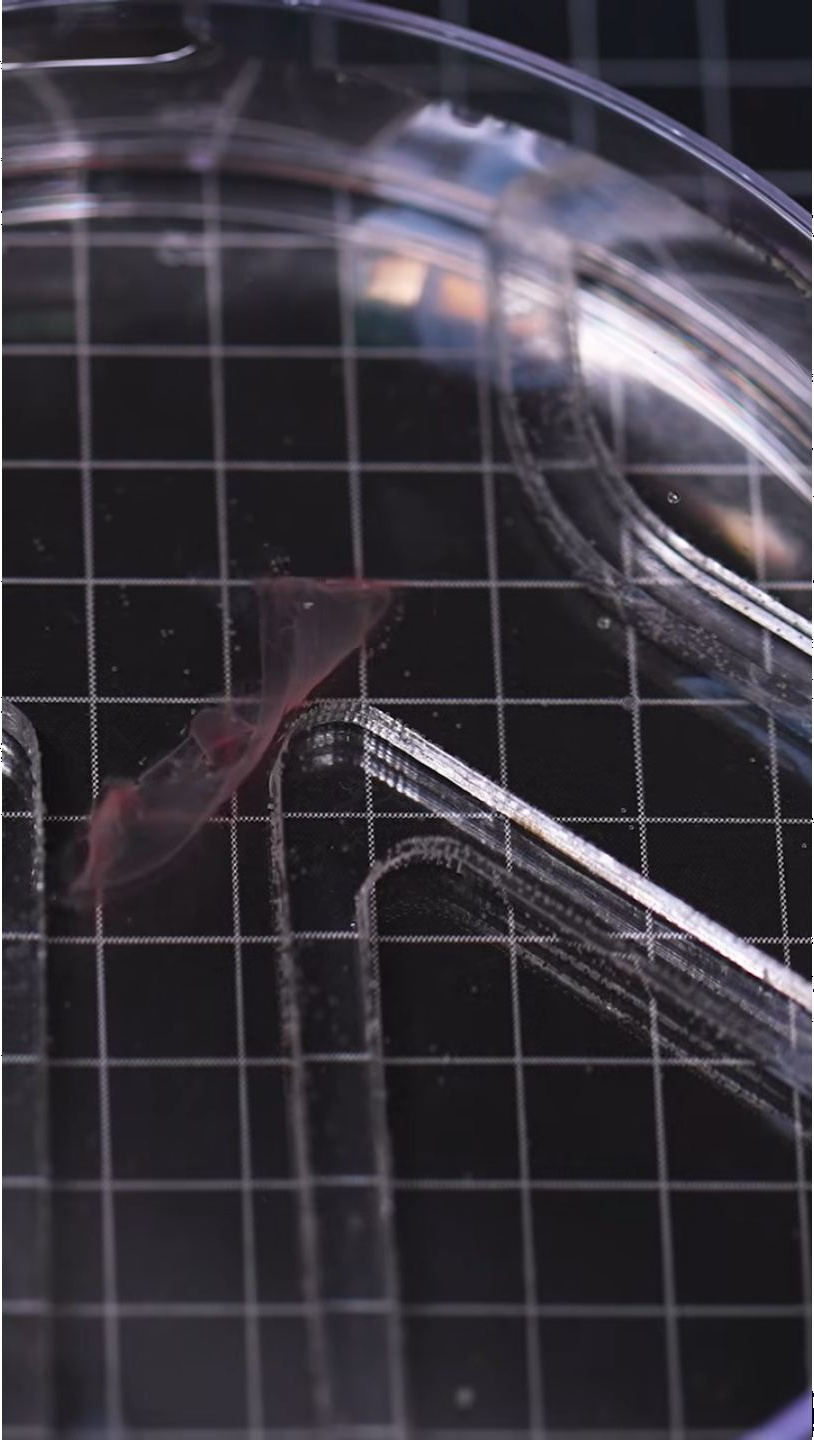
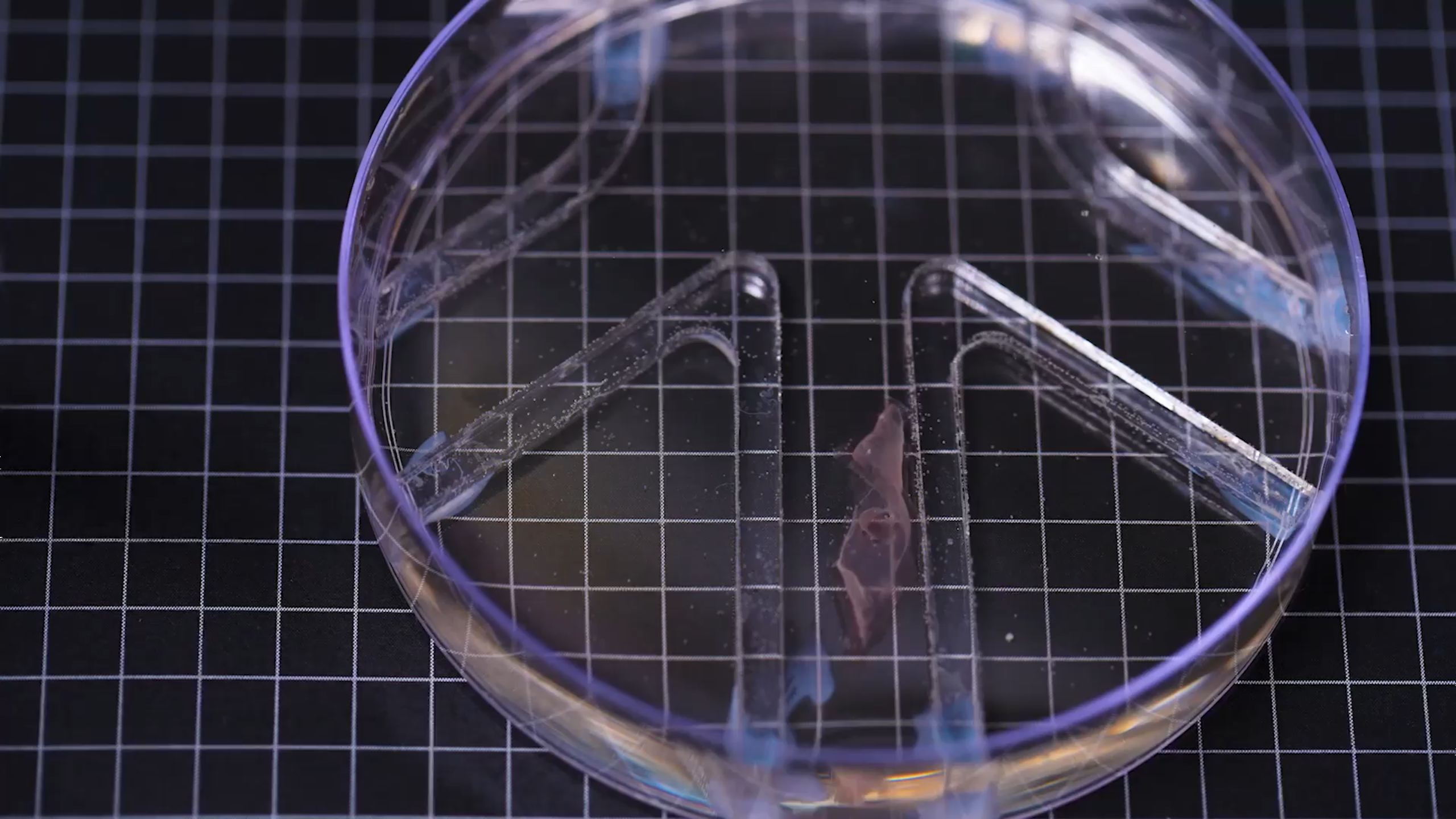
The robot consists primarily of a thin layer of gel that is roughly the length and width of a stick of chewing gum. Along the two edges of the strip are the robot's so-called fins, each consisting of an ultra-thin layer containing living muscle cells.
These muscle cells have been genetically modified to respond to light. When a muscle layer is illuminated, the muscles contract; when the light is switched off, the layer relaxes again. By selectively switching the light on and off and illuminating one fin or the other, the robot's direction and speed can be controlled.
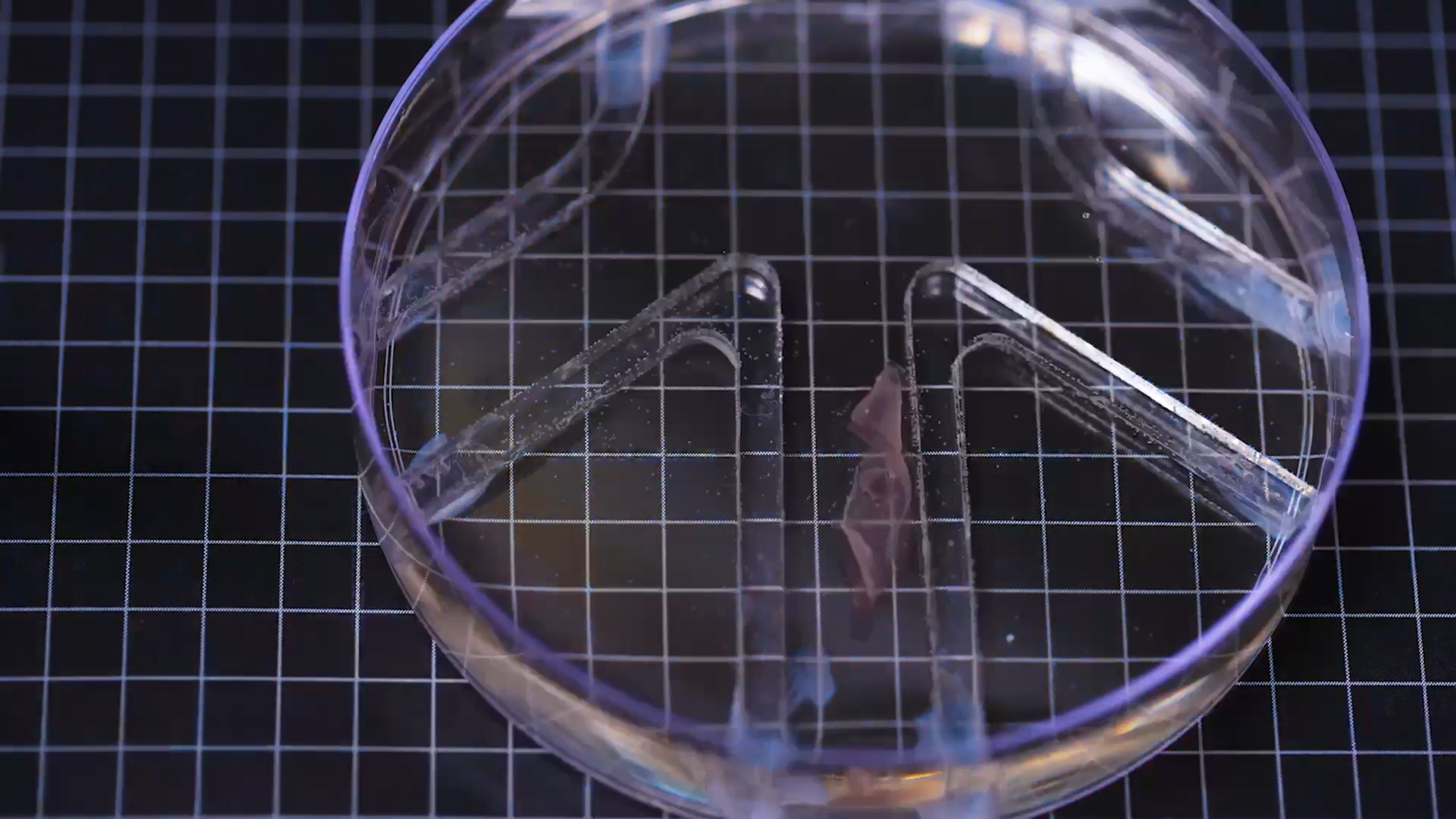
The robot can therefore swim by contracting and relaxing the muscles in its fins. It can be turned or deliberately guided through a small obstacle course. It is still far from fast, however, moving at a maximum speed of four body lengths per minute. An Olympic swimmer can cover around 65 body lengths per minute, while a large sixgill shark explores the ocean at a pace similar to that of the biohybrid robot.
For now, the technology is primarily a proof of concept. MIT has demonstrated that an ultra-thin layer of living muscle cells can generate enough force to propel a tiny robot through water. Potential future applications could include environmental monitoring in sensitive bodies of water or even exploration inside the human body.
Source
 Add as a preferred source on Google


No comments for this article
