




“Mind-reading” AI reconstructs images from brain activity data
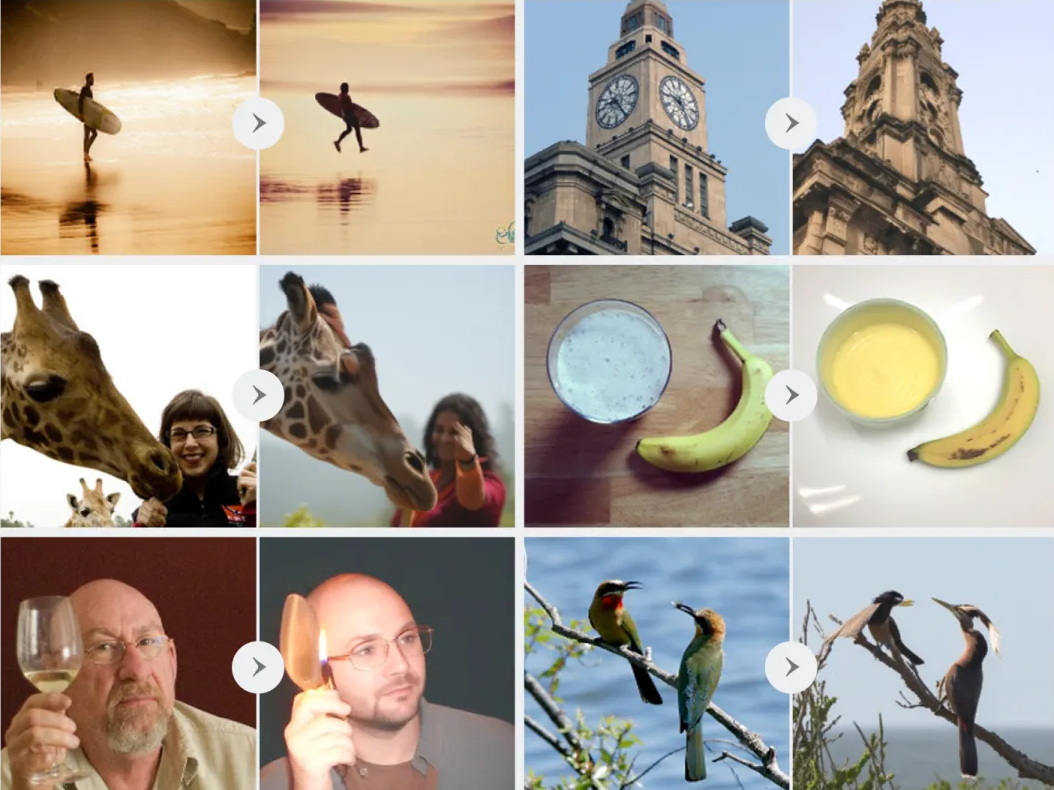
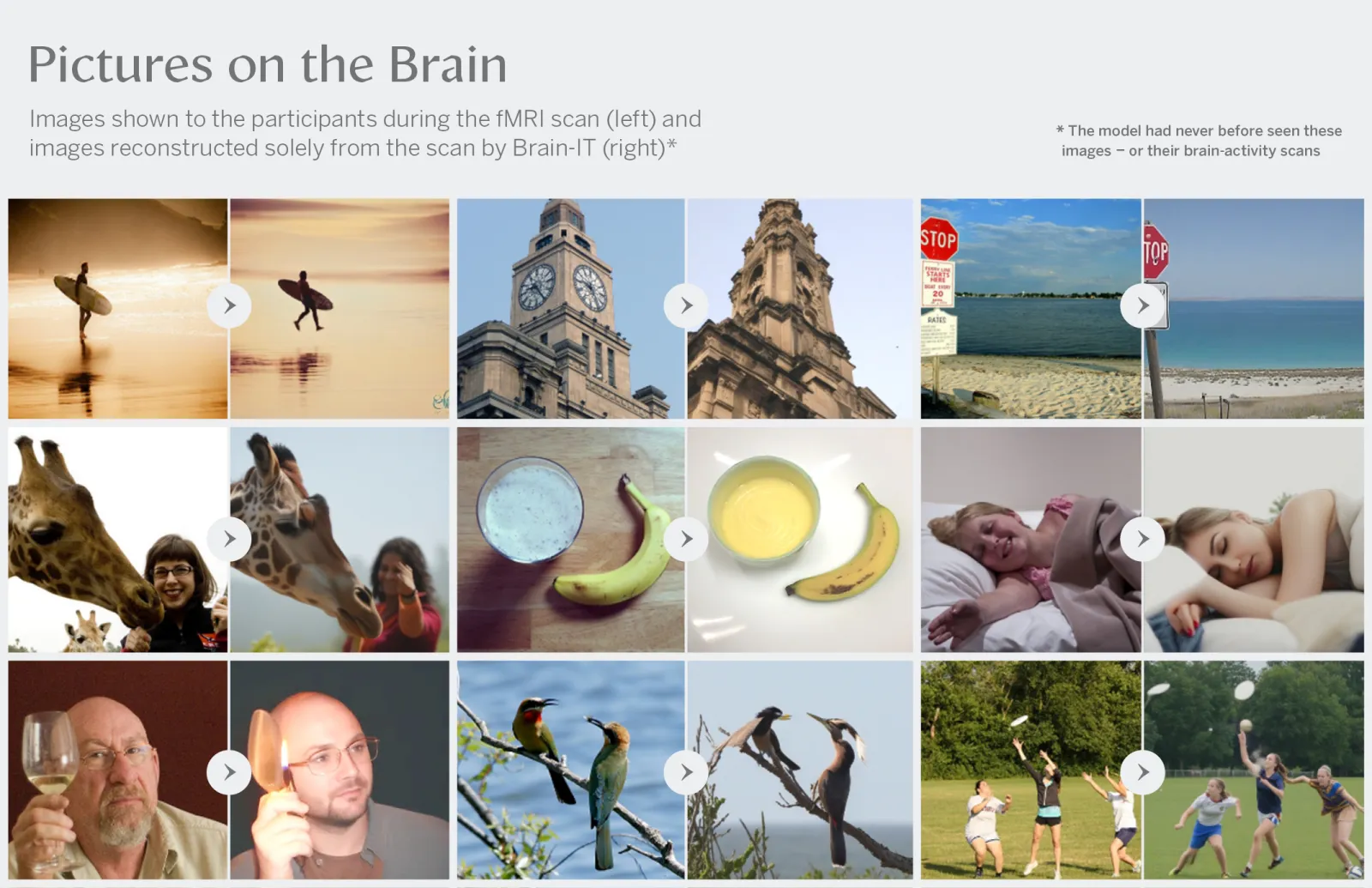
Scientists at the Weizmann Institute of Science had test subjects look at a set of images while recording fMRI scans of their brain activity. A specially trained AI was then able to reconstruct images from this data that in some cases looked remarkably similar to the originals.

To do this, the AI was first trained for the task. During this process, it learned correlations between specific image features and patterns of activity in the brain. It then attempted to reconstruct the image the test subjects had seen based on their brain activity.
The AI still had to be retrained to some extent for each individual, but while dozens of hours of additional training were often required in the past, just one hour of fMRI data from a new person was sufficient this time. Brain-IT is designed to make greater use of patterns shared across different human brains rather than having to be completely retrained each time. The AI, however, never saw the original images or the original brain activity scans.
The Weizmann Institute of Science is a major Israeli research university and multidisciplinary research institution in Rehovot, Israel. It was founded in 1934 as the Daniel Sieff Research Institute and renamed the Weizmann Institute of Science in 1949.
Of course, this is not actual mind reading. The AI reconstructs images from analyzed patterns of brain activity, and the images are not identical to the originals the subjects viewed. Nevertheless, the images generated by the AI are surprisingly similar to the originals. If methods like these continue to improve in the future — and that is to be expected — their implications could be far-reaching and could transform society as a whole.
Source
 Add as a preferred source on Google


No comments for this article
