




Did Garmin lie? Lawsuit accuses Garmin of misleading customers with Index S2 marketing

We have reported on smart scales several times before and have also pointed out that measurements such as body fat percentage, especially when there are no hand sensors, necessarily have certain limitations in terms of accuracy because of the measurement principle and the path taken by the electrical current used for the measurement. A smart scale that measures from one leg to the other is therefore more likely to measure lower-body body fat percentage than total body fat percentage. This lower-body body fat percentage can still provide some useful information, especially for tracking trends, but fat distribution varies from person to person within certain limits. An exact, meaning accurate, body fat analysis is anything but trivial. DEXA scans require specialized equipment, and caliper measurements, which private individuals can carry out relatively easily but with some effort, are also subject to deviations.
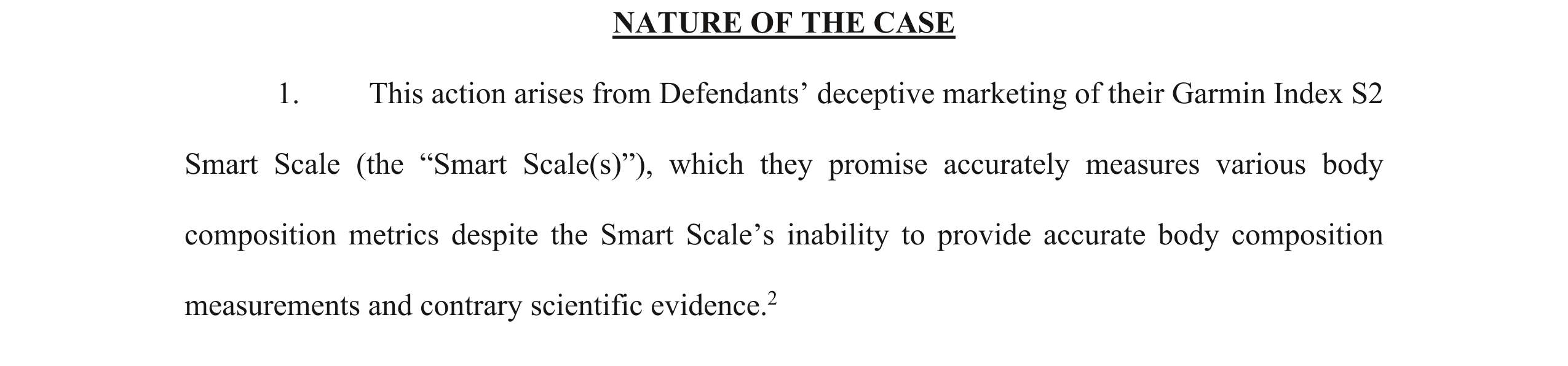
Garmin offers smart scales that are supposed to measure body fat percentage, among other metrics, using bioelectrical impedance analysis. Now, a class-action lawsuit has been filed against Garmin in the United States District Court for the Northern District of Illinois. The 56-page class-action complaint centers on the marketing claim that the Garmin Index S2 can accurately measure various body composition metrics. According to Garmin Rumors, the site has reviewed the document in full. According to the filing, plaintiff Victor Maurer purchased the scale in August 2024 and found significant discrepancies compared with values obtained from a DEXA scan. The complaint points to the measurement-related limitations of this kind of two-foot-electrode setup described above and also cites two studies. Unsurprisingly, the lawsuit not only seeks an end to what the complaint describes as misleading marketing, but also financial compensation, including for legal fees.
Source(s)
PacerMonitor, Garmin Rumors, Image: appshunter.io on Unsplash
 Add as a preferred source on Google


